

Mahogany Tilt Top Stand
A mahogany tilt top stand saves space by tipping upright when not holding a lamp, book or glass of wine.
Mahogany Tilt Top Stand
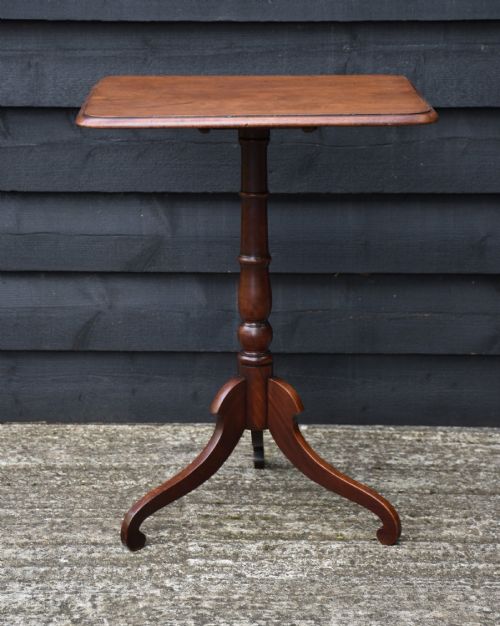
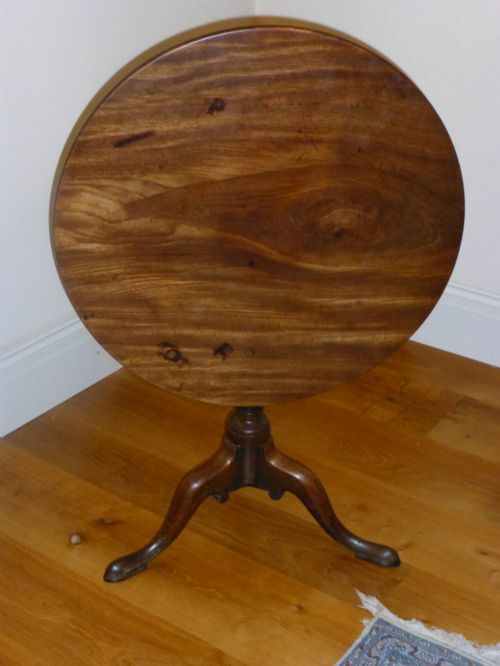
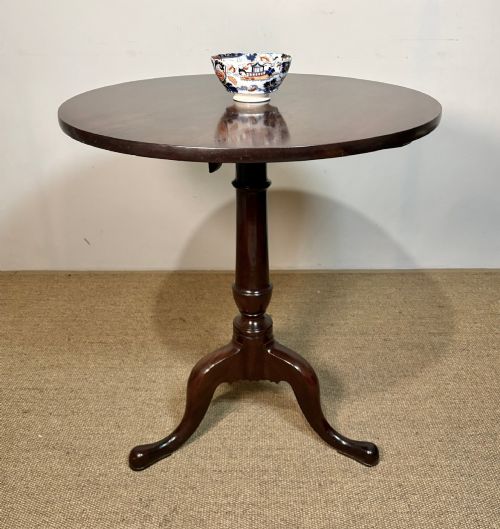
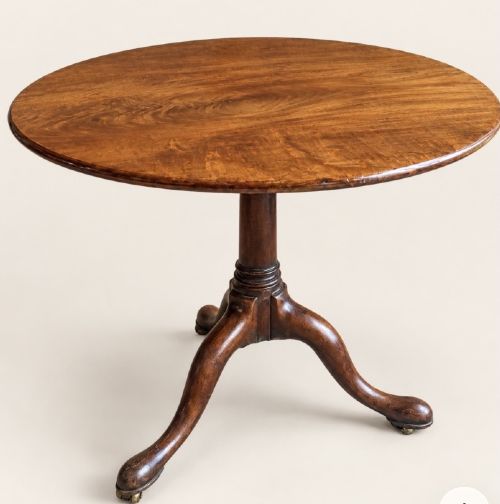
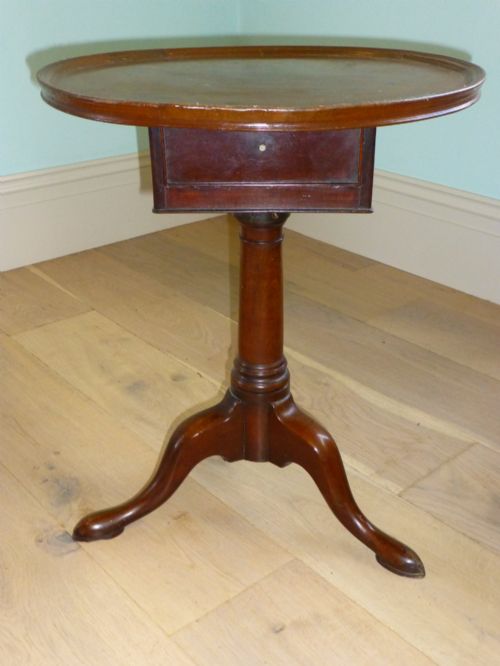
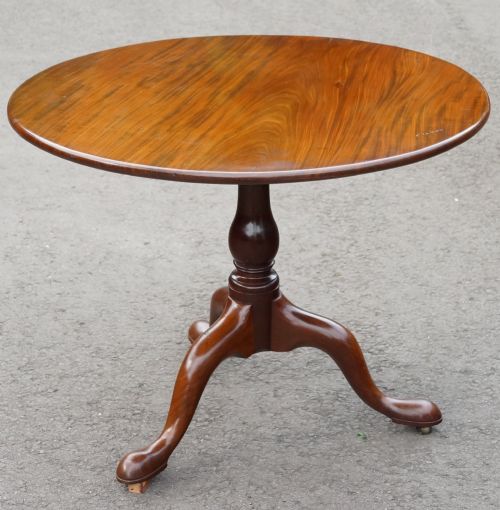
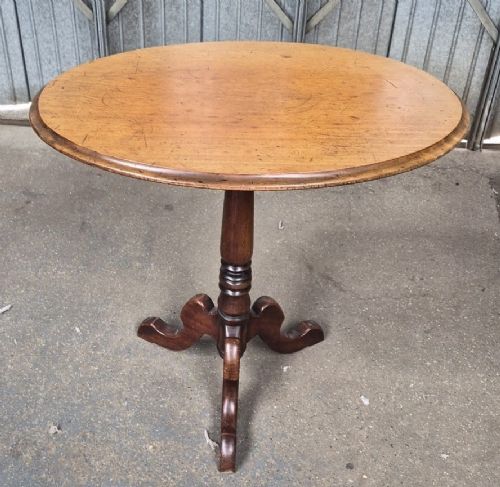
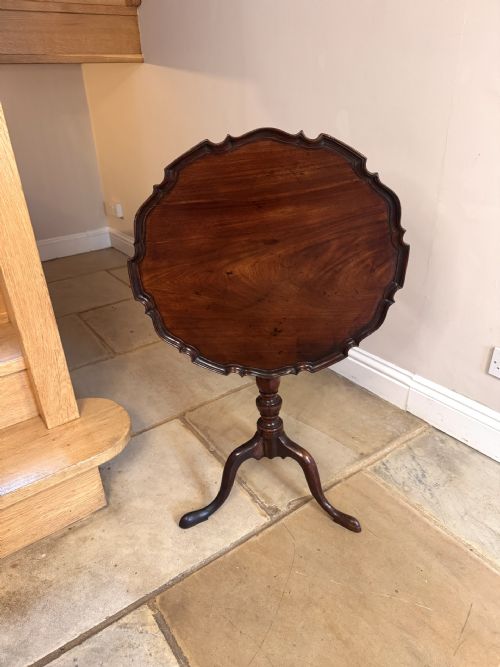
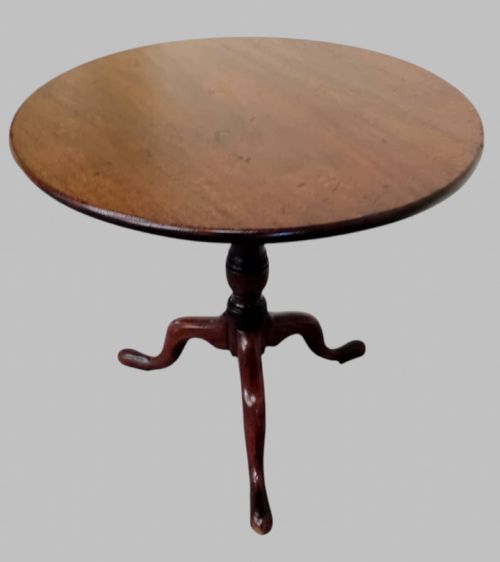
A mahogany tilt top stand is a versatile small table designed to pivot on a central mechanism, allowing the top to rest vertically against the pedestal when idle. You encounter these most frequently as tripod wine tables, lamp tables and occasional tables dating from the Georgian and Victorian eras.
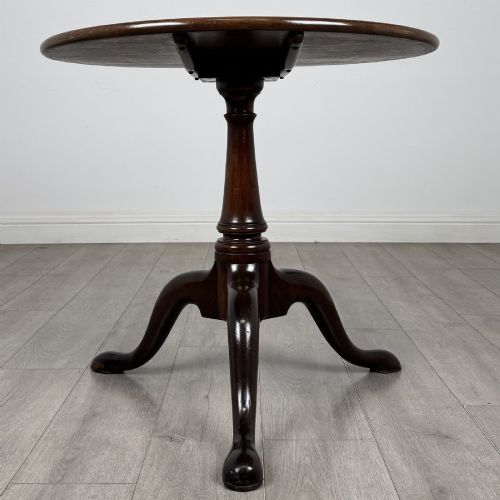
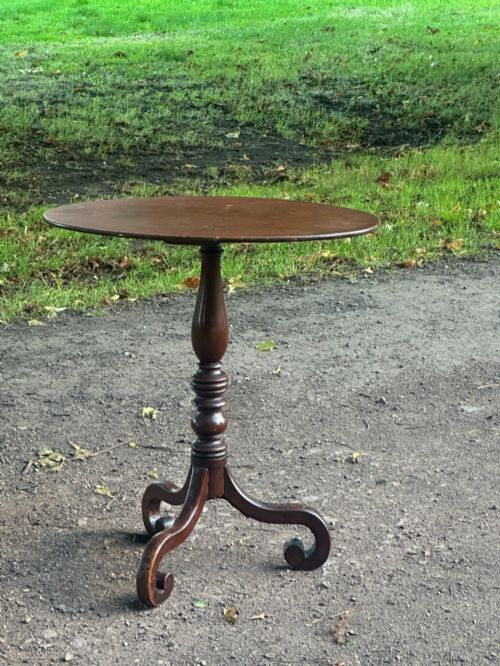
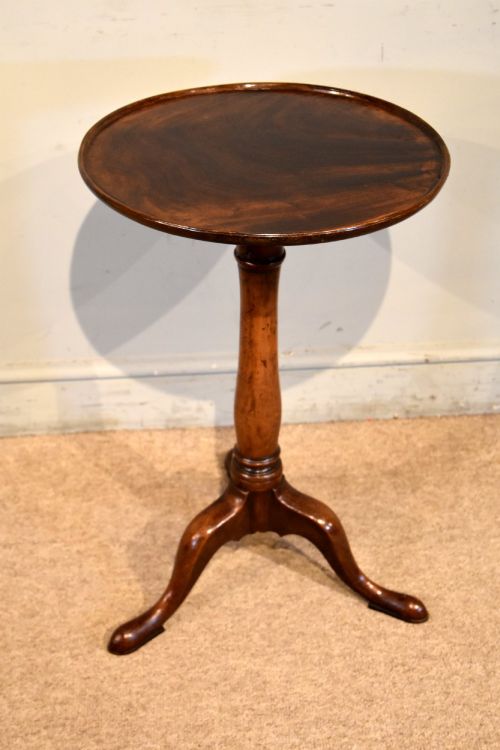
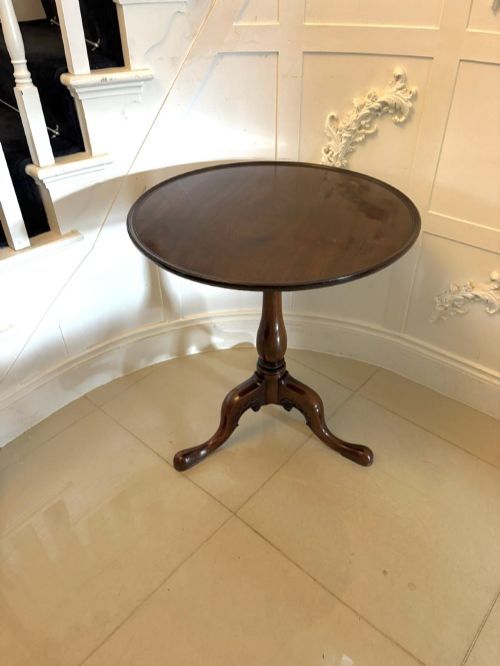
The form typically comprises a circular or oval wooden top mounted on a birdcage or tilting mechanism above a turned pillar and three-legged base. Makers from the eighteenth century onwards favoured this construction for ease of movement around a drawing room or parlour.
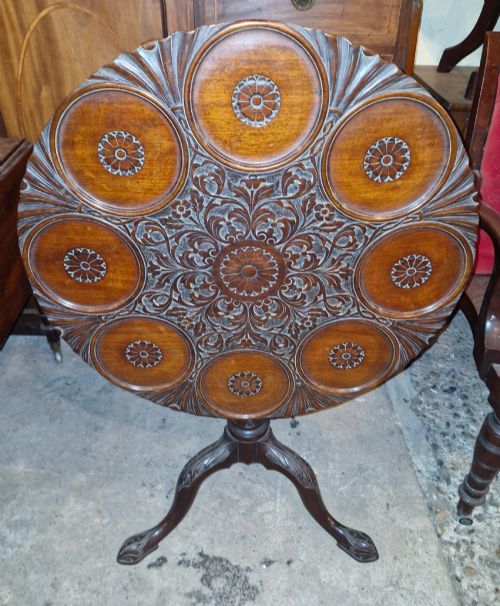
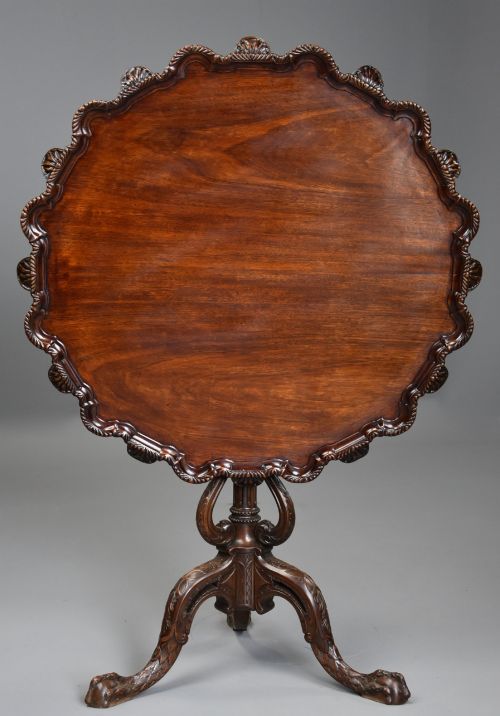
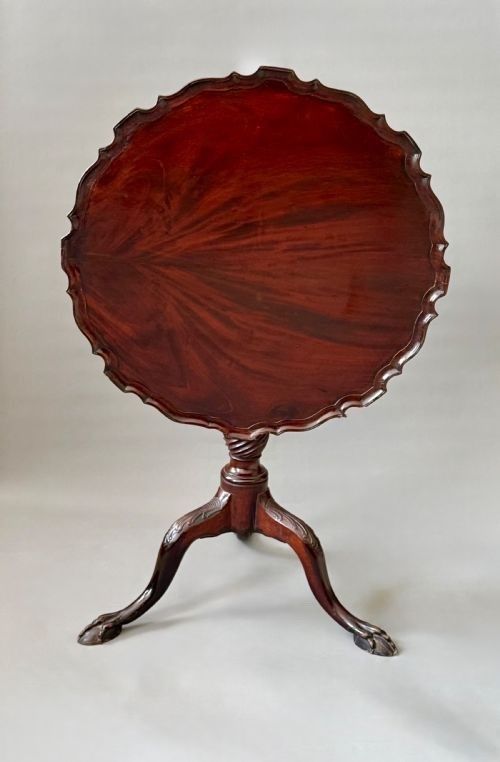
Examples on this page span several decades, featuring stylistic influences ranging from George II and George III to Chippendale, Regency and the later revival periods. While many serve simply as compact surfaces, others incorporate reading stands, boxwood inlay or carved pie crust edges.
How they were made
Makers constructed these stands primarily using solid mahogany and dense Cuban mahogany, occasionally incorporating walnut, boxwood stringing and brass fittings. The timber was turned on a lathe for the central column and carved by hand for the tripod legs and pie crust borders.
The tilting mechanism relied on a clever hinge block or birdcage assembly secured beneath the top, allowing the surface to swivel and lock flat or upright. Joinery combined pegged mortise and tenon joints in the base with dovetails and screw attachments under the tabletop to ensure stability.
Mahogany Tilt Top Stand Retail Price Guide 2026
Typical asking prices for mahogany tilt top stand among the pieces listed under this phrase on Sellingantiques today, from the lower quarter to the upper quarter. They describe what is for sale here now, not the wider market.
Listings feature pieces spanning from the mid-eighteenth century through the Georgian and Regency eras into Victorian and early twentieth-century revival styles.
What varies in quality
Quality rests principally in the crispness of the carving, the selection of figured mahogany timber, and the mechanical precision of the tilt mechanism. Superior pieces display finely turned columns, delicate claw and ball or pad feet, and tight joints that keep the top level when lowered.
Lesser examples show simpler turned legs without carving, plain straight-grained timber, and loose pivot mechanisms that allow the tabletop to wobble. The integration of secondary woods like boxwood inlay or a well-fitted birdcage action also marks out the more ambitious pieces.
John Bivins·Norman Adams
The Mahogany Tilt Top Stand Glossary
- Tilt-top
- A tabletop mounted on a pivot mechanism that allows the surface to be turned vertical when not in use. This clever design saved valuable floor space in period drawing rooms.
- Tripod table
- A small occasional table supported by a central pillar resting on three legs. The three-legged base ensured the table stood steady on uneven floorboards.
- Birdcage
- A wooden framework beneath the tabletop that permits the surface both to rotate and to tilt. It represents a superior mechanical solution found on finer eighteenth-century examples.
- Pie-crust edge
- A decorative raised border carved into the perimeter of a circular tabletop with undulating curves. Cabinetmakers shaped these mouldings entirely by hand from solid timber.
- Snap top
- An alternative term for a tilt-top table utilising a spring catch or latch to hold the surface securely in the horizontal position.
Mahogany Tilt Top Stand: Frequently Asked Questions
What is a tilt top table used for?
These versatile stands served originally as convenient surfaces for holding tea wares, wine glasses, books or lamps during the evening. Their ability to tilt upright meant servants could push them against a wall to clear the floor for dancing or games.
Today, they function perfectly as bedside tables, lamp stands or decorative occasional pieces in living spaces where floor area is at a premium.
How do I know if the tilt mechanism is original?
Examine the underside of the tabletop and the top of the central pillar for matching wear patterns, period screws and appropriate wood ageing. Original birdcage actions and hinge blocks show consistent patination and hand-cut joinery that aligns with the era of the table.
Replaced blocks or modern metal screws usually indicate later repair or adaptation, which is common in furniture that endured heavy domestic use over centuries.
Are all these tables mahogany?
The majority of pieces utilise solid mahogany or dense Cuban mahogany, prized by cabinetmakers for its strength, rich colour and capacity for fine carving. Some variations incorporate secondary timbers such as walnut or feature contrasting boxwood inlay.
When inspecting a piece, look closely at the grain and weight to distinguish between the heavier native hardwoods and later stylistic revivals.
How do I tell a Georgian table from a Victorian one?
Georgian examples, particularly from the George III period, often display restrained elegance, slender proportions and meticulous hand-carved details like claw and ball feet or pie-crust edges. Their timber patination tends to be deep and warm from long exposure.
Victorian and later revival pieces frequently feature heavier turned elements, broader proportions, or machine-assisted joinery alongside varied stylistic revivals like Chippendale or Regency tastes.