





Mahogany Tambour Commode
A mahogany tambour commode brings compact storage and fine timber to a bedside, moving through Georgian and Regency rooms with sliding shutters.
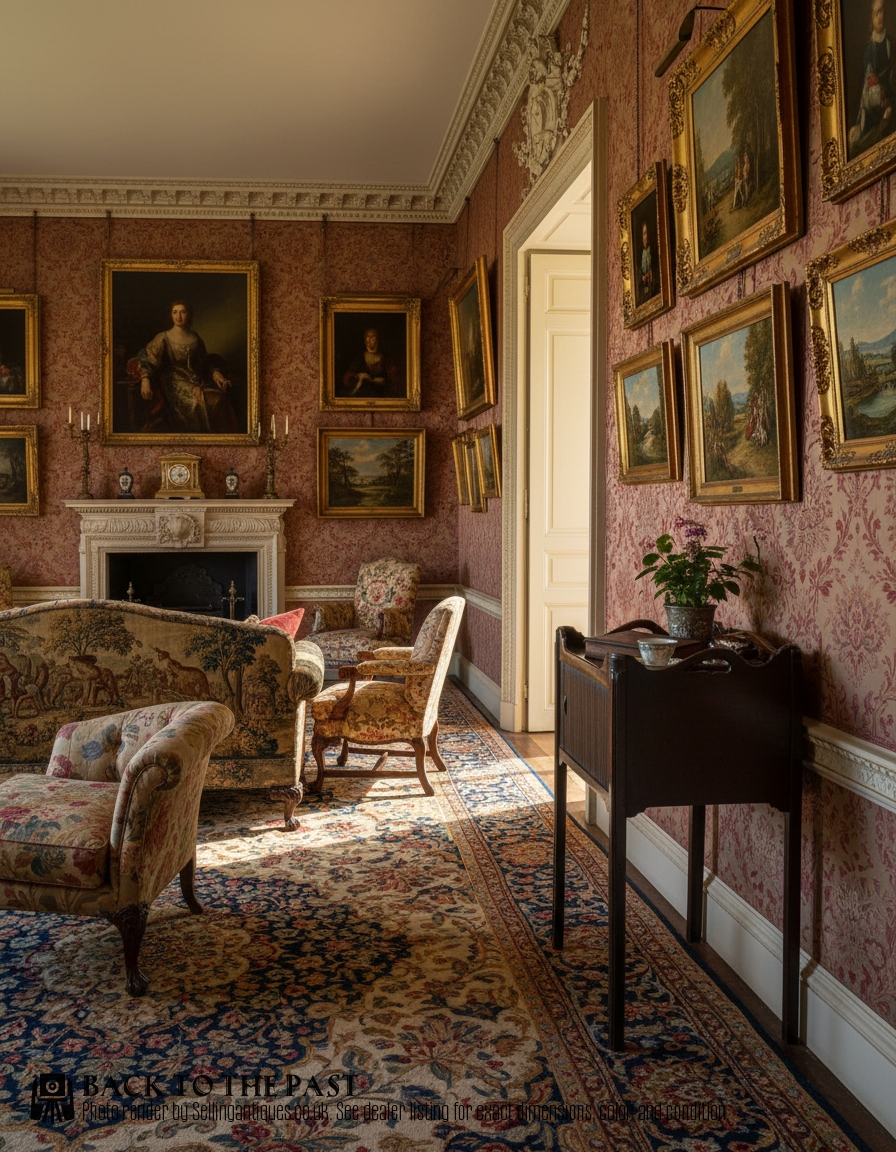
Mahogany Tambour Commode
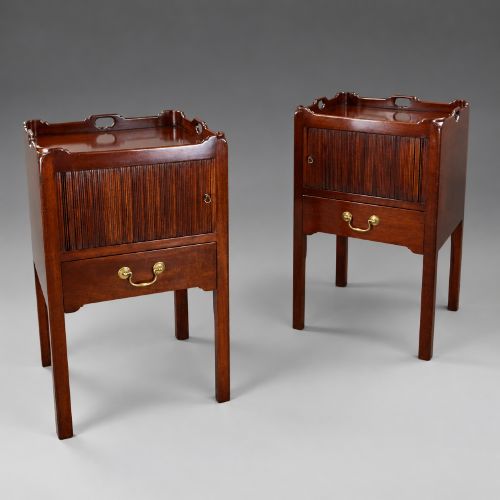
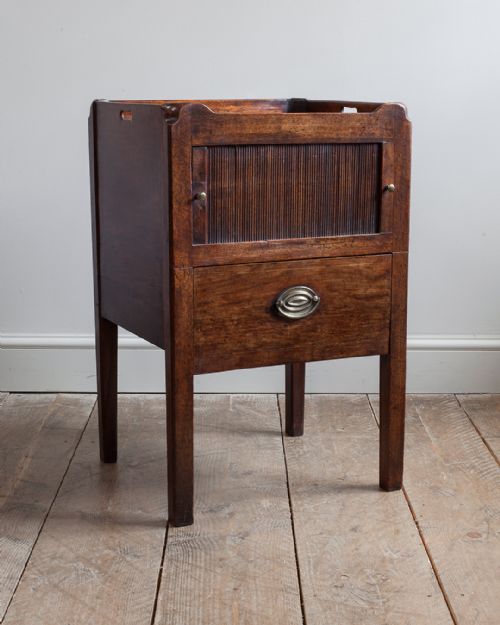
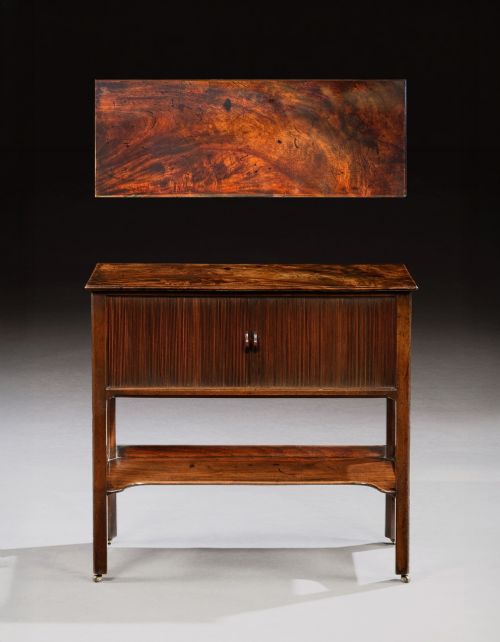
A mahogany tambour commode is a small bedside cabinet or nightstand, often built with a sliding wooden slat door that conceals the cupboard space below a surface top. The selection here ranges widely across the Georgian and Regency periods, drawing together George III examples, 19th-century variants, and later 1930 revivals.
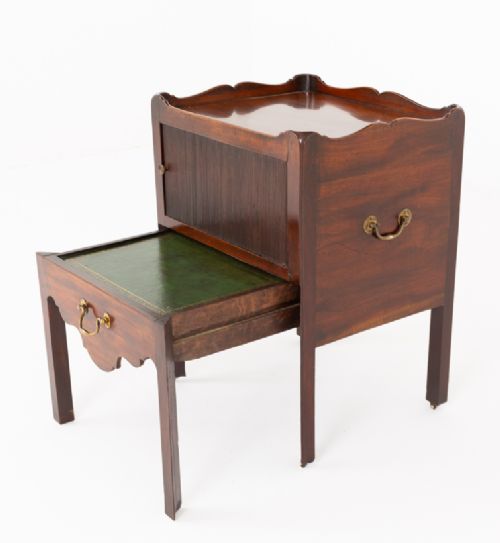
Buyers meet several related forms under this search phrase, including bedside tables, nightstands, pot cupboards, and tray-top commodes alongside larger chests of drawers and credenzas. The George III items dominate the selection, appearing frequently with enclosed tambour fronts, bow fronts, and serpentine shapes.
Origins stretch from English workshops to 18th-century Dutch makers, incorporating occasional pairs alongside single cabinets. The variety includes folding top washstands and pieces retaining original boxwood inlay or satinwood detailing.
How they were made
Cabinetmakers constructed these pieces primarily from solid mahogany and mahogany veneers, supported by secondary timbers such as oak for internal drawer linings. Workshops utilised brass for handles and hardware, while boxwood and satinwood provided decorative stringing and contrast inlay.
The defining mechanical feature relies on tambour construction, where narrow strips of wood are glued to a canvas or linen backing to form a flexible sliding shutter. This allowed makers to build curved fronts, such as bow fronts and serpentine shapes, without requiring rigid hinged doors.
Some gentlemen needed hidden washing facilities so badly that their bedside tables doubled as folding-top vanity sinks with built-in mirrors.
What varies in quality
Quality rests significantly on the precision of the timber selection and the execution of the sliding tambour mechanism. Better examples display carefully matched grain patterns across the curved slats and operate smoothly along their tracks without binding.
Refinement in secondary details elevates a piece, such as crisp boxwood inlay, well-figured mahogany surfaces, and intact tray tops. Pieces showing simpler construction or heavy later restoration occupy a different tier from untouched period items.
Gillows
The Mahogany Tambour Commode Glossary
- Tambour
- A flexible shutter made of narrow vertical wooden strips glued to canvas, allowing doors to slide around curved cabinet corners. This technique required high skill from the cabinetmaker.
- Commode
- A term used historically for various enclosed pieces of bedside furniture or small cabinets. In this context, it frequently denotes a bedside cupboard or nightstand.
- Tray top
- A raised rim around the upper surface of a bedside table, designed to prevent items from rolling off. It appears frequently on George III examples.
- Serpentine
- A furniture front shaped with a central convex curve flanked by two concave curves. This contour demands advanced woodworking techniques.
- Stringing
- Thin lines of contrasting wood, such as boxwood, inlaid into the mahogany surface for decoration. It frames drawers and tabletops.
Mahogany Tambour Commode: Frequently Asked Questions
What is a tambour commode?
A tambour commode is a small enclosed bedside cabinet featuring a sliding slatted wooden door. It served historically as a night table or pot cupboard in Georgian bedchambers.
The sliding shutter allowed access to the interior storage without requiring clearance for swinging doors, making these cabinets practical for tight spaces beside a bed.
How do I date a mahogany commode?
Dating relies on examining the timber species, construction methods, and overall style characteristics such as straight legs, bracket feet, or shaped aprons. George III pieces typically date from the late 18th century.
Later revival pieces from the 1920s or 1930s often employ machine-cut elements and different secondary woods compared to their 18th-century predecessors.
Where were these commodes used?
These cabinets stood primarily beside sleeping quarters beds as nightstands or night tables. They held chamber pots, washing equipment, or personal items out of sight.
Today, buyers place them beside modern beds or use them as small accent cabinets in living spaces and hallways.