


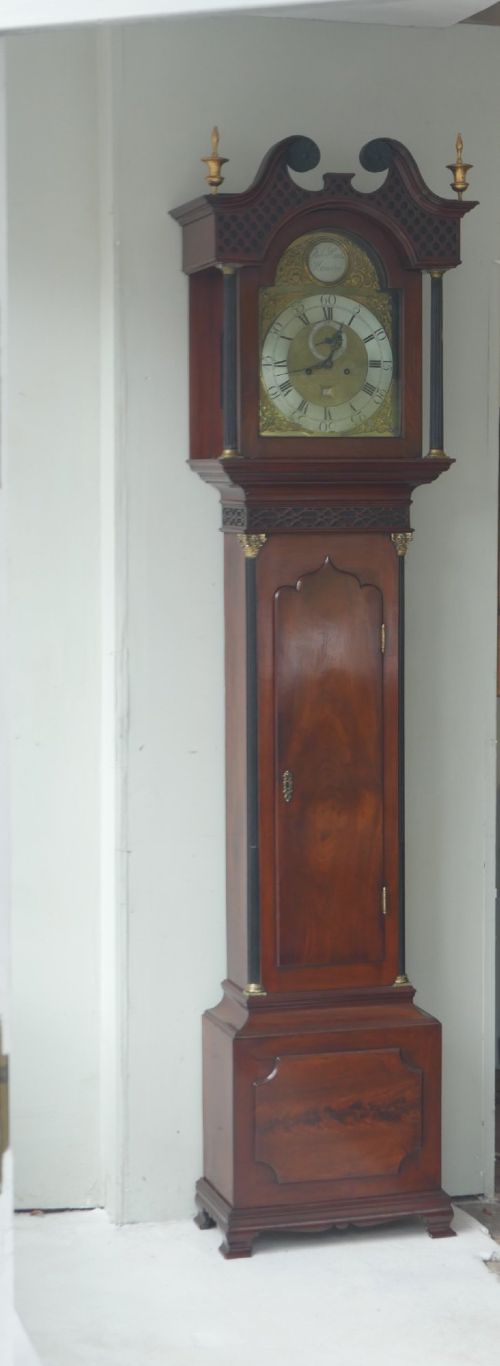
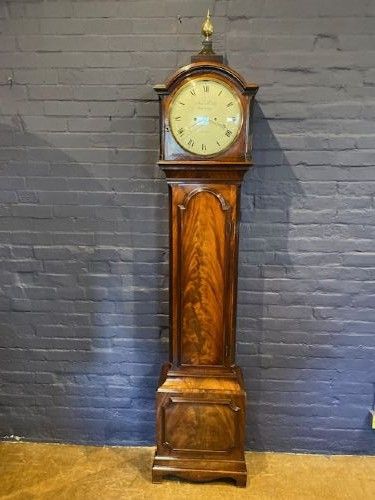
Mahogany Tall Clock
A mahogany tall clock brings architectural presence and mechanical precision to a room, standing as a primary statement piece from centuries past.
Mahogany Tall Clock
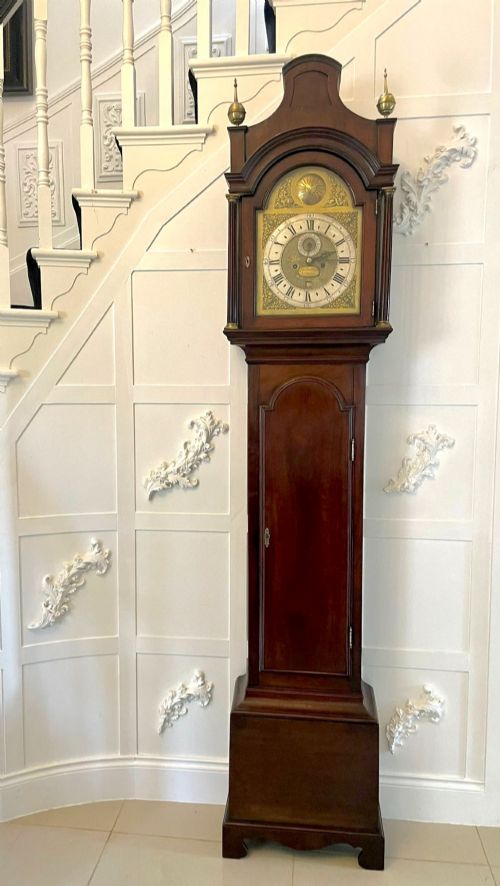
A mahogany tall clock, often called a longcase or grandfather clock, is a weight-driven timekeeper housed in a tall wooden case designed to rest directly on the floor. These pieces span multiple eras, with Georgian, 18th Century, and 19th Century examples forming the majority of what you will encounter here.
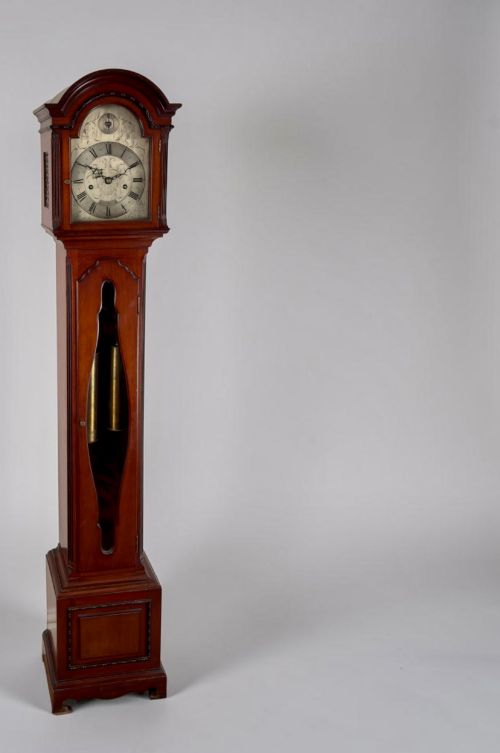
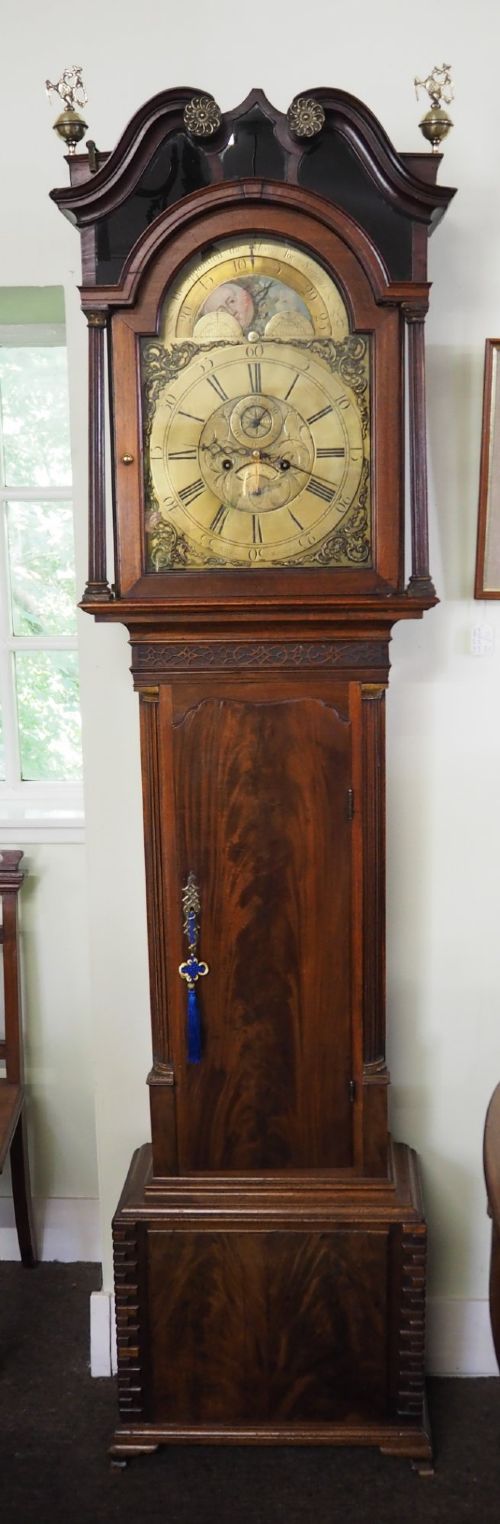
The form encompasses various regional styles, including Scottish variations, London-made pieces, and smaller proportions such as grandmother clocks or miniature versions from later decades. Alongside standard time-and-strike movements, specialised forms include regulators and moonphase dials that track lunar cycles.
How they were made
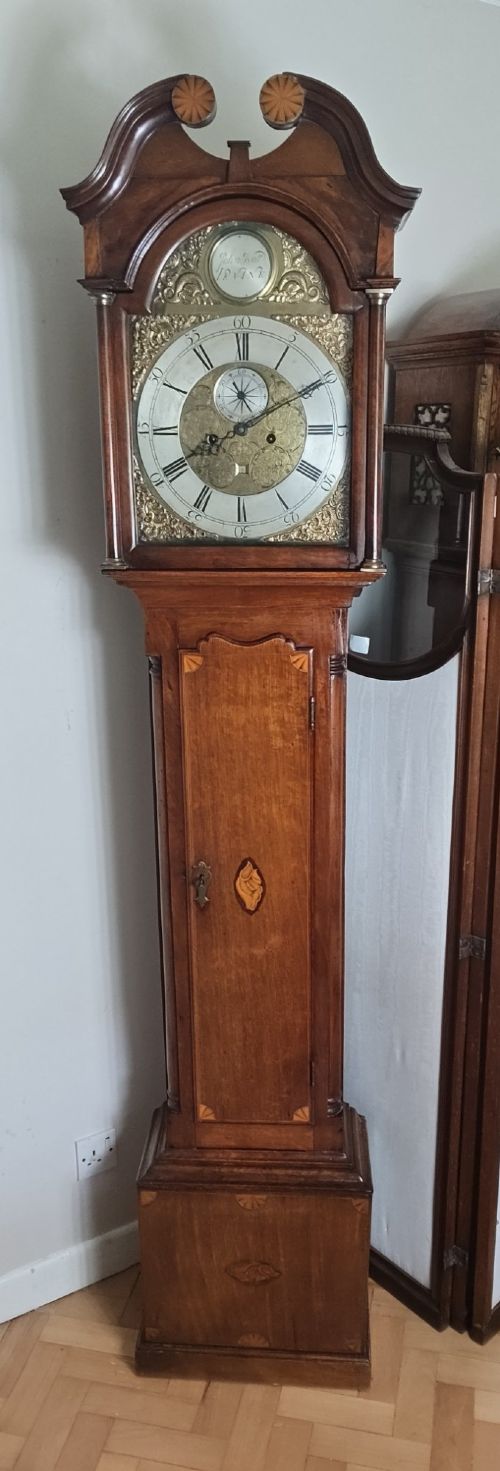
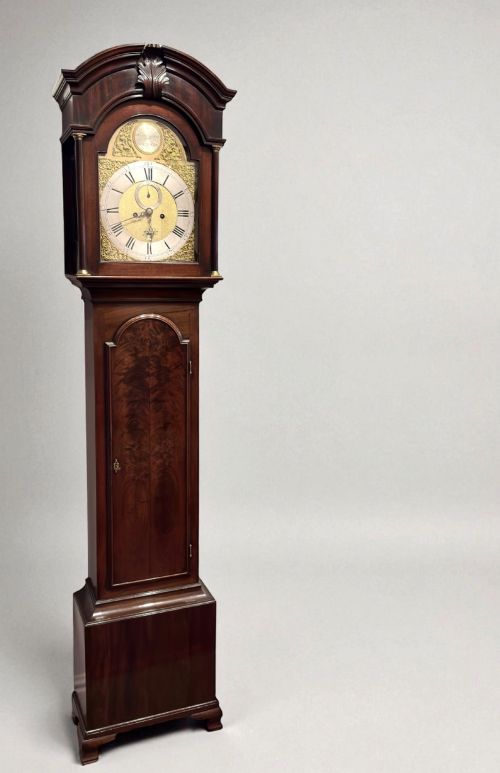
Cabinetmakers constructed the tall cases primarily from solid and veneered mahogany, frequently incorporating secondary timbers like oak for internal framing and bracing. Glass protected the dial face within the hood, while brass and steel formed the intricate gear trains, escapements, and pendulum assemblies.
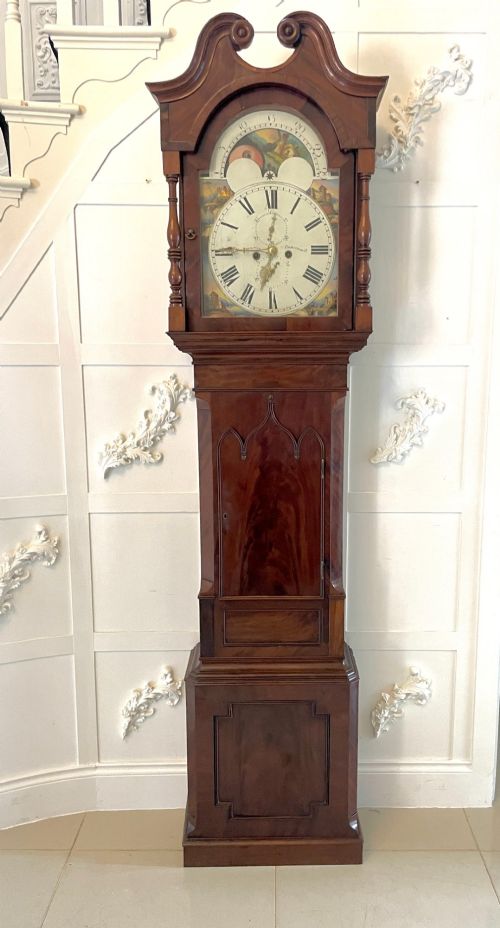
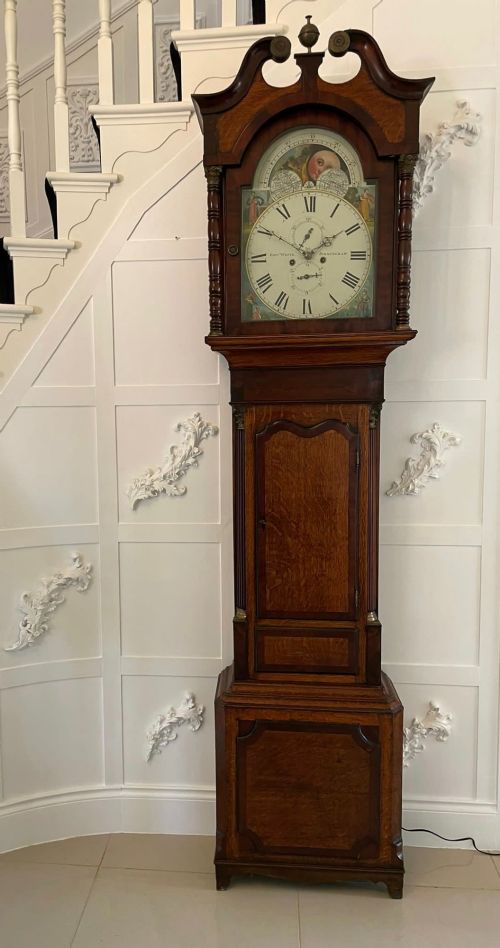
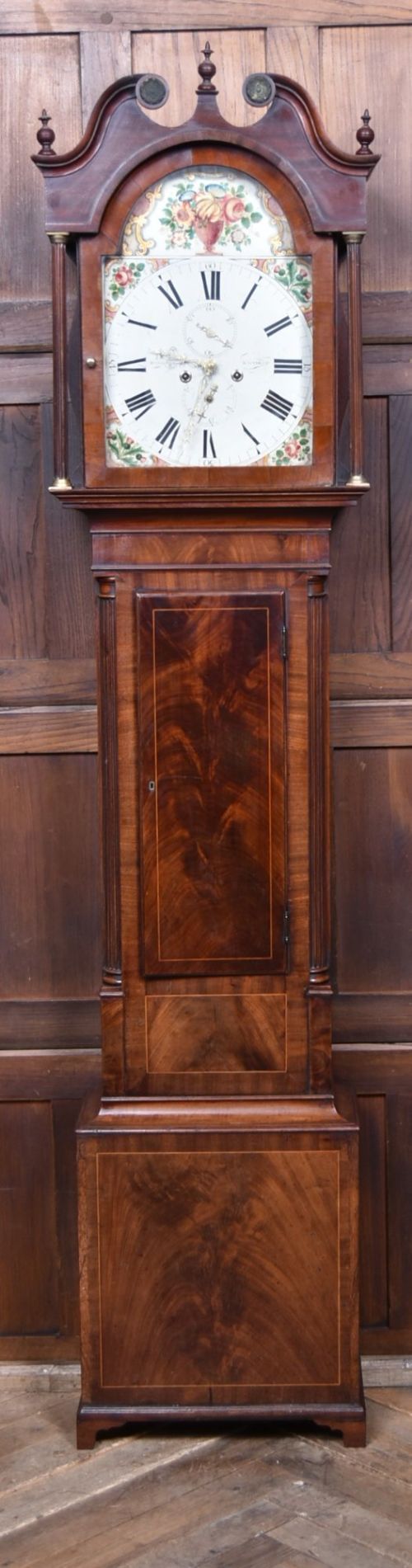
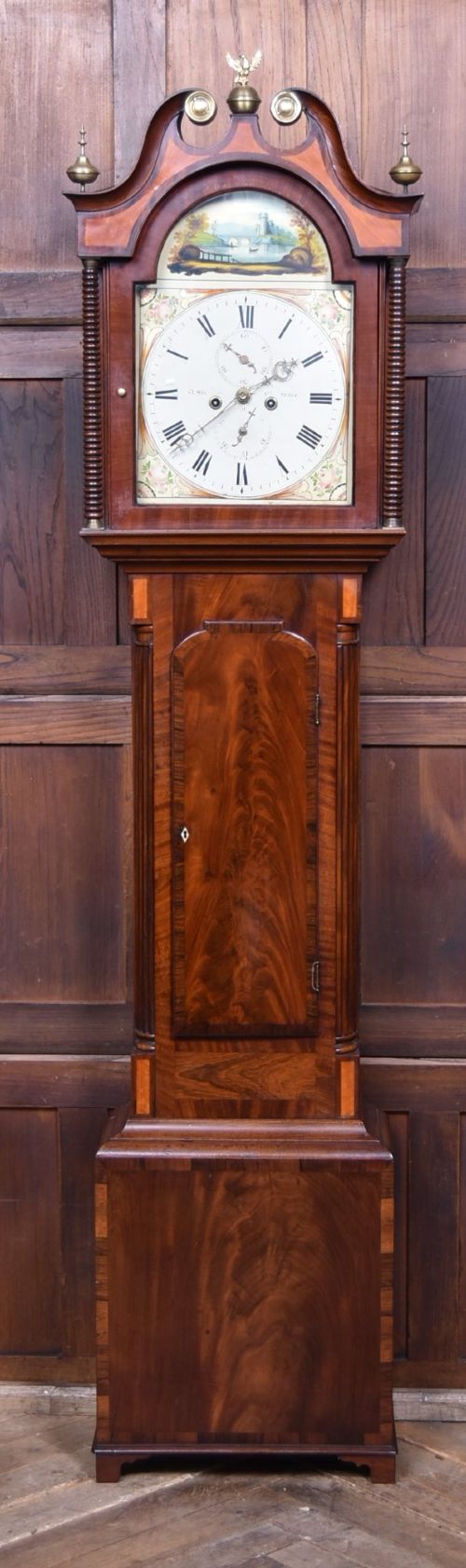
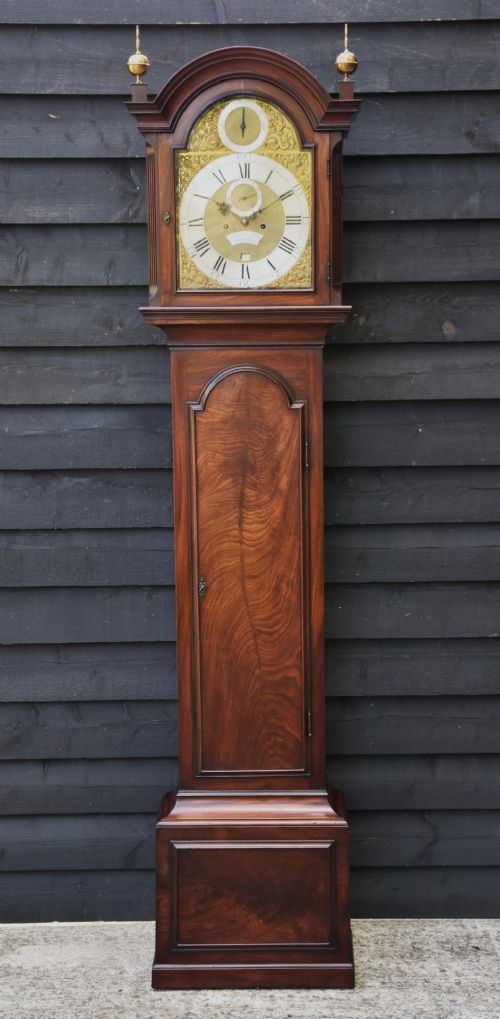
Dial faces combined multiple materials and techniques, ranging from brass backplates with engraved silvered chapter rings to painted iron and enamel surfaces adorned with subsidiary hands and moon rollers.
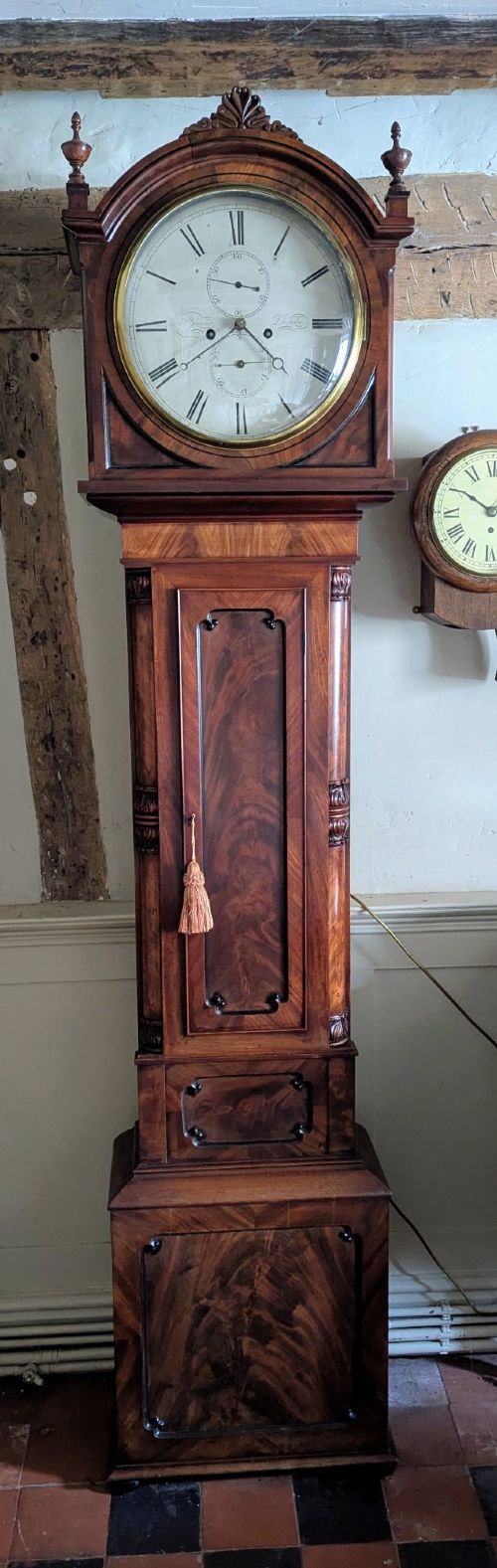
One cheerful Scottish drumhead model manages to tell time while looking remarkably like a very dignified wall hanging that lost its way.
What varies in quality
Quality in a mahogany tall clock lies in the harmony between the cabinetwork and the movement within. Superior examples demonstrate cabinet timber with rich figuring, crisp mouldings, and well-proportioned hoods, paired with a movement signed by a known maker and engineered with precise wheel-cutting.
The dial execution further separates pieces, where hand-painted numerals, subsidiary seconds dials, and complex moon phase mechanisms indicate higher levels of craftsmanship than plain, utilitarian faces.
Charles Shuckburgh·Hendrie Ogg·Gordon of Aberdeen·Gillett & Johnston·D. Straiton·James Field·Handley & Moore·Samuel Kellett·D Williams·William Jourdain·George Hallifax·Henry Weedon·Edward Shepley·James Waring
The Mahogany Tall Clock Glossary
- Longcase clock
- A tall, weight-driven pendulum clock enclosed in a wooden case. This term is often used interchangeably with grandfather clock.
- Moon roller
- A rotating disc behind the dial that tracks the phases of the moon. It typically completes a full rotation every lunar month.
- Chapter ring
- The circular ring on a clock face that displays the hour numerals. These are frequently made of silvered brass.
- Regulator
- A precision pendulum clock designed for high accuracy. They often feature simplified dials to facilitate exact time reading.
- Grandmother clock
- A smaller, more slender version of the traditional longcase clock. They were produced in later periods such as the Edwardian era.
Mahogany Tall Clock: Frequently Asked Questions
How do I wind a mahogany tall clock?
Winding involves using a specialised key to raise the weights inside the trunk via the winding arbor on the dial face. Care must be taken not to overwind the movement.
Most eight-day movements require winding once a week, while thirty-hour versions need attention daily or less frequently depending on the drive mechanism.
Where should I place a tall clock in my home?
Position the piece against a sturdy interior wall away from direct sunlight, heating vents, and exterior doors. A stable environment prevents wood movement and keeps the pendulum swinging evenly.
Ensure the floor is level so the case stands plumb, which is essential for the escapement to beat in correct rhythm.
What is the difference between a longcase and a grandmother clock?
A traditional longcase clock stands over six feet tall with generous proportions designed for large rooms and halls. Their impressive stature dominated domestic spaces from the seventeenth century onward.
In contrast, a grandmother clock is a scaled-down version appearing in twentieth-century contexts, offering the same mechanical layout in a shorter, narrower case.
How do I identify the period of a tall clock?
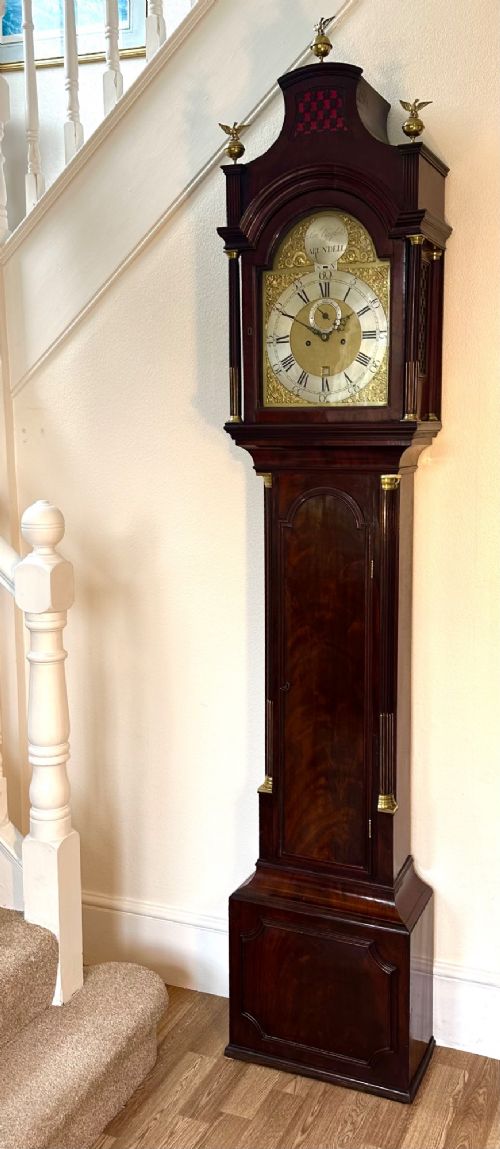
Dating relies on stylistic clues in the mahogany case, the design of the hood pillars, and the construction of the dial face. Earlier Georgian examples often feature brass dials with cast spandrels, while later 19th-century pieces frequently utilise painted iron dials.
Signatures on the dial or movement backplate provide direct clues to the maker and operational era.