

Mahogany Swing Vanity Mirror
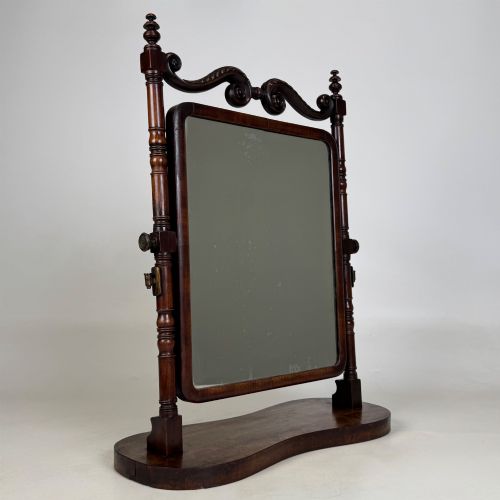
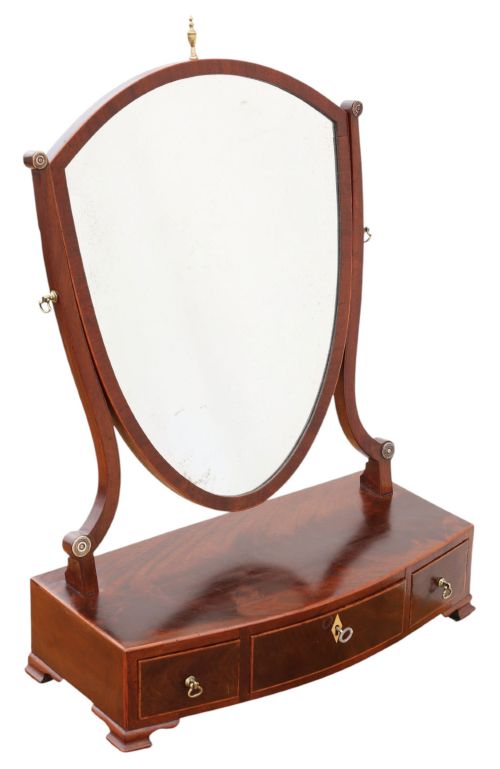
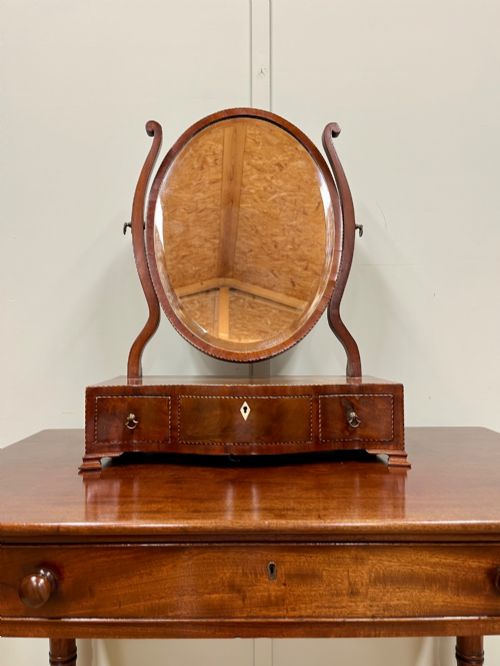
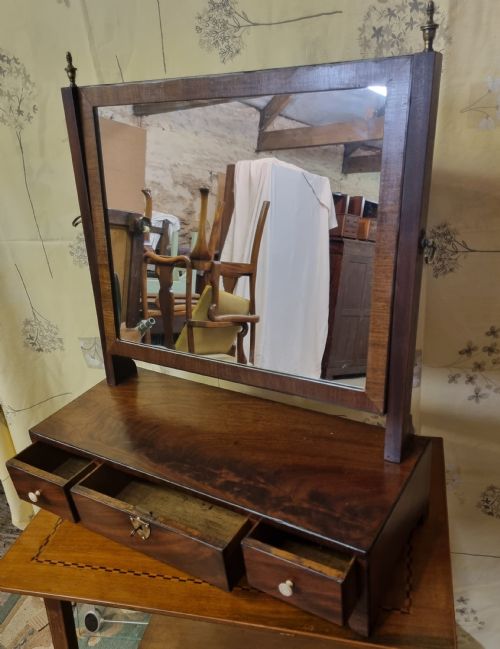
Mahogany swing vanity mirror forms provide practical tabletop dressing reflection through pivoted plates framed in timber.
Mahogany Swing Vanity Mirror
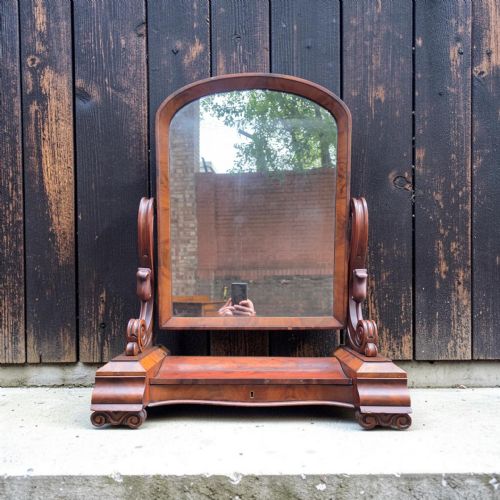
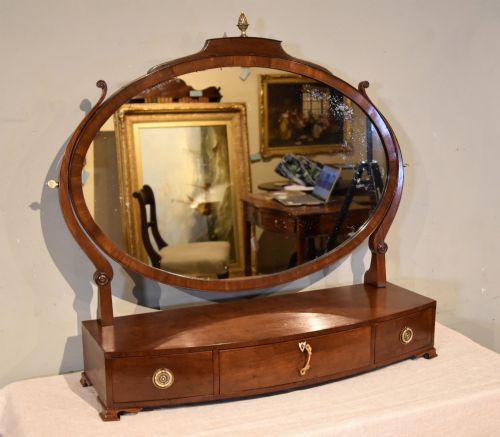
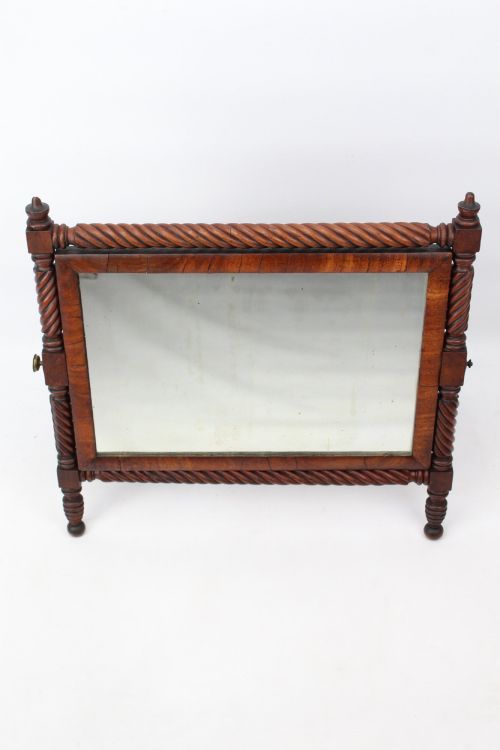
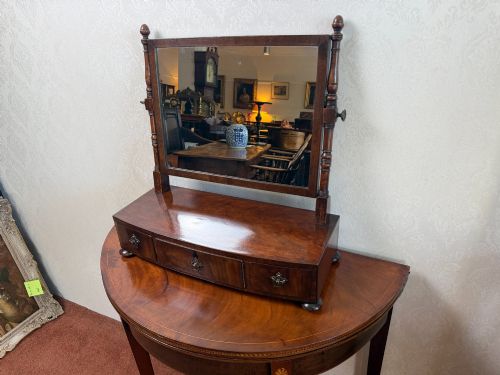
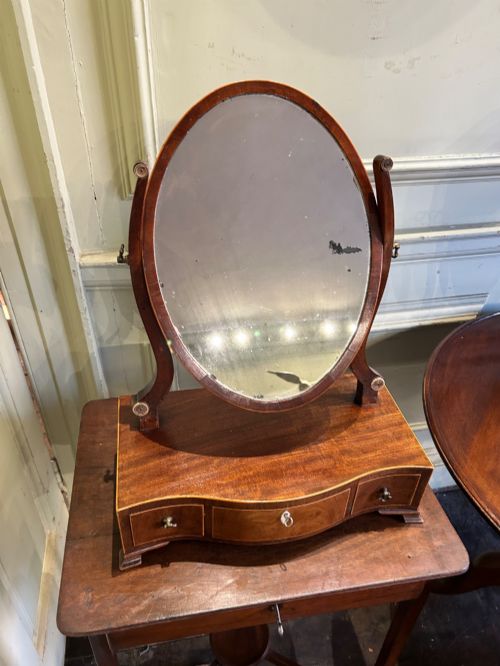
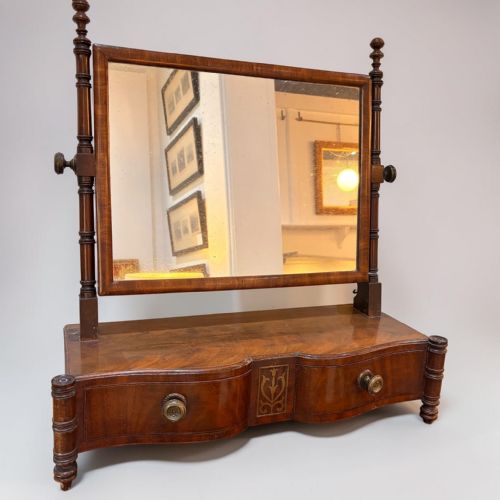
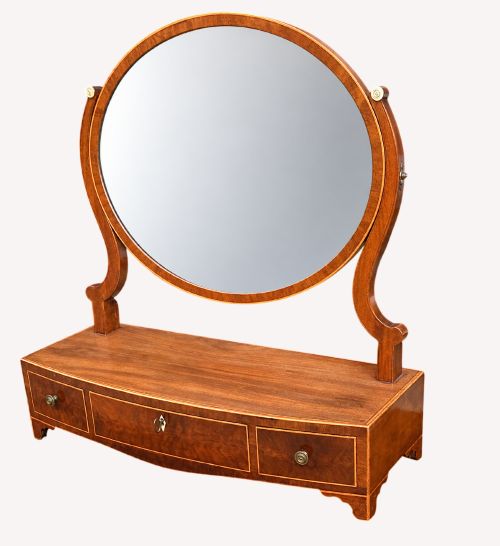
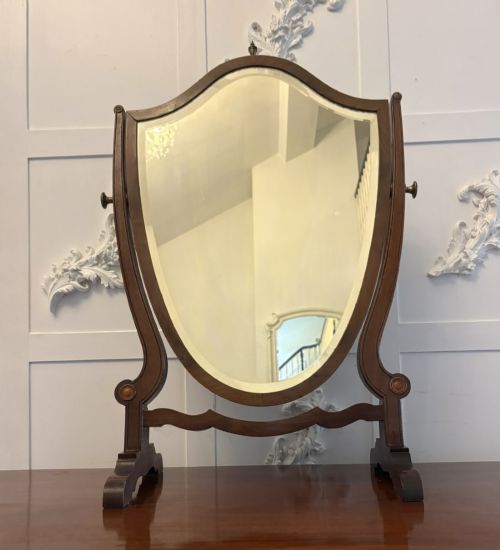
A mahogany swing vanity mirror sits upon a table base or box, offering adjustable reflection through a pivoted plate frame. When searching for a mahogany swing vanity mirror, buyers encounter numerous Georgian, Regency and Victorian pieces designed for dressing tables and chests.
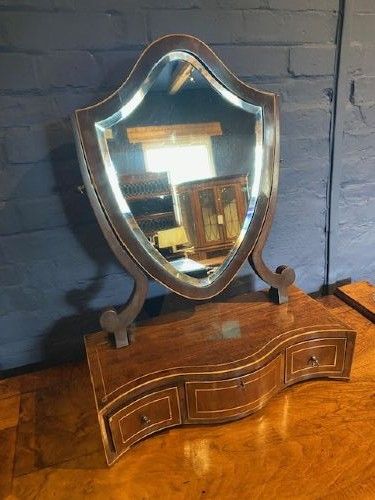
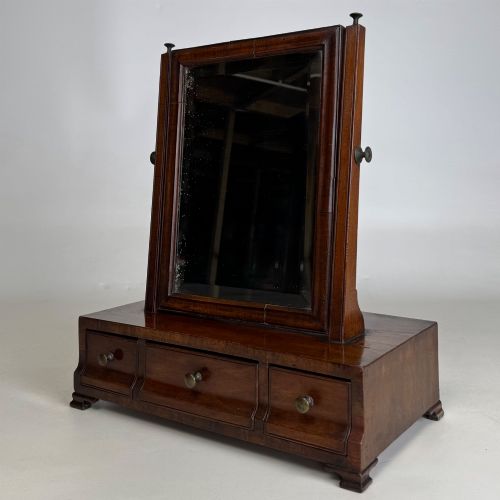
The surviving forms range from simple rectangular toilet mirrors to serpentine-fronted box bases containing small drawers for trinkets. Many examples feature shield, oval or rectangular mirror plates supported by upright arms.
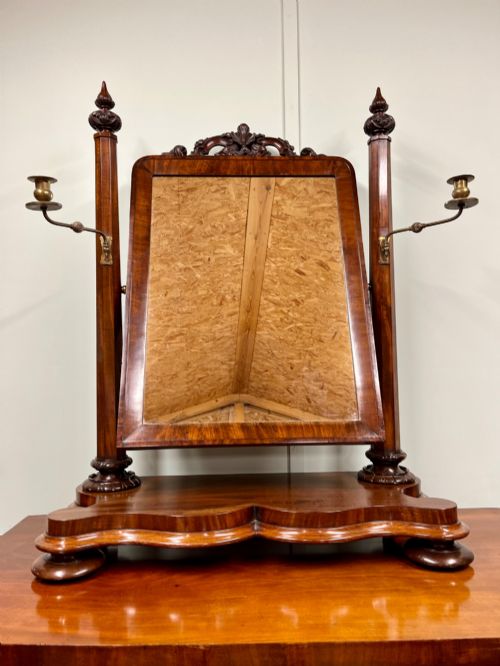
The evidence shows considerable representation from the Georgian and Regency periods, alongside later Victorian and Edwardian iterations. Buyers frequently select these table-top mirrors for their compact proportions and functional pivoting mechanism.
Evaluating quality in a mahogany swing vanity mirror
The refinement of the timber grain and the precision of the box dovetailing dictate the standard of the piece. Superior examples display balanced proportions in the upright support arms and clean execution of serpentine or shield shapes.
Originality of the mirror plate and associated brass hardware significantly influences the standing of an individual mirror. Subtle details such as crossbanding, fine stringing and well-fitted drawer construction separate standard utility pieces from workshop-produced examples.
Mahogany Swing Vanity Mirror Retail Price Guide 2026
Typical asking prices for mahogany swing vanity mirror among the pieces listed under this phrase on Sellingantiques today, from the lower quarter to the upper quarter. They describe what is for sale here now, not the wider market.
Listings span the 18th Century, Georgian, Regency, Victorian and Edwardian periods, constructed primarily in mahogany with brass and glass.
Heal And Sons·P And MA Nicholson·Gillows
The Mahogany Swing Vanity Mirror Glossary
- Toilet mirror
- A smaller dressing mirror designed to stand upon a table or chest of drawers rather than hang on a wall.
- Cheval mirror
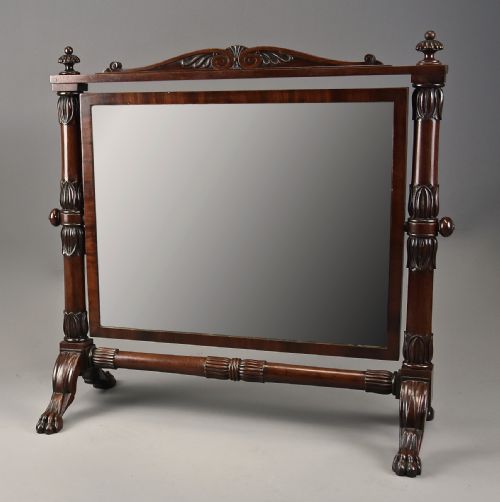
- A large full-length dressing mirror supported on a freestanding frame, though smaller table versions appear in the evidence.
- Crossbanding
- A border veneer applied perpendicularly to the surrounding grain to frame the edge of a drawer front or table top.
- Shield mirror
- A mirror plate cut in the curved outline of a heraldic shield, popular during the eighteenth century.
- Swing-lock
- A mechanical fitting that secures the pivoting angle of the mirror plate within its upright supports.
Mahogany Swing Vanity Mirror: Frequently Asked Questions
What is a mahogany swing vanity mirror?
A mahogany swing vanity mirror is a tabletop dressing glass mounted on pivots between two upright arms, allowing the user to tilt the reflection.
These pieces typically incorporate a small box base with drawers for storage, originating primarily from the Georgian, Regency and Victorian eras.
How do I date a mahogany swing vanity mirror?
Dating relies on observing the silhouette of the mirror plate, the shape of the base drawers and the construction techniques used in the woodwork.
Earlier eighteenth-century pieces often feature shield or oval plates with serpentine box bases, while later Victorian examples display heavier proportions and simpler rectangular formats.
Were these mirrors used on dressing tables?
These mirrors were placed on top of dressing tables, chest of drawers or washstands to provide a close reflection for grooming.
The base compartments also served to hold small personal items, jewellery and cosmetics.
How do I maintain the pivot mechanism?
The pivot mechanism relies on brass screws or threaded bolts passing through the upright arms into the side of the mirror frame.
Gentle adjustment of the retaining hardware allows the mirror to hold its tilted position without straining the wooden frame.