
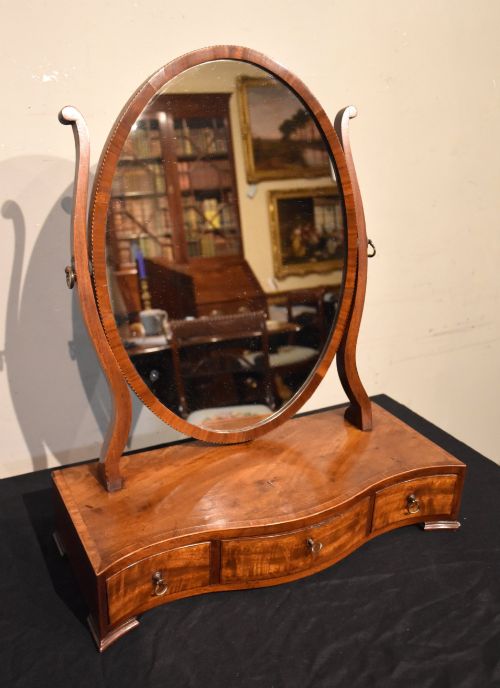
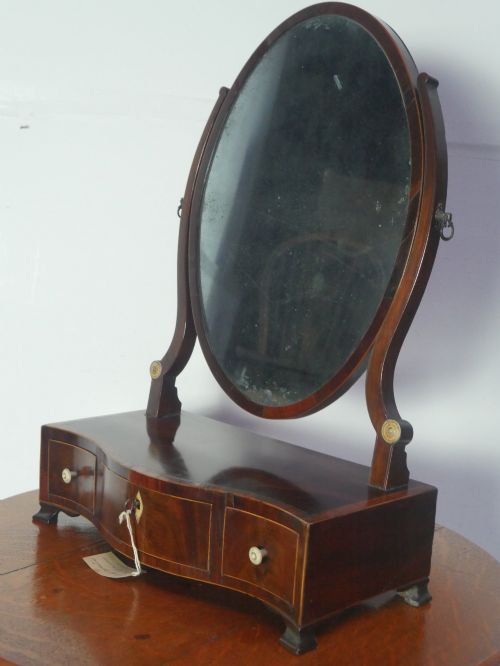
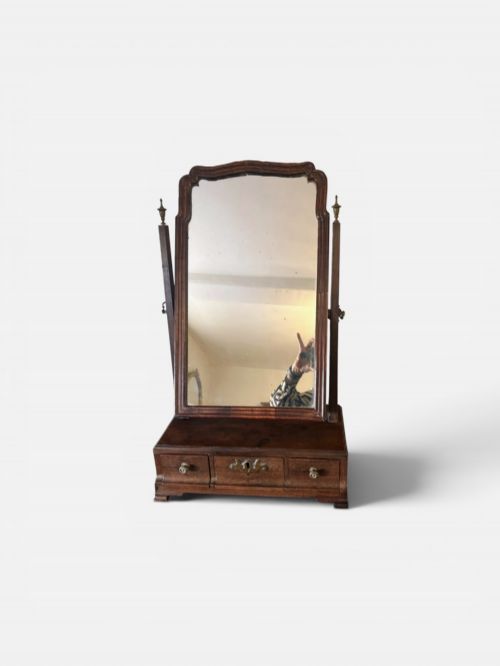
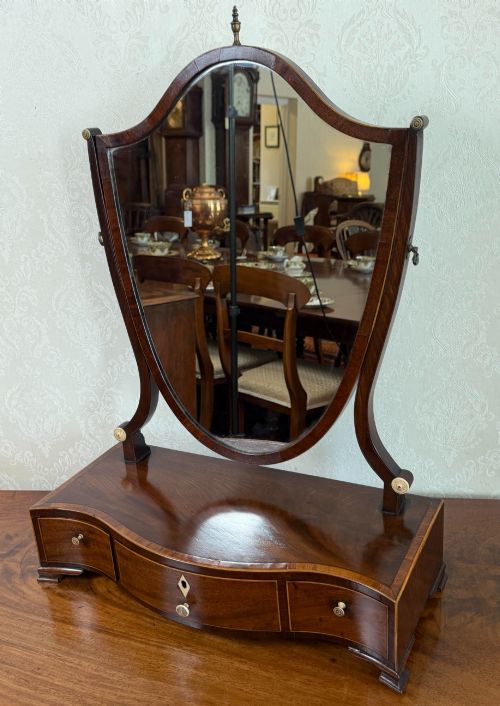
Mahogany Swing Toilet Mirror
A mahogany swing toilet mirror brings adjustable reflection and tidy storage to a dressing table, combining useful mechanics with rich timber.
Mahogany Swing Toilet Mirror
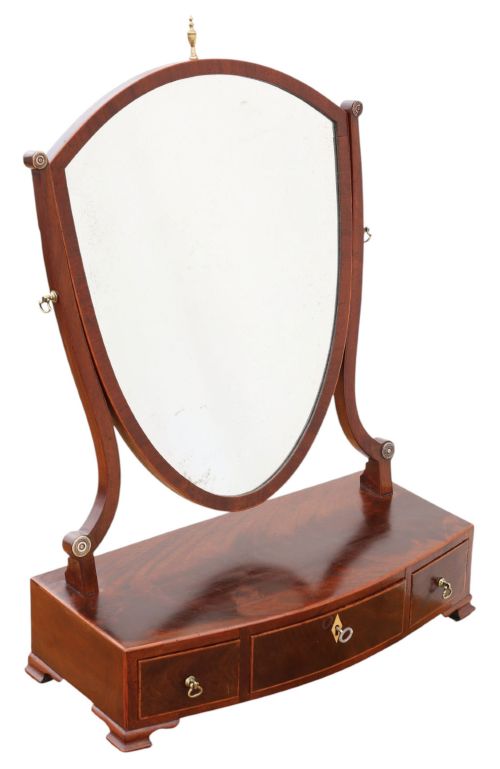
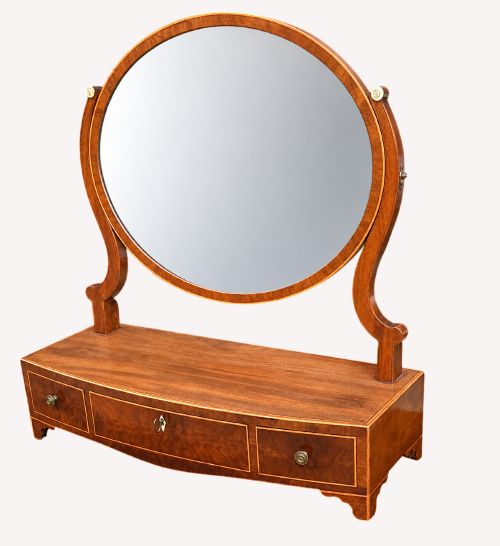
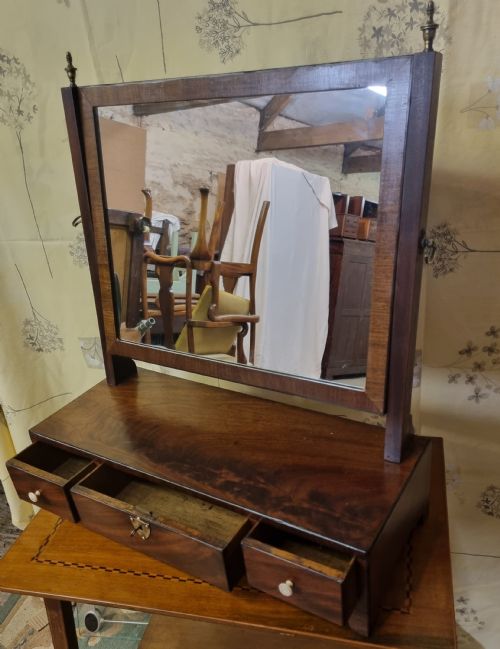
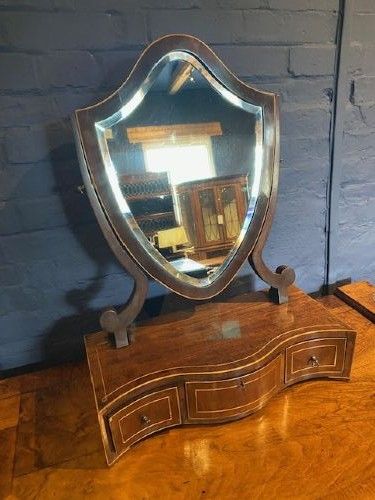
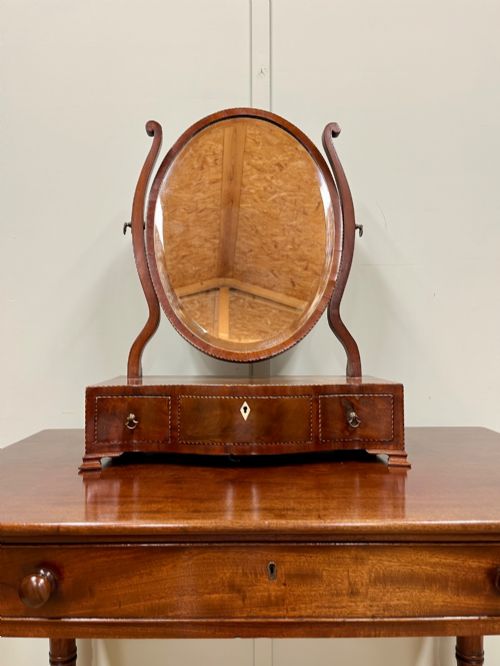
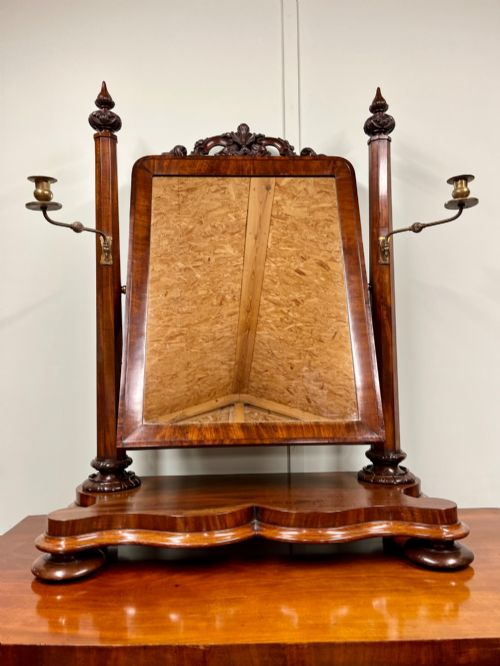
A mahogany swing toilet mirror sits upon a small box base or frame, designed to pivot between upright supports for personal grooming. These pieces appear across Georgian, Regency, and Victorian periods, taking forms from simple shield shapes to serpentine drawer units.
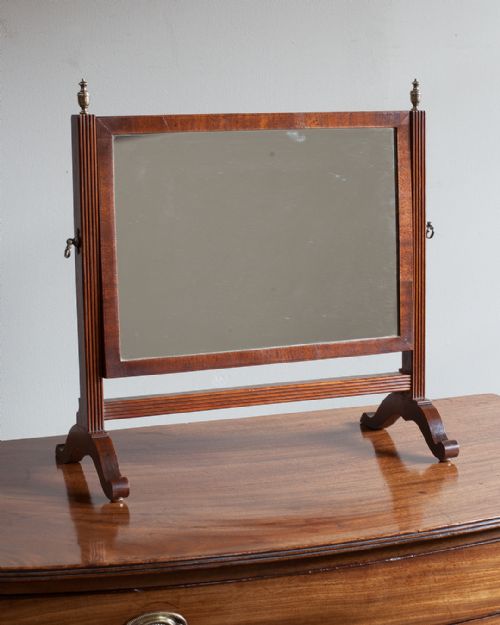
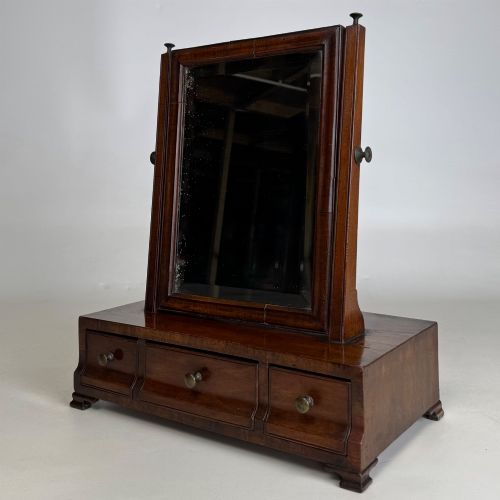
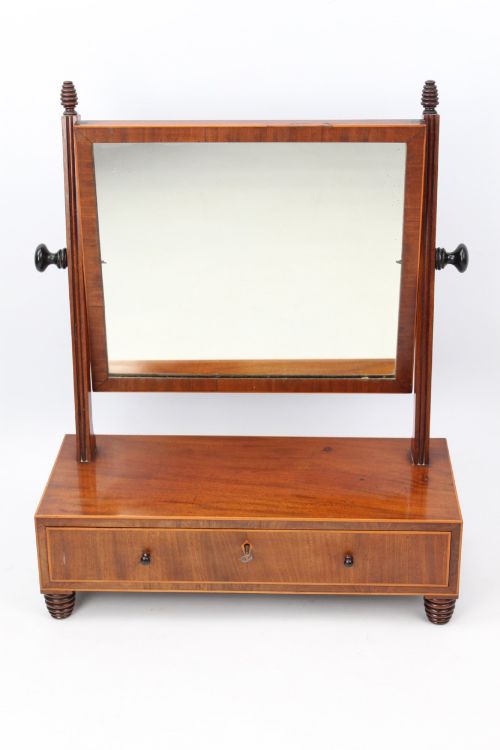
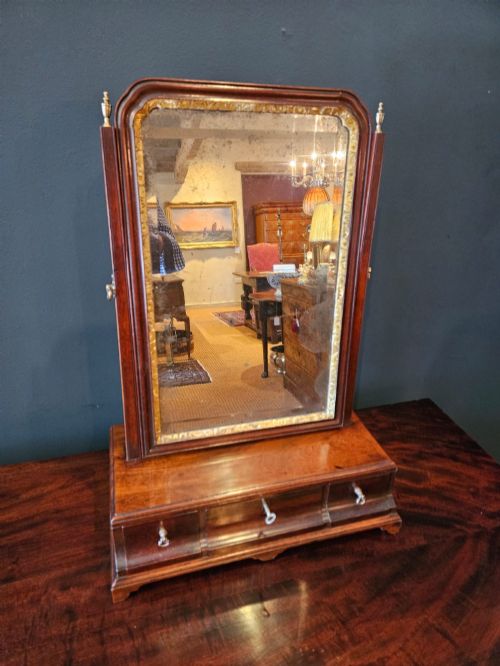
The most common examples on this page date from the Georgian and 19th-century eras, often featuring rectangular or oval glass plates. Many incorporate small drawers beneath the frame to hold trinkets or letters, resting on bracket feet or small turned supports.
How they were made
Cabinetmakers constructed these frames primarily from solid mahogany and veneers, frequently adding satinwood, bone, or brass details to enrich the surfaces. Mirror plates sat within slender pivoted frames connected to upright arms by threaded brass knobs or pins.
Box bases utilised dovetailed corner joints for strength, while secondary timbers like pine or oak lined the interior drawers. Selected examples incorporated marquetry inlay, crossbanding, or parcel-gilt highlights to catch the light.
Listings span from the 18th century through the Victorian era, utilising mahogany, brass, glass, and bone.
What varies in quality
Quality rests upon the selection of timber figure, such as flame mahogany or Cuban grain, and the crispness of cabinet joints. Finer workshops invested in thicker mirror plates, substantial brass hardware, and hand-cut dovetails on the drawer linings.
Proportion dictates the overall elegance, where upright supports balance the weight of the swiveling frame without sagging. Secondary details like fine stringing, neat escutcheons, and well-fitted drawers separate standard domestic pieces from finer productions.
P & MA Nicholson·Heal & Sons·Gillows
The Mahogany Swing Toilet Mirror Glossary
- Swing mirror
- A glass plate mounted on pivots within a vertical frame that tilts forward and back. This mechanism allows the user to adjust the angle of reflection during grooming.
- Cheval mirror
- A full-length freestanding dressing mirror that swings within a floor-standing frame. Some tabletop versions also adopt this pivoting principle.
- Crossbanding
- A decorative border of veneer laid with the grain running perpendicular to the main panel. It creates a neat visual frame around drawer fronts and mirror surrounds.
- Parcel-gilt
- Partially gilded woodwork where thin layers of gold leaf accent specific carved details. This treatment highlights mouldings and decorative motifs against dark mahogany.
- Serpentine
- A curved line that bows outward in the centre and curves inward at the sides. This fluid profile frequently shapes the front of drawer bases on Georgian mirrors.
Mahogany Swing Toilet Mirror: Frequently Asked Questions
Where should I place a toilet mirror?
These mirrors suit a dressing table, chest of drawers, or sideboard where they can sit securely at a comfortable height for daily use. Their compact footprint also allows them to function as decorative tabletop items on side tables.
Ensure the surface is level so the base bears weight evenly. Positioning the piece near natural light helps maximise the reflective utility of the tilting glass.
How do the tilting mechanisms work?
A pair of threaded brass screws or metal pins pass through the upright support arms into the sides of the mirror frame. Tightening these fixings holds the glass at the desired angle during use.
Over decades, washers or wooden friction pads inside the joints wear down. Gentle adjustment of the hardware restores the ability of the frame to hold its position.
How do I date an older mirror?
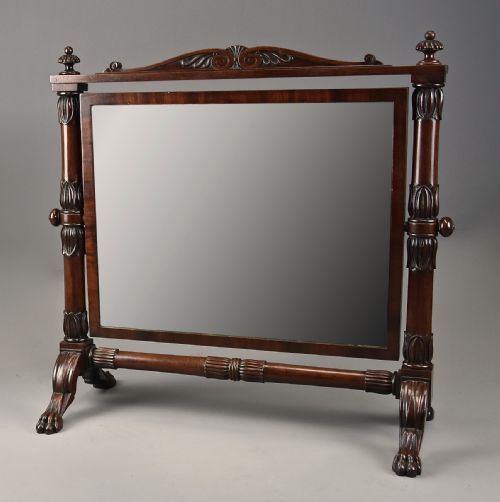
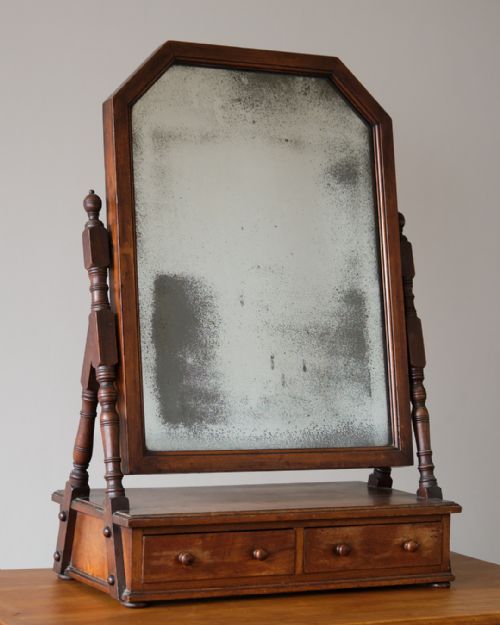
Dating relies on combining timber characteristics, construction methods, and hardware styles across different eras. Georgian examples often feature hand-cut dovetails and lighter framework, while Victorian pieces tend to be heavier with turned supports.
Examining the mirror glass itself provides additional clues, as older plates may show subtle distortion or slight silvering loss at the edges. Drawer linings and backboards also reveal the age through tool marks and timber choice.
Can I store jewellery inside the base?
Many box bases contain small fitted drawers specifically designed to hold rings, pins, and small valuables. The enclosed compartments protect delicate items from dust and light exposure.
Linings inside these drawers often consist of simple paper or fabric rather than modern velvet. Keeping items clean prevents any snagging within older wooden interiors.