

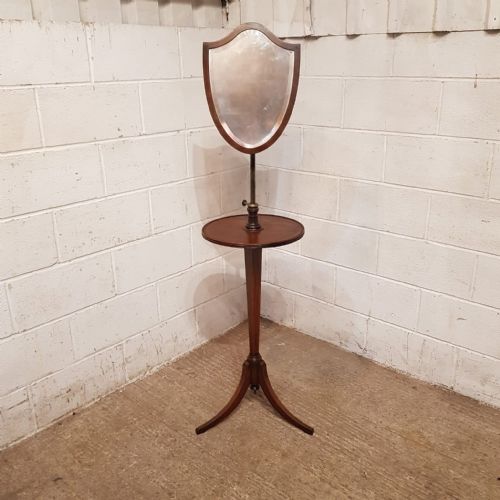
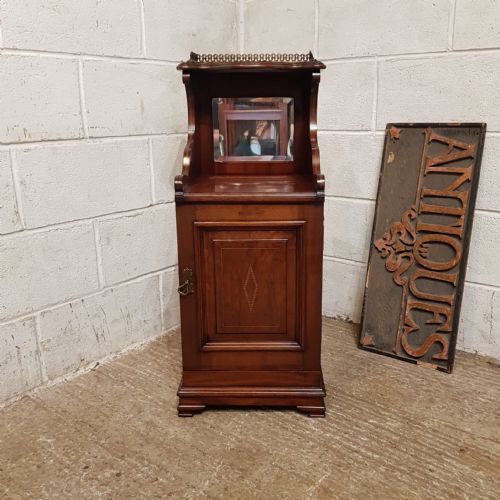


Mahogany Pedestal Mirror
Mahogany pedestal mirror pieces are upright looking glasses set on weighted bases, combining dense timber and clear glass for daily grooming.
Mahogany Pedestal Mirror
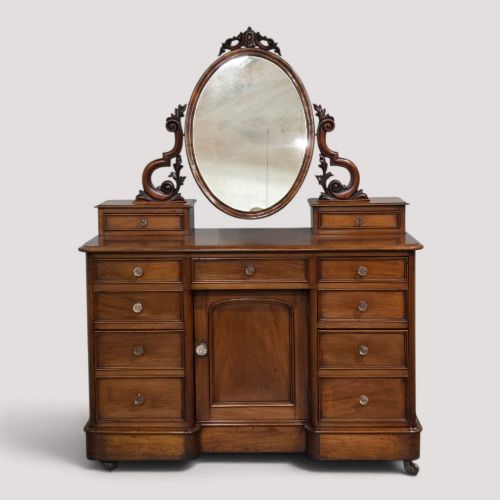
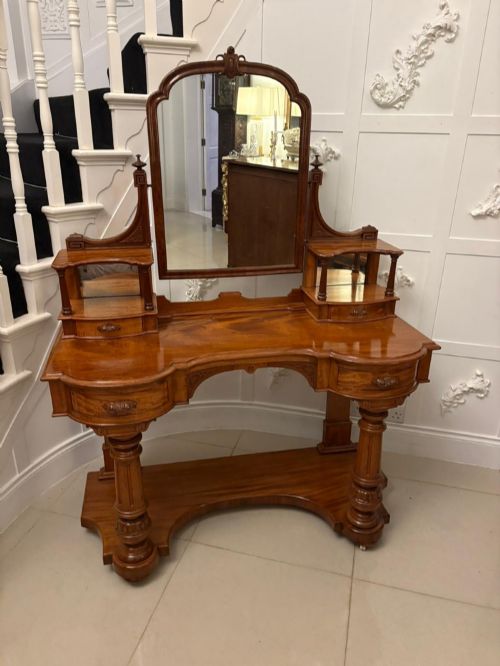
A mahogany pedestal mirror is an upright glass framed in timber, mounted on twin supports or a central column above a stable base. When you search for this phrase, you encounter dressing table mirrors, shaving stands, and cheval mirrors from the Victorian and Edwardian periods.
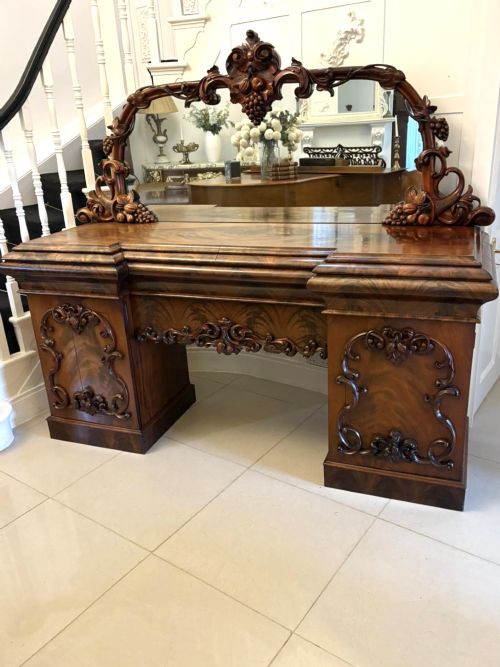
The pieces on this page originate mainly from the nineteenth and early twentieth centuries, spanning styles from straightforward Victorian forms to Gothic Revival and American Empire designs. Many integrate directly with larger dressing furniture, whilst others stand independently on tables or floors.
How they were made
Cabinet makers utilised solid mahogany and flame mahogany veneer over secondary timbers, often embellishing surfaces with satinwood inlay and marquetry. Brass fixtures such as adjustable arms, screws, and handles provide mechanical movement and structural contrast.
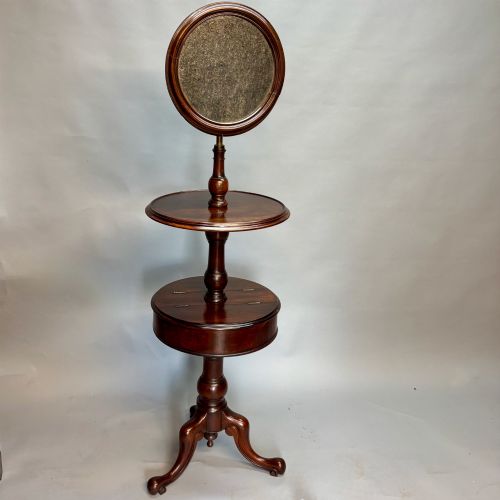
The reflective surfaces consist of traditional mirror glass held securely within rebated wooden frames. Tripod legs, heavy pedestals, and telescopic shafts give these tall looking glasses the necessary balance for daily adjustment.
Mahogany Pedestal Mirror Retail Price Guide 2026
Typical asking prices for mahogany pedestal mirror among the pieces listed under this phrase on Sellingantiques today, from the lower quarter to the upper quarter. They describe what is for sale here now, not the wider market.
Listings feature mahogany pedestal mirror pieces alongside related forms such as dressing tables, bedside cabinets, and sideboard units.
What varies in quality
Quality rests upon the selection of timber, particularly where figured flame mahogany veneer or fine satinwood inlay displays superior grain patterns. Cabinet making standards appear in the precision of the joinery, the stability of the pedestal base, and the smooth operation of adjustable mirror pivots.
Higher tier pieces maintain original brass hardware and untouched mirror glass with minimal foxing. The integration of carving, whether simple linear moulding or elaborate Victorian ornamentation, separates standard utility items from finer workshop output.
Edwards & Roberts
The Mahogany Pedestal Mirror Glossary
- Cheval mirror
- A full length floor standing mirror hung on a frame with vertical pivots allowing it to swing. This form appears frequently in Victorian and Edwardian dressing arrangements.
- Flame mahogany
- A decorative veneer cut from timber where the grain creates a pattern resembling flickering flames. Cabinet makers used this to draw the eye on prominent surfaces.
- Shaving stand
- A specialised piece featuring an adjustable mirror combined with small drawers or surfaces for grooming implements. These date predominantly to the nineteenth century.
- Satinwood inlay
- Contrasting pale timber inserted into recesses within darker mahogany surfaces to form decorative motifs. It appears across Edwardian and Victorian examples.
- Telescopic
- Describing a vertical shaft that extends upward to adjust the height of the mirror. This mechanical feature allows users to alter the viewing angle.
Mahogany Pedestal Mirror: Frequently Asked Questions
What is a mahogany pedestal mirror used for?
These mirrors serve for personal grooming, dressing, and shaving by providing an adjustable reflection at a convenient height.
Historically placed on dressing tables, sideboards, or freestanding on the floor, they allowed users to check their appearance in natural or candlelight.
How do I date a mahogany pedestal mirror?
Dating relies on stylistic clues, construction methods, and materials such as the presence of flame mahogany veneer or satinwood inlay. Victorian pieces often feature heavy carved frames, whereas Edwardian examples tend to show lighter inlay work.
Hardware like brass screws and pivot mechanisms also provide chronological markers when compared against documented nineteenth-century workshop standards.
Are these mirrors freestanding or attached?
The pieces span both formats, including tabletop versions mounted on pedestals, mirrors fixed to dressing tables, and tall freestanding cheval designs.
Many pedestal variants sit securely on their own weighted bases or tripod stands without requiring permanent wall or furniture attachment.
How do I care for antique mahogany timber?
Maintain the wood by keeping it away from direct sunlight and fluctuating humidity to prevent the veneer from lifting. Clean surfaces using a soft, dry cloth rather than modern silicone polishes.
Preserve the original finish by applying occasional specialist wax to nourish the antique mahogany and protect the grain.