

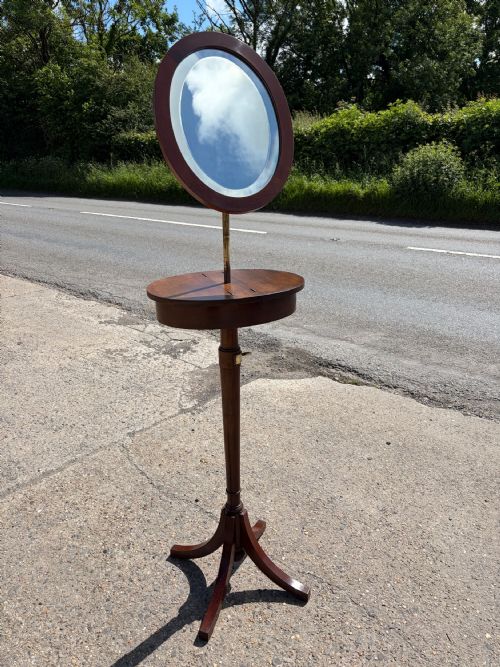


Antique Gentleman Dressing Mirror
An antique gentleman dressing mirror is a practical piece of grooming furniture designed for shaving and personal care.
Antique Gentleman Dressing Mirror
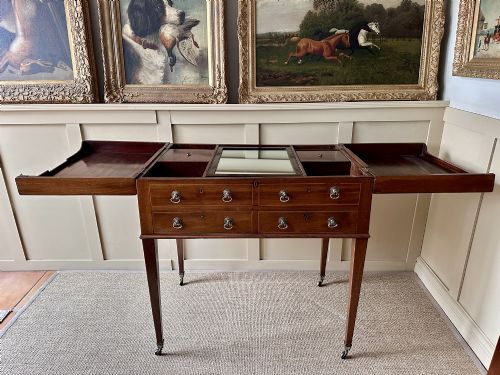
When you search for an antique gentleman dressing mirror, you find a collection of specialised shaving stands, vanity tables, and adjustable mirrors created to assist with morning routines. These items appear across several distinct historical eras, including the Georgian, Victorian, and Edwardian periods.
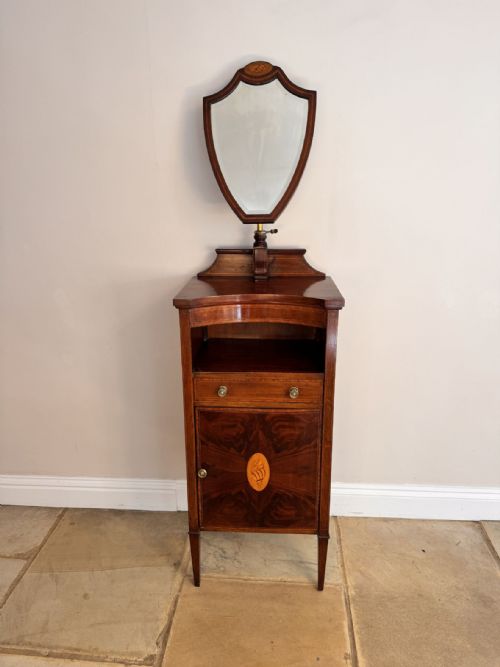
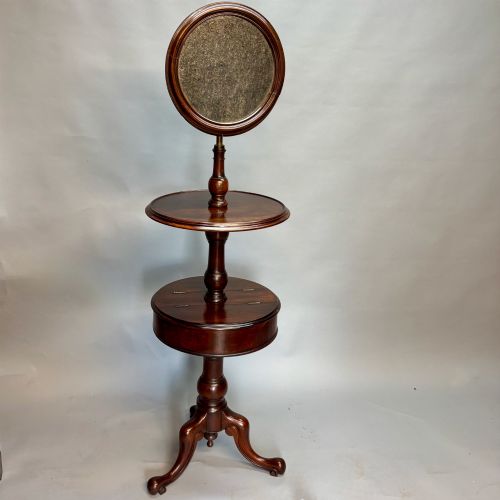
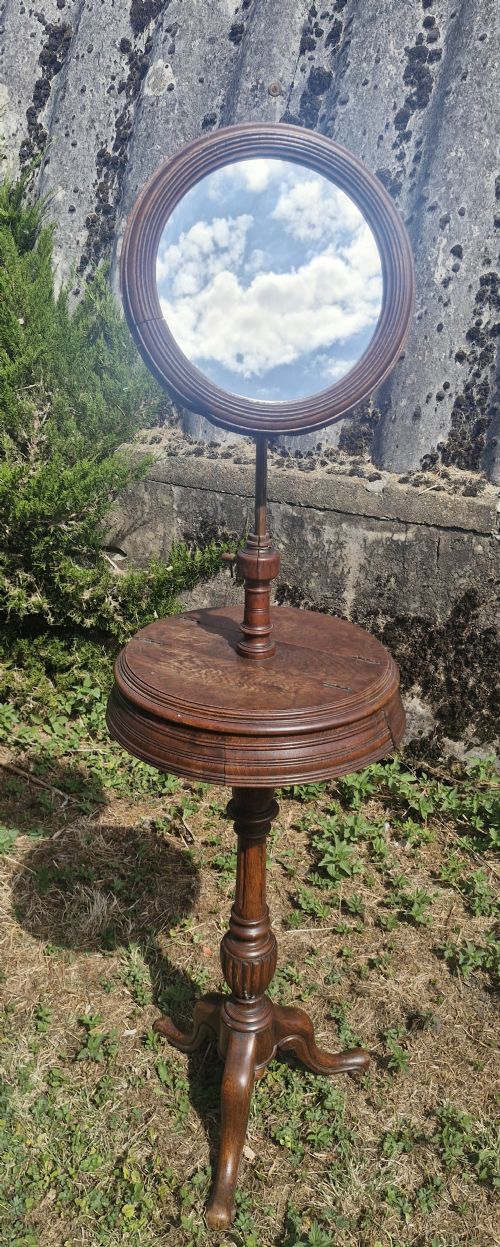
The most common forms on this page are mahogany shaving stands featuring adjustable or telescopic mirrors mounted on tripod bases or storage cabinets. You also encounter George III wash stands, Victorian dressing mirrors, and early twentieth century Viennese vanity tables.
The selection ranges from compact table-top glass items to taller standing furniture pieces incorporating brass fittings and inlaid satinwood details. Each object reflects the domestic requirements of past households where dedicated grooming stations formed an essential part of daily life.
How they were made
Cabinet makers utilised dense hardwoods such as mahogany and oak to build the primary structures of these stands and tables. Satinwood and inlay work frequently decorated the surfaces of pieces from the Georgian and Edwardian eras.
Functional mechanisms relied upon brass fittings to allow height adjustments and tilting movements for the mirror glass. Turned tripod legs and fitted storage compartments required precise carpentry to ensure stability during daily use.
Antique Gentleman Dressing Mirror Retail Price Guide 2026
Typical asking prices for gentleman dressing mirror among the pieces listed under this phrase on Sellingantiques today, from the lower quarter to the upper quarter. They describe what is for sale here now, not the wider market.
Some Victorian gentlemen required an adjustable mirror on a tripod base simply to catch the morning light just right.
What varies in quality
The distinction between standard examples and superior pieces rests on the choice of timber and the sophistication of the mechanical adjustments. Richly figured mahogany and well-executed brass telescopic mechanisms indicate a higher standard of workshop production.
Subtleties in proportion and the integration of storage drawers distinguish simpler utility stands from elaborate dressing tables made by prominent firms. The clarity of the mirror glass and the precision of inlaid details further separate ordinary items from exceptional survivors.
James Shoolbred
The Antique Gentleman Dressing Mirror Glossary
- Telescopic
- A descriptor for a mirror support designed to extend vertically using internal or sliding mechanisms. This allowed users to alter the height for sitting or standing positions.
- Tripod base
- A three-legged support structure commonly utilised on Victorian shaving stands to maintain stability on uneven floors.
- Satinwood
- A light-coloured, lustrous timber native to India and Sri Lanka, utilised by cabinet makers for decorative veneers and stringing lines on Georgian and Edwardian furniture.
- Campaign dressing chest
- A portable form of furniture made in sections with brass hardware, designed for easy transport by travellers and officers during the Georgian period.
- Shaving stand
- A dedicated piece of furniture combining a mirror, small surface area, and sometimes a drawer or basin cutout for grooming accessories.
Antique Gentleman Dressing Mirror: Frequently Asked Questions
How do I adjust a telescopic mirror?
Telescopic mirrors utilise brass stems or sliding mechanisms that allow you to raise or lower the glass plate manually.
Careful handling of the brass fittings ensures the internal mechanism remains secure at your chosen height.
Where were shaving stands placed?
These pieces typically stood in bedrooms or dressing rooms where natural light assisted with morning shaving and personal hygiene.
Their compact footprints allowed them to fit neatly into corners or beside washing basins.
How do I identify a Georgian piece?
Georgian examples often feature solid mahogany construction, understated brass hardware, and precise cabinet proportions typical of the eighteenth century.
Makers from this era frequently combined wash stands and dressing tables into single functional units.
What materials are used in Victorian stands?
Victorian stands predominantly utilise mahogany and oak, frequently paired with adjustable mirror glass and brass supports.
Some later nineteenth-century examples also incorporate walnut and painted metal elements.