

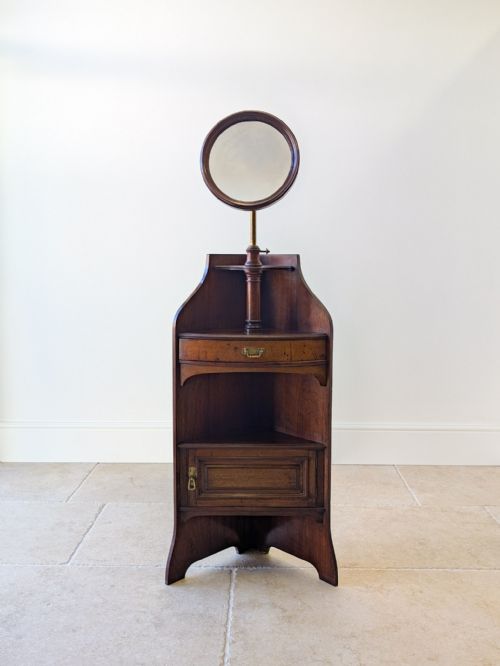
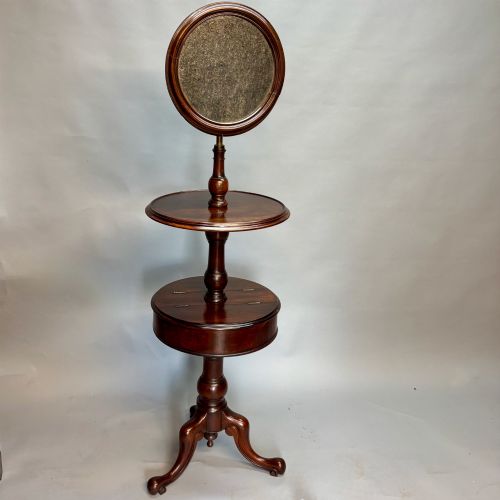
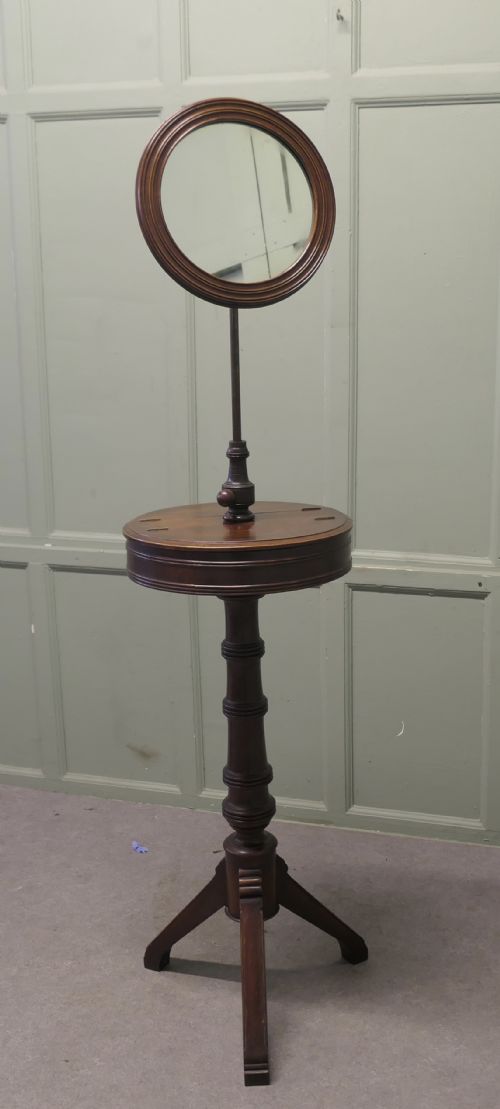
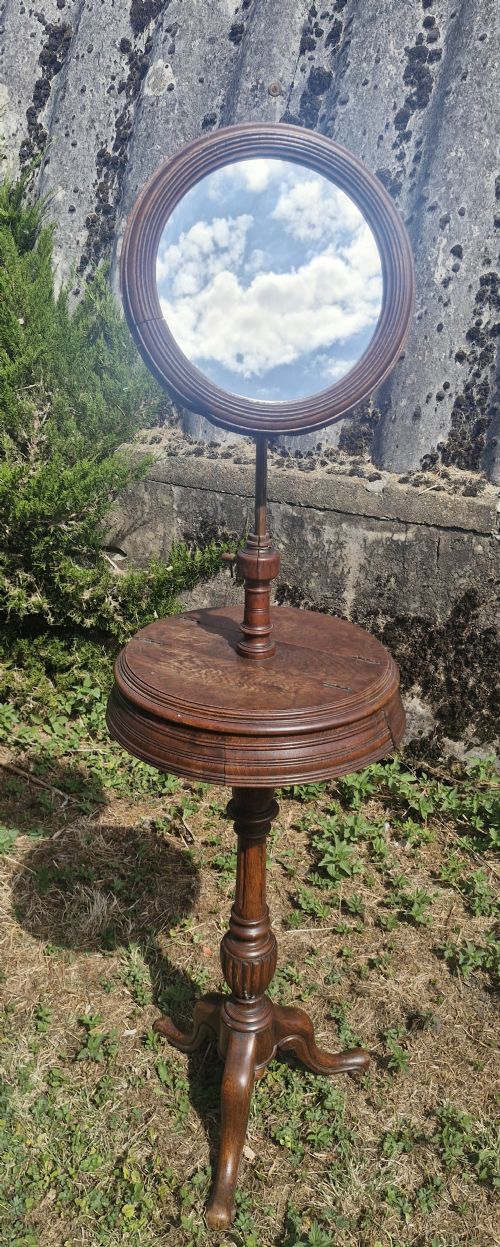
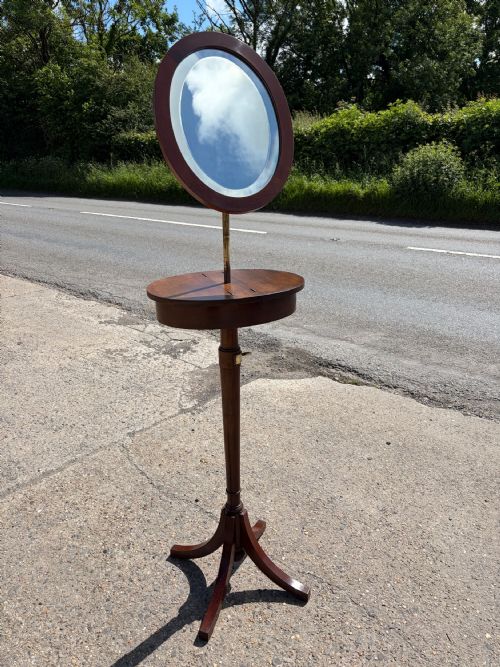


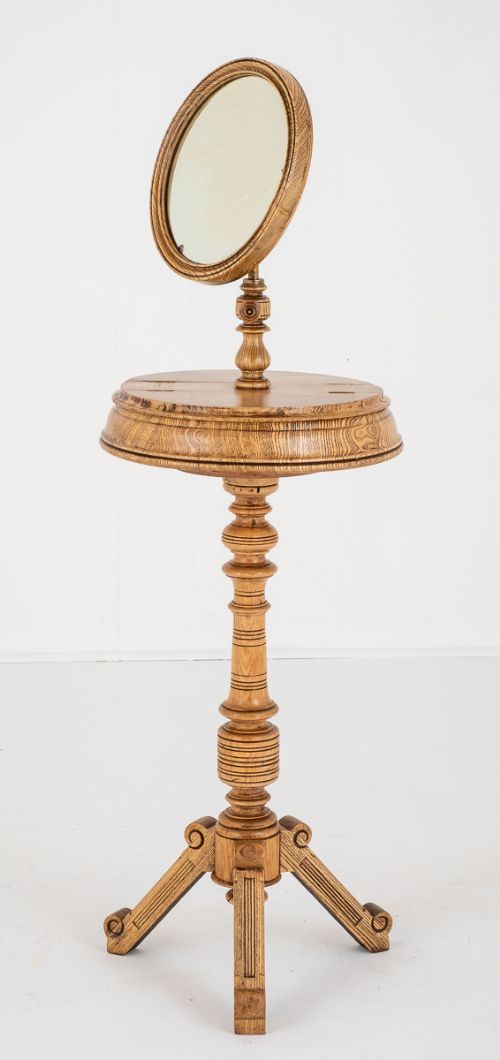


Freestanding Shaving Stand
A freestanding shaving stand brings purposeful Victorian or Edwardian craftsmanship into the modern room.
Freestanding Shaving Stand
A freestanding shaving stand is a dedicated piece of utility furniture designed for the morning grooming routine, typically combining a mirror with a supporting structure. Most examples encountered here hail from the Victorian and Edwardian eras, reflecting an age when personal grooming had its own specialised furniture.
Beyond traditional timber models, the category broadens to include occasional 1930s chrome or painted metal vanity pieces and grander Regency-inspired dressing stands. Each configuration serves the same fundamental purpose of providing a clear, height-appropriate reflection alongside a stable stance.
Materials and construction
Cabinet makers utilised dense hardwoods like mahogany and walnut to give these tall, slender stands adequate weight at the base, particularly on tripod configurations. These timbers were often turned, polished, or inlaid to elevate their appearance beyond pure utility.
Metal mechanisms, largely cast in brass, allowed mirrors to tilt, extend, and lock securely into position using telescopic stems or pivots. Mirror glass itself was set within supportive frames, occasionally accompanied by subsidiary trays or candle arms.
Freestanding Shaving Stand Retail Price Guide 2026
Typical asking prices for freestanding shaving stand among the pieces listed under this phrase on Sellingantiques today, from the lower quarter to the upper quarter. They describe what is for sale here now, not the wider market.
Some Victorian stands feature tiny brass arms designed to hold small candles so gentlemen could illuminate their chins before dawn.
Assessing quality and merit
Superior examples distinguish themselves through the mechanical ingenuity of their adjustable telescopic stems and the stability of their tripod or pedestal bases. A well-engineered brass screw mechanism and smooth swivelling joints mark out a piece made for daily domestic service.
Selection of timber grain and the precision of joinery around the mirror frame and supporting column dictate the visual standing of the object. Finer pieces combine robust structural timber with subtle decorative inlays and well-proportioned turning.
Originality of the glass, brass fittings, and structural elements preserves the integrity of the piece. The presence of secondary materials like painted metal or chrome in later decades shifts the aesthetic from traditional warmth to industrial sheen.
The Freestanding Shaving Stand Glossary
- Telescopic
- Describing a vertical shaft that extends upwards to alter the height of the mirror. This mechanism relies on inner and outer tubes held by a tightening screw.
- Tripod base
- A three-legged support structure designed to keep a tall, slender stand stable on uneven floorboards. It spreads the centre of gravity outwards.
- Cheval mirror
- A full-length mirror hung in a frame that allows it to swing. Some variants cross into dressing table or standing formats.
- Inlay
- A decorative technique where contrasting strips of wood or other materials are inserted into recesses in the primary timber surface. It adds subtle pattern without altering the profile.
Freestanding Shaving Stand: Frequently Asked Questions
How do I adjust the mirror height?
Most period pieces use a telescopic brass rod secured by a thumbscrew or friction collar. Loosening this collar allows you to raise or lower the mirror frame smoothly.
Take care to support the glass with one hand while loosening the mechanism to prevent sudden drops or strain on the joints.
Where should I place a shaving stand?
These compact pieces work exceptionally well in bedrooms, dressing rooms, or large bathrooms where you want a movable, period-appropriate mirror. Their narrow footprints make them ideal for corners or beside windows.
Ensure the floor is level, particularly with tripod bases, to maintain stability when adjusting the viewing angle.
How do I tell Victorian from Edwardian stands?
Victorian stands tend to use rich, dark timbers like mahogany and walnut with heavier turned columns and elaborate brass fittings. They often feature deep polishing and robust tripod bases.
Edwardian pieces generally lean towards lighter woods, simpler lines, and occasional subtle inlays, reflecting a shift in domestic taste toward brighter, less cluttered interiors.
Can these be used for everyday grooming?
Yes, many owners still utilise them for daily routines because the adjustable height and pivoting mirrors offer practical angles that modern wall mirrors lack. The sturdy wooden construction handles normal daily interaction easily.
Simply treat the polished wood and antique mirror glass with standard care, avoiding excessive moisture on unsealed timber.