

Mahogany Study Chairs
Mahogany study chairs bring gravitas to a working room through rich timber and sturdy construction.
Mahogany Study Chairs
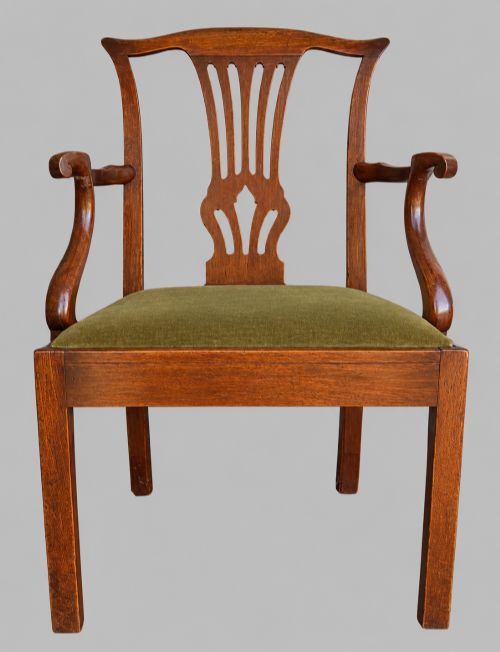
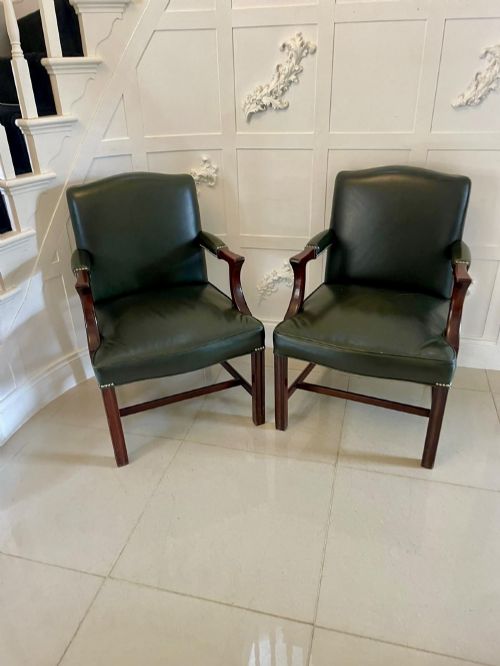
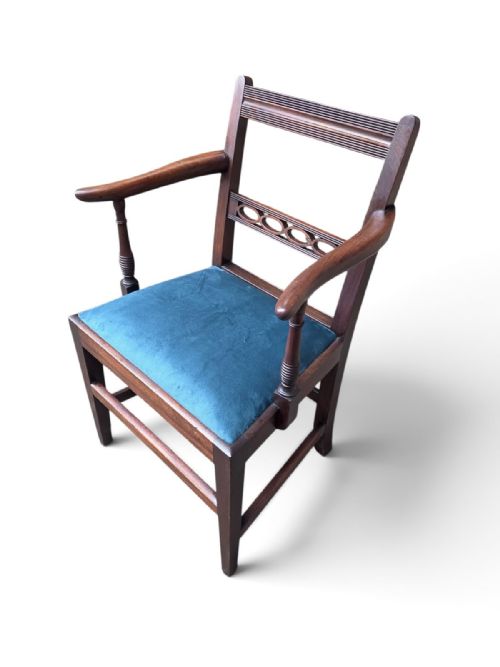
Mahogany study chairs encompass desk chairs, library armchairs, and office seating designed for sustained sitting in workspaces. These pieces appear primarily across Victorian, Edwardian, and Georgian periods, offering solid frames suited to daily use.
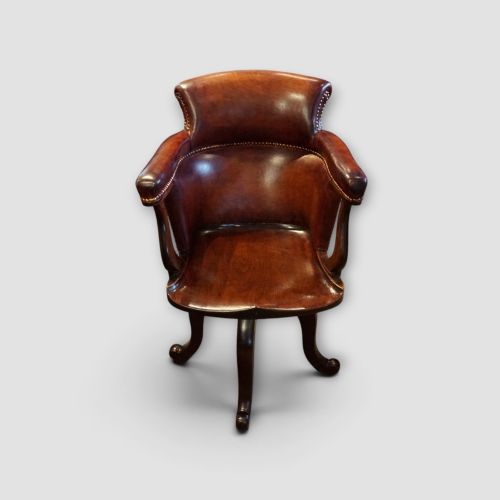
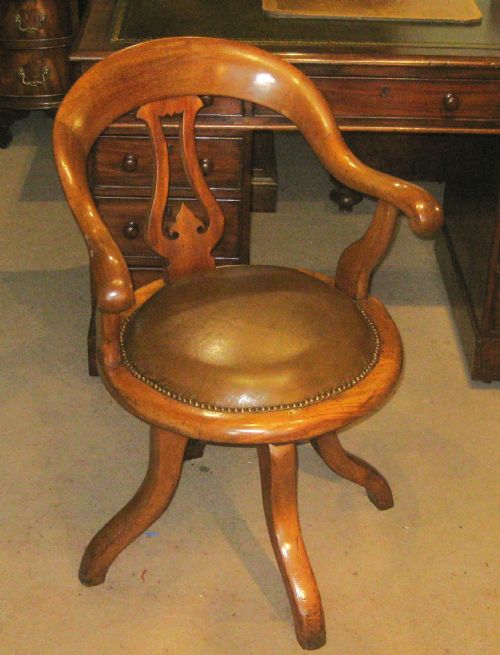
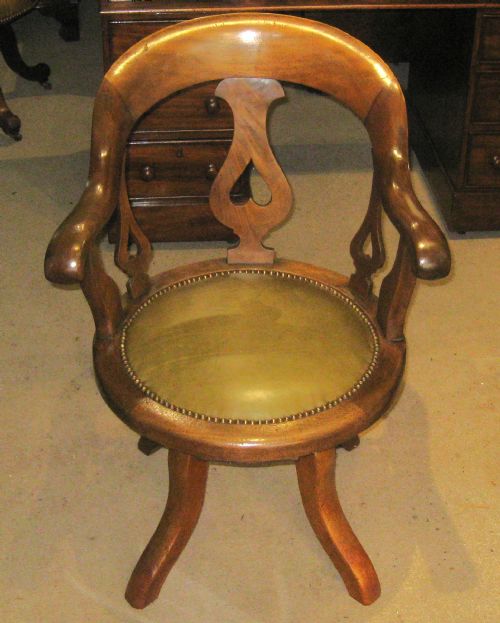
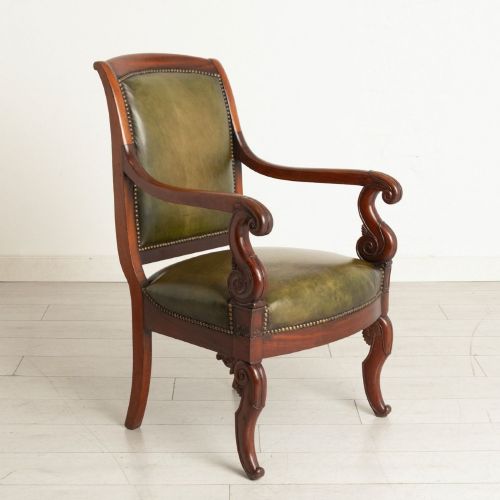
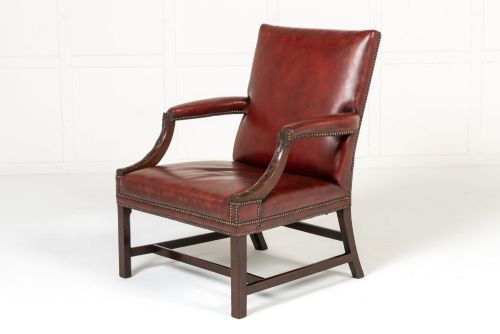
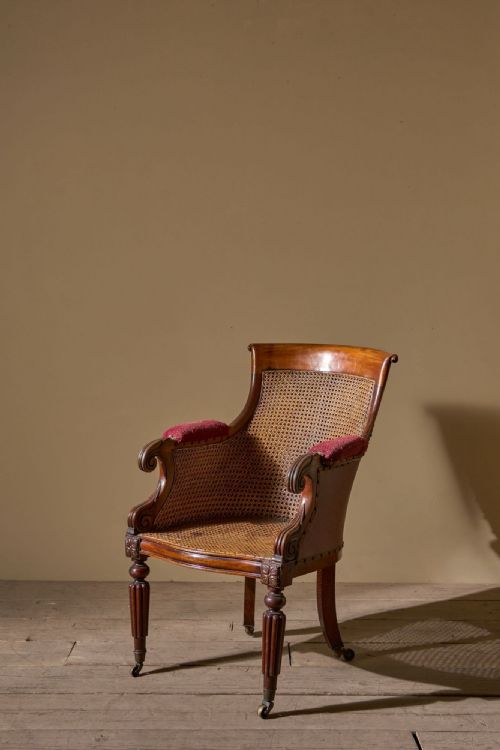
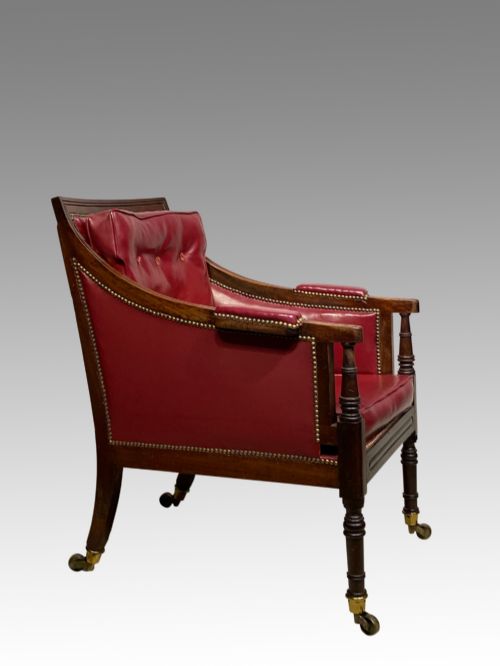
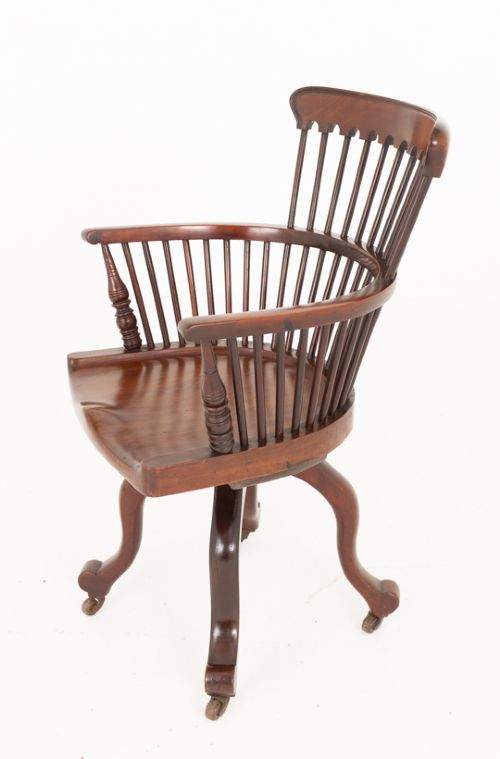
The most common formats on this page include revolving desk chairs and leather-upholstered library armchairs. Makers often incorporated brass castors, cane panels, or carved details into these robust wooden frames.
Materials and construction methods
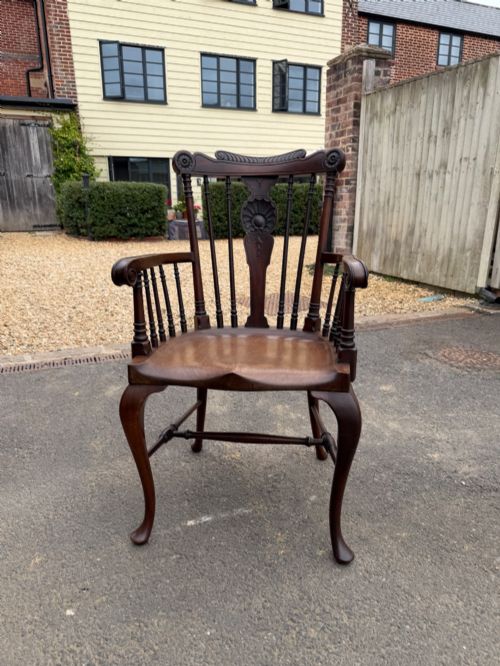
Makers relied on solid mahogany for structural integrity, shaping the timber into curved armrests and robust legs. Secondary materials such as brass fittings, iron mechanisms, and cane inserts added functional versatility to the seating.
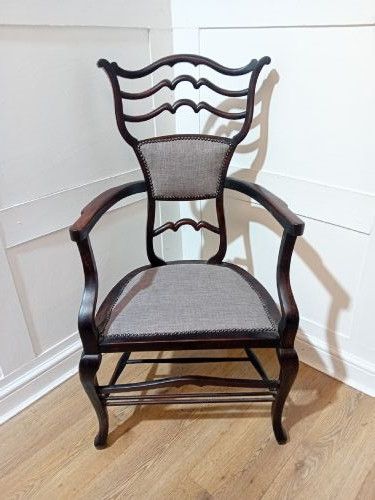
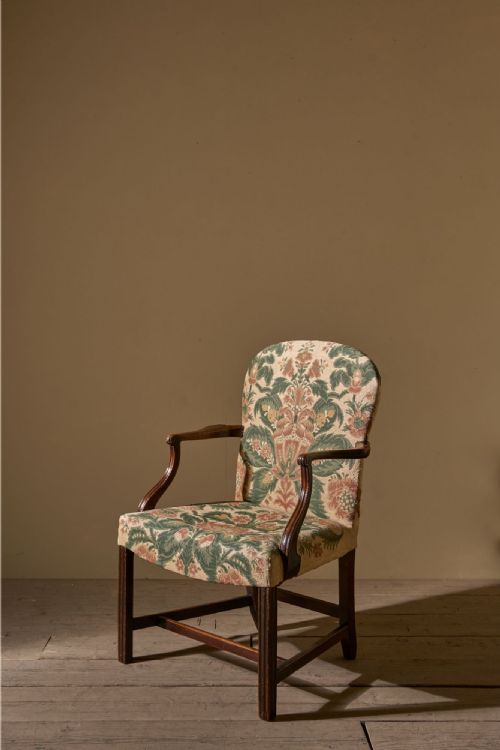
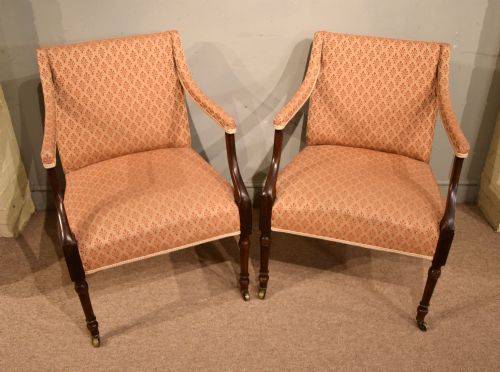
Upholstery involved leather, velvet, fabric, or tapestry secured over padding to provide comfort during long hours at a desk. Wood was frequently polished to highlight the natural grain and deep red-brown tone of the timber.
Certain revolving desk chairs allow writers to swivel effortlessly between multiple piles of paperwork without ever leaving their seats.
Assessing quality in construction
Quality rests in the depth of timber selection and the precision of joinery within the frame. Heavier, well-seasoned mahogany supports intricate carving without compromising structural stability.
The integration of leather upholstery, whether hand-tooled or buttoned, distinguishes standard production from finer workshop output. Mechanism smoothness in revolving models further separates utilitarian office pieces from superior library seating.
The Mahogany Study Chairs Glossary
- Mahogany
- A durable, reddish-brown tropical hardwood prized for furniture making. It accepts polish well and resists warping over decades of use.
- Bergère
- An enclosed upholstered armchair with wooden framing, often featuring cane work on the sides and back. This style provides a lighter visual presence while retaining solid support.
- Gainsborough chair
- A wide, low-backed armchair with upholstered seat and armrests, designed specifically for writing desks. Eighteenth-century versions set the template for later revival pieces.
- Castor
- A small wheel fitted to the bottom of chair legs to allow smooth movement across carpets and floors. Brass wheels are typical on nineteenth-century examples.
- Revolving desk chair
- A swivel seat mounted on a central pivot or pedestal base. These designs allowed users to turn between desk surfaces without moving the entire heavy wooden frame.
Mahogany Study Chairs: Frequently Asked Questions
How do I date a mahogany study chair?
Dating relies on stylistic clues, timber characteristics, and hardware such as castors or swivel mechanisms. Georgian and Regency pieces show different carved motifs compared to Victorian or Edwardian revivals.
Examining the underside and joinery reveals hand-cut elements versus later machine-made components. Comparing the wood finish to documented period examples helps confirm the decade of manufacture.
Are these chairs suitable for daily computer work?
Many historical desk chairs offer sturdy wooden frames and supportive upholstered seating that function well for modern desk use. Ergonomics vary compared to contemporary office seating.
Revolving models and leather-padded library chairs accommodate hours of sitting while maintaining traditional aesthetics. Adding a discreet lumbar cushion can improve comfort without altering the chair.
What is the difference between a library chair and a desk chair?
Library chairs generally feature wider upholstered armrests and deeper seats designed for reading and relaxation. Desk chairs prioritize upright posture and often include revolving bases or compact frames.
Overlaps occur frequently in historical terminology, with many library chairs serving double duty at writing tables. Both types utilise heavy mahogany construction to endure frequent repositioning.
How should I maintain leather upholstery on antique chairs?
Leather requires periodic conditioning with specialised creams to prevent drying and cracking over time. Keeping the material away from direct heat sources preserves its suppleness.
Gentle dusting with a dry cloth prevents debris from wearing down the surface grain. Professional restoration can secure loose buttons or re-secure tacked edges if necessary.