
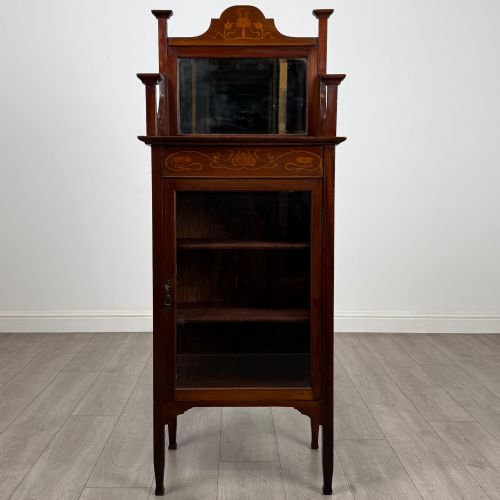
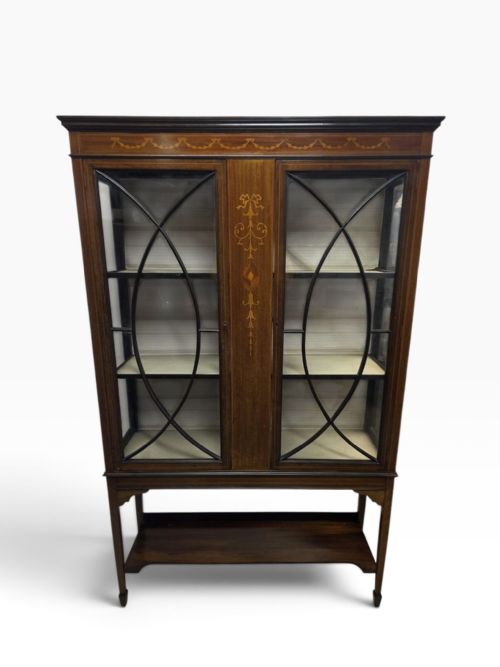
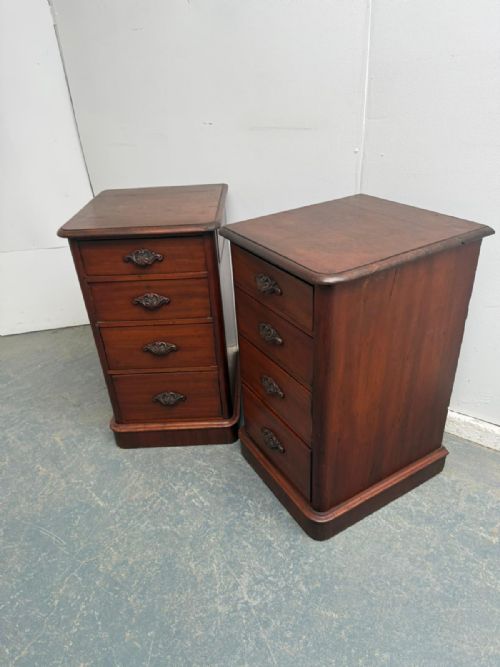
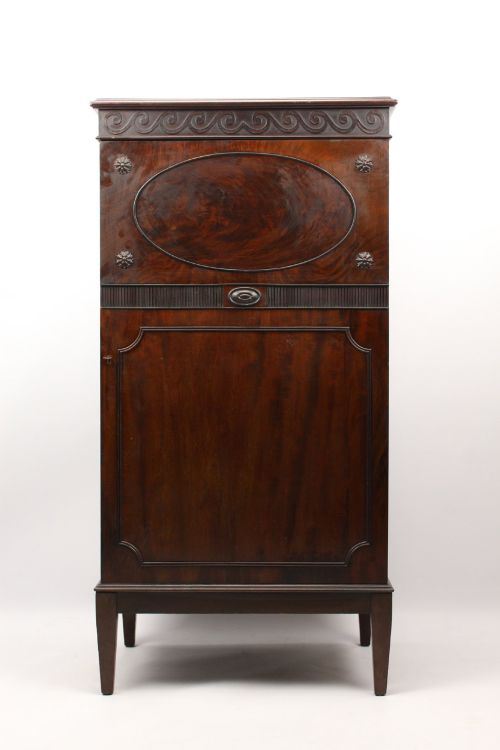
Mahogany Standing Cabinet
A mahogany standing cabinet brings grounded presence and rich timber tone to a room, offering practical storage or display space across centuries of craftsmanship.
Mahogany Standing Cabinet
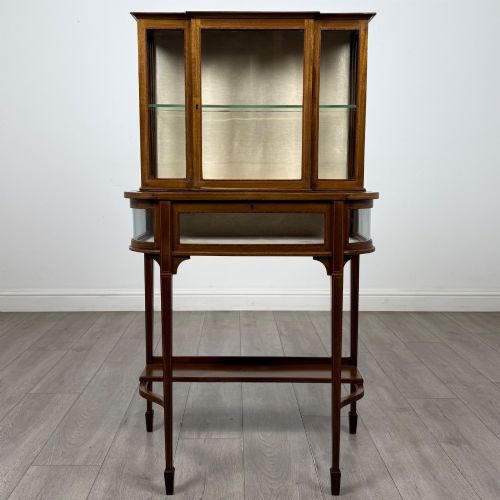
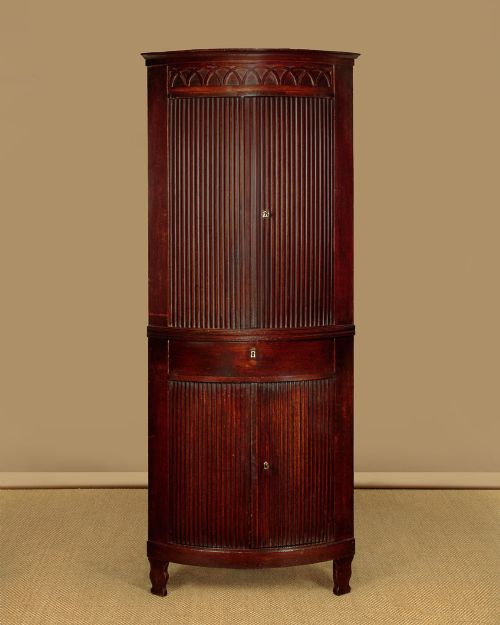
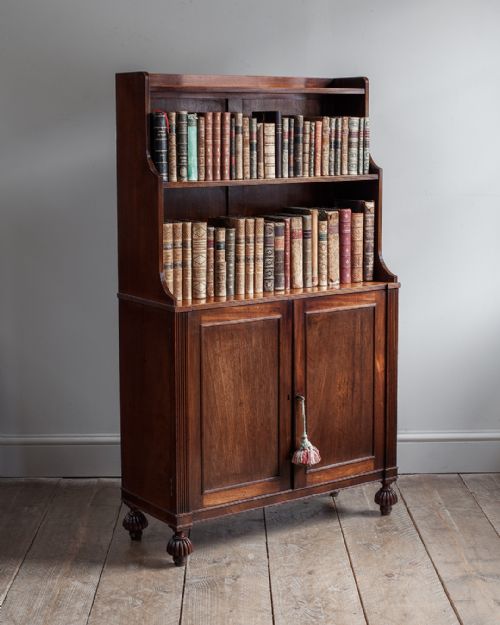
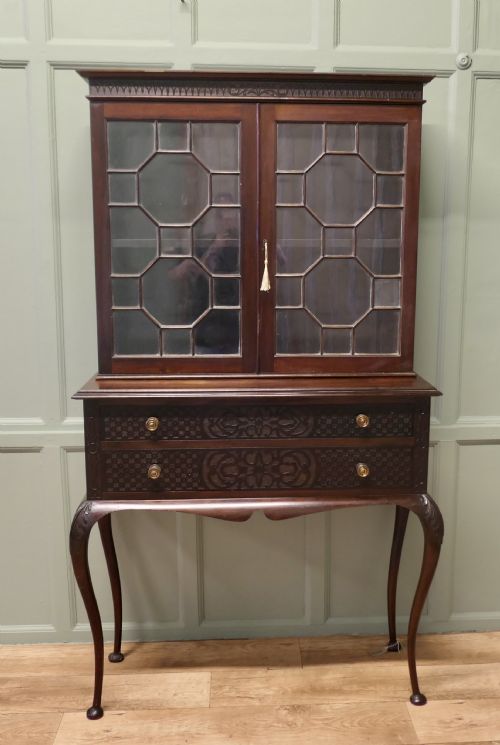
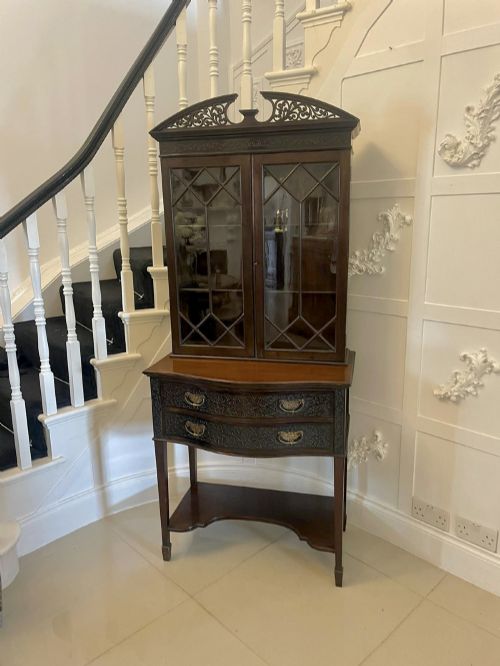
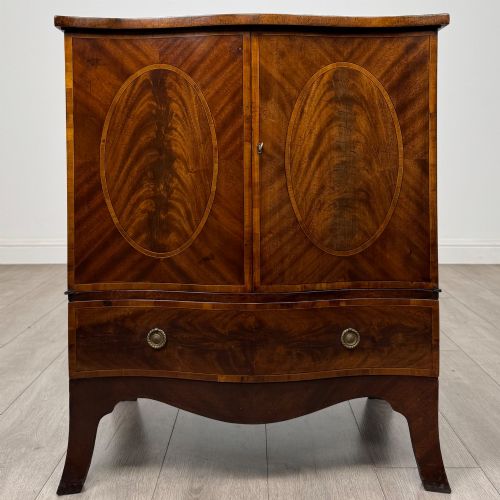
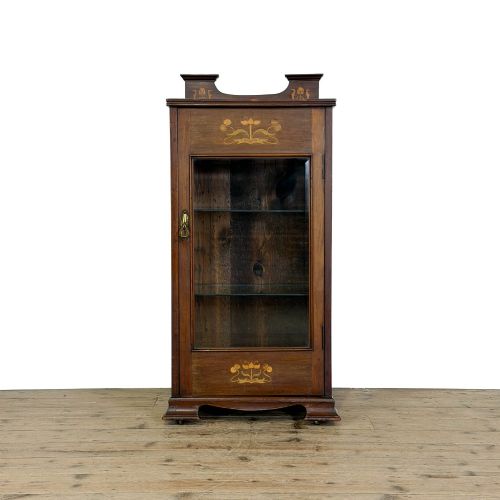
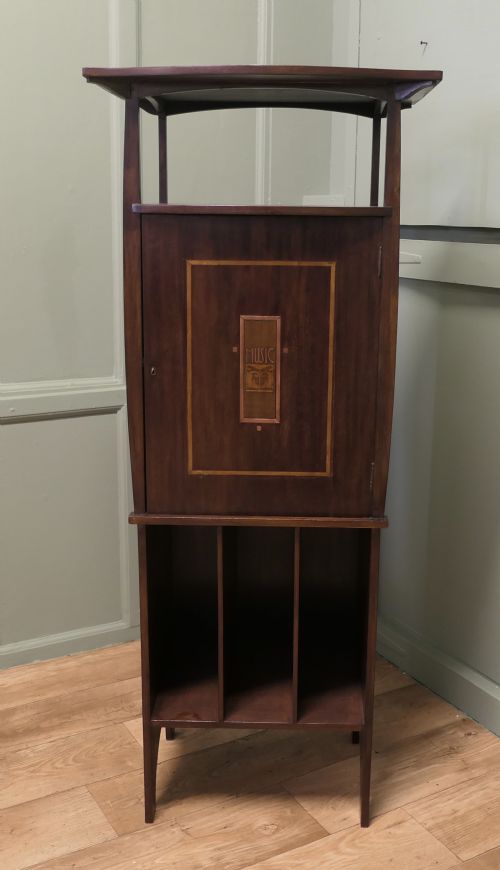
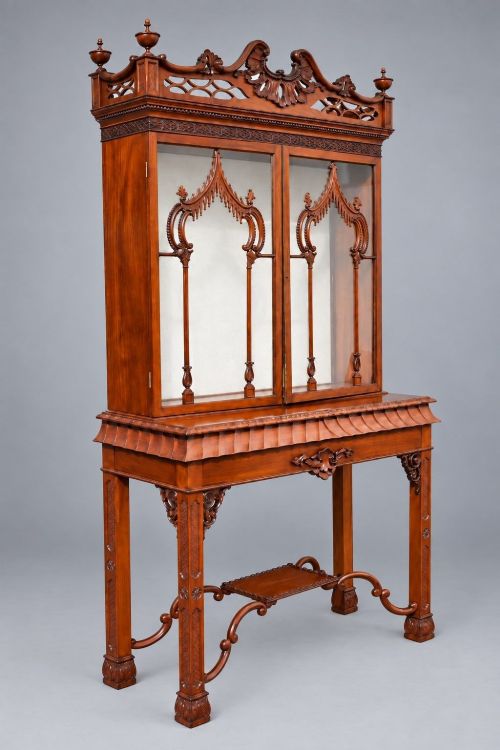
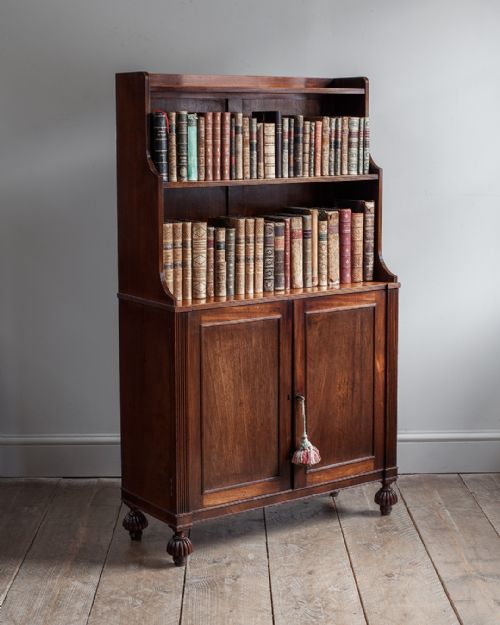
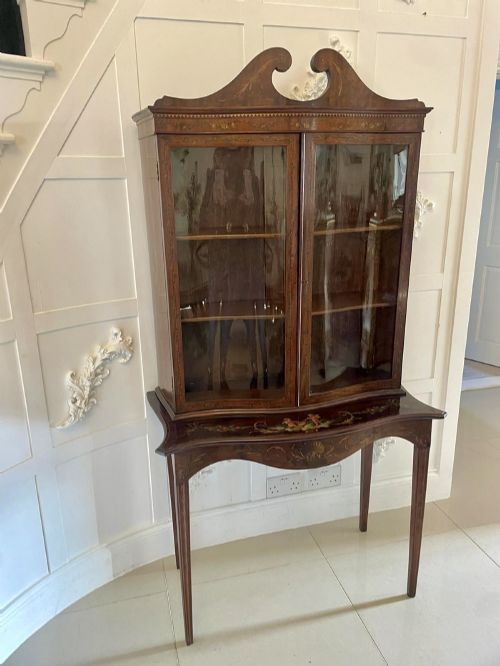
A mahogany standing cabinet encompasses a broad variety of tall or floor-standing furniture designed to hold books, display porcelain, or conceal household items. The forms seen here range from Georgian corner cupboards and Regency bookcases to Victorian display cabinets and Edwardian inlaid side pieces.
Buyers exploring this selection frequently encounter pieces from the Georgian, Victorian, and Edwardian eras, each reflecting the stylistic priorities of its period. Corner cupboards, tallboys, and glazed vitrines dominate the forms, sitting directly on the floor rather than resting on desks or chests.
Originating predominantly from British workshops across the eighteenth, nineteenth, and early twentieth centuries, these cabinets utilise the deep reddish-brown tones of solid and veneered mahogany. They serve both functional storage needs and decorative display purposes within domestic interiors.
Materials and Technique
Cabinet makers built these pieces using solid mahogany and carefully sawn mahogany veneers, frequently enriched with contrasting inlays of satinwood and various exotic woods. Structural stability was achieved through traditional joinery, dovetailing drawer carcases, and mounting doors on sturdy brass hinges.
Glazing techniques defined pieces intended for display, employing astragal bars to hold delicate panes of glass in geometric or arched patterns. Surface finishes relied on hand-applied wax or polish, highlighting the natural grain and figuring of the timber over time.
Mahogany Standing Cabinet Retail Price Guide 2026
Typical asking prices for mahogany standing cabinet among the pieces listed under this phrase on Sellingantiques today, from the lower quarter to the upper quarter. They describe what is for sale here now, not the wider market.
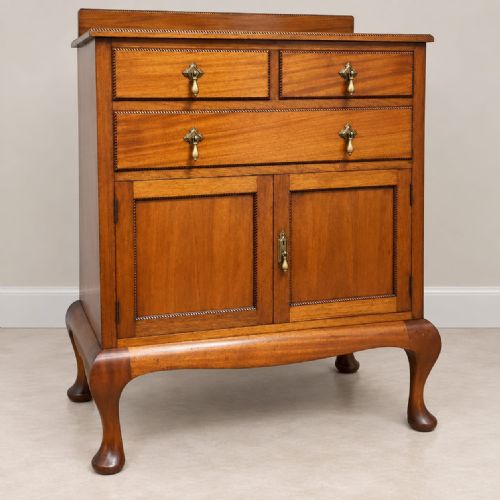
Some nineteenth-century bedside cabinets doubled as discreet washstands, hiding basins and porcelain jugs behind polite panelled doors.
Quality Variations
The distinction between standard domestic furniture and the finest workshop productions rests on the selection of timber and the precision of the cabinet work. Superior pieces display heavily figured flame mahogany veneers, meticulous marquetry, and finely carved mouldings that remain crisp and sharp.
Internal construction and secondary timbers also signal standard, with premier makers utilising solid oak or mahogany for drawer linings and backboards rather than cheaper softwoods. Original hardware, such as brass castors, locks, and handles, contributes significantly to the integrity of the piece.
GM Elwood for JS Henry·Denby & Spinks·Maple & Co·Gill & Reigate·Edwards and Roberts·Gillows
The Mahogany Standing Cabinet Glossary
- Astragal glazed
- A method of framing glass doors with slender wooden strips known as astragals, dividing the pane into smaller geometric lights.
- Marquetry
- Decorative veneer work arranged in pictorial or geometric patterns using diverse coloured woods and other materials.
- Serpentine
- A furniture front or shelf shaped with a concave central section flanked by two convex curves, creating a gentle wave effect.
- Tallboy
- A tall chest of drawers standing upon another chest or a low base, maximising vertical storage space.
- Vitrine
- A glass-panelled cabinet specifically constructed for the display of curiosities, silver, or porcelain.
Mahogany Standing Cabinet: Frequently Asked Questions
How do I place a standing cabinet in a modern room?
These cabinets suit living rooms, dining spaces, and hallways where their vertical presence anchors the surrounding decor. Corner variants utilise neglected angles effectively, while glazed display versions provide a focal point for collected objects.
Ensure the room has adequate floor clearance and stable humidity levels to protect older timber and veneer from environmental stress.
What is the difference between a corner cupboard and a vitrine?
A corner cupboard is engineered specifically to fit into the ninety-degree angle of a room, often featuring solid wooden doors or simple upper glazing for functional storage. A vitrine is designed primarily for visual exhibition, featuring glass on multiple sides to showcase precious items.
Both forms utilise floor standing bases, but their visual weight and intended contents differ significantly.
How can I tell a Georgian cabinet from a Victorian one?
Georgian cabinets from the eighteenth and early nineteenth centuries typically exhibit restrained classical proportions, understated bracket feet, and simple mahogany grain. Victorian examples from the later nineteenth century often incorporate richer inlays, satinwood banding, and heavier carving influenced by revivalist movements.
Examining the construction methods inside drawers and behind backboards helps confirm the period of manufacture.
Can I adjust the shelves inside these antique cabinets?
Many older standing cabinets feature fixed wooden shelving integral to the original carcase structure, though some later Victorian and Edwardian examples include removable or adjustable shelves supported by wooden bearers or metal pins.
Reviewing the internal configuration in the listing helps determine if the shelving suits books, dishware, or display objects.