



Mahogany Stacked Tables
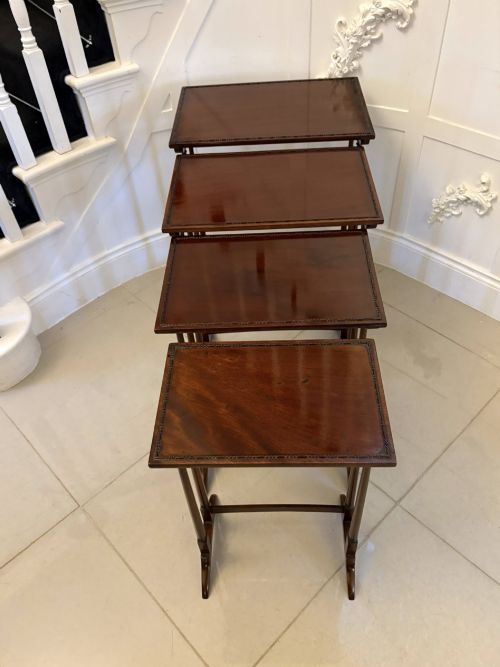
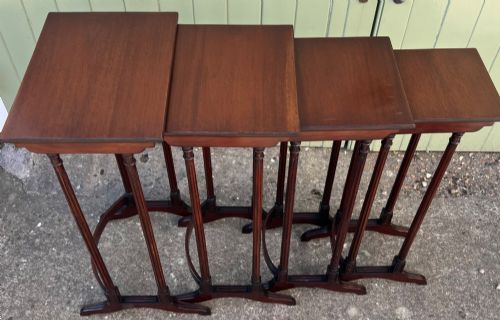
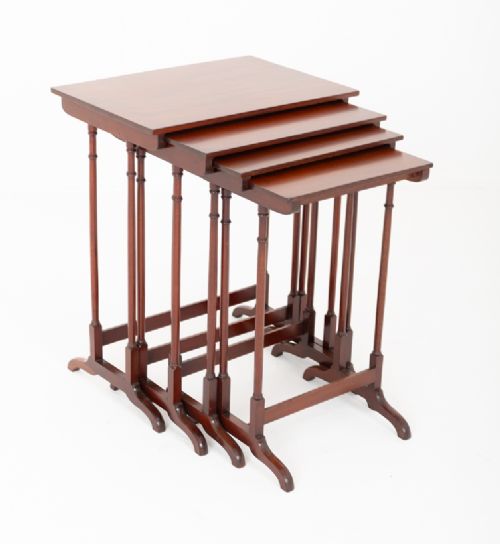
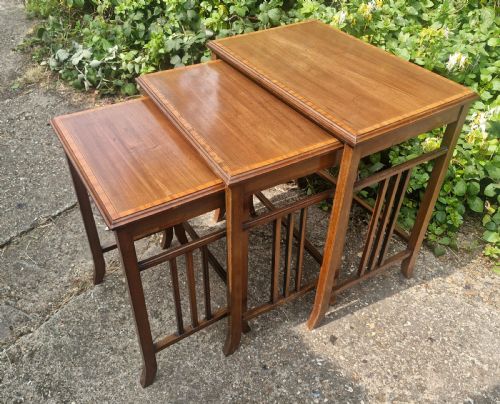
Mahogany stacked tables offer a space-saving arrangement of graduating pieces that slide together neatly when not in use.
Mahogany Stacked Tables
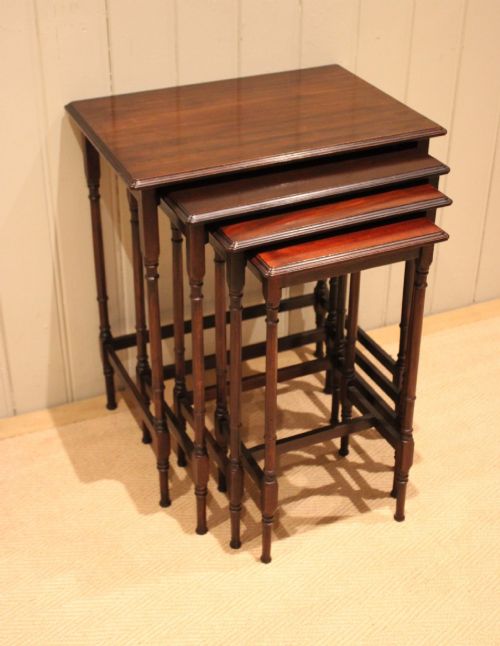
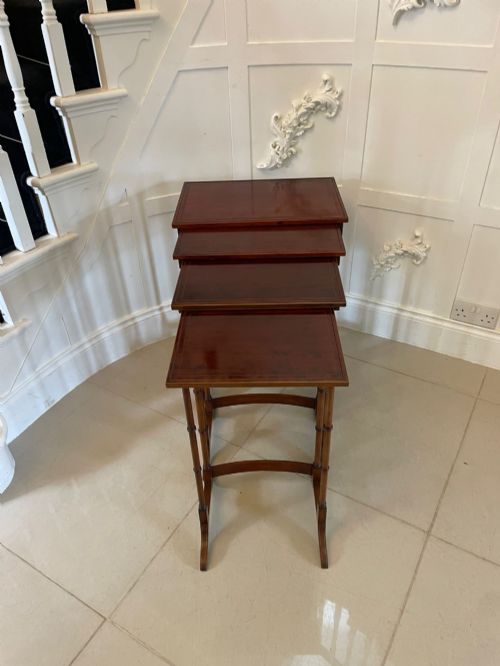
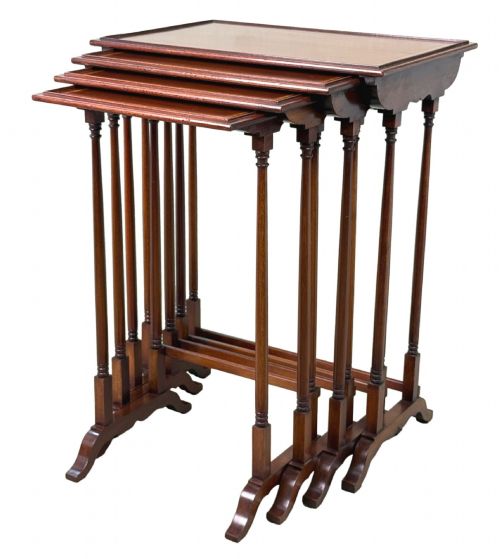
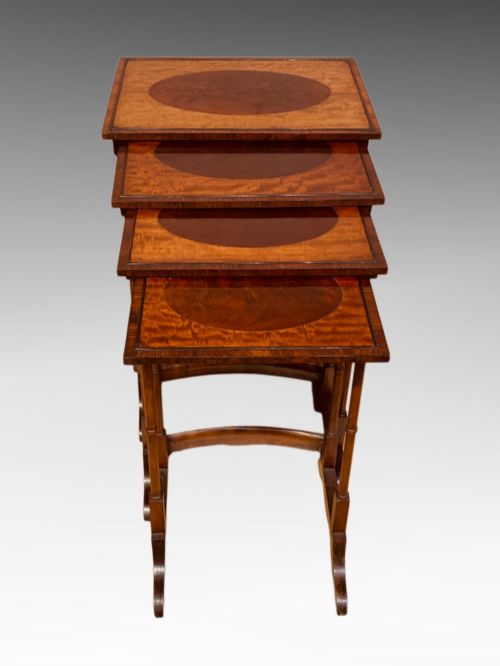
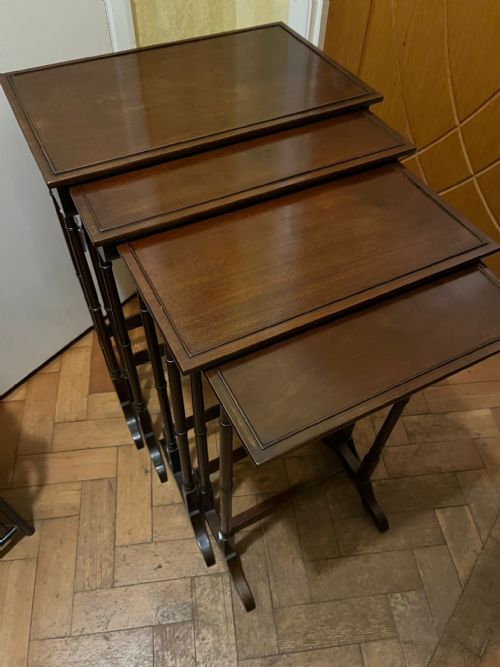
When you search for mahogany stacked tables, you encounter sets of graduating occasional tables designed to slide neatly into one another. The most common form on this page is the quartetto nest of four, appearing frequently across Edwardian and Victorian periods alongside occasional sets of three and five.
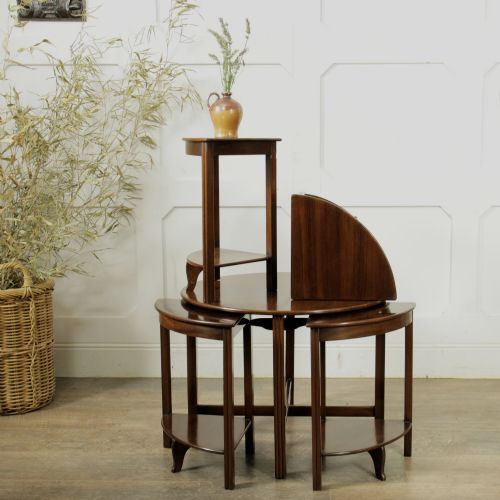
Makers created these pieces primarily as occasional tables for drawing rooms and parlours, where surface space needed to expand for tea or writing and contract afterwards. The forms range from rectangular and square tops to circular, oval, and serpentine shapes.
Stylistic influences span from strict Georgian proportion to Regency revival, English country house taste, and Sheraton revival. Most examples you meet date from the late nineteenth century through to the interwar years of the twentieth century.
Materials and construction
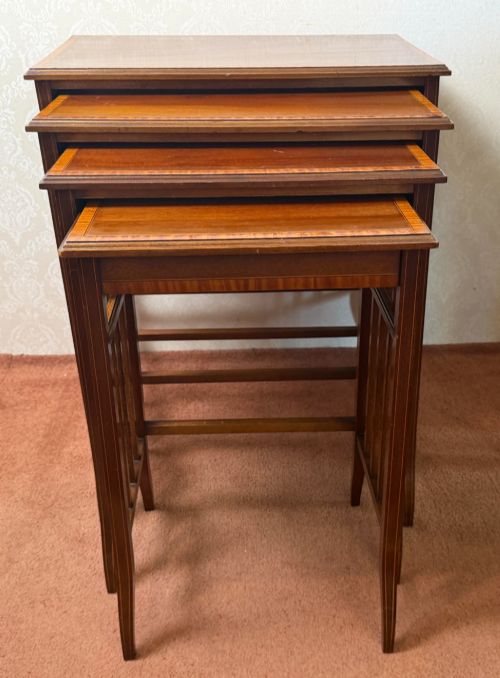
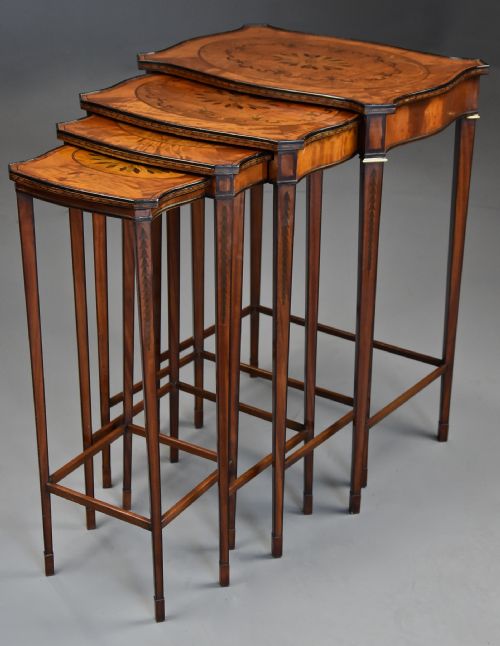
Cabinet makers built these sets using solid mahogany and figured mahogany veneers, often selecting timber with rich natural grain patterns. They frequently embellished the primary wood with contrasting satinwood and boxwood inlay, stringing, and cross-banding.
Construction relies on slender uprights such as square tapered legs or turned supports to ensure the graduated frames fit precisely within each other. Selected examples incorporate specialist surfaces like embossed leather tops or glass panels alongside secondary timbers including yew and rosewood.
Some sets manage to hide four entire tables in the floor footprint of just one.
Evaluating craftsmanship and proportion
Quality in these sets rests upon the precision of the graduating frame and the integrity of the timber selection. Finer examples display carefully matched figured mahogany veneers and crisp, neat boxwood or satinwood inlay rather than rudimentary painted decoration.
Structural refinement separates standard production from superior pieces, visible in the slenderness of the legs, the tight fit of the sliding tiers, and the retention of original polished surfaces. Subtle details such as serpentine outlines, shaped tops, and brass inlay elevate the manufacturing standard.
The Mahogany Stacked Tables Glossary
- Quartetto
- A set of four nesting tables designed to slide progressively beneath the largest top. This term appears frequently in Edwardian and Victorian listings.
- Cross-banding
- A border of veneer laid around the edge of a table top with the grain running perpendicular to the centre panel. It frames the primary mahogany timber.
- Stringing
- Thin inlay lines of a contrasting light wood, such as boxwood or satinwood, embedded into the mahogany surface. This technique outlines drawers, legs, and table tops.
- Serpentine
- A curved edge or outline shaped in a double curve, resembling a wave. You see this form on finer Edwardian occasional tables.
Mahogany Stacked Tables: Frequently Asked Questions
What are mahogany stacked tables?
These pieces consist of sets of three, four, or five graduating tables designed to slide neatly beneath one another to save floor space.
They function as versatile occasional furniture that can be separated around a room for tea, reading, or display.
How were nesting tables used historically?
Victorians and Edwardians utilised these tiered surfaces in drawing rooms to accommodate guests without permanently overcrowding the interior.
Servants or hosts would pull out the smaller individual tiers as needed for cups, books, or sewing work.
How do I identify an Edwardian set?
Edwardian examples often feature light satinwood or boxwood inlay, slender square tapered legs, and delicate proportions.
They frequently adopt Sheraton revival styling with polished mahogany frames and refined stringing details.
Can I use them as coffee tables?
Many people separate the individual tables of a nest to serve as multiple side tables or coffee table surfaces around a seating area.
The graduating sizes allow you to arrange them together as a tiered low arrangement or scatter them independently.