



Mahogany Stack of Tables
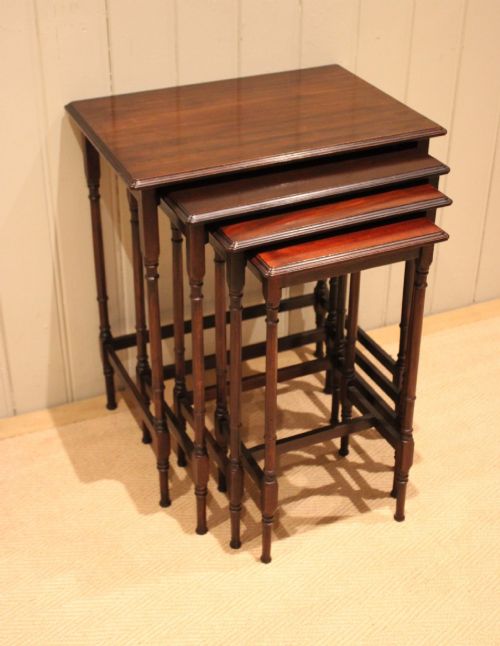
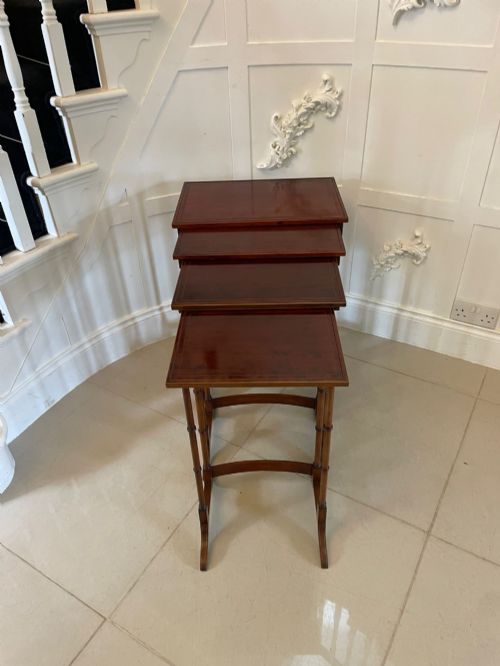
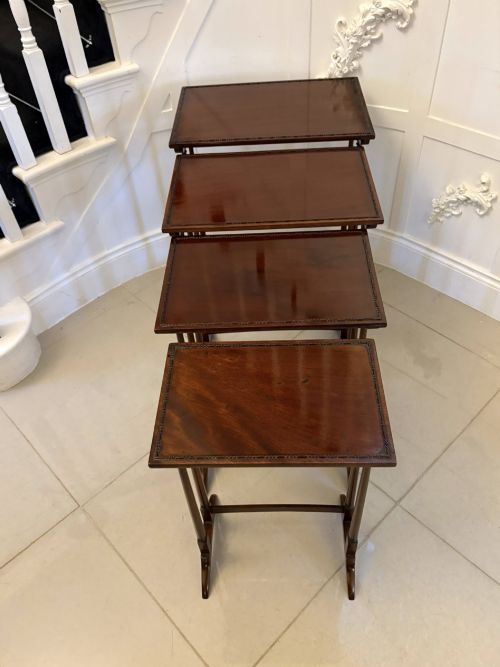
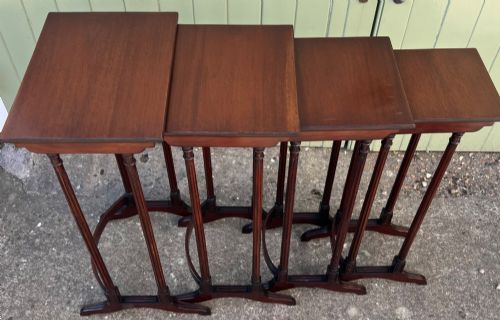
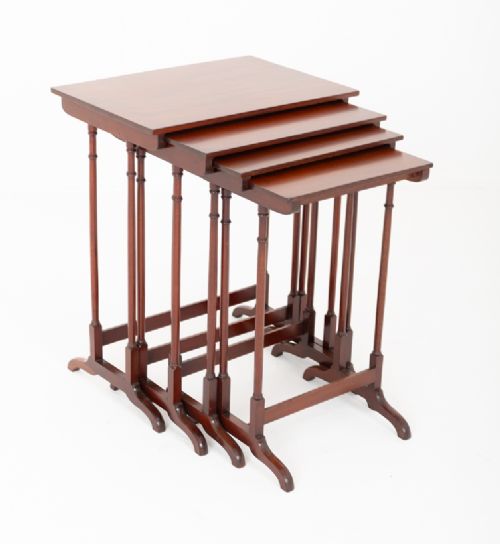
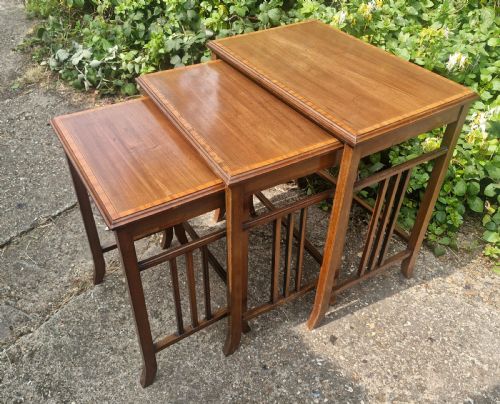
A mahogany stack of tables provides a set of graduating occasional surfaces that fit neatly inside one another when space is tight.
Mahogany Stack of Tables
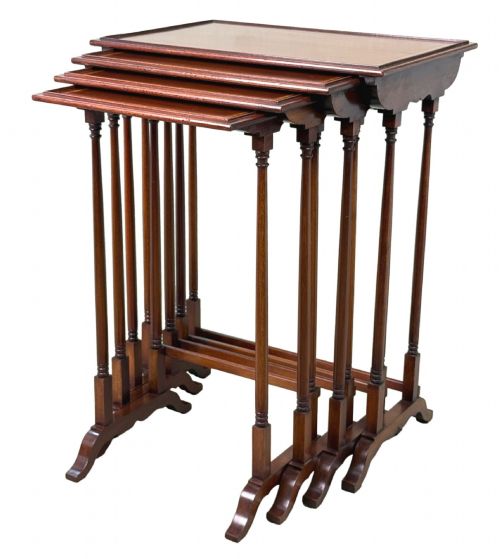
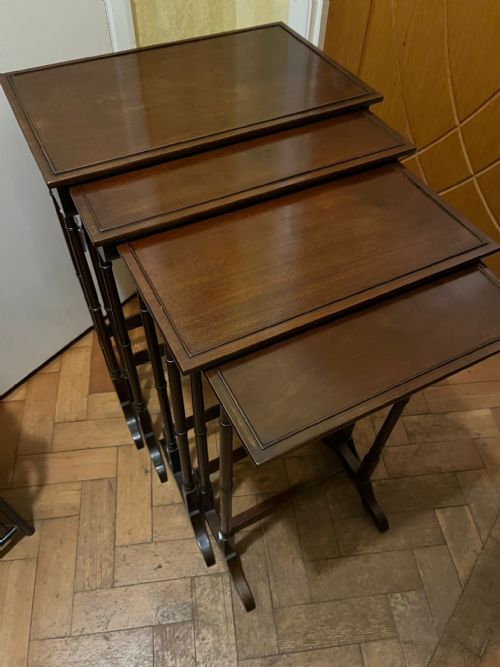
When you search for a mahogany stack of tables, you encounter sets of three, four, or five occasional tables designed to slide together into the footprint of the largest single piece. These sets appear frequently in Edwardian and Victorian forms, often referred to historically as quartetto tables.
The dominant varieties on this page span the late nineteenth century through the 1930s, encompassing Edwardian and Victorian periods alongside later revivals. Most examples consist of three or four graduating tables intended for tea, coffee, or lamp placement in domestic sitting rooms.
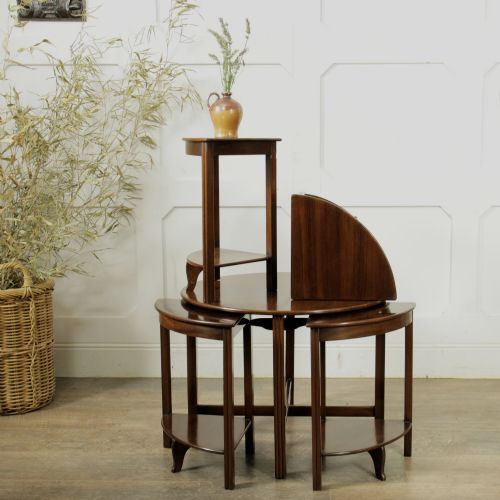
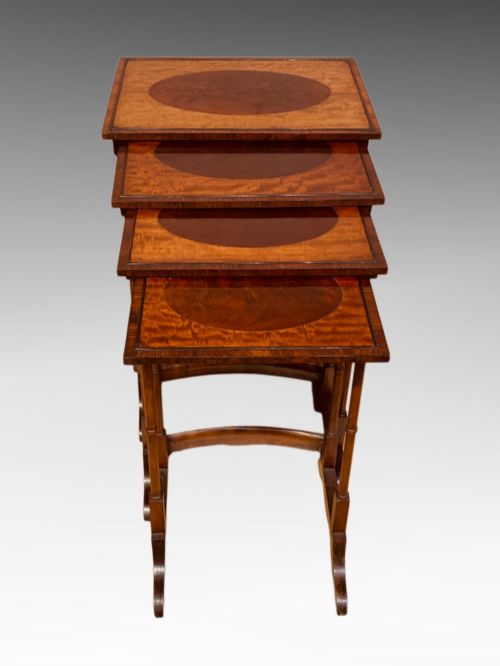
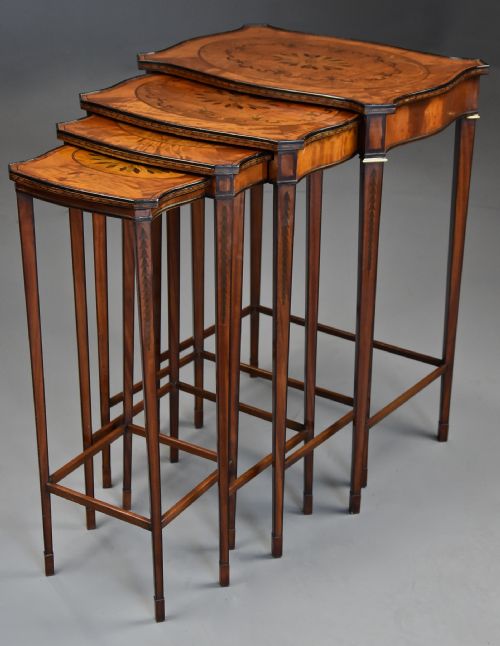
Makers and cabinetmakers produced these sets in various configurations, including rectangular, circular, oval, and serpentine shapes. The smaller tables descend smoothly beneath the main top, utilising minimal floor space until pulled out for entertaining.
How They Were Made
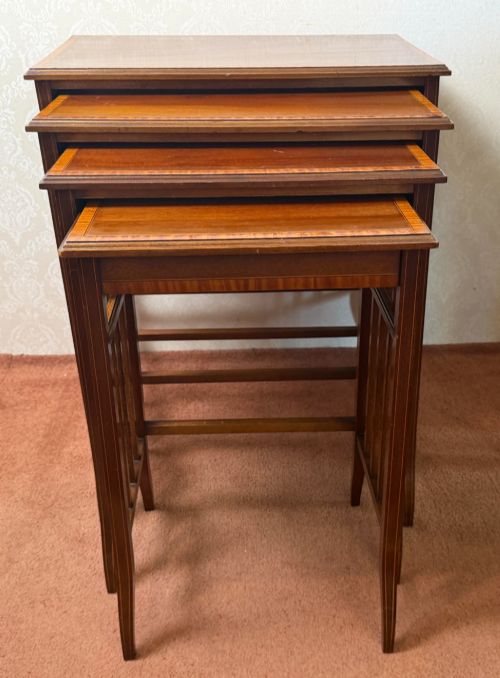
Cabinetmakers constructed these sets primarily from solid mahogany and mahogany veneers, frequently incorporating contrasting timbers such as satinwood, boxwood, and yew for decorative banding and stringing. Selected pieces also include embossed leather inset tops or French brass inlay.
Construction relies on slender, square tapered or turned legs that allow the smaller tables to nest snugly without binding. Joinery on the frames maintains rigidity despite the narrow dimensions required to make the stacking mechanism function correctly.
Certain sets manage to squeeze five entire tables into a single stack without wider floor footprints.
What Varies in Quality
The distinction between ordinary and superior sets rests on the choice of timber figure, the crispness of the stringing, and the structural integrity of the joints across all graduating sizes. Finer examples display carefully matched mahogany grain on every tabletop and precise inlay work.
Lesser sets often utilise plain timber with simpler edge treatments and may suffer from warping that prevents the tables from sliding together smoothly. Top-tier pieces maintain balanced proportions and stability whether deployed individually around a room or stacked together.
The Mahogany Stack of Tables Glossary
- Quartetto
- A set of four graduating tables designed to nest together. This term appears frequently in nineteenth and early twentieth-century cabinet descriptions.
- Cross banding
- A border of veneer laid with the grain running perpendicular to the main surface. This technique frames the top of many occasional tables.
- Stringing
- Thin lines of contrasting wood inlaid into channels in the primary timber. It outlines table edges and legs on decorated pieces.
Mahogany Stack of Tables: Frequently Asked Questions
How were nest of tables used?
These sets served primarily in Victorian and Edwardian drawing rooms for holding tea cups, books, or lamps. Servants or hosts pulled out the smaller tables as needed when guests arrived.
Once the gathering ended, the tables slid back into a single compact column against a wall or beside a sofa, saving valuable floor space in the room.
What is a quartetto table?
A quartetto is a specific set of four graduating tables designed to nest neatly beneath one another. The term derives from musical quartets and became popular in the Victorian era.
Cabinetmakers built them so that each smaller table descended in height and width, allowing the entire group to occupy the floor space of just one table.
How do I date an Edwardian nest?
Edwardian nests generally date between 1901 and 1910, often displaying light satinwood inlay, boxwood stringing, and slender tapered legs. They reflect a lighter aesthetic than heavier Victorian furniture.
Examining the underside, screw types, and timber secondary woods helps confirm the period when style cues alone overlap with late nineteenth-century revival pieces.
Can I use them as coffee tables?
These tables adapt well to modern living as modular side tables or low coffee alternatives. The individual pieces can be separated around a seating area to hold drinks or scattered beside different chairs.
When not in use, stacking them restores an open floor plan while keeping extra surfaces instantly accessible for daily domestic life.