
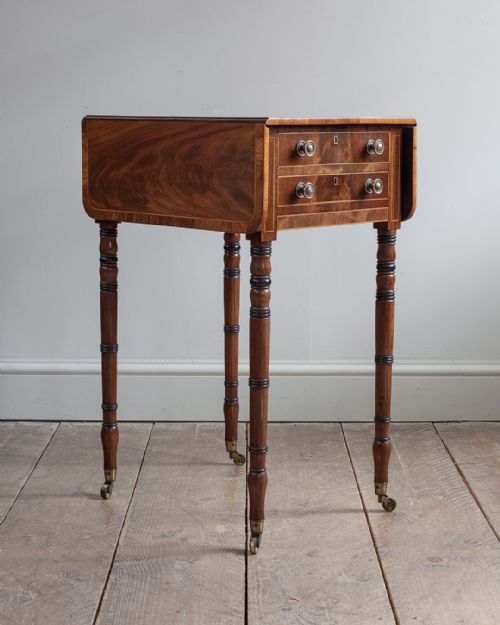
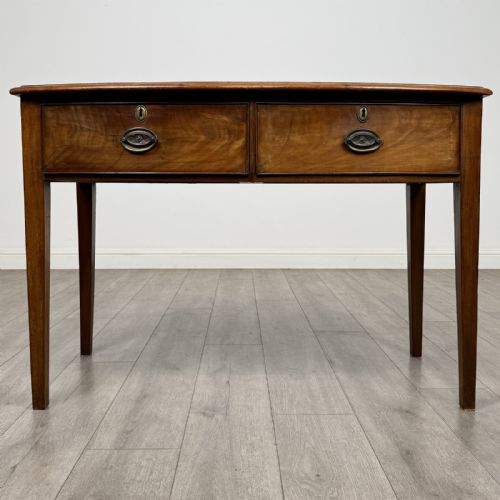
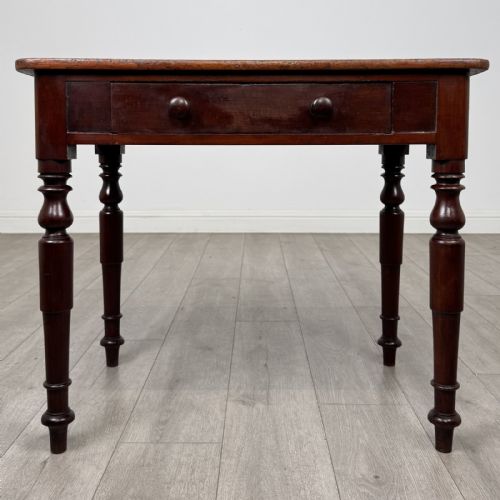
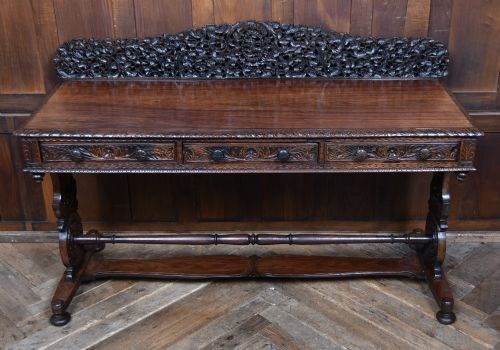
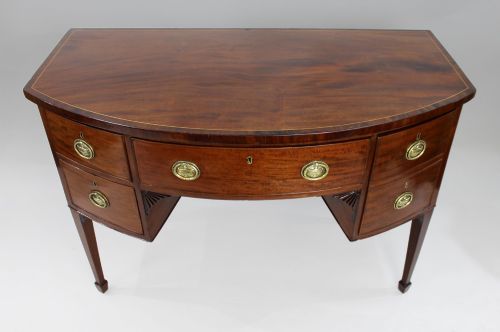
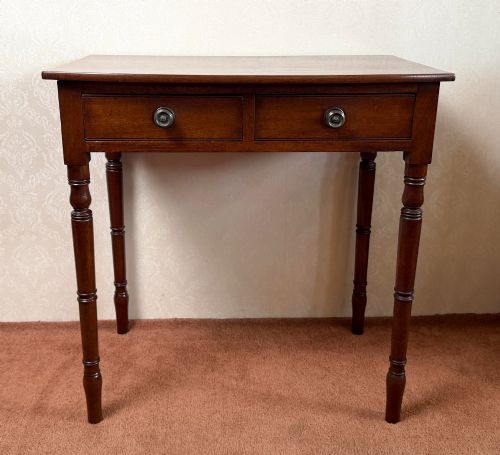
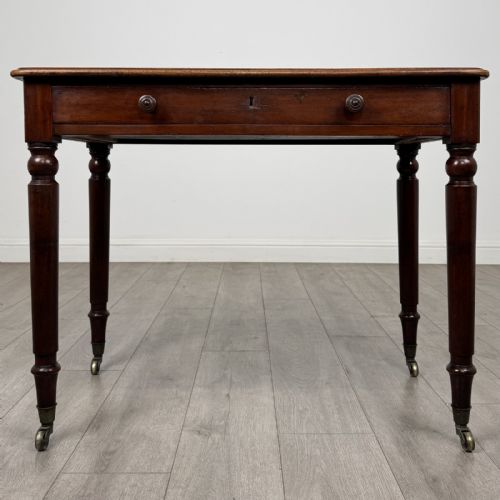
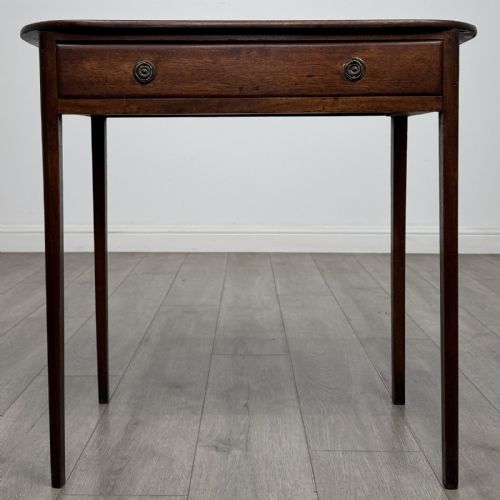
Mahogany Side Table with Drawer
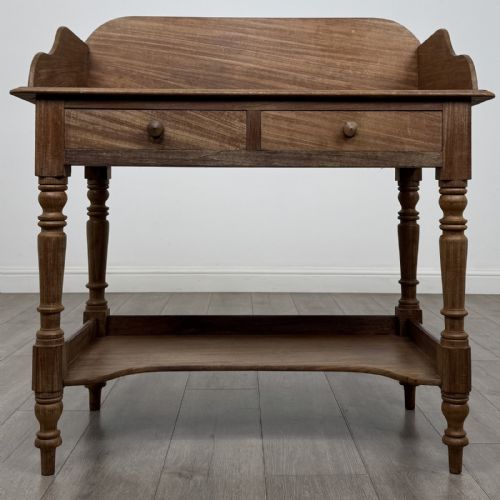
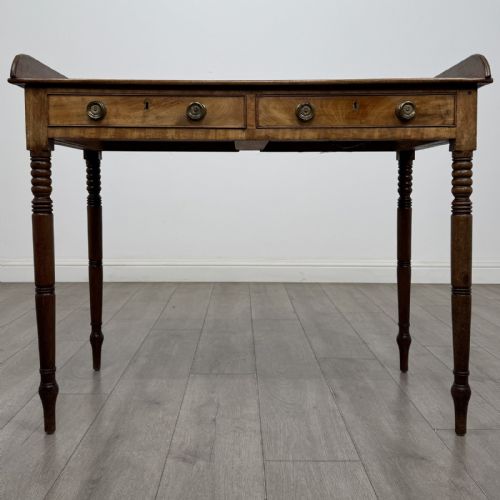
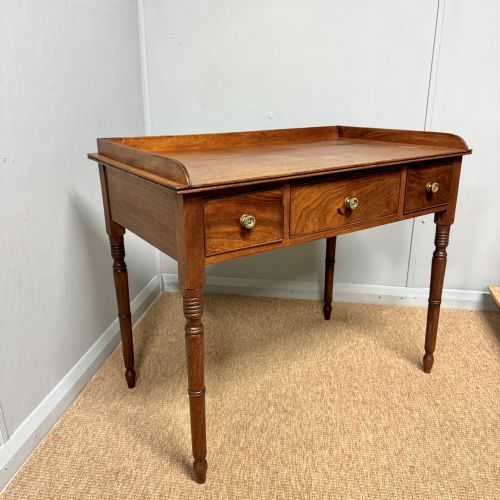
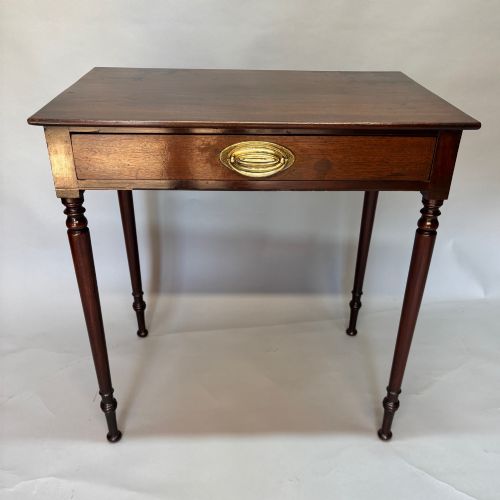
A mahogany side table with drawer serves as a versatile piece of furniture built across Georgian, Victorian, and Edwardian periods.
Mahogany Side Table with Drawer
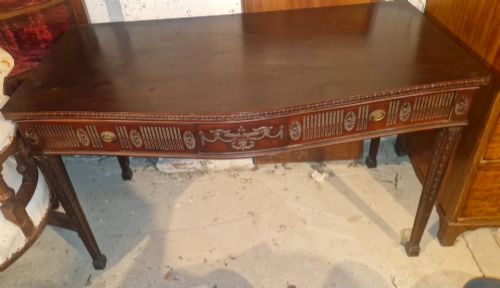
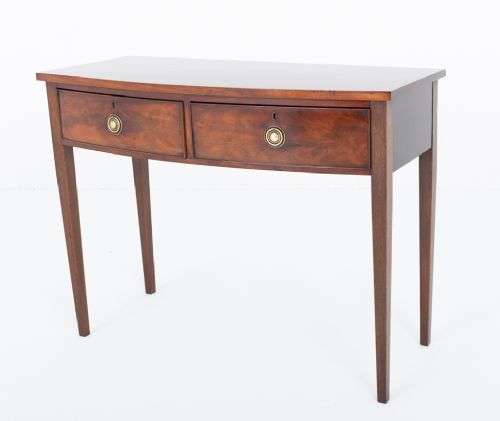
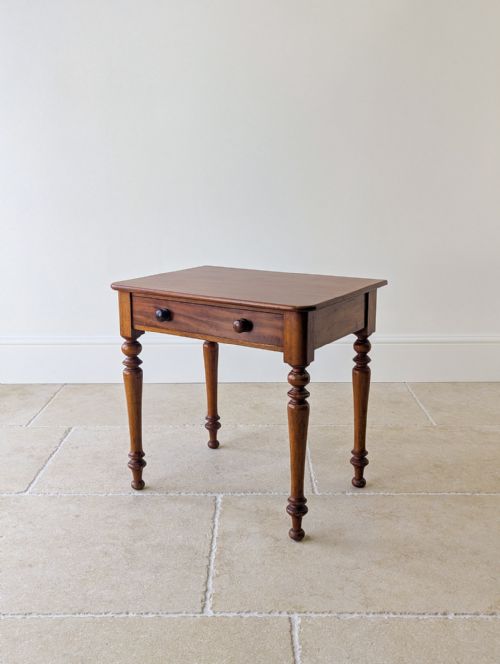
A mahogany side table with drawer brings functional surface space and concealed storage to a room through forms that span writing tables, lowboys, and occasional tables.
The selections on this page draw from 18th-century Georgian designs through to Edwardian interpretations, reflecting changing domestic needs over centuries.
Buyers most frequently encounter Victorian and Edwardian examples featuring single or multiple frieze drawers, often resting on turned or tapering legs.
What Varies in Quality
The distinction between standard domestic furniture and finer cabinet work rests on the selection of timber figures, such as flame or golden mahogany grains, and the crispness of carved details like brackets or stiles.
Construction integrity determines the upper tiers of the range, visible in the smooth running of dovetailed drawers, the retention of original brass or wooden handles, and the stability of the frame.
Listings feature mahogany side tables paired with materials like brass, leather, satinwood, and boxwood across Georgian to Edwardian periods.
Gillows of Lancaster·J A Mein·Druce and Co
The Mahogany Side Table with Drawer Glossary
- Frieze drawer
- A drawer integrated directly beneath the top surface of a table. This is the primary storage compartment found in most side tables.
- Crossbanding
- A strip of veneer laid perpendicularly to the main grain along the border of a top or drawer front. This decorative technique highlights the edge of the furniture.
- Lowboy
- A small dressing or side table featuring one or more rows of drawers supported by relatively tall legs. Georgian versions are particularly sought after by collectors.
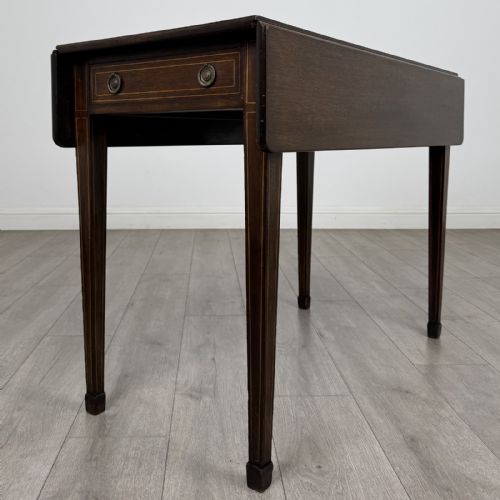
- Pembroke table
- A drop-leaf table with hinged flaps on either side and a single drawer. It was designed to be easily moved and expanded when needed.
- Dovetail
- A joint formed by interlocking wedge-shaped fingers used to secure drawer corners. Hand-cut variations help indicate earlier periods of manufacture.
Mahogany Side Table with Drawer: Frequently Asked Questions
What rooms suit a side table?
These tables adapt easily to hallways, living rooms, and bedrooms where surface space is needed alongside discreet storage.
Their compact proportions allow them to sit neatly against walls or beside seating without dominating the floor plan.
How do I spot a Georgian table?
Georgian pieces often display simpler, robust lines with timber grains that have matured to a deep reddish brown.
Look for structural clues like hand-cut drawer dovetails and period-appropriate hardware such as swan neck handles.
Are these tables sturdy enough for daily use?
Solid mahogany construction provides the durability required for everyday household tasks like writing or placing lamps.
Checking the joints and legs ensures the piece remains stable and capable of supporting regular weight.
What is the difference between a side table and a console?
Console tables traditionally stood against a wall, sometimes relying on wall brackets for support, whereas side tables are freestanding.
Both forms frequently incorporate drawers, making their modern usage in hallways quite similar.