
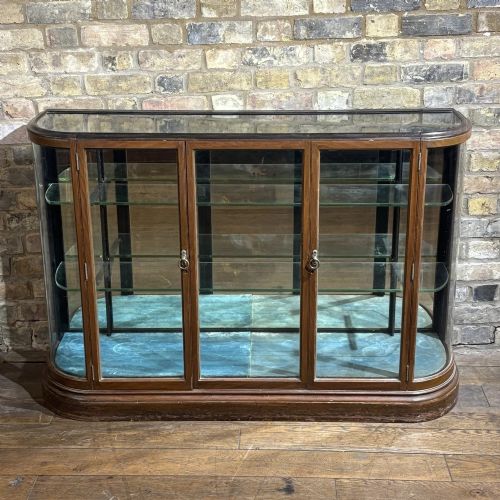


Mahogany Shop Counter Display
A mahogany shop counter display brings the refined utility of Victorian and Edwardian commerce directly into a modern interior.
Mahogany Shop Counter Display
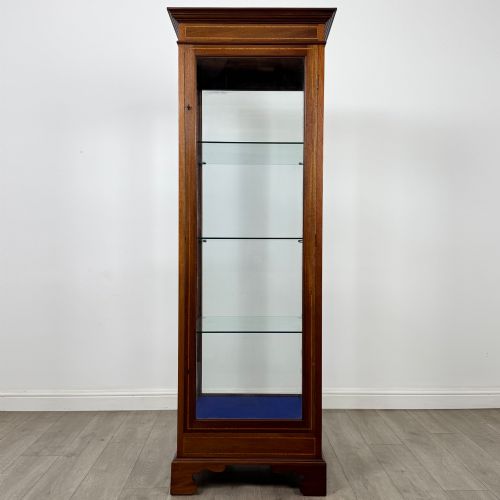
A mahogany shop counter display serves to present wares clearly to customers while protecting them behind glass in a retail environment. These commercial fittings range from small tabletop cases and apothecary boxes to large freestanding counters and haberdashery units.
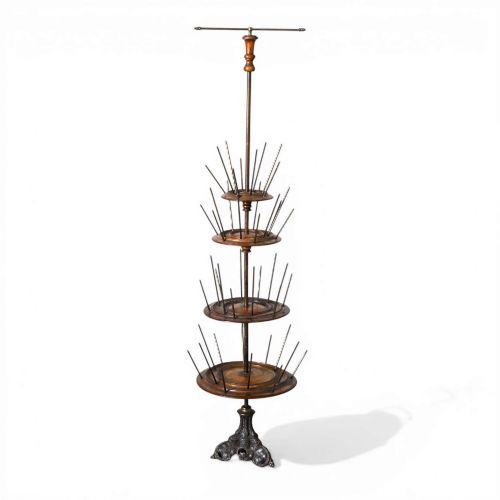
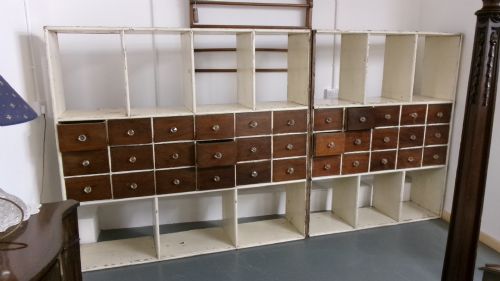
The pieces on this page originate predominantly from the Victorian, Edwardian, and 1920s commercial eras, reflecting the high standards of nineteenth and early twentieth-century shop fitters. Common forms include bow-fronted cabinets, tiered cotton reel stands, and banks of drawers designed for specific trades.
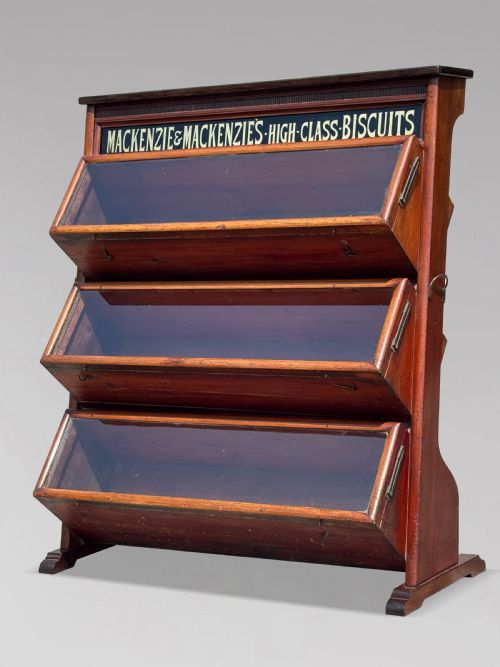
Specialised variations often bear the names of confectionery and pharmaceutical brands such as Fry's Chocolate, Rowntree's, and various chemists. These branded pieces served as both practical storage and point-of-sale advertising in traditional British shops.
How They Were Made
Makers built these heavy commercial fittings primarily using solid mahogany and mahogany veneers over secondary timbers like pine and hardwood. This dark wood framework was joined securely to withstand daily retail use and polished to a smooth finish.
Glazing forms the central visual component of each case, allowing patrons to view contents from multiple angles while keeping goods secure. Brass hardware, mirrored interior panels, and fabric linings frequently complement the woodwork to enhance the display.
Cotton reel display trees rotated gracefully so Victorian seamstress customers could spin their way to the perfect shade of thread.
What Varies in Quality
The distinction between ordinary utility fittings and exceptional pieces lies in the subtlety of the woodwork and the ambition of the form. Cabinets featuring complex curves, such as bow ends or pentagonal geometry, demand superior joinery compared to simple rectangular boxes.
Original maker attribution and intact period signage elevate a piece significantly. Shop fittings bearing the marks of known commercial cabinet makers or authentic contemporary advertisements hold greater historical interest than unmarked examples.
F. Sage & Co.·John Stow Ltd of Bradford·E. Pollard & Co. Ltd.
The Mahogany Shop Counter Display Glossary
- Haberdashery cabinet
- A specialised multi-drawer unit designed for storing small sewing items like buttons, threads, and ribbons.
- Bow end
- A curved glass or wooden end panel that softens the rectangular profile of a display counter.
- Chemist shop fitting
- Specialised cabinetry featuring small drawers and compartments originally used to organise medicines and apothecary supplies.
- Countertop display case
- A smaller glazed showcase intended to sit directly upon a shop counter for eye-level merchandising.
- Shop fitter
- A specialist craftsman or firm responsible for designing and installing the interior fixtures of commercial premises.
Mahogany Shop Counter Display: Frequently Asked Questions
What were mahogany shop counter displays used for?
These pieces sat in Victorian and Edwardian shops to showcase and protect small goods such as chocolate, cotton reels, and tobacco. Shopkeepers used the glazed enclosures to tempt customers while keeping delicate stock clean and secure.
Over time, these counters became central to the interior architecture of traditional British retail spaces, combining storage with point-of-sale merchandising.
How do I date a shop display cabinet?
Dating relies on observing construction methods, timber choices, and stylistic cues from periods like the Victorian era or the 1920s. Formats shifted from heavy Victorian timber frames toward lighter Edwardian glazing and later Art Deco commercial lines.
Maker plaques, original brass hardware, and painted brand signage also help narrow down the decade of manufacture.
Can I use these cabinets in a modern home?
These pieces transition easily into domestic interiors to display collections, glassware, or books behind protective glass. Their sturdy mahogany construction and glass panels bring character and practical surface space to living rooms or kitchens.
Tabletop versions fit neatly onto sideboards, while larger freestanding counters function well as statement furniture pieces.
What is the difference between a counter and a cabinet?
Counters generally provide a working surface for the shopkeeper on one side and a display area facing the customer on the other. Cabinets function purely as display units and are typically designed to sit atop existing furniture or stand independently.
Both utilise mahogany framing and glass panes, but their original placement behind or upon the shop floor dictated their structural layout.