




Mahogany Serpentine Server
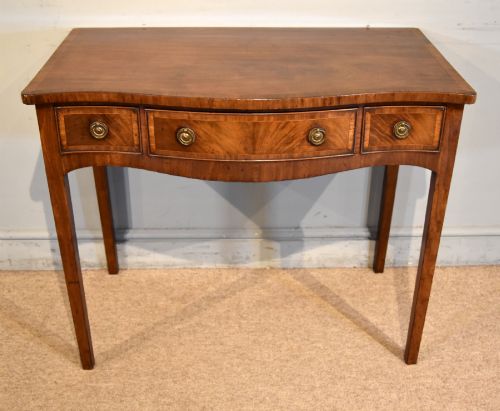
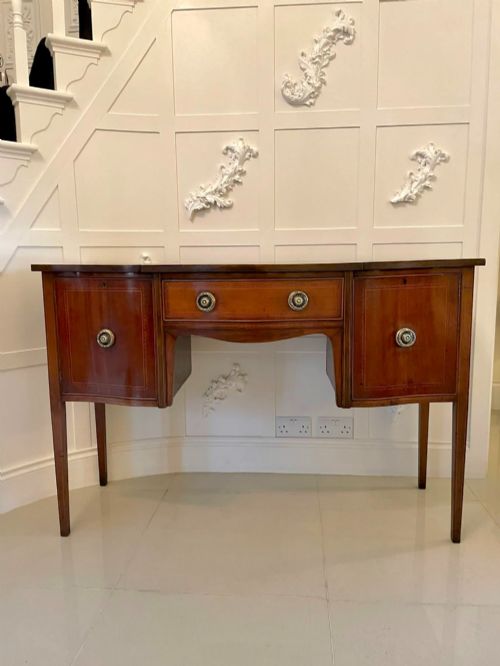
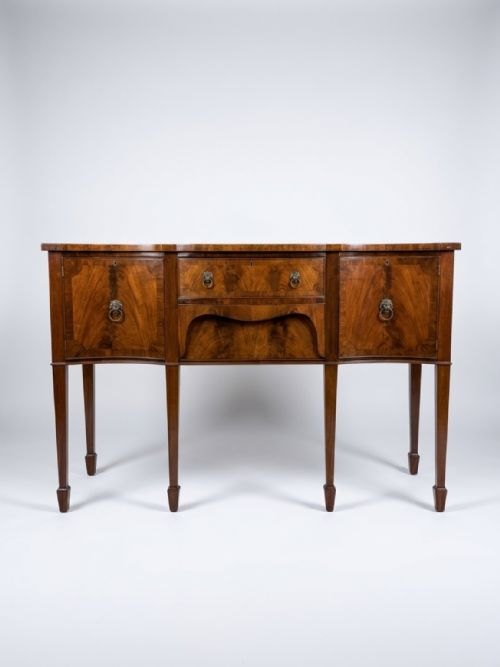
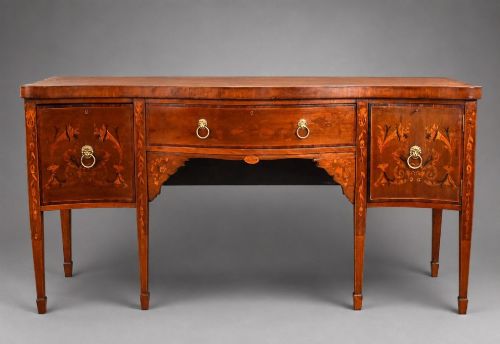
A mahogany serpentine server brings sculptural curve and rich timber grain to a dining room, offering both practical surface space and period elegance.
Mahogany Serpentine Server
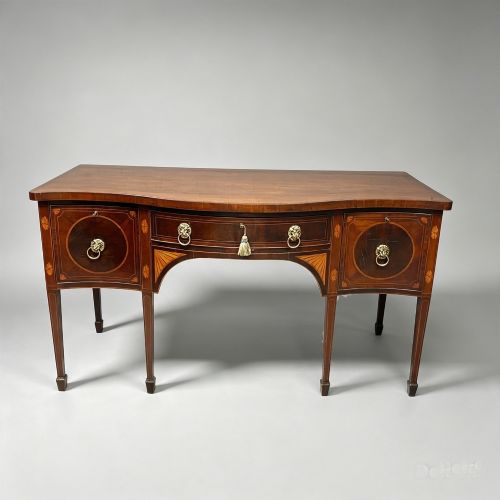
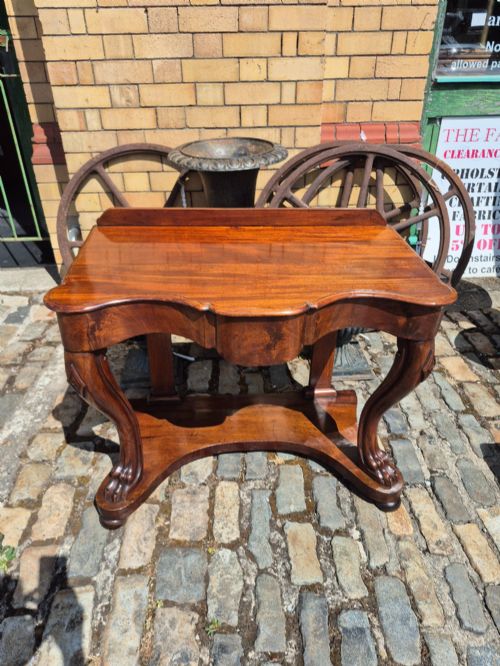
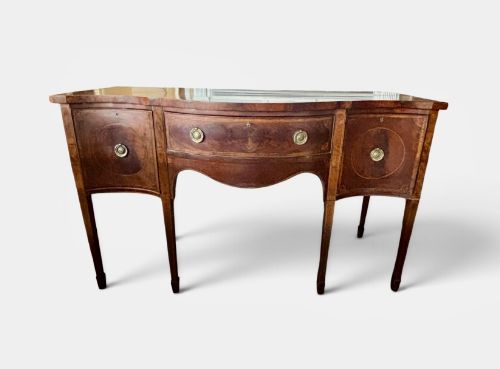
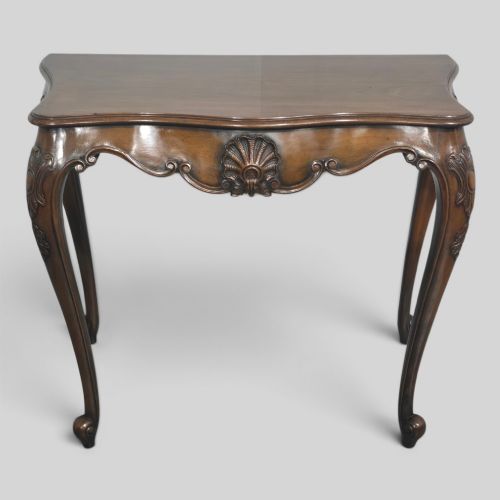
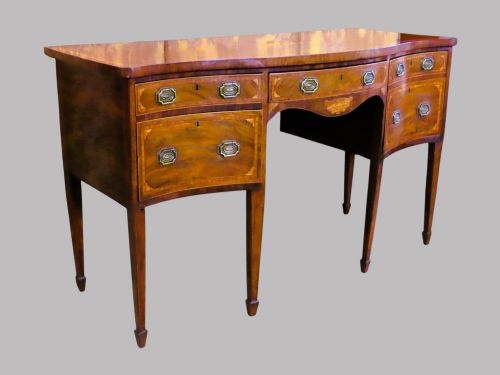
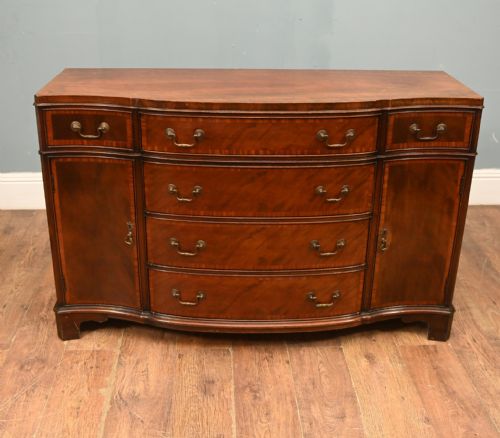
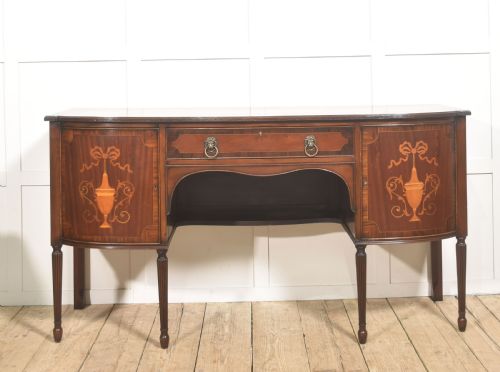
When you search for a mahogany serpentine server, you look for a substantial dining room piece featuring a distinct undulating front contour. The pieces found here range from robust Georgian and George III originals to later Edwardian and revival interpretations.
The form functions primarily as a sideboard, serving table, or buffet designed for dining room hospitality and display. Most examples you encounter belong to the Georgian and Edwardian eras, combining deep timber tones with curved drawer and cabinet layouts.
How they were made
Cabinet makers constructed these servers using solid mahogany and carefully selected flame mahogany veneers laid over secondary timbers. The undulating serpentine shape required precise woodworking to curve the timber frames and drawer fronts without losing structural integrity.
Detailing often involved contrasting stringing and banding using satinwood and boxwood inlay. Brass hardware, including handles and occasional gallery rails, completed the construction.
The listings on this page span the Georgian, Regency, Victorian, and Edwardian eras, executed primarily in mahogany with satinwood and boxwood inlay.
What varies in quality
The visual strength of a mahogany serpentine server depends heavily on the choice of timber and the grain figure in the veneer. Premium examples display lively flame patterns across the curved drawers, matched symmetrically from the centre outwards.
Refinement of the serpentine sweep and the crispness of any inlaid satinwood and boxwood set the finer pieces apart from standard workshop output. Original brass fittings and smooth drawer construction further distinguish superior craftsmanship.
Gillow
The Mahogany Serpentine Server Glossary
- Serpentine
- A front contour that curves outward in the centre and inward at the sides, creating an undulating wave shape. This profile demands advanced woodworking skill to execute cleanly on a sideboard.
- Flame mahogany
- A highly figured wood grain pattern resembling flickering flames, achieved by cutting across the branch forks of the tree. Cabinet makers reserved this timber for prominent drawer fronts.
- Inlay
- A technique where contrasting woods like boxwood or satinwood are fitted into recesses flush with the surface to create geometric borders. It defines the decorative style of Sheraton revival pieces.
- Gallery
- A raised wooden or brass rail positioned around the top edge of a serving table to prevent items from sliding off. They appear frequently on serving tables and servers.
- Chiffonier
- A compact low sideboard or cabinet with doors enclosing shelves, sometimes found alongside dining servers in later periods. It provides enclosed storage for glassware and dining linen.
Mahogany Serpentine Server: Frequently Asked Questions
What is a mahogany serpentine server used for?
These pieces function primarily as serving tables and sideboards in dining rooms, providing a surface for laying out food and drinks during meals. They also incorporate drawers and cupboards for storing cutlery, linen, and dining accessories.
Historically, they sat against the dining room wall to assist hosts during large dinner parties. Today, they serve a similar practical function while acting as a focal point for displaying decorative objects.
How do I date a serpentine sideboard?
Dating relies on examining the timber, secondary woods, construction methods, and decorative styles visible across the piece. Georgian and George III examples display robust proportions and hand-cut joinery, whereas Edwardian and revival pieces often feature lighter framing and machine-cut elements.
Inlay styles also offer clues, with delicate satinwood banding pointing towards the Sheraton revival of the late nineteenth and early twentieth centuries. Comparing the drawer linings and backboards helps confirm the period of manufacture.
Are these servers suitable for modern dining rooms?
Their classic proportions and warm timber tones allow them to anchor both traditional and contemporary dining spaces easily. The curved front adds a softer visual element to a room compared to straight-sided sideboards.
They provide useful surface space and storage without overwhelming the surrounding interior design. Regular polishing with traditional wax keeps the timber nourished and maintains the sheen.
What is the difference between a server and a sideboard?
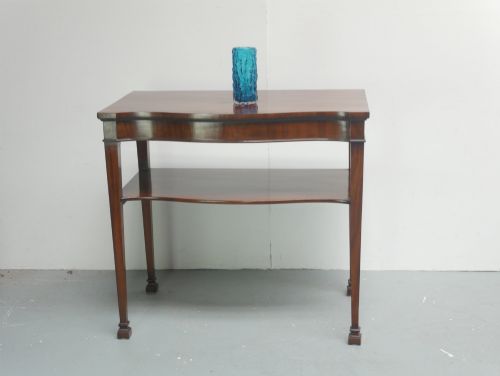
Servers and sideboards share overlapping forms, though serving tables often emphasise an open lower structure or a lighter table-like base. Sideboards more commonly incorporate enclosed cupboards flanking a central drawer.
Both terms describe dining room furniture designed for serving food and storing tableware. The specific designation often depends on whether the piece prioritises open display or enclosed storage.