





Mahogany Serpentine Front Bureau
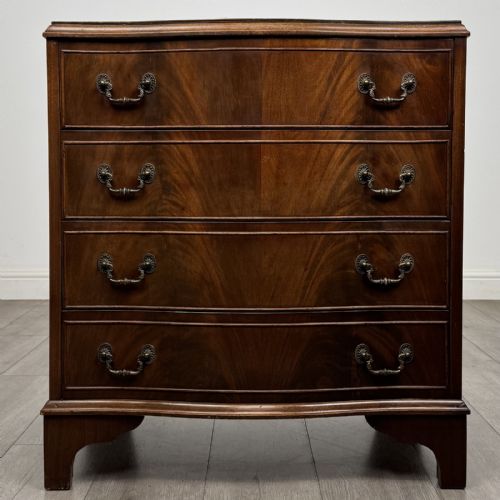
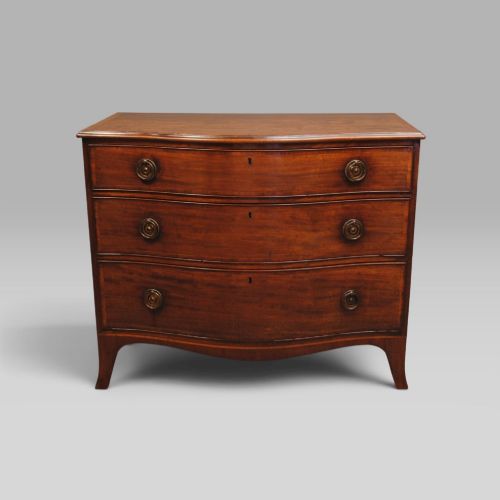
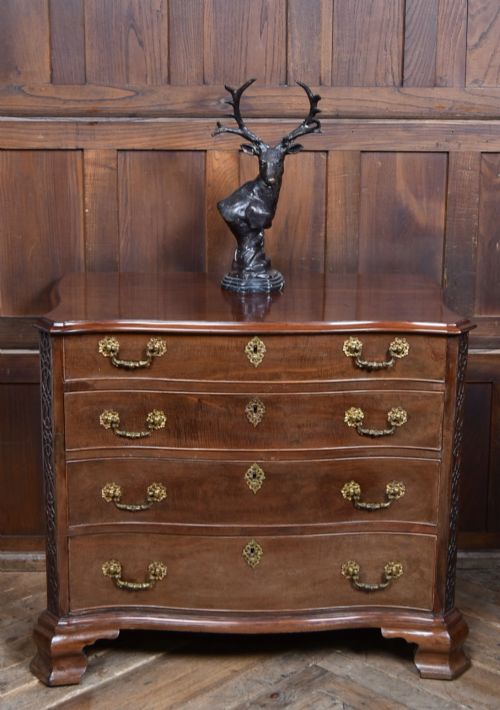
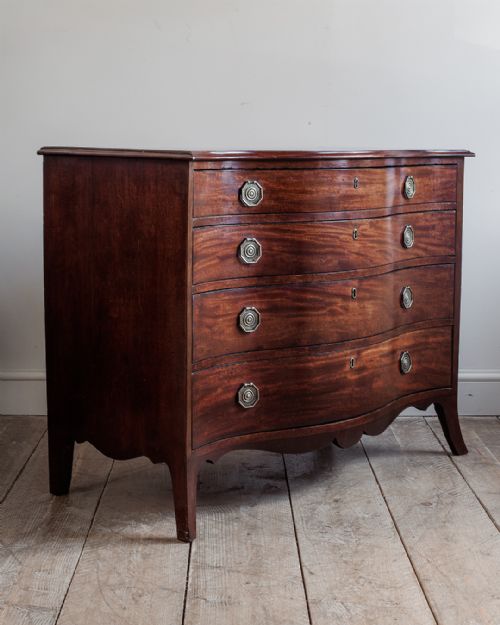
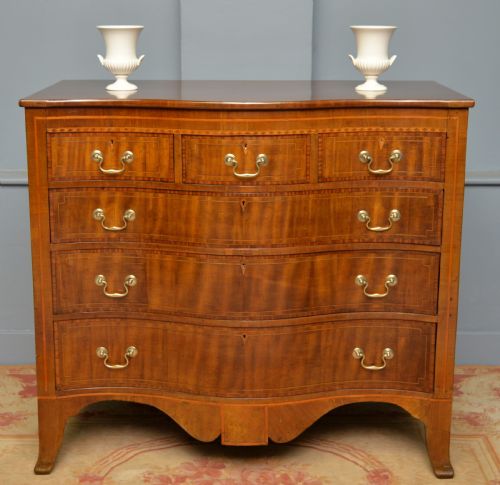
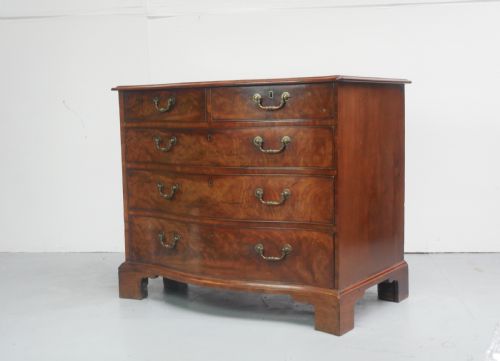
A mahogany serpentine front bureau brings together rich timber and the undulating sweep of eighteenth-century design for a practical workspace.
Mahogany Serpentine Front Bureau
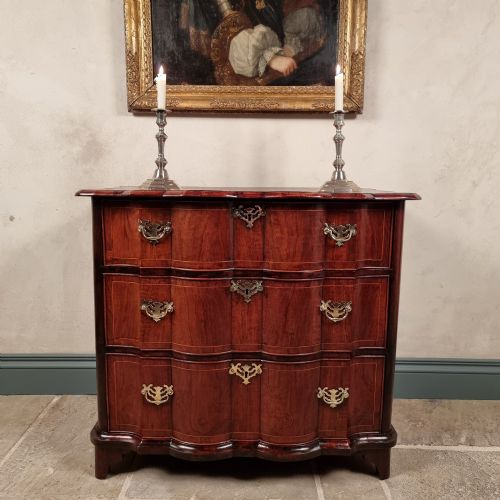
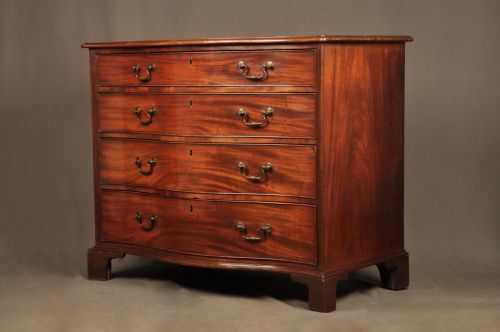
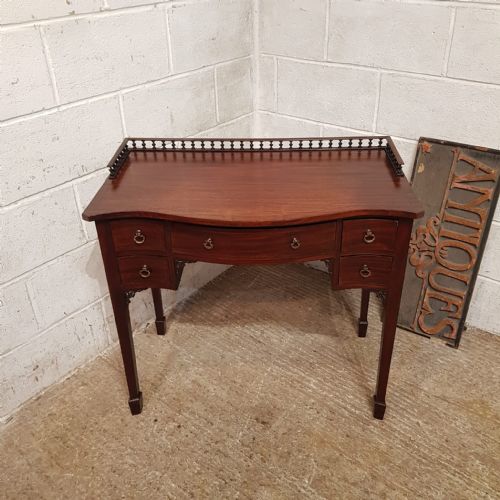
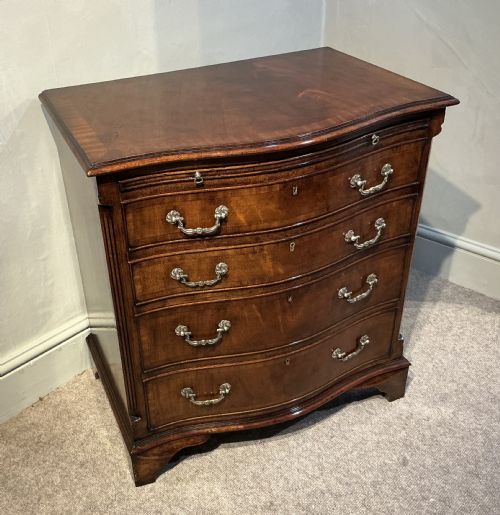
A mahogany serpentine front bureau presents a rhythmic, curved drawer line that draws the eye across the polished grain. Buyers searching for a mahogany serpentine front bureau will find primarily chest of drawers forms alongside writing tables, desks, and secretaire bookcases.
The selections span distinct eras from the Georgian period through to Edwardian revivals. Eighteenth-century examples sit alongside later nineteenth-century interpretations and early twentieth-century pieces.
Makers and workshops across England, Scotland, and France contributed to this lineage. The forms range from compact kneehole desks to tall bookcases fitted with sloping fitted writing compartments.
How they were made
Cabinetmakers constructed these pieces primarily from solid and veneered mahogany, often selecting figured timber for the main facade. Oak frequently served as secondary wood for drawer linings and internal framing.
Detailing relied upon contrasting timbers such as satinwood and boxwood inlay alongside brass handles and escutcheons. Leather writing surfaces and occasional glass panels completed the functional elements of the desks and bookcases.
Mahogany Serpentine Front Bureau Retail Price Guide 2026
Typical asking prices for mahogany serpentine front bureau among the pieces listed under this phrase on Sellingantiques today, from the lower quarter to the upper quarter. They describe what is for sale here now, not the wider market.
Some desks hide secret compartments behind miniature pigeonholes, waiting for owners to discover forgotten letters.
What varies in quality
The ambition of the silhouette and the handling of the curved timber define the upper tier of these pieces. Smooth, continuous undulations across the drawer fronts demand superior cabinetmaking skill compared to rigid flat surfaces.
The choice of timber grain, from fiddleback mahogany to finely figured veneers, separates standard production from exceptional examples. Integrated stringing, boxwood inlay, and well-chosen brass hardware elevate the finish.
Maple and Co.
The Mahogany Serpentine Front Bureau Glossary
- Serpentine
- A shaped furniture front featuring a convex centre flanked by concave curves, creating a gentle wave effect. This silhouette requires precise carpentry to fit drawers smoothly within the undulating frame.
- Fiddleback
- A type of mahogany figure displaying rippled horizontal grain patterns resembling the back of a violin. Cabinetmakers utilised this decorative timber on prominent drawer fronts to catch the light.
- Kneehole
- A compact desk or dressing chest featuring a central recess for the legs, flanked by banks of small drawers. This form became popular during the eighteenth century for private writing rooms.
- Secretaire
- A cabinet or bookcase incorporating a fitted drop-front drawer that serves as a writing desk. Inside, small pigeonholes and secret drawers organise correspondence.
- Inlay
- The technique of inserting contrasting pieces of wood, such as boxwood and satinwood, into recesses to form decorative patterns. This ornamentation defines many Georgian and revival pieces.
Mahogany Serpentine Front Bureau: Frequently Asked Questions
What is a serpentine front?
A serpentine front describes furniture shaped with a convex curve flanked by two concave curves, forming a continuous undulating line. This profile adds movement and elegance to chests of drawers and desks.
Cabinetmakers had to shape solid timber or apply veneers with extreme precision to ensure the drawers operated smoothly within the curved framework.
How do I spot a Georgian piece?
Georgian pieces typically display proportions, timber selections, and construction methods characteristic of the eighteenth century. Look for oak secondary woods inside drawers and traditional dovetailing.
Later revivals from the nineteenth and twentieth centuries often imitate these proportions but utilise different internal construction techniques and modern hardware fixings.
Where were these desks used?
These desks and writing tables served private studies, bedrooms, and libraries as dedicated spaces for correspondence and business management. Secretaire bookcases combined storage for volumes with a pull-out writing surface.
Their refined facades meant they were positioned prominently in entertaining rooms rather than hidden away in utilitarian workspaces.
What woods are used?
Mahogany forms the primary show wood across these pieces, frequently enhanced by figured grains like fiddleback. Secondary timbers like oak appear inside drawer linings and carcass backs.
Decorative accents often incorporate boxwood and satinwood for contrasting stringing and geometric inlay work.