


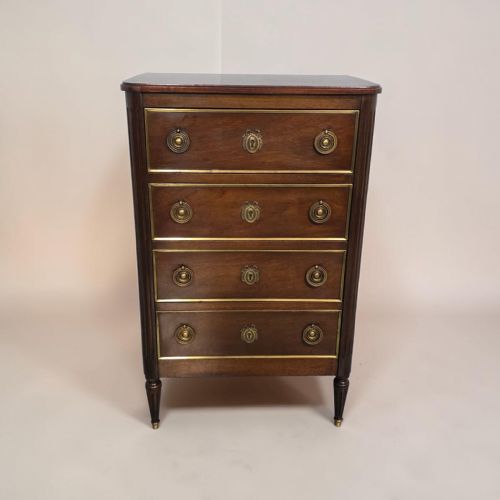


Mahogany Semainier Chest
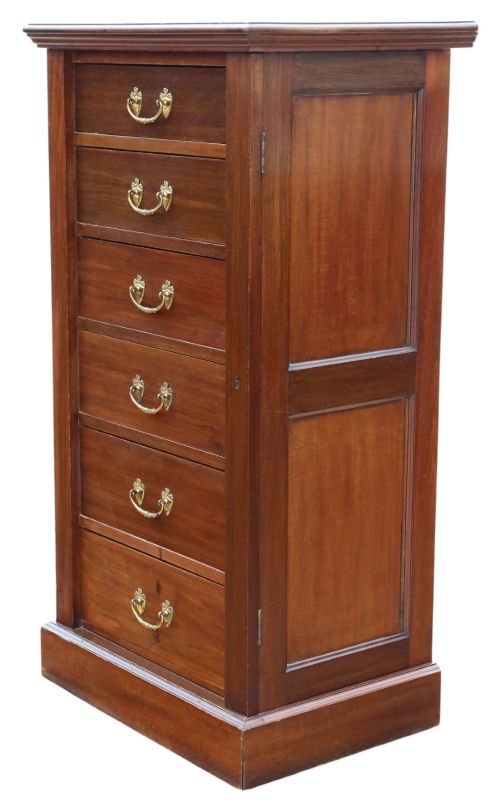
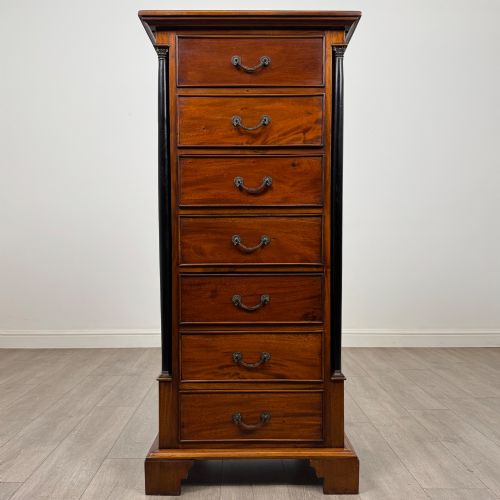
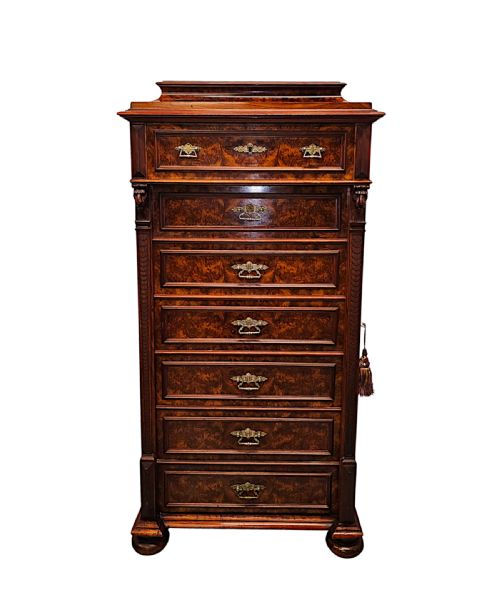
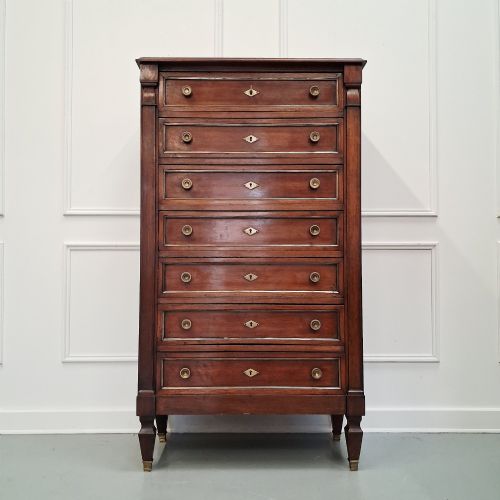
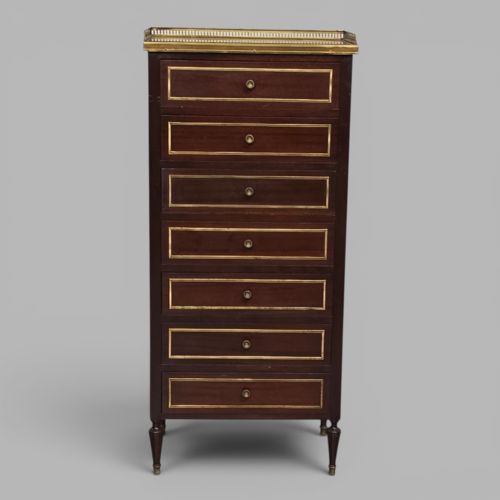
A mahogany semainier chest offers seven stacked drawers for the week, combining narrow proportions with substantial vertical storage.
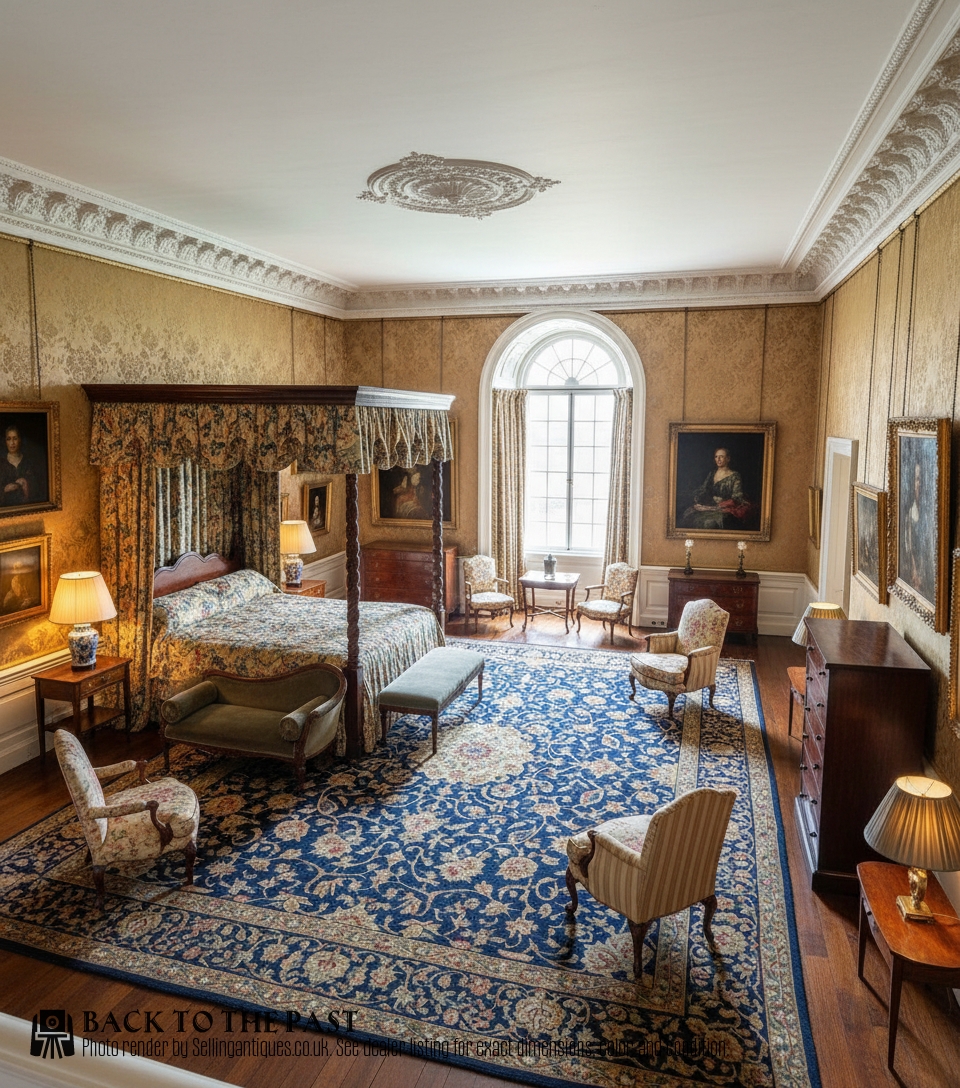
Mahogany Semainier Chest
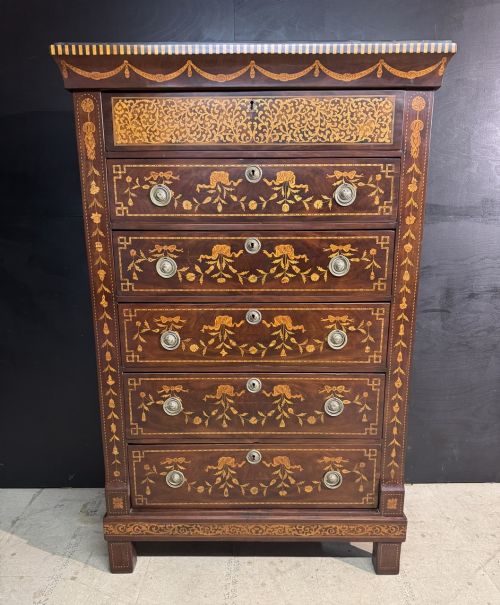
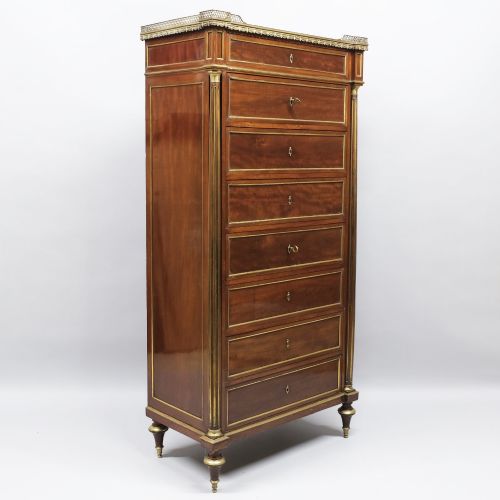
A mahogany semainier chest is a tall, slender drawer unit designed primarily for bedroom use, originating from French traditions where each tier held the clothing required for a single day of the week. Buyers searching for a mahogany semainier chest encounter variations that span the Victorian era, Edwardian period, and continental styles, including French Empire pieces.
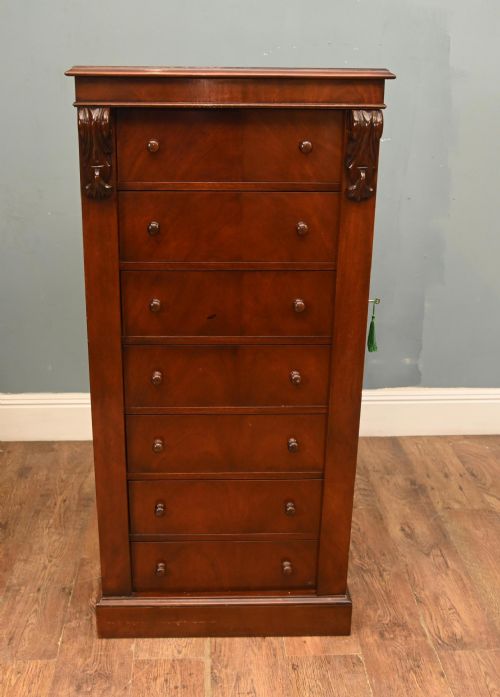
The format frequently overlaps with Wellington chests and tall pedestal cabinets, sharing the characteristic narrow footprint and multiple stacked drawers. Most examples met on this page appear in solid mahogany or flame mahogany veneer, occasionally topped with marble or fitted with brass mounts.
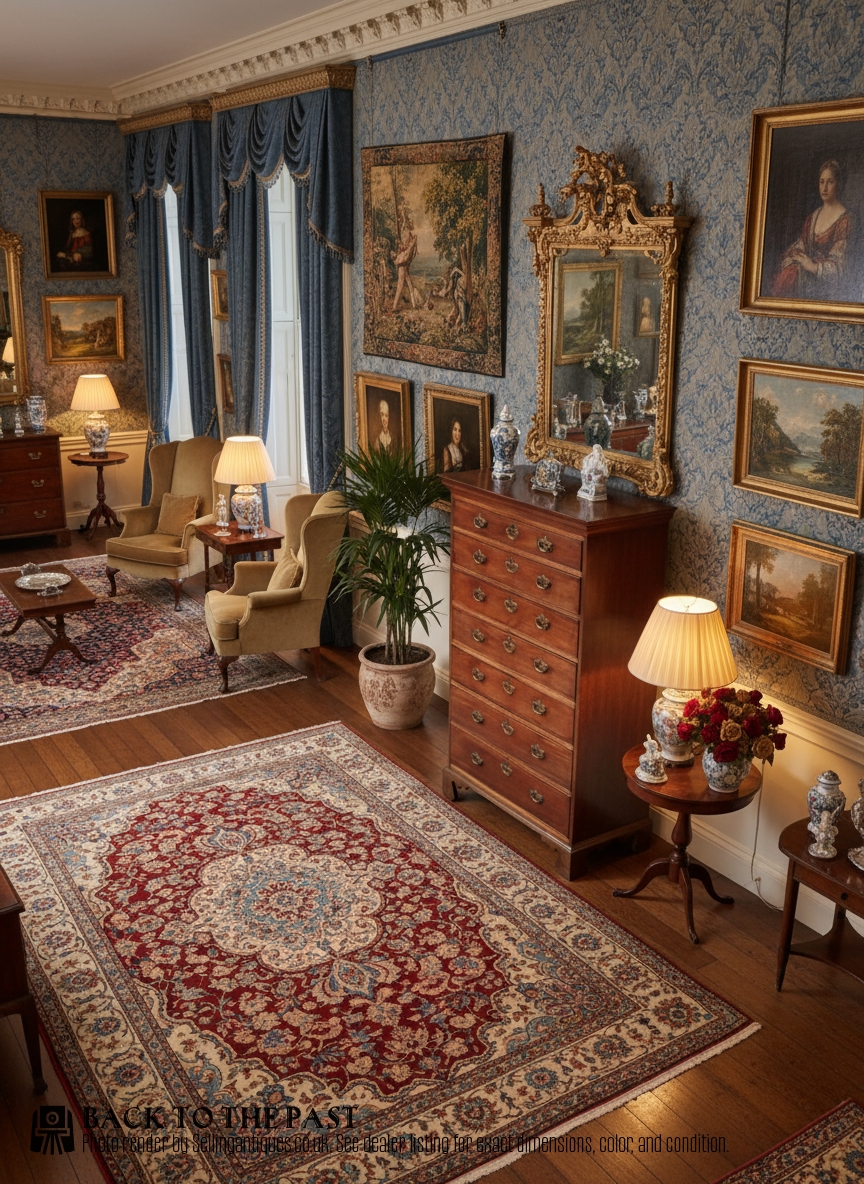
How they were made
Cabinetmakers built these tall carcases using pine or mahogany as a structural timber, applying figured veneers such as flame mahogany across the drawer fronts to create rippled grain patterns. Surface decoration often incorporated satinwood stringing, ormolu, and gilt bronze mounts, particularly on pieces influenced by French classical design.
Hardware played an essential mechanical role in narrower formats, utilising locking stiles or secret locking bars to secure the entire stack of drawers with a single turn of a key. Brass handles, escutcheons, and occasional marble tops completed the construction of these substantial vertical pieces.
Mahogany Semainier Chest Retail Price Guide 2026
Typical asking prices for mahogany semainier chest among the pieces listed under this phrase on Sellingantiques today, from the lower quarter to the upper quarter. They describe what is for sale here now, not the wider market.
Listings feature pieces spanning the 18th, 19th, and 20th centuries, executed in mahogany, flame mahogany veneer, satinwood, and pine.
What varies in quality
The standard of a mahogany semainier chest depends heavily on the selection of timber veneers and the crispness of applied metalwork. Finely figured flame mahogany matched symmetrically across seven drawers indicates superior cabinetmaking compared to plain timber carcases.
Structural integrity in such a tall, narrow form relies on robust drawer linings, dovetail joints, and functioning locking mechanisms. Pieces retaining original brass mounts, intact marble slabs, and smooth-running timber runners represent the higher tier of surviving examples.
Maple and Co
The Mahogany Semainier Chest Glossary
- Semainier
- A tall, seven-drawer chest traditionally associated with French domestic interiors. Each drawer corresponds to a day of the week.
- Wellington chest
- A tall, narrow chest of drawers secured by a hinged locking side stile. This design originated in the nineteenth century.
- Flame mahogany
- A veneer cut from timber fork where branches join the main trunk, yielding a distinctive flickering pattern. Cabinetmakers prized this figure for principal display surfaces.
- Ormolu
- Cast brass that has been gilded with gold leaf or mercury amalgam. It appears frequently as decorative mounts on French Empire furniture.
- Cartonnier
- A specialised piece designed for holding papers and documents, often built as a tall stack of shallow drawers.
Mahogany Semainier Chest: Frequently Asked Questions
What is a semainier chest used for?
A semainier provides high-capacity vertical storage within a compact floor footprint, originally intended for organising weekly garments. The seven stacked drawers make it practical for sorting clothing or accessories in modern bedrooms.
The narrow proportions allow the cabinet to fit into tighter spaces where a wide chest would not go. It serves equally well as a tall bedside cabinet or a standalone storage piece.
How do I tell a semainier from a Wellington chest?
A semainier typically references a French style with seven drawers, while a Wellington chest is a British form featuring a locking side bar. Both share a tall, narrow profile that distinguishes them from standard chests of drawers.
Many listings use the terms interchangeably due to their similar dimensions and drawer counts. Examining the locking mechanism and regional decorative details helps clarify the origin.
Are these chests French or British?
The evidence shows examples from both traditions, with French Empire and Dutch pieces appearing alongside Victorian and Edwardian British formats. French models frequently incorporate marble tops, ormolu mounts, or marquetry.
British versions often follow the Wellington format in solid or veneered mahogany. Both regional types maintain the characteristic narrow proportions.
Do all these chests have locking bars?
Not all examples feature a locking side stile, though it remains a common characteristic of Wellington styles and certain tall narrow cabinets. Some pieces rely on individual drawer locks rather than a single bar.
Secret locking mechanisms built into the side pilaster are typical of mid-nineteenth-century British pieces. French semainiers more often feature simple drawer construction without the locking stile.