

Mahogany Secretary Bureau Desk
A mahogany secretary bureau desk brings together a practical writing surface and enclosed storage, shaped by centuries of cabinet-making tradition.
Mahogany Secretary Bureau Desk
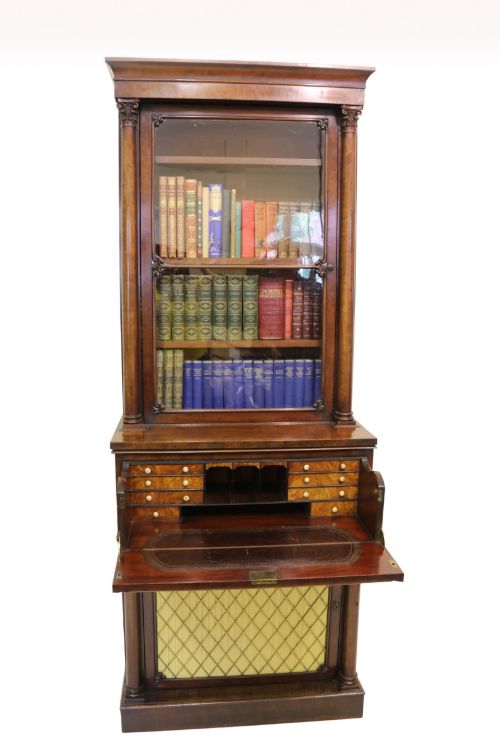
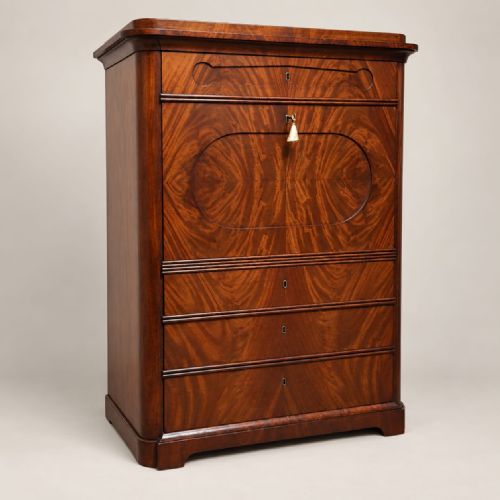
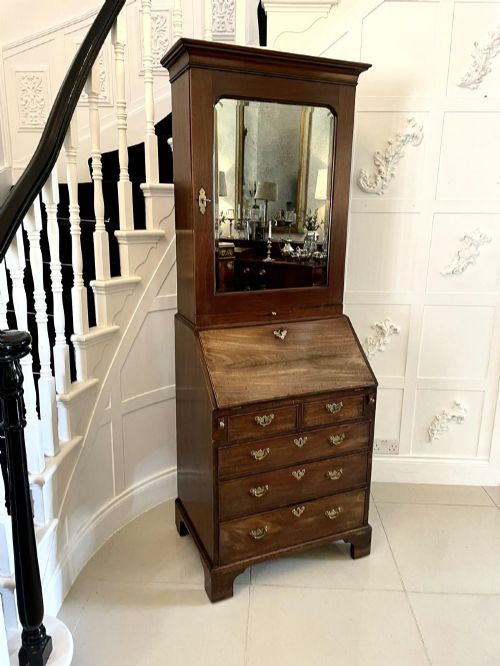
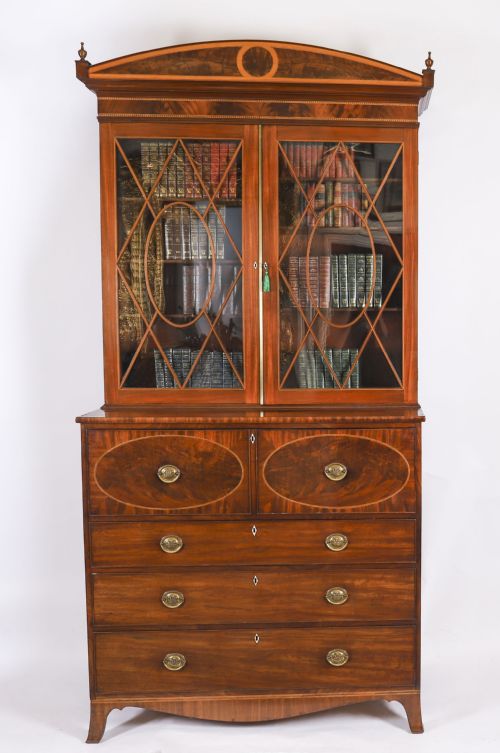
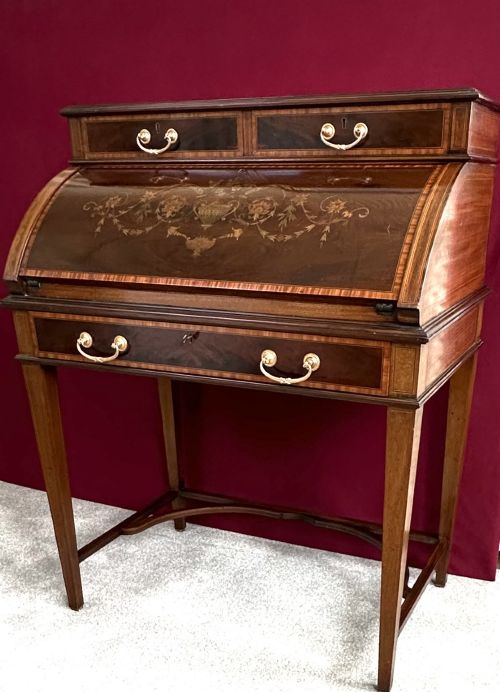
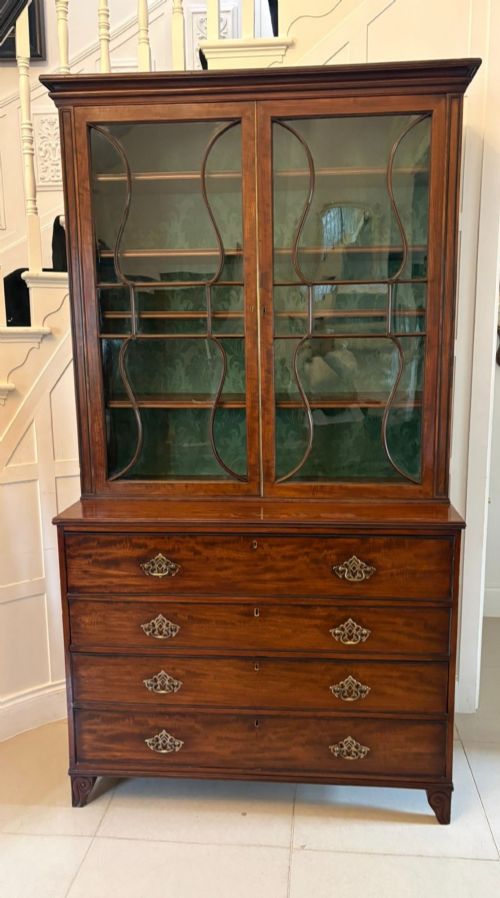
A mahogany secretary bureau desk encompasses fall-front bureaux, cylinder desks, and tall bookcase combinations designed for domestic writing and storage. These pieces emerge primarily from Georgian, Regency, William IV, and Edwardian periods, reflecting changing domestic requirements across the eighteenth and nineteenth centuries.
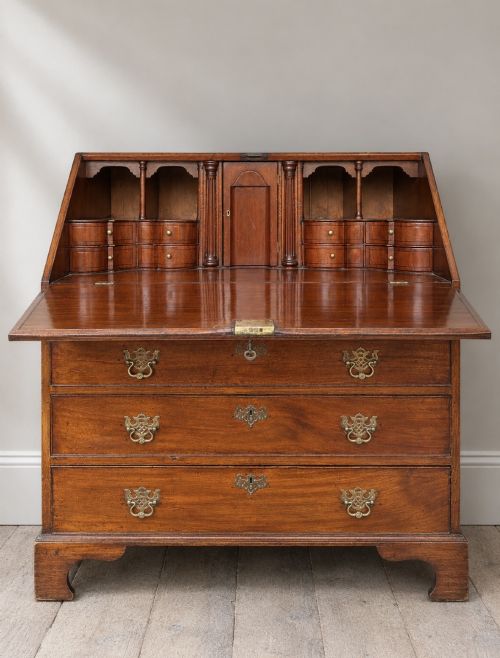
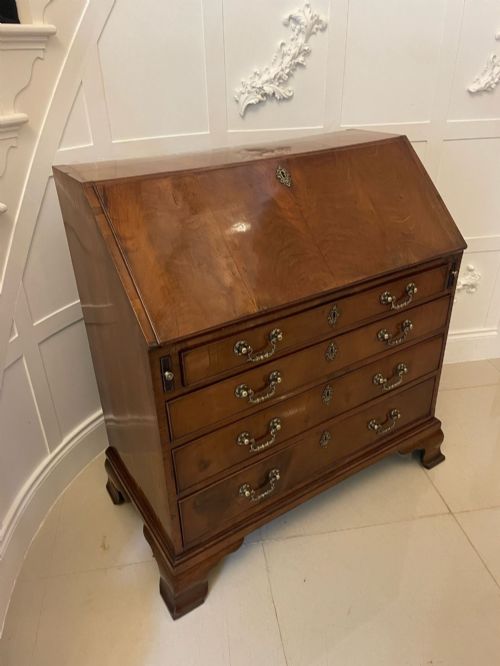
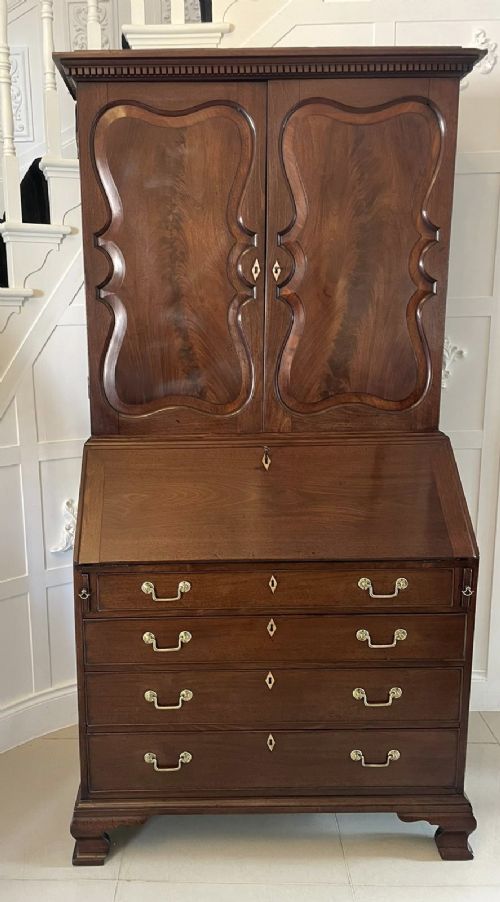
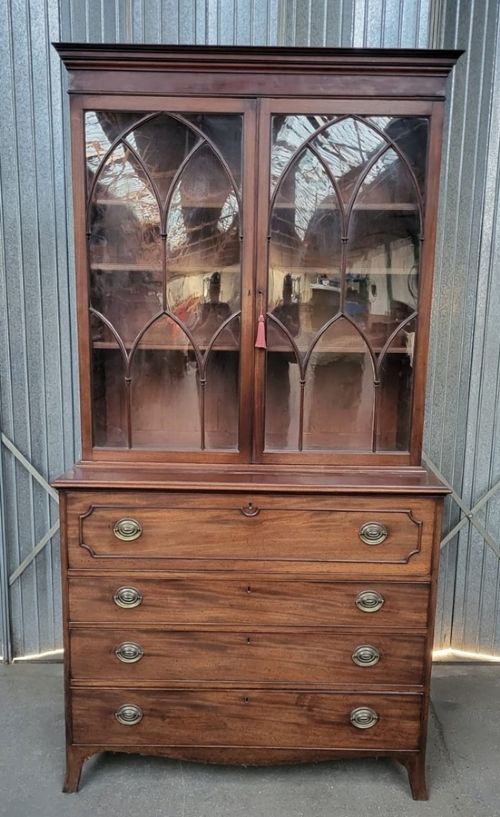
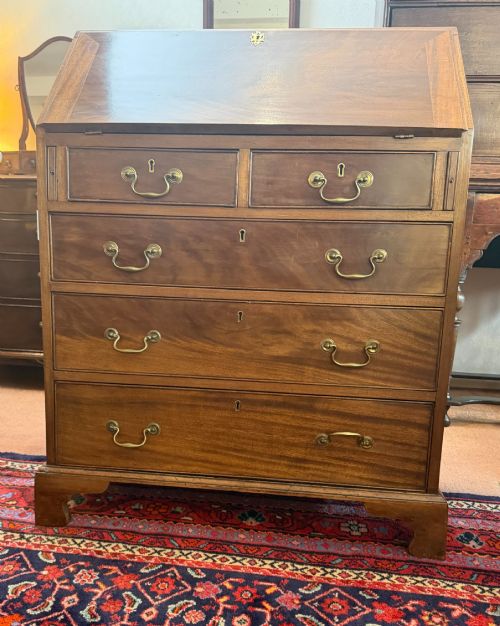
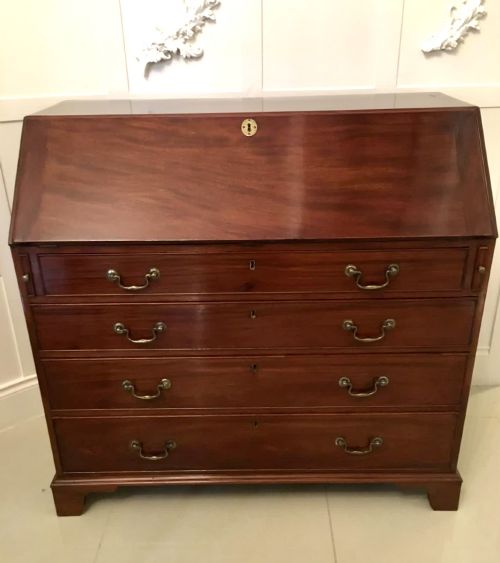
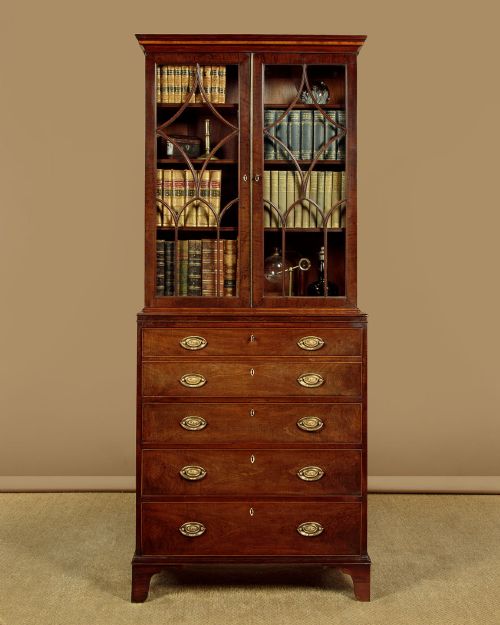
The selections on this page range from compact eighteenth-century examples resting on bracket feet to taller secretaire bookcases fitted with glazed upper doors. Buyers encounter both simple drop-front writing desks and complex cabinet forms featuring internal drawers and pigeonholes.
Makers utilised resilient timbers to construct pieces that served studies, libraries, and drawing rooms. The persistence of these forms demonstrates their enduring utility in traditional and modern interiors alike.
Materials and Technique
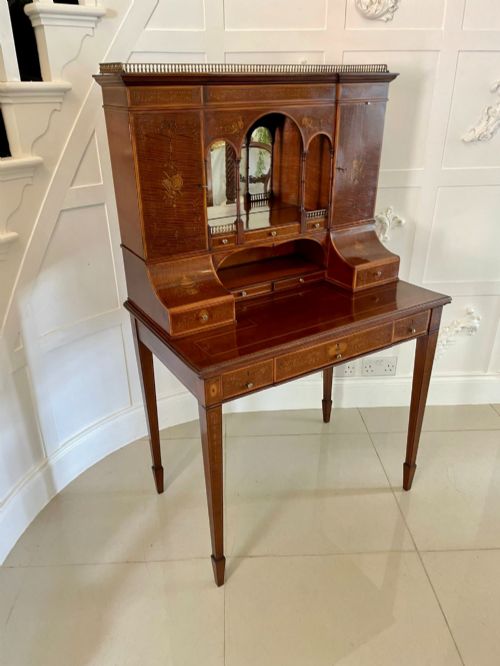
Cabinet-makers relied on solid mahogany and figured veneers such as flame mahogany, often accentuating surfaces with satinwood inlay or contrasting banding. Structural integrity was maintained through traditional joinery, including dovetail construction on drawer boxes and secure hinge placement for fall-front writing flaps.
Glazed upper sections on bookcase variants required delicate timber framing to hold individual panes of glass securely. Interiors incorporated small drawers, pigeonholes, and occasionally sliding writing surfaces built from secondary timbers like oak.
Listings feature mahogany secretary bureau desk examples spanning the Georgian, Regency, William IV, and Edwardian periods.
Craftsmanship and Proportion
The distinction between tiers of quality rests upon the selection of timber and the precision of decorative inlay. Pieces utilising highly figured flame mahogany or intricate satinwood stringing demonstrate a higher level of workshop ambition than plain variants.
Structural harmony also dictates value, seen in balanced proportions, neatly fitted internal pigeonholes, and well-executed bracket or plinth feet. Original brass hardware and cleanly cut glazing bars further separate standard examples from finer commissions.
George Oakley·Tudor & Burrey
The Mahogany Secretary Bureau Desk Glossary
- Secretaire
- A desk or cabinet featuring a pull-out or drop-down writing drawer that conceals smaller compartments. This mechanism allows a tall piece of furniture to function as a writing surface without a traditional sloping front.
- Fall-front
- A hinged writing flap that opens outward to a horizontal position for writing. When closed, it conceals the internal drawers and pigeonholes.
- Cylinder top
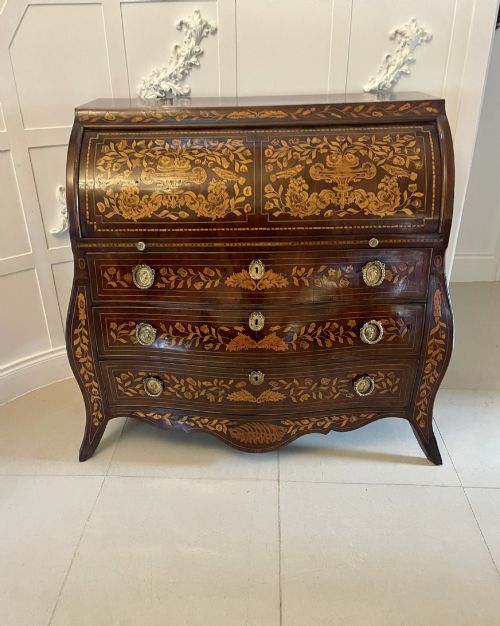
- A curved wooden shutter that rolls backward into the body of the desk to reveal the writing surface. This mechanism appeared on refined pieces during the late eighteenth and nineteenth centuries.
- Bracket feet
- Small, structural feet supporting the corners of a cabinet, shaped in an L-form. They are characteristic of eighteenth-century case furniture.
- Flame mahogany
- A veneer cut from the fork of a mahogany tree where the grain produces a flickering, flame-like pattern. It was favoured for drawer fronts and primary display surfaces.
Mahogany Secretary Bureau Desk: Frequently Asked Questions
How do I use a bureau desk?
Lower the fall-front flap to reveal the internal writing surface, drawers, and pigeonholes for correspondence and storage.
Close the flap when writing tasks are finished to keep papers concealed and protect the interior fittings.
Where should I place this desk?
Position the piece in a study, library, or living room away from direct sunlight and heat sources to protect the mahogany timber.
Freestanding variants allow placement away from walls, while taller bookcase combinations require adequate vertical clearance.
How do I tell periods apart?
Examine the feet, handles, and secondary woods to determine the era of manufacture. Georgian pieces often feature bracket feet and understated stringing, while Regency and William IV examples display bolder architectural forms.
Edwardian items frequently show lighter framing and revived historical styles from the early twentieth century.
What is the difference between a bureau and a secretaire bookcase?
A standard bureau relies on a sloping drop-front to provide a writing area, sitting lower to the floor. A secretaire bookcase combines a dedicated writing drawer or drop-front within a taller cabinet that includes enclosed shelving above.
Both forms serve similar domestic functions but occupy different amounts of floor and wall space.