



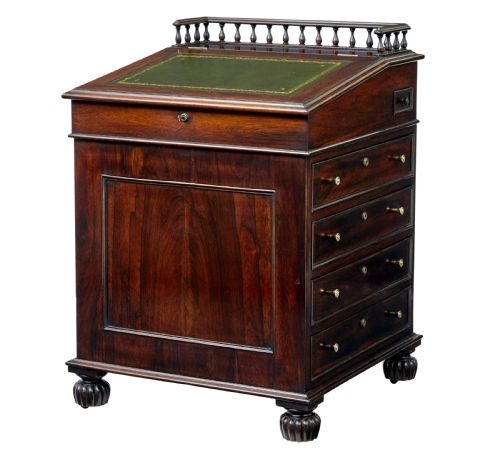
Mahogany Writing Slope Bureau
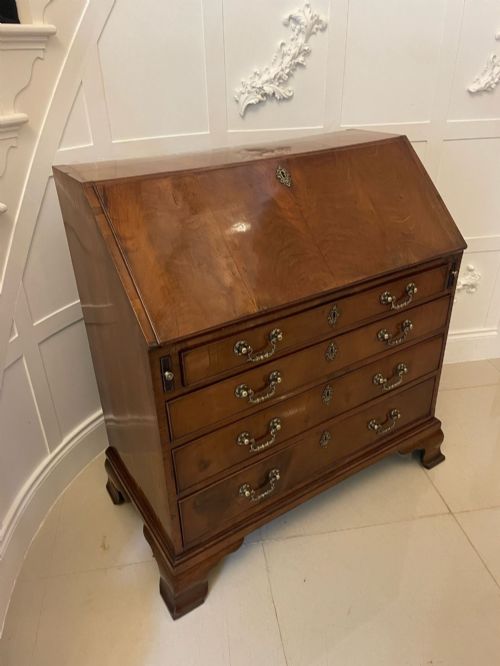
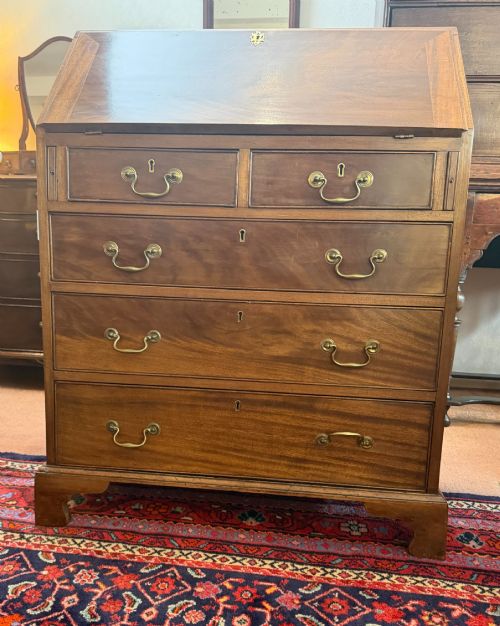
A mahogany writing slope bureau brings solid timber and fitted drawers together for letter writing and daily administration.
Mahogany Writing Slope Bureau
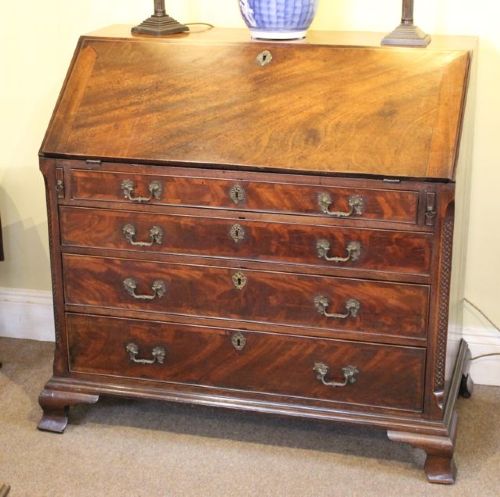
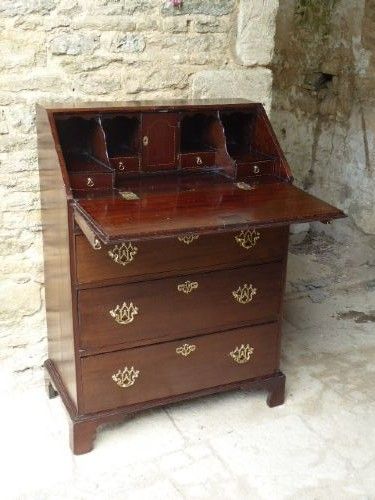
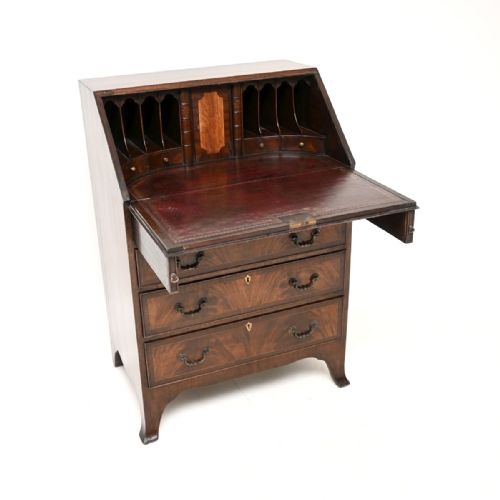
A mahogany writing slope bureau serves as a compact workspace with a slanted lid or a drop-down fall front opening to reveal pigeonholes and small drawers. When you search for a mahogany writing slope bureau, you encounter examples ranging from 18th Century and Georgian cabinetwork to Victorian and Edwardian iterations.
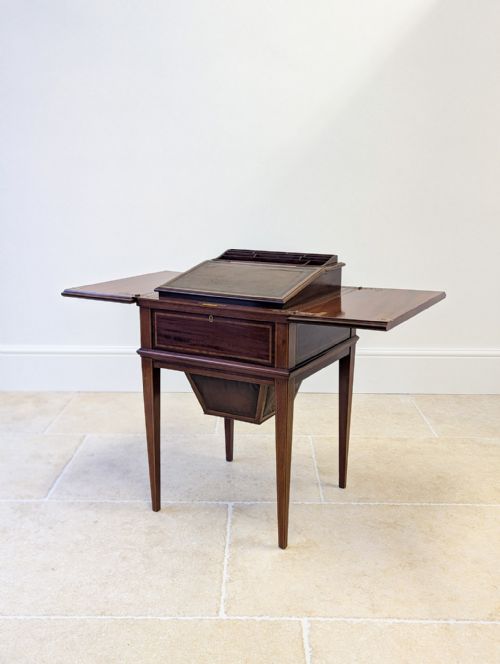
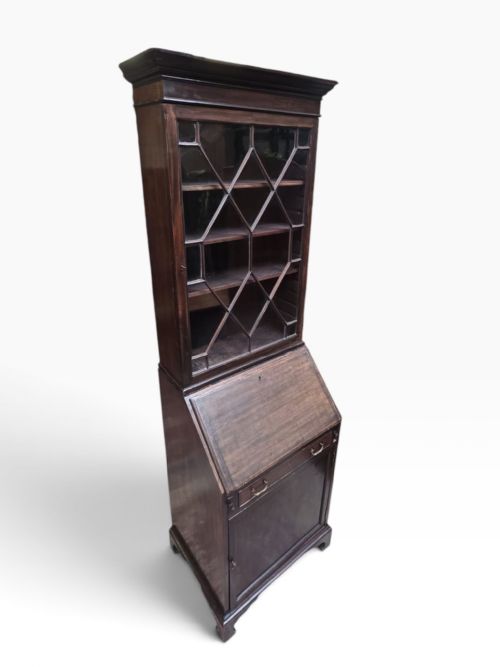
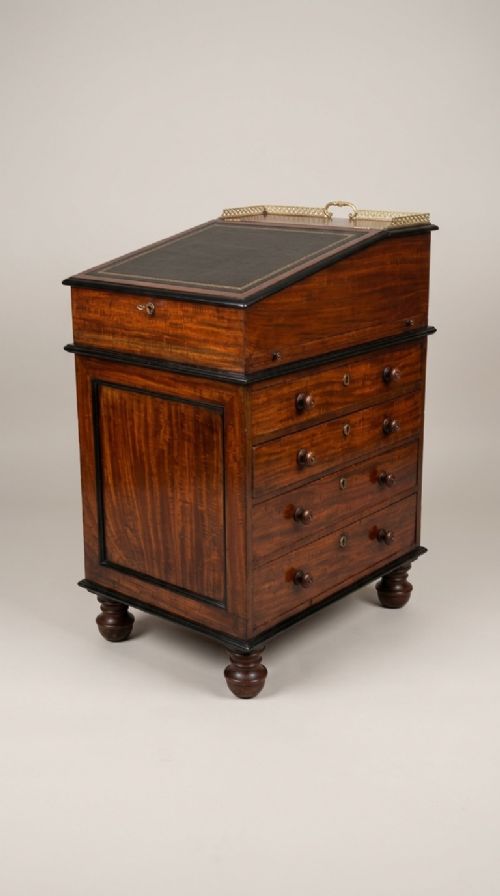
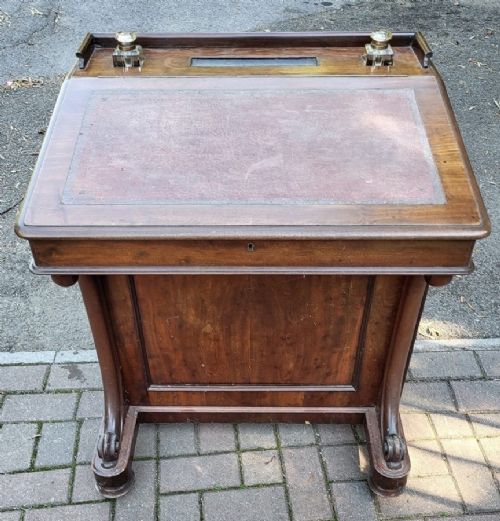
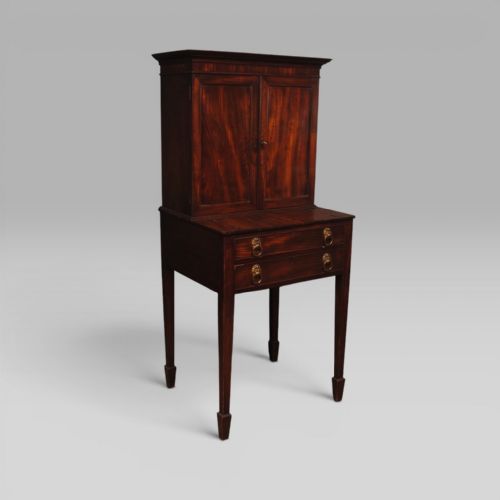
The form encompasses standard drop-front writing desks, fall-front slope cabinets, and compact Davenport desks alongside larger bureau bookcases. Pieces originating in the Georgian and George III periods appear frequently alongside later Victorian, Edwardian, and Regency examples.
Makers such as Gillows of Lancaster produced specialised writing furniture in mahogany, featuring integrated drawers and sliding writing surfaces. The selection spans straightforward utilitarian clerks' desks to elaborate marquetry-inlaid bombe shapes and cylinder desks.
How they were made
Cabinetmakers constructed these writing surfaces primarily using solid mahogany and Cuban mahogany, sometimes accented with satinwood stringing, brass handles, or ormolu mounts. The internal compartments and small drawers relied on precise dovetail joinery to withstand frequent use of the writing flap.
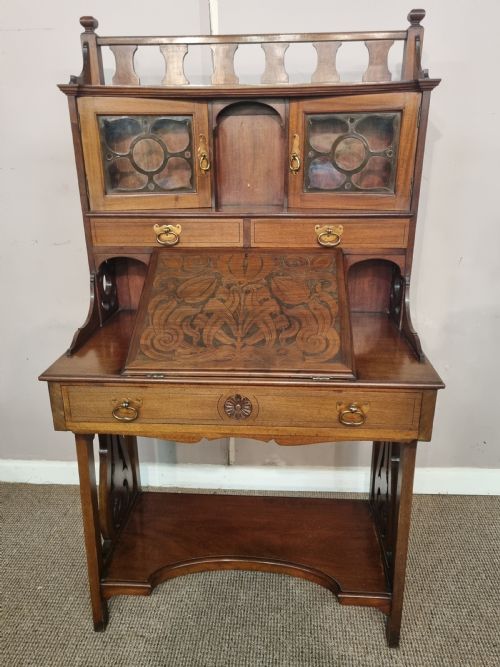
Surfaces frequently incorporate inset panels of leather for writing, whilst secondary timbers such as oak support internal framing. Decorative elements include floral marquetry inlay, ebonised detailing, and carved mouldings typical of Arts and Crafts or Georgian revival movements.
Many writing slopes retain secret compartments hidden behind dummy drawers, designed to outsmart prying eyes.
What varies in quality
The standard of timber selection defines the visual impact, with figured mahogany and Cuban mahogany displaying rich grain patterns and deep colour compared to plain stock. Expert timber matching across the fall front and drawer faces indicates skilled workshop production.
Internal complexity and secondary details distinguish standard pieces from superior examples. Finely turned interior drawers, original brass hardware, and intricate marquetry or inlaid satinwood elevate the execution of a piece.
Gillows of Lancaster
The Mahogany Writing Slope Bureau Glossary
- Bureau
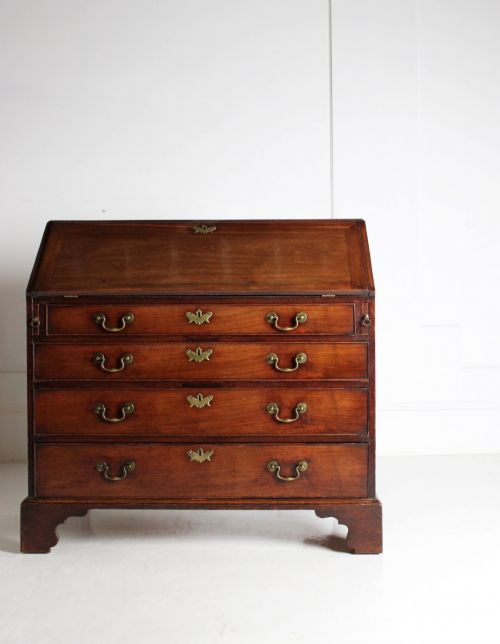
- A desk with a sloping hinged lid that opens to form a writing surface, above a tier of drawers. This form evolved through the Georgian and Victorian periods into various specialised writing cabinets.
- Davenport
- A compact pedestal desk with a sloped writing top, usually featuring a bank of drawers to one side. Gillows produced notable examples of this form during the Regency and early Victorian eras.
- Fall front
- A vertical or inclined wooden panel hinged at the bottom that drops forward to create a horizontal writing desk. It conceals pigeonholes and small stationery drawers when closed.
- Cuban mahogany
- A dense, dark timber harvested in the Caribbean and utilised extensively in high-status 18th Century furniture. It displays a distinctive rich figure and substantial weight.
- Marquetry
- Decorative patterns formed by inlaying small pieces of veneered wood into a contrasting background. Floral motifs appear on select 18th Century bureau surfaces.
Mahogany Writing Slope Bureau: Frequently Asked Questions
What is a mahogany writing slope bureau?
A mahogany writing slope bureau is a traditional desk featuring a slanted or drop-down writing surface above storage drawers. These pieces provide a dedicated writing station with internal compartments for letters and stationery.
They appear in various forms, including compact Davenport desks, bureau bookcases, and standard Georgian fall-front writing cabinets.
How do I date a mahogany bureau?
Dating relies on observing construction methods, timber choices, and stylistic details such as bracket feet or inlaid satinwood. Georgian and 18th Century pieces typically feature solid mahogany construction with hand-cut dovetails and understated brass hardware.
Victorian and Edwardian versions often incorporate different interior layouts, machine-cut elements, or alternative woods like satinwood and ebonised details.
Where were Davenport desks placed?
Davenport desks were designed as compact, freestanding writing tables positioned within studies, drawing rooms, or bedrooms. Their small footprint allowed them to fit comfortably into smaller spaces while offering accessible storage.
The side drawers and sloped top kept writing materials organised without dominating the room.
How do I care for antique mahogany furniture?
Maintain antique mahogany surfaces by keeping them away from direct sunlight and sudden temperature changes that can dry out the timber. Regular dusting with a soft, dry cloth preserves the finish without requiring heavy polishes.
Leather writing inserts benefit from occasional gentle conditioning to prevent cracking over time.