


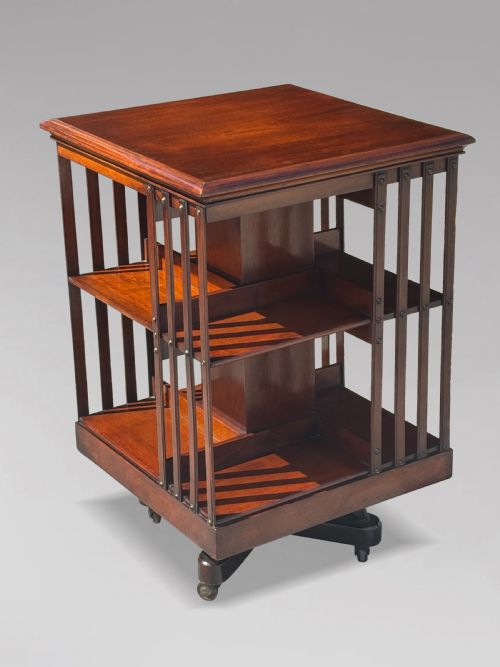


Mahogany Rotating Bookshelf
A mahogany rotating bookshelf lets you keep a working library within arm's reach while turning smoothly on its axis.
Mahogany Rotating Bookshelf
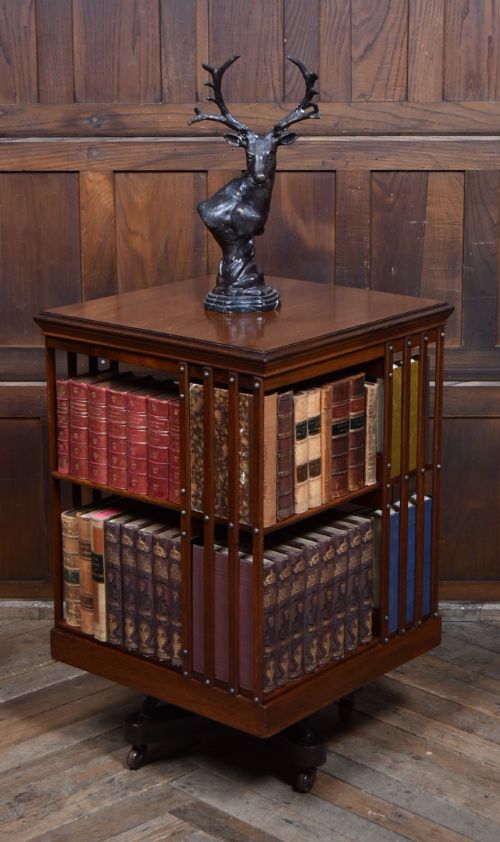
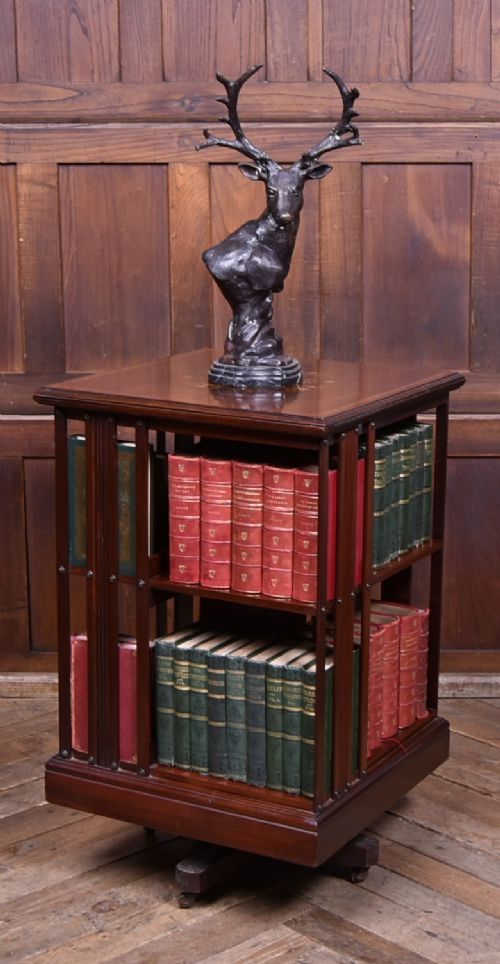
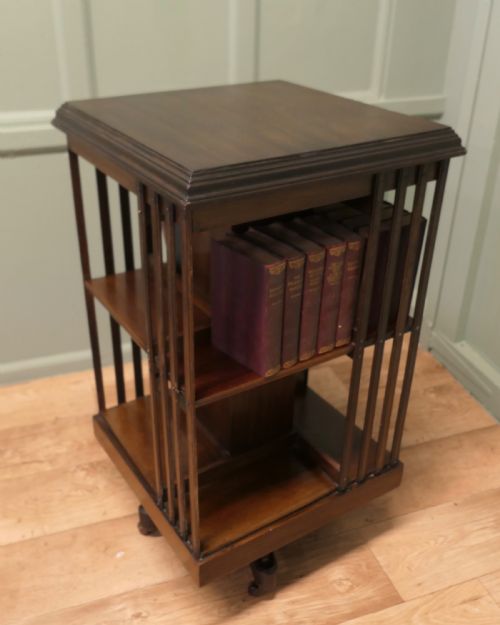
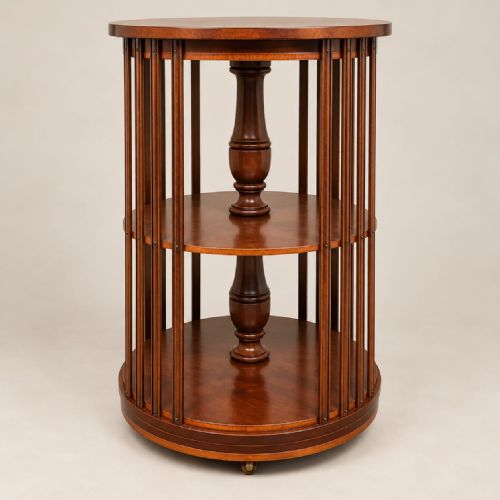
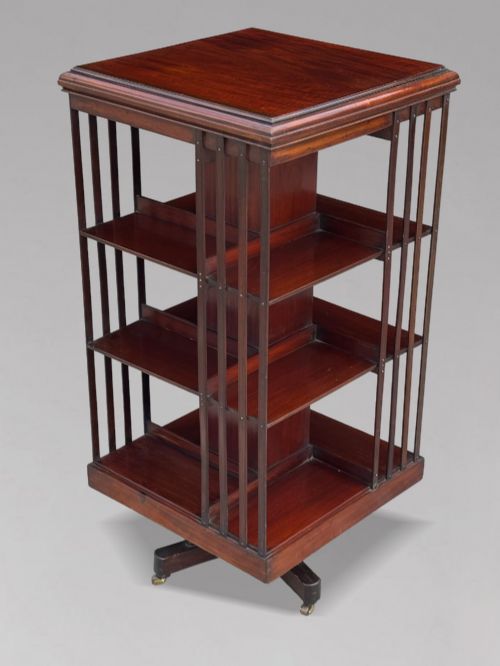
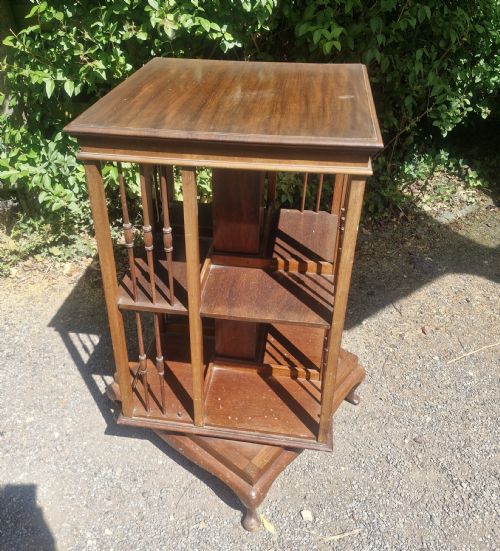
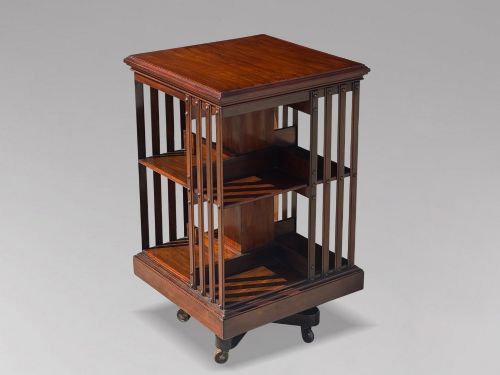
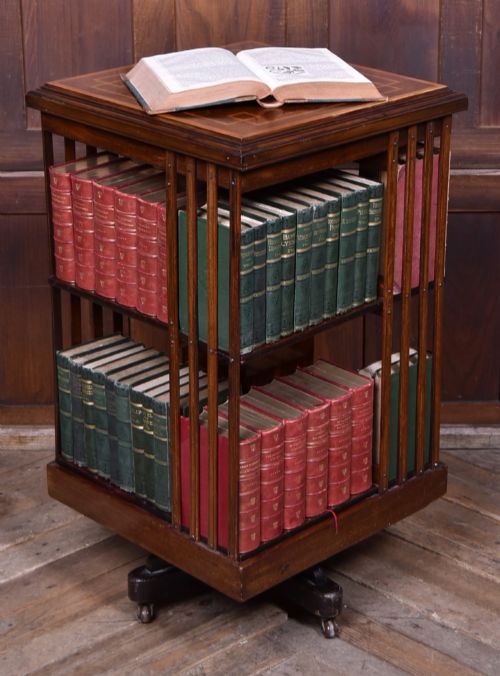
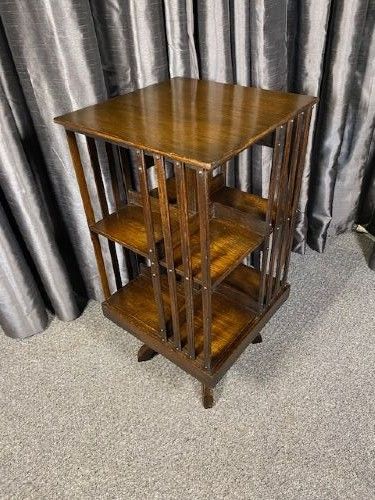
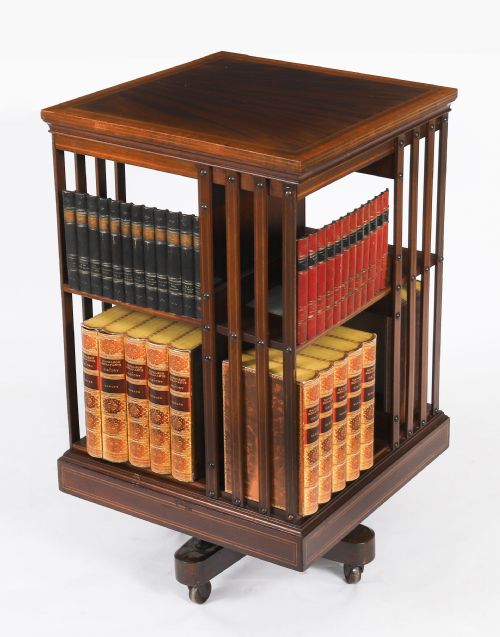
A mahogany rotating bookshelf is a practical piece designed to hold volumes upright in compartments arranged around a central vertical axis. When you search for a mahogany rotating bookshelf, you encounter pieces that sit either on the floor or directly upon a desk or table.
The examples gathered here date predominantly from the Victorian and Edwardian eras, spanning the late nineteenth century into the early decades of the twentieth century. These include standard floor-standing bookcases alongside smaller table-top variations.
Makers such as Heals and Maple and Co are represented among the pieces, demonstrating the commercial output of the period. Styles range from plain classical forms to those displaying Chippendale influences or Art Nouveau characteristics.
Judging quality in construction
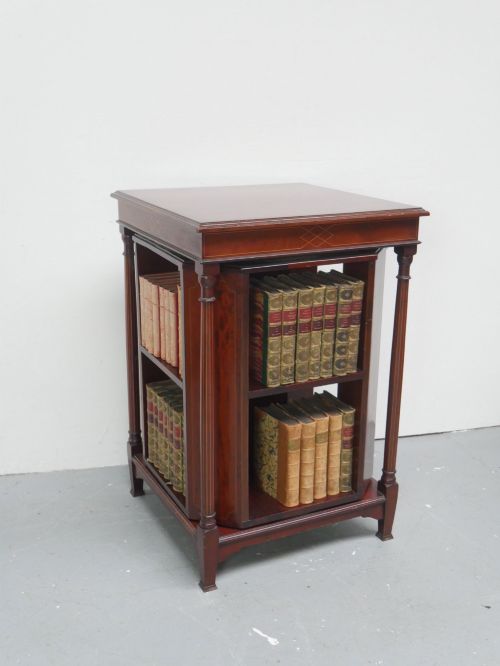
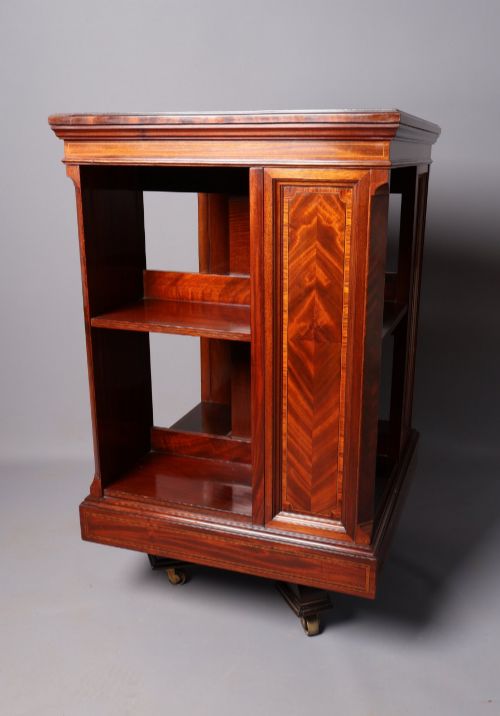
Quality in these pieces is dictated by the selection of the timber and the precision of the joinery rather than ornamentation alone. Finer examples display carefully matched flame mahogany veneers and crisp satinwood inlay that remains flush with the surrounding wood.
The internal bearing and pivot mechanism determines the daily utility of the bookcase. Superior models turn silently and evenly without listing to one side, supported by robust metal hardware concealed beneath the base.
Mahogany Rotating Bookshelf Retail Price Guide 2026
Typical asking prices for mahogany rotating bookshelf among the pieces listed under this phrase on Sellingantiques today, from the lower quarter to the upper quarter. They describe what is for sale here now, not the wider market.
Listings feature mahogany, satinwood, and oak alongside brass and cast iron hardware across Victorian and Edwardian periods.
Maple and Co·Heals
The Mahogany Rotating Bookshelf Glossary
- Flame mahogany
- A figure in mahogany timber resembling flickering flames, created by cutting across the branch junctions of the tree. It is prized for its dramatic pattern.
- Satinwood
- A pale, hard wood sourced from tropical trees, used extensively for contrasting stringing and decorative inlay work on darker timbers.
- Inlay
- A technique where pieces of contrasting wood or other materials are inserted into recessed cavities in the primary surface to form a pattern.
- Chippendale style
- A design aesthetic drawing from eighteenth-century furniture patterns, characterised by classical proportions and subtle carved details.
- Revolving bookcase
- A freestanding or desktop book holder built upon a concealed pivot mechanism allowing access to all sides without repositioning the furniture.
Mahogany Rotating Bookshelf: Frequently Asked Questions
How do these revolving bookcases work?
The upper wooden tiers rest upon an internal iron or brass pivot mechanism concealed within the base. This engineering allows the entire body of shelves to turn through a full circle with minimal manual effort.
Built to bear the weight of heavy volumes, the rotating action relies on well-maintained metal components that keep the cabinet balanced during movement.
Where should I place a revolving bookcase?
Floor-standing models suit corners or open spaces beside seating where multiple volumes require immediate access. Because all sides hold books, positioning them slightly away from walls allows full use of every compartment.
Smaller table-top versions sit conveniently upon large desks, sideboards, or library tables to organise active reference texts.
How do I distinguish Edwardian from Victorian pieces?
Victorian examples tend to display heavier proportions and simpler mahogany surfaces dating from the late nineteenth century. Edwardian pieces often incorporate lighter satinwood inlay and refined decorative details reflecting early twentieth-century tastes.
Construction traits and registration marks where present also help narrow down the manufacturing decade between eighteen-eighty and nineteen-ten.
Are these bookcases suitable for heavy modern books?
The sturdy mahogany frames and oak interiors easily accommodate standard hardbacks and reference volumes. However, checking the internal shelf dimensions ensures taller modern volumes fit comfortably within the upright dividers.
The underlying metal pivot determines weight distribution, so evenly balancing books across all sides preserves the smooth turning motion.