
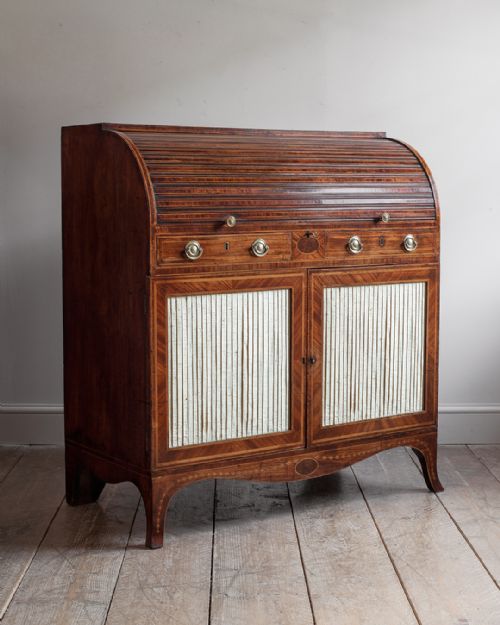
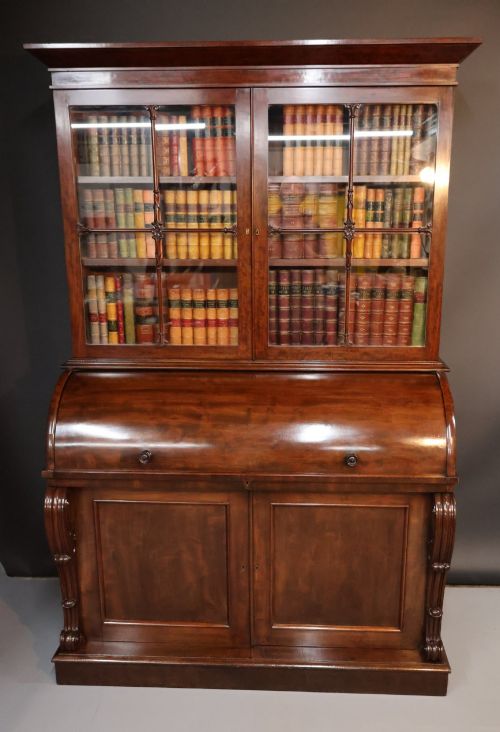
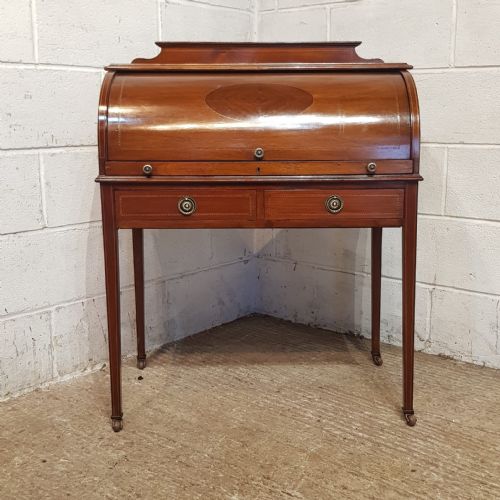
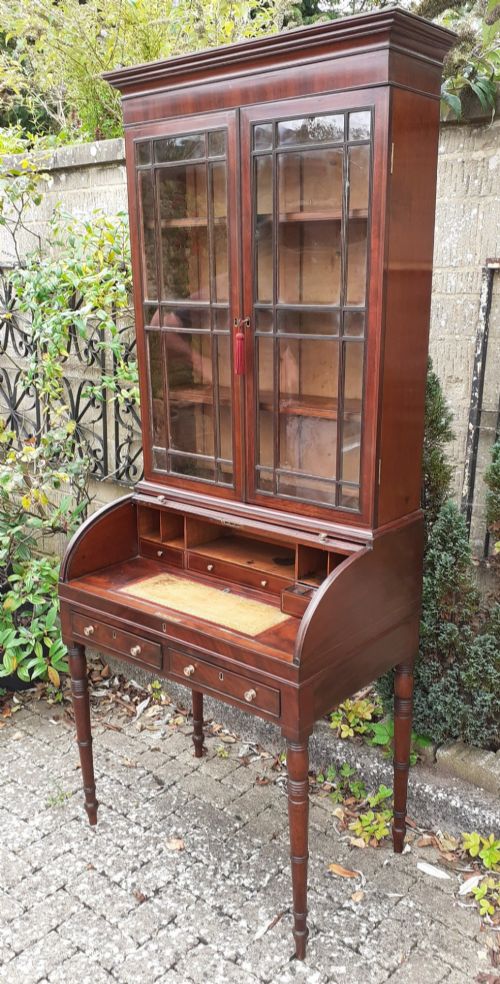
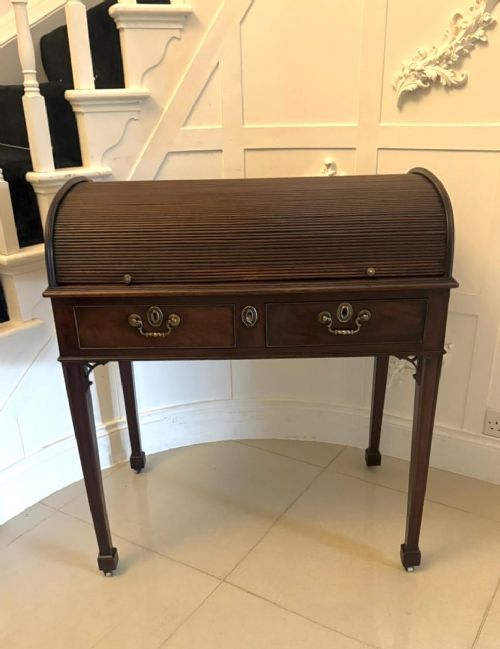
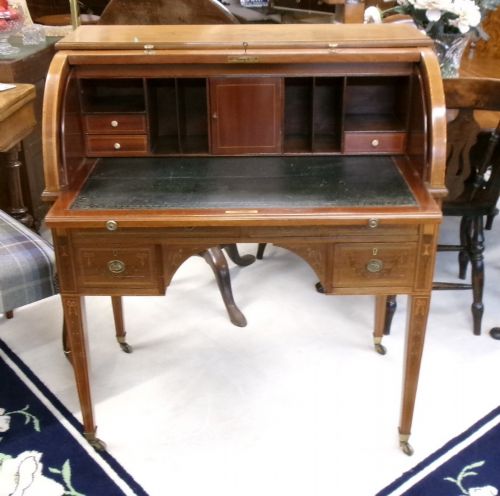
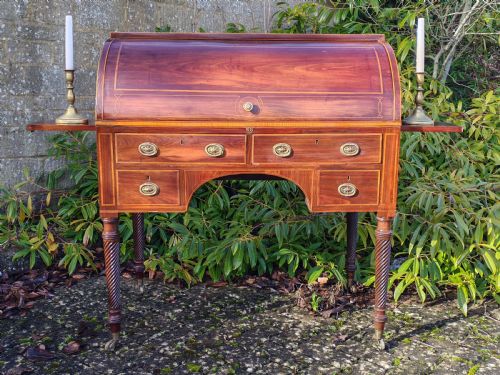
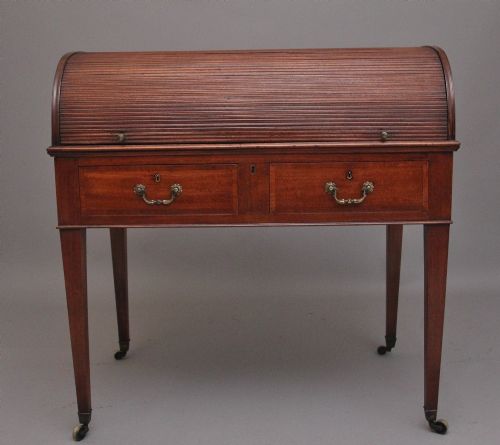
Mahogany Roll Top Desk
A mahogany roll top desk brings concealed mechanics and figured timber together, offering a private writing surface that sweeps shut.
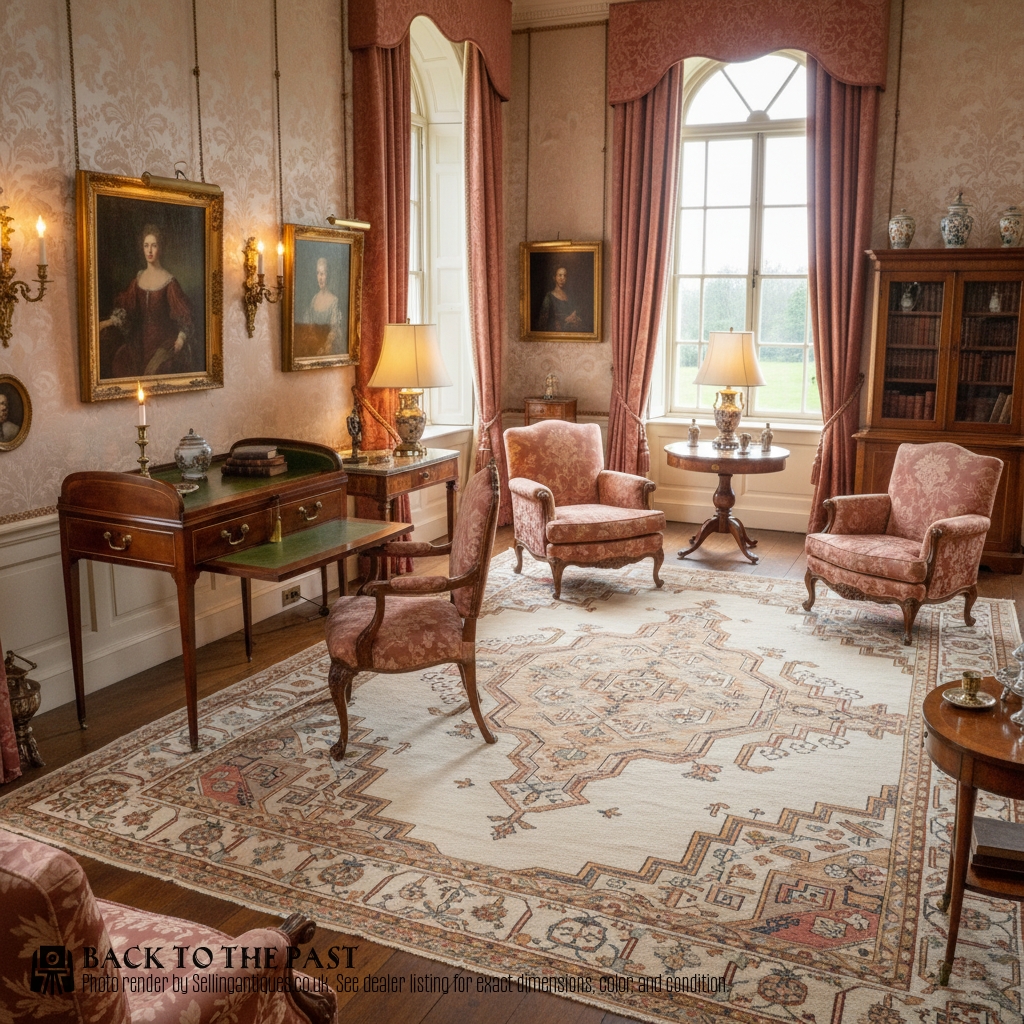
Mahogany Roll Top Desk
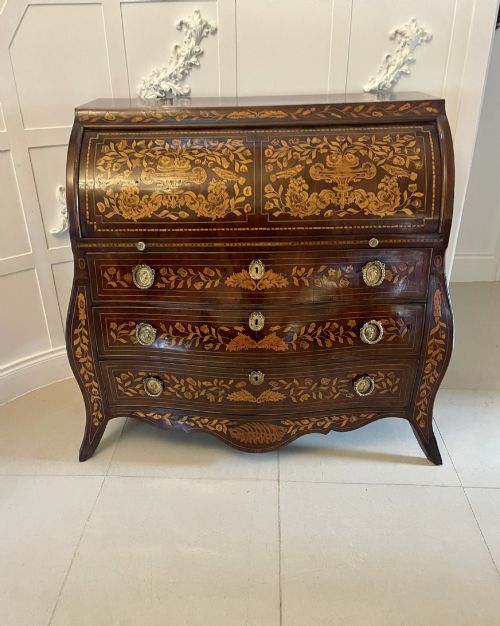
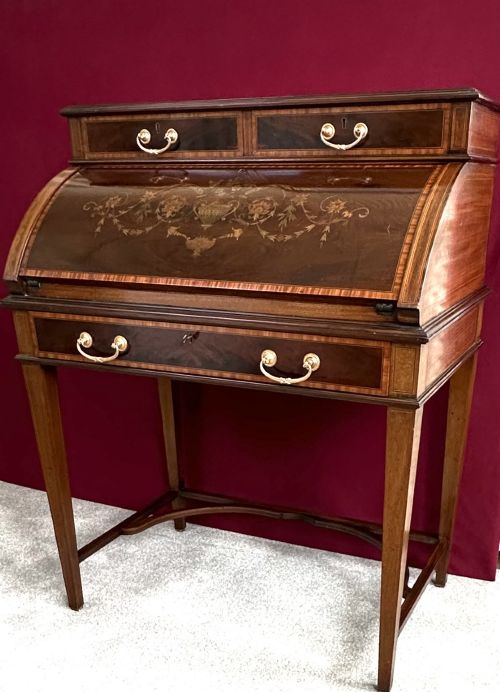
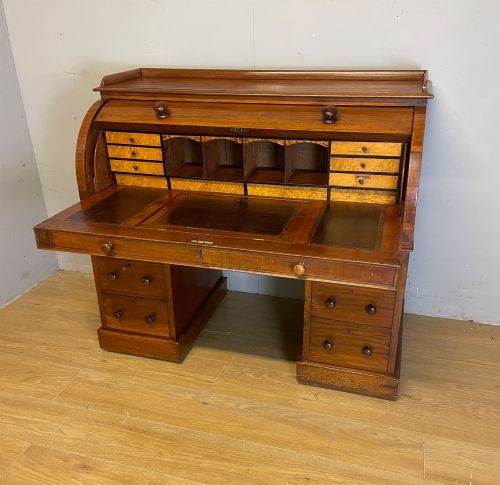
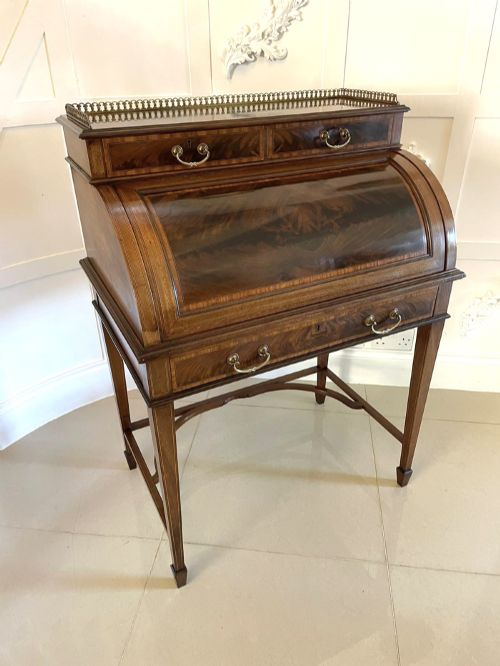
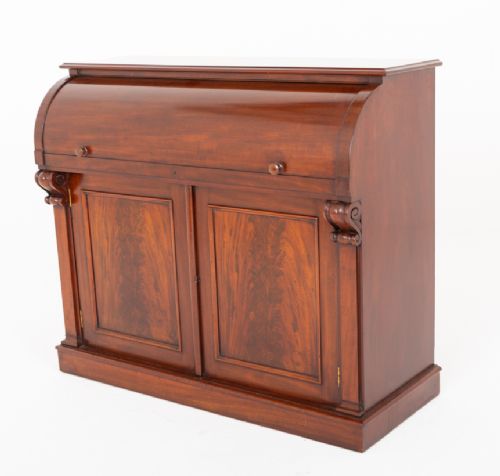
A mahogany roll top desk provides a secure writing space enclosed by a flexible tambour shutter or a rigid curving cylinder. These pieces span periods from the 18th century through the Georgian, Regency, and Victorian eras into Edwardian production.
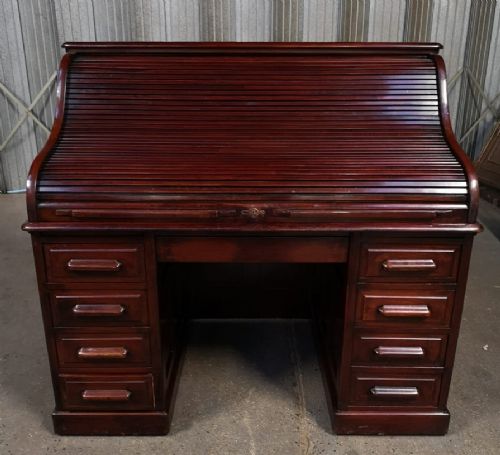
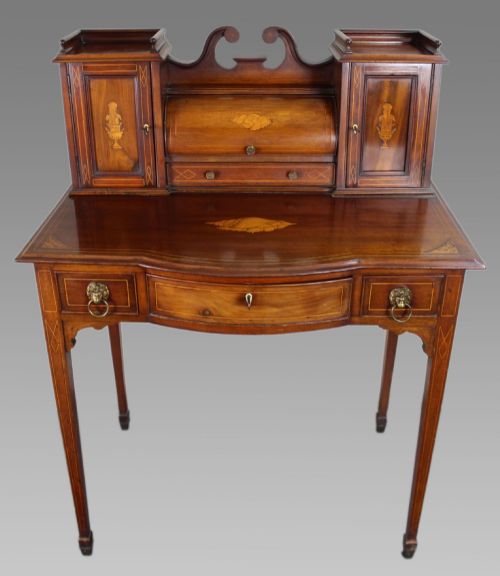
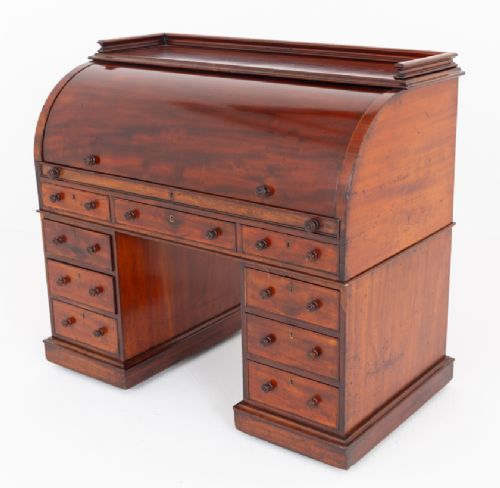
The most common examples on this page are Victorian and Edwardian pedestal forms and freestanding writing tables. These versions house internal pigeonholes and drawers beneath a sweeping timber lid that conceals correspondence.
Earlier Georgian examples often feature delicate tambour slats running in wooden grooves, while later pieces adopt heavier mechanical cylinder actions. Buyers encounter everything from compact ladies' writing desks to large double-sided office partners' furniture.
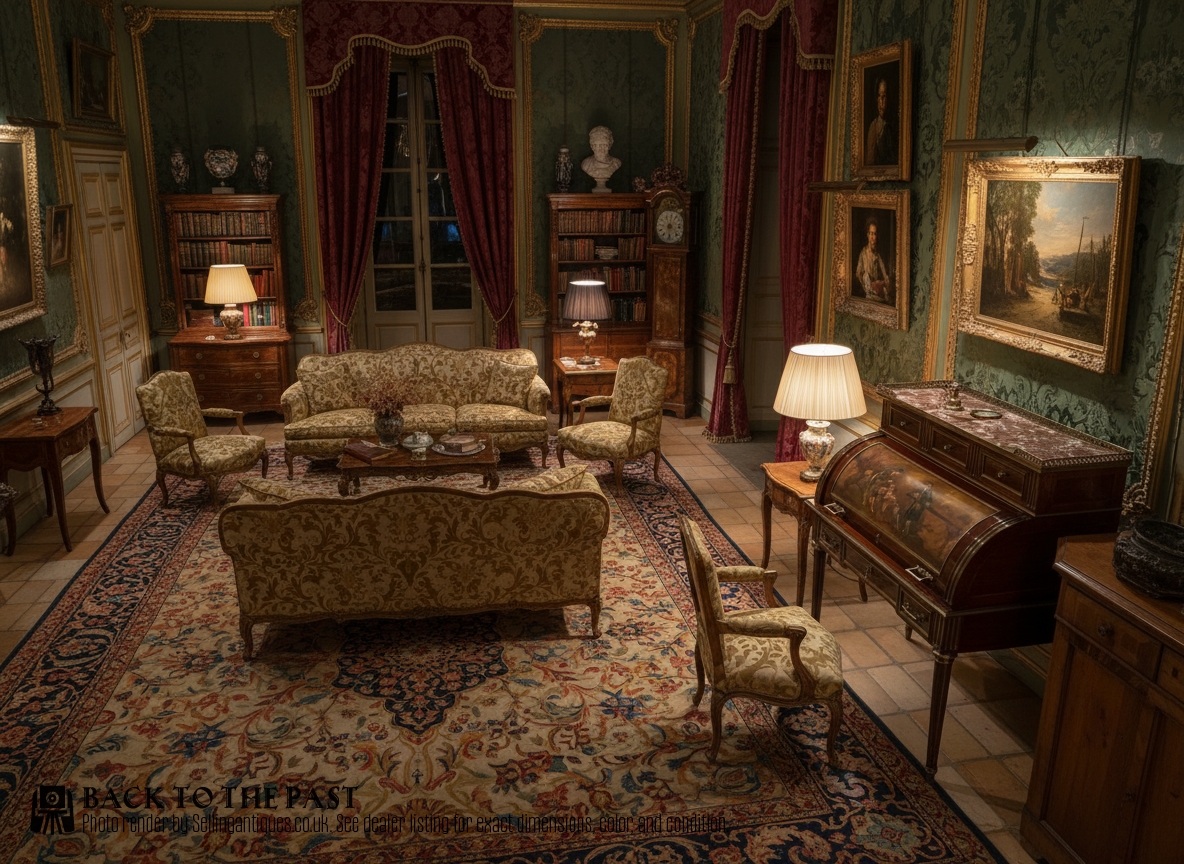
How They Were Made
Cabinet makers built these pieces using solid mahogany and carefully selected veneers over secondary framing woods. Many examples incorporate satinwood inlay, ebony stringing, and brass hardware such as ring handles and key escutcheons.
The curved roll top relies on precise joinery, utilising either narrow vertical tambour strips glued to a canvas backing or a solid curved panel that rotates on hidden pivots. Writing surfaces frequently feature inset leather panels tooled with gold leaf borders.
Mahogany Roll Top Desk Retail Price Guide 2026
Typical asking prices for mahogany roll top desk among the pieces listed under this phrase on Sellingantiques today, from the lower quarter to the upper quarter. They describe what is for sale here now, not the wider market.
Listings feature mahogany construction paired with satinwood inlay, glass, brass, marble, and ormolu across multiple centuries.
What Varies in Quality
The distinction between standard utility office furniture and high workshop production rests in timber selection and internal complexity. Superior pieces display heavily figured flame mahogany veneers and intricate interior drawer arrangements with secret compartments.
Mechanical smoothness defines the better examples on the market. A top-tier cylinder or tambour action glides effortlessly without binding in its tracks, while inferior pieces suffer from warped runners and sticking shutters.
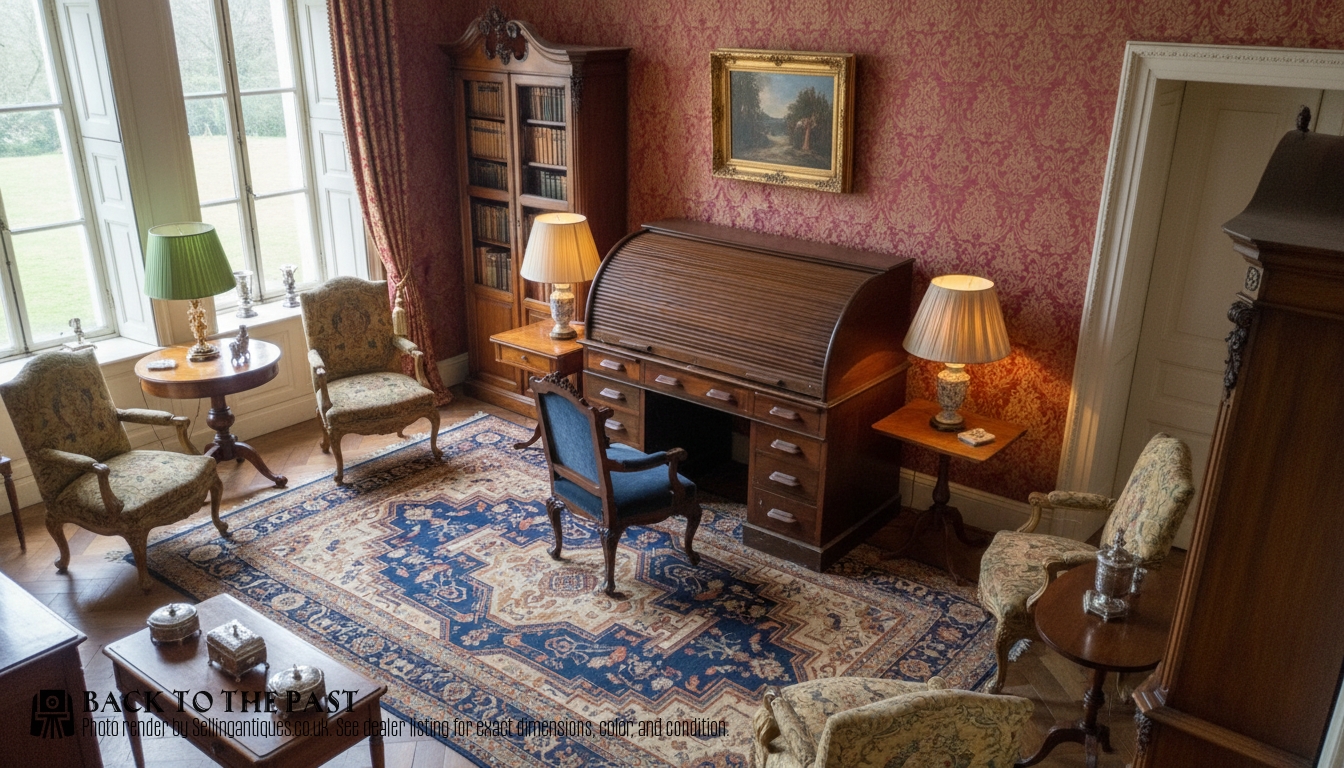
Maple & Co London·Waring & Gillows·Tudor & Burrey Shrewsbury
The Mahogany Roll Top Desk Glossary
- Cylinder desk
- A desk featuring a quarter-circle solid wooden lid that rolls back on tracks to reveal the writing surface. This rigid form provides a clean, unbroken expanse of polished timber when closed.
- Tambour
- A flexible shutter constructed from narrow strips of wood glued to a fabric backing, allowing the surface to curve around a drum. It runs in concealed tracks to enclose the desk interior.
- Pedestal desk
- A heavy table form supported by two banks of drawers resting on the floor. These large units often feature double-sided configurations for shared office use.
- Marquetry
- Decorative inlay work using various coloured woods to create pictorial or geometric patterns on the surface. Cabinet makers applied this technique to drawer fronts and cylinder lids.
- Pigeonhole
- Small open compartments built into the upper interior of the desk for sorting letters and papers. They sit above the pull-out writing slide.
Mahogany Roll Top Desk: Frequently Asked Questions
How do cylinder and tambour desks differ?
A cylinder desk uses a solid, curved wooden shell that rotates on a pivot to open and close. This rigid lid gives a smooth, uniform appearance when shut.
In contrast, a tambour desk uses many small horizontal slats glued to canvas. This flexible shutter bends around a tight radius to slide away inside the desk body.
Where were these desks placed originally?
Earlier examples from the Georgian and Regency periods served as refined library and parlour furniture, often positioned freestanding in the room. They held personal correspondence and private accounts.
Later Victorian and Edwardian versions migrated into studies and commercial offices as working furniture. Large pedestal variants accommodated growing paperwork and heavy ledgers.
How do I care for the leather surface?
The leather writing insert benefits from occasional cleaning with a slightly damp cloth followed by neutral leather balm. Avoid harsh modern chemical cleaners that strip the original gold tooling.
Keep the desk away from direct sunlight and strong heat sources to prevent the leather from drying and cracking over time.
Can I use modern laptops on them?
Many antique roll top desks accommodate modern laptops when the pull-out writing slide or main desk surface provides sufficient depth. Users should check internal clearance dimensions before placing modern equipment inside.
Careful measurement ensures the heavy wooden lid or tambour shutter clears the screen and keyboard when closed.