


Mahogany Revival Furniture
Mahogany revival furniture gathers the confident echoes of Georgian and Regency design, offering practical domestic utility through structured wood and classical inlay.
Mahogany Revival Furniture
Mahogany revival furniture comprises functional domestic items and display pieces produced largely during the Victorian, Edwardian and early twentieth century periods. Makers looked back to earlier eras, translating eighteenth-century proportion into forms suited to contemporary homes.
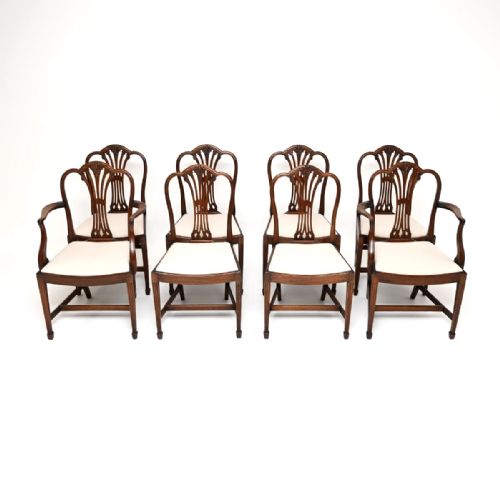
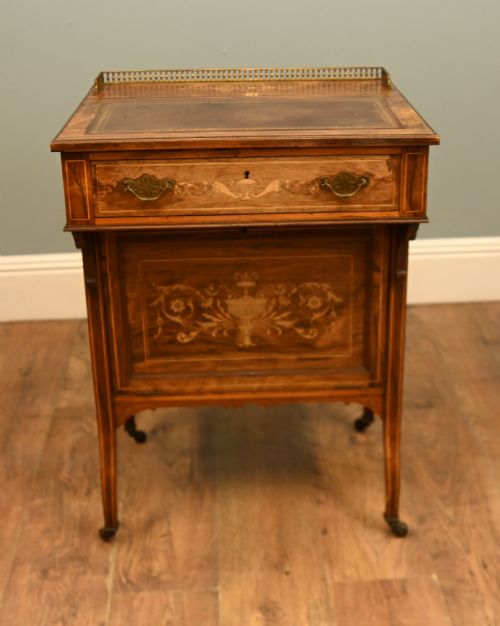
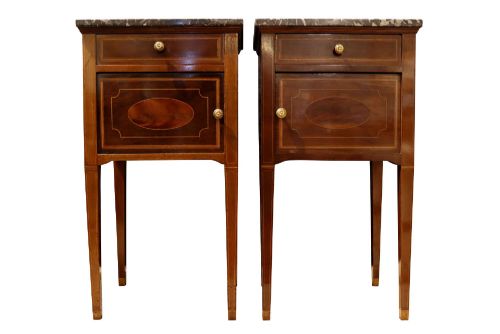
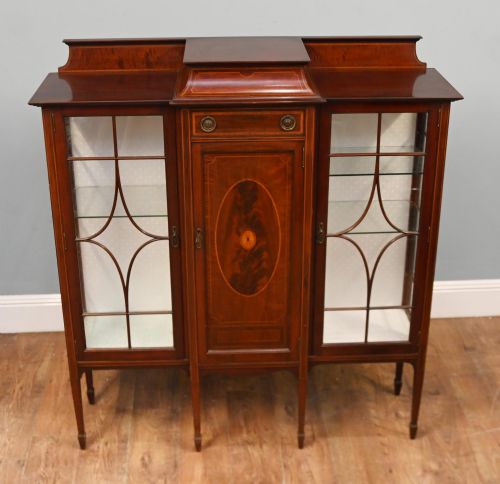
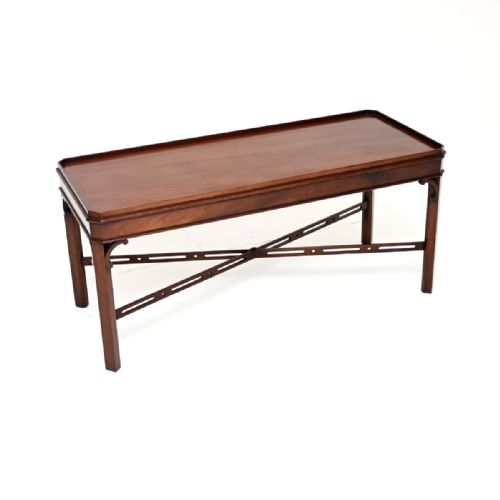
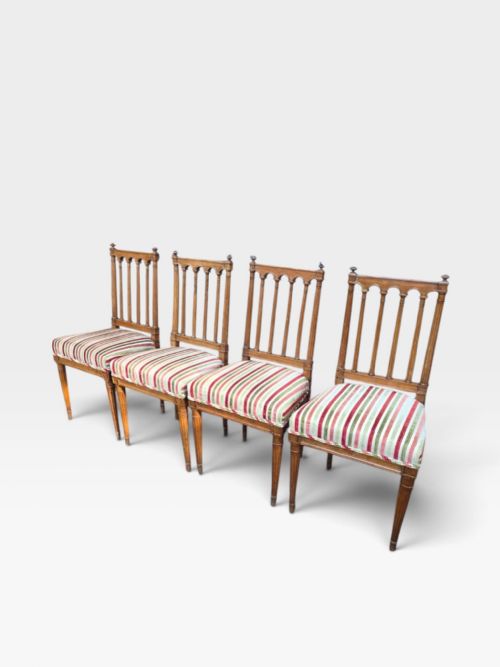
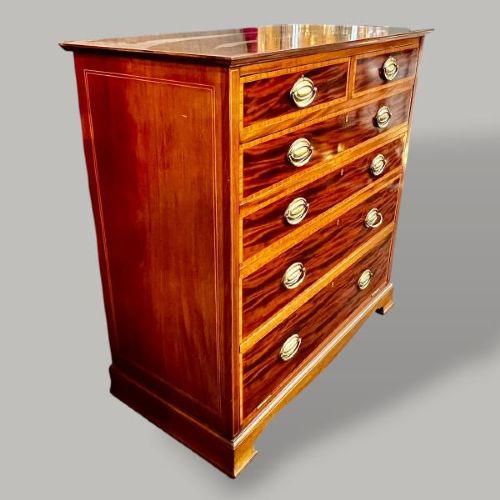
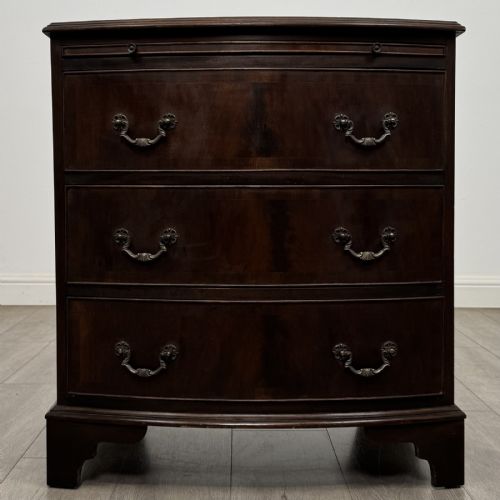
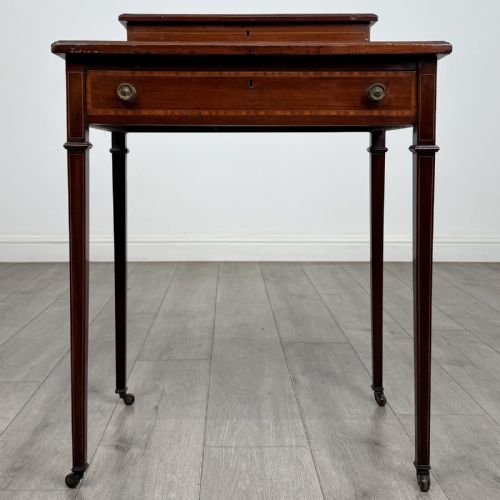
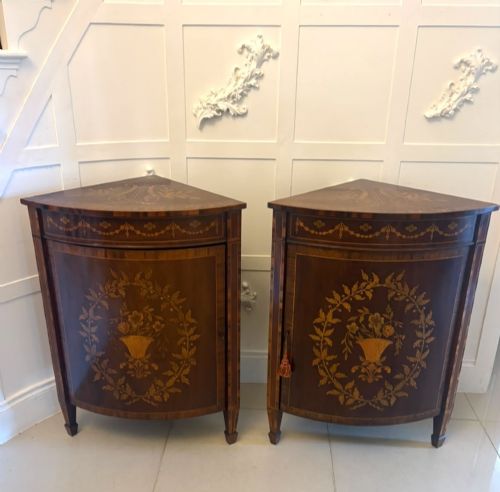
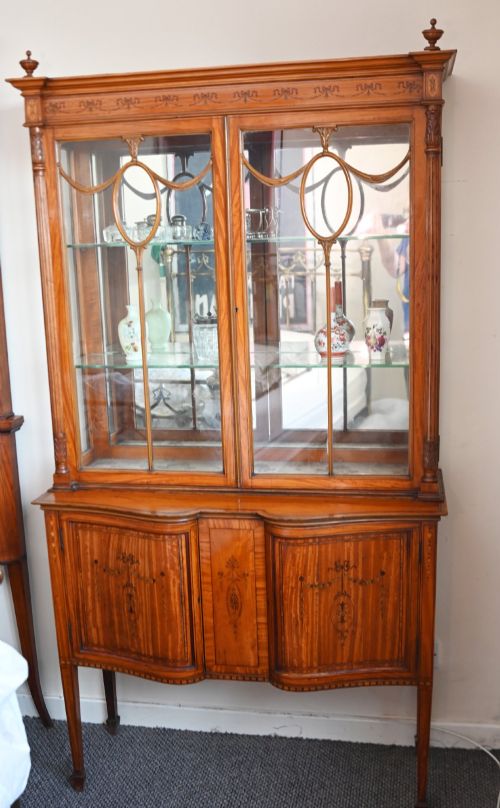
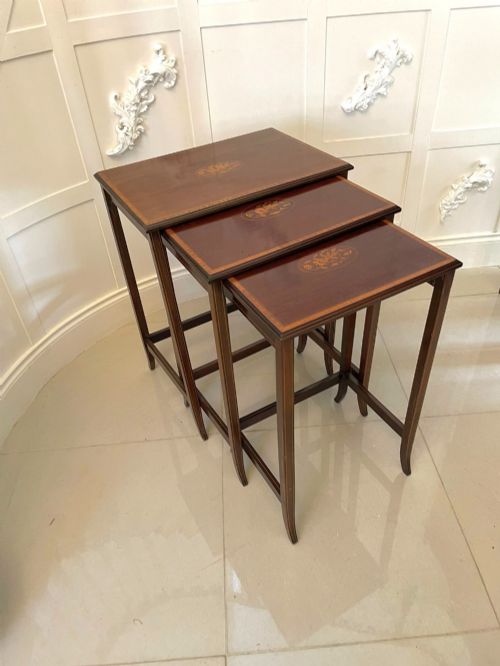
The selections encountered most frequently on this page include Edwardian writing desks, display cabinets and occasional tables, often carrying Sheraton or Chippendale revival details. Sideboards, chests of drawers and bedside cupboards appear alongside dining chairs and nests of tables.
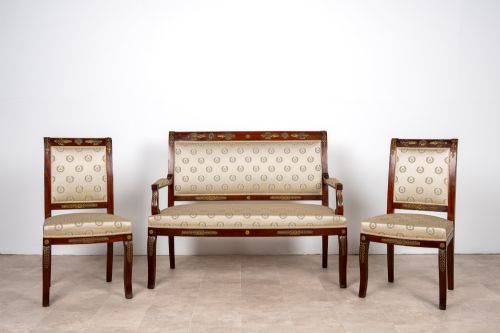
Origins span English workshops and French ateliers, embracing styles from plain Georgian lines to ornate Louis XVI, Adam and Egyptian revival schemes. Pieces bridge everyday household service and deliberate decorative display.
How they were made
Construction relies fundamentally on solid mahogany and mahogany veneers, providing a stable, deep-toned ground for cabinetwork. Artisans built up structural carcases and table frames designed to endure regular domestic handling.
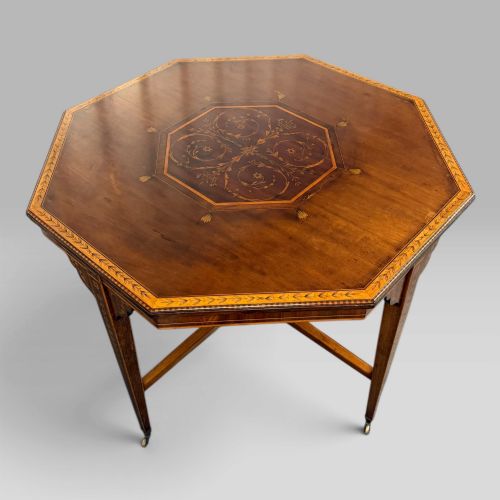
Decoration draws heavily on contrasting timber inlays and stringing, notably satinwood and boxwood, set into the primary dark surface. Marquetry panels, painted floral motifs, glass panels and cast brass handles complete the surface detailing.
Mahogany Revival Furniture Retail Price Guide 2026
Typical asking prices for mahogany revival furniture among the pieces listed under this phrase on Sellingantiques today, from the lower quarter to the upper quarter. They describe what is for sale here now, not the wider market.
Listings feature periods spanning the nineteenth and twentieth centuries, predominantly Edwardian and Victorian creations utilising mahogany, satinwood and brass.
What varies in quality
Quality rests on the crispness of cabinetmaking execution and the ambition of the design, distinguishing standard workshop output from exceptional commissions. Finer items exhibit precise joinery, balanced proportions and confident execution of revival styles.
The standard of decorative enrichment marks a clear division across the range. Simple items rely purely on polished timber surfaces, while superior examples incorporate complex marquetry, hand-painted decoration, or bespoke brass and ormolu mounts.
Hewetsons London·Gillows·J Shoolbred·Antoine Lampre Paris·François Linke
The Mahogany Revival Furniture Glossary
- Sheraton Revival
- A late nineteenth and early twentieth century style imitating the lighter, neoclassical furniture designs associated with George Sheraton. Pieces often feature satinwood inlay, tapered legs and painted ornamentation.
- Marquetry
- The art of forming decorative patterns by fitting together small pieces of wood veneer of different colours and grains. This technique creates pictorial or geometric panels on tabletops and cabinet doors.
- Vitrine
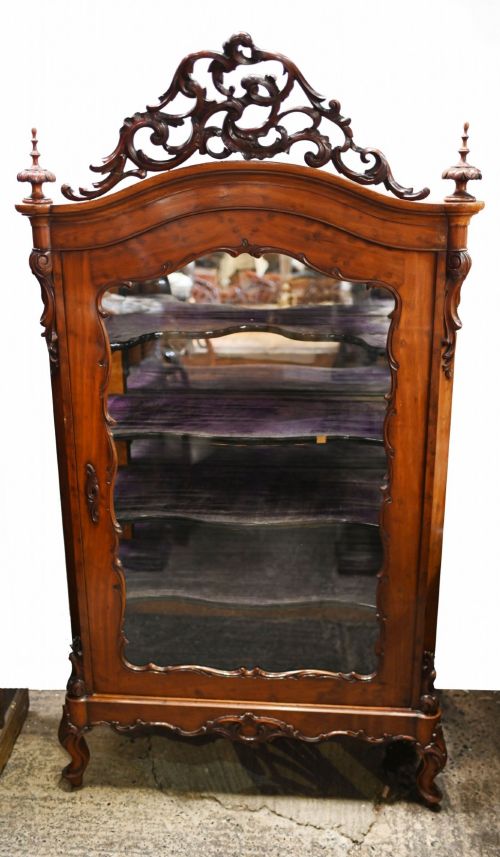
- A glass-fronted display cabinet or showcase designed for exhibiting ceramics, books or ornaments. The form gained immense popularity during the Victorian and Edwardian periods.
- Wellington Chest
- A tall, slender chest of drawers secured by a hinged vertical locking bar on one side, which is itself held in place by a padlock. The form originated in the nineteenth century for efficient storage.
- Ormolu
- Gilded bronze mounts applied to furniture, particularly French revival pieces. The technique adds metallic highlight and sculptural definition to corners and aprons.
Mahogany Revival Furniture: Frequently Asked Questions
What is mahogany revival furniture?
Mahogany revival furniture covers cabinets, desks, tables and seating produced in the nineteenth and twentieth centuries that imitate earlier classical styles. These items adapt historical forms for contemporary domestic interiors.
Craftsmen drew upon Georgian, Regency and Chippendale vocabularies, applying traditional woodworking methods to create practical household furnishings with refined decorative surfaces.
How do I date my piece?
Dating relies on examining construction techniques, timber choices, hardware and characteristic revival design traits recorded across the periods. Secondary woods and interior linings often provide clear clues to the decade of manufacture.
Stylistic markers such as Edwardian satinwood inlay or Victorian proportion help narrow down whether a piece belongs to the nineteenth century or the early twentieth century.
Where were these pieces used?
These items served functional roles across domestic and formal rooms, from home offices and bedrooms to drawing rooms and dining spaces. Writing tables accommodated correspondence, while display cabinets showcased prized collections.
Bedside cupboards and occasional tables provided compact utility, integrating smoothly into the domestic routines of Victorian and Edwardian households.
How do I care for mahogany?
Maintaining mahogany revival pieces involves protecting polished wooden surfaces from direct sunlight and excessive humidity. Regular gentle dusting preserves the natural lustre of the timber and veneer.
Avoiding abrasive cleaners ensures that delicate boxwood stringing, marquetry and hand-painted decorations remain intact across generations of use.