


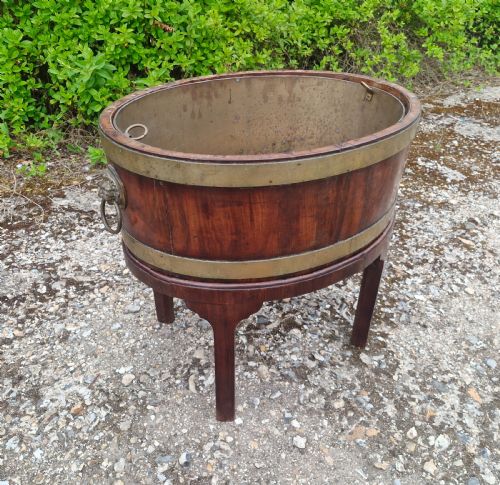


Mahogany Planter Stand
A mahogany planter stand bridges fine cabinet-making and practical botany, holding greenery and floral displays inside period interiors.
Mahogany Planter Stand
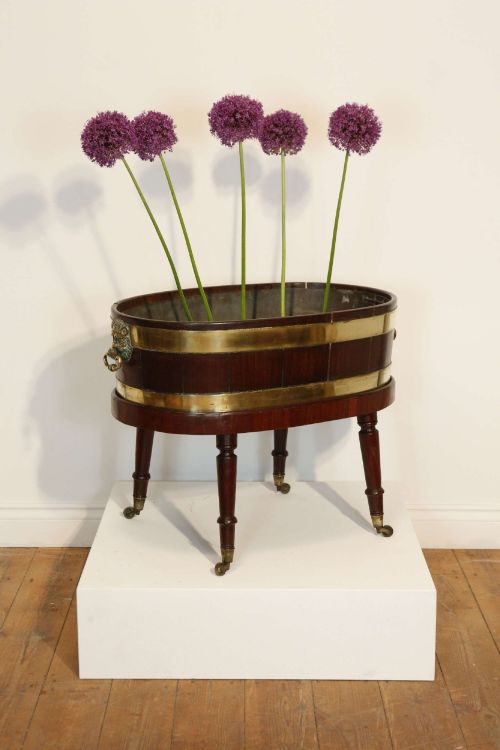
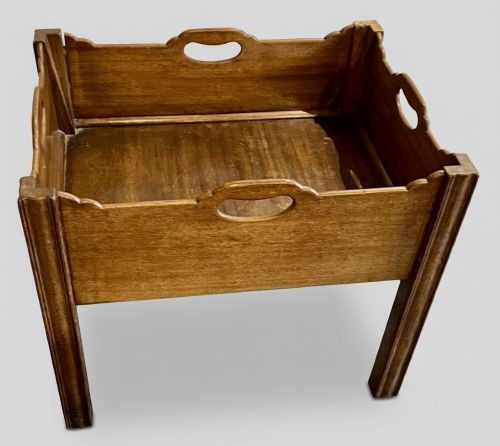
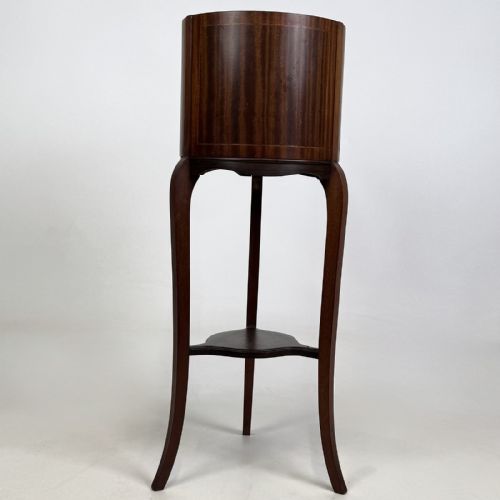
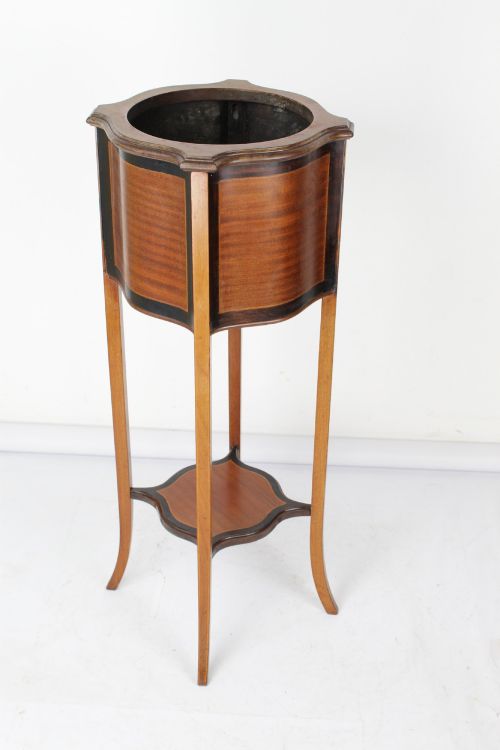
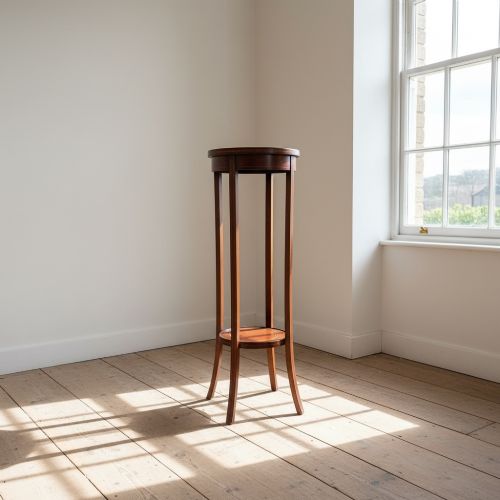
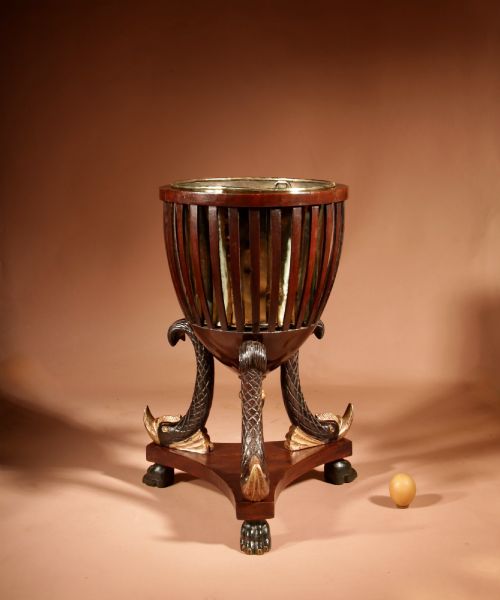
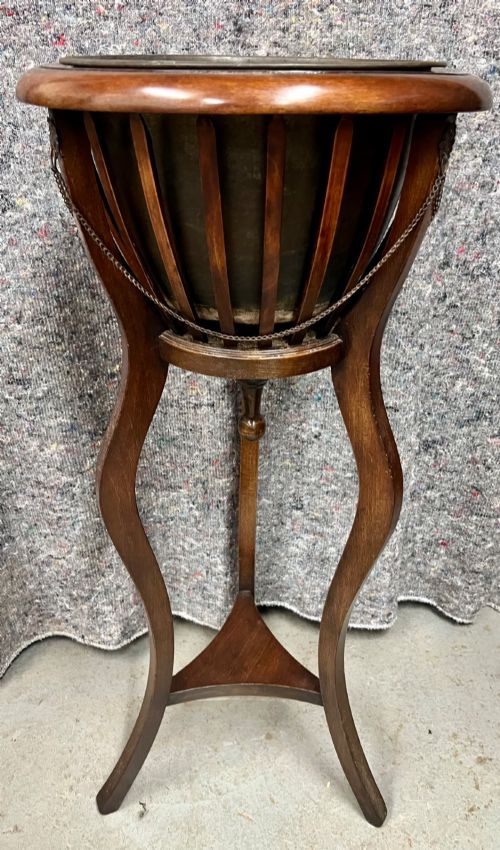
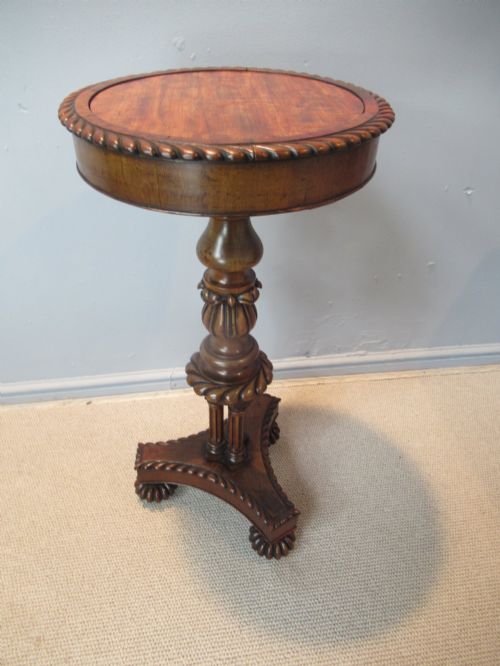
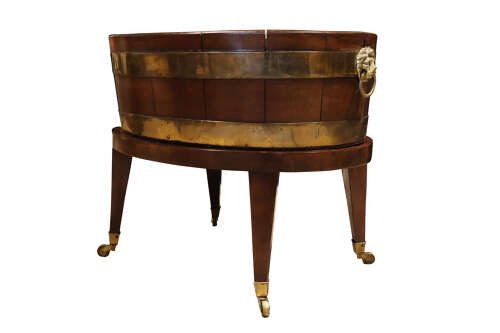
A mahogany planter stand unites several related forms across the inventory, including jardiniere stands, wine coolers on stands, and carved plant pedestals. These objects range from compact Edwardian inlaid holders to substantial Georgian brass-bound vessels designed to display indoor foliage.
Buyers seeking a mahogany planter stand frequently encounter Edwardian and Georgian iterations, alongside Chinese export and nineteenth-century coopered buckets. The selection covers tall torchere styles and low oval vessels supported by dedicated frames.
How they were made
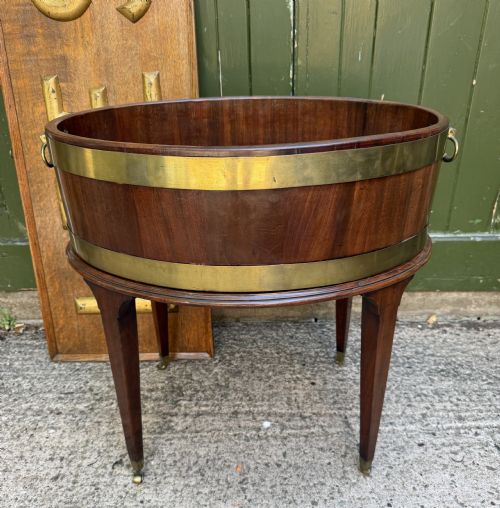
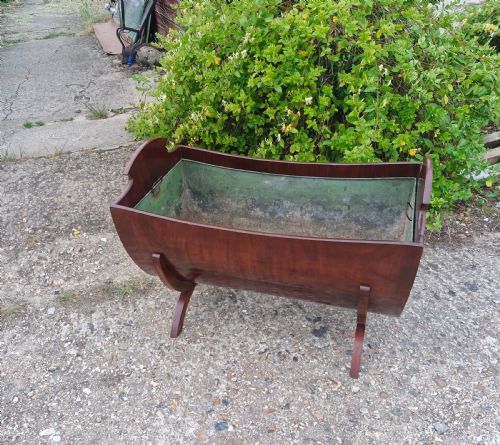
Cabinet-makers constructed these stands using solid mahogany, hardwood, and occasional satinwood or boxwood inlay, often employing traditional coopered stave techniques for round or oval vessels. Metal liners in brass, zinc, or iron protected the timber from moisture and soil.
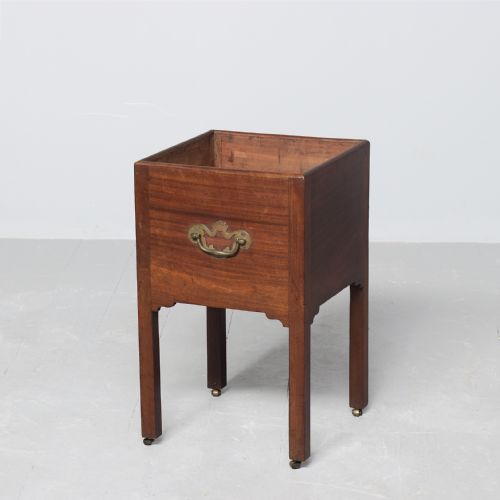
Many examples feature exposed brass banding, campaign-style drop handles, and carved detailing, combining structural joinery with metalwork suited to heavy damp contents.
Mahogany Planter Stand Retail Price Guide 2026
Typical asking prices for mahogany planter stand among the pieces listed under this phrase on Sellingantiques today, from the lower quarter to the upper quarter. They describe what is for sale here now, not the wider market.
Many of these botanical stands spent their early lives holding ice and claret before retiring to a life of quiet greenery.
What varies in quality
The standard of a mahogany planter stand depends on the crispness of its hand-carving, the precision of boxwood or satinwood stringing, and the integrity of its timber. Superior examples retain original brass hoops and liners without excessive replacement parts.
Construction methods also distinguish finer workshops, seen in tight coopering, well-fitted stands, and carefully matched mahogany grain across the staves and legs.
The Mahogany Planter Stand Glossary
- Coopered
- Constructed from curved wooden staves bound together with metal hoops, much like a traditional barrel. This technique ensured watertight vessels for plants and wine.
- Jardiniere
- A decorative pot or stand designed to hold a plant or floral arrangement indoors. These vessels often sit within dedicated wooden frames or tripod bases.
- Torchere
- A tall, slender stand designed to elevate a single light source, vase, or plant. In mahogany, these tall pedestals provide vertical emphasis in a room.
- Cellarette
- A lockable container used originally to store bottles of wine or spirits, frequently adapted or built in forms similar to planters and jardiniere stands.
Mahogany Planter Stand: Frequently Asked Questions
What is a mahogany planter stand?
A mahogany planter stand is a decorative furniture piece designed to elevate and display plants or flowers inside a room. These items combine timber frames or coopered buckets with protective inner linings.
They appear in various forms, from tall Edwardian pedestals to low Georgian brass-bound vessels on stands, serving both botanical and display functions.
How do I care for the wood?
Protecting the mahogany surface involves keeping the timber away from direct moisture and using a suitable metal or plastic liner inside the stand. Regular dusting and occasional wax polishing help maintain the finish.
Water splashes should be wiped away immediately to prevent staining the timber or lifting any delicate boxwood inlay.
Where should I place it?
These stands suit entrance halls, drawing rooms, and garden rooms where plants or floral displays can be viewed from multiple angles. Tall torchere styles fit corners or empty wall spaces, while oval jardiniere stands anchor larger rooms.
Keeping the stand away from intense heat sources preserves the stability of the mahogany and prevents the wood from drying out.
How do I date a stand?
Dating relies on stylistic clues such as inlay patterns, leg forms, and construction methods. Georgian examples often feature brass bands and heavy bracket feet, whereas Edwardian pieces display lighter stringing and slender profiles.
Hardware style, such as campaign handles or liner materials, also provides clear indicators of the manufacturing period.