

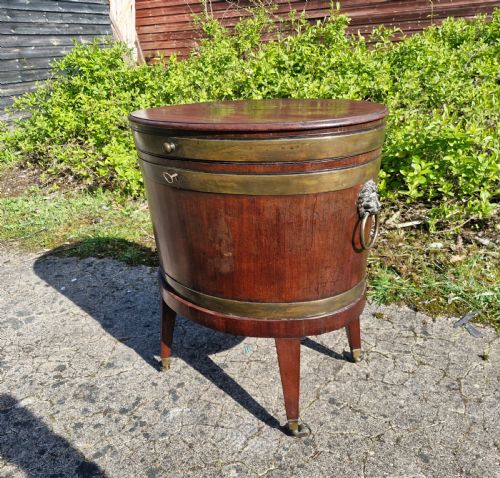


Brass Bound Wine Tub
These brass bound wine tub examples bring enduring Georgian and nineteenth-century craftsmanship into your home as functional wine coolers or decorative plant jardinières.
What They Are
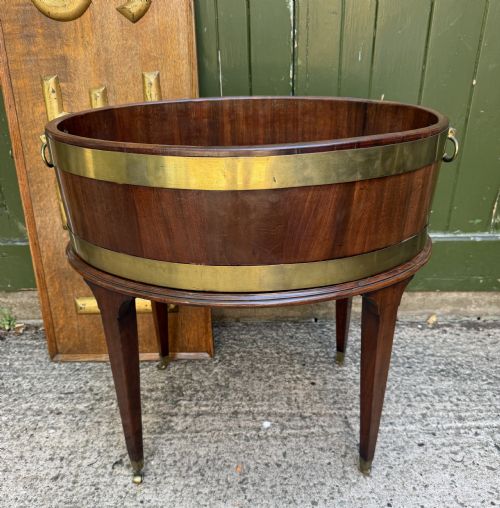
A brass bound wine tub serves as a handsome receptacle designed to chill bottles or display greenery within domestic spaces. When you search for this phrase, you encounter vessels rooted in Georgian, Regency, and George III periods.
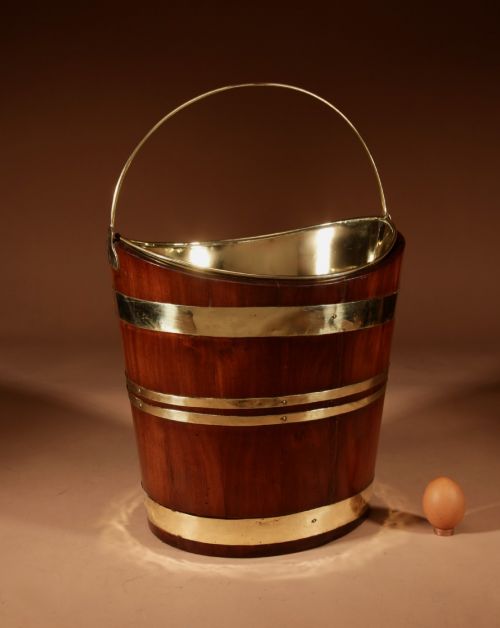
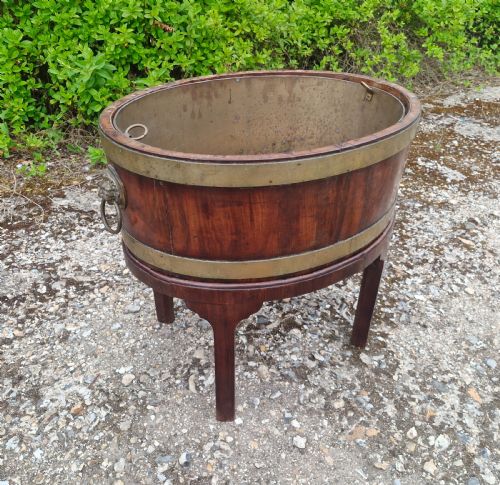
The most typical form met on this page is the mahogany or walnut bucket, often shaped elliptically or oval, encircled by secure metal bands. These pieces bridge the gap between practical dining room accessories and striking decorative focal points.
Earlier eighteenth-century examples sit alongside early nineteenth-century iterations, showing how these cooling vessels evolved in proportion while retaining their characteristic metal fastenings.
How They Were Made
Cabinetmakers utilised rich timber species including mahogany and walnut, constructing the staves or bodies with precision to hold liquids or plants securely. These wooden structures relied on traditional coopering or joinery techniques passed down through generations.
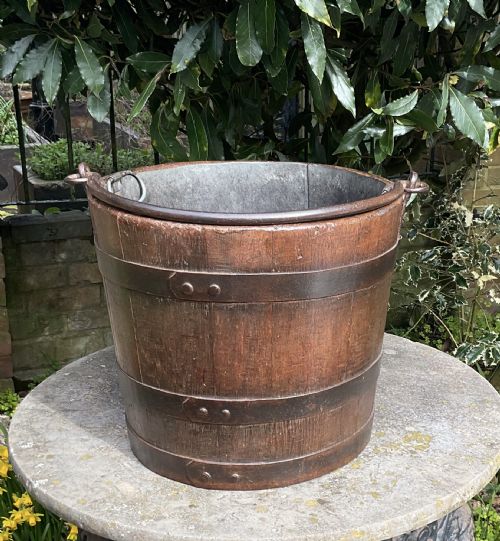
Metal bands, executed in brass or other metals, were fitted tightly around the circumference to provide structural integrity and visual contrast against the dark wood. Zinc liners frequently feature inside the tubs to protect the timber from moisture and ice.
Retail Price Guide 2026
Typical UK retail prices for brass bound wine tub, calculated from the Sellingantiques database of over a million retail prices indexed since 2003. This retail price guide relies exclusively on Sellingantiques data; no external sources or auction records are used, so the figures do not describe the wider market.
Many of these sturdy vessels survived centuries of dinner parties only to retire gracefully as indoor homes for ferns.
What Varies in Quality
The refinement of the timber grain and the warmth of the polished surface separate finer examples from standard ones. Superior vessels display carefully selected cuts of walnut or mahogany that age gracefully over centuries.
The weight and finish of the brass bands contribute significantly to the overall presence of the piece, with tighter construction and heavier metalwork marking out better craftsmanship.
The Brass Bound Wine Tub Glossary
- Cellarette
- A lockable container used for storing wine bottles in the dining room before serving. These pieces often doubled as coolers when packed with ice.
- Jardiniere
- An ornamental pot or tub designed to hold plants and flowers. Examples frequently find new life in this capacity within modern interiors.
- Stave
- One of the narrow strips of wood assembled to make the sides of a traditional tub or bucket. Their tight assembly ensures the vessel remains stable.
- Elliptical
- Having an oval shape with curved sides, a common profile for these tubs that allowed them to fit neatly beside dining tables.
Frequently Asked Questions
What is a brass bound wine tub?
It is a wooden cooling vessel encircled with metal bands, dating from the eighteenth or nineteenth century. Originally used to keep wine cold at the table, it functions equally well today as a planter.
Cabinetmakers built these items from hardwoods like mahogany and walnut, equipping them with durable interiors to handle ice and water.
How were these tubs used originally?
Diners filled them with ice and water to chill bottles during formal meals. Servants placed them on the floor near the dining table for easy access.
Over time, changing dining habits meant many of these vessels transitioned into decorative plant containers or umbrella stands.
How do I care for a historic tub?
Keep the wood nourished with appropriate wax and avoid placing it near direct heat sources that might dry the timber. Using a protective liner ensures moisture does not damage the interior.
Regular dusting and gentle polishing will maintain the lustre of both the wood and the brass elements.
How can I tell the period?
Stylistic cues, construction methods, and timber choices point toward the Georgian, Regency, or George III eras. Eighteenth-century models often show distinct cabinetmaking traits compared to early nineteenth-century pieces.
Examining the metal fastenings and interior zinc linings also helps establish the age and manufacturing context of the tub.