
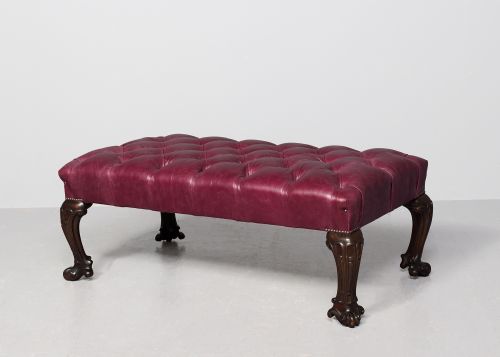
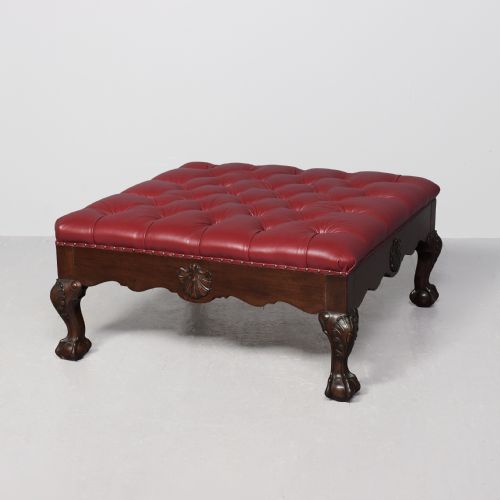
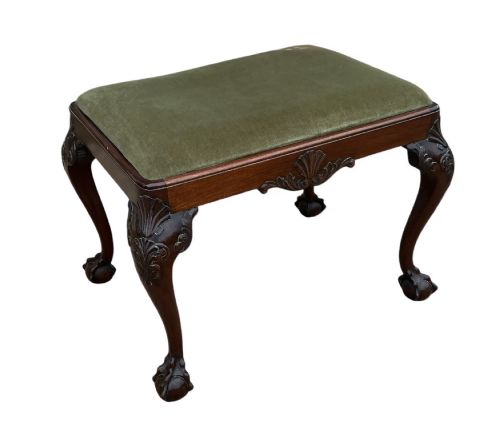
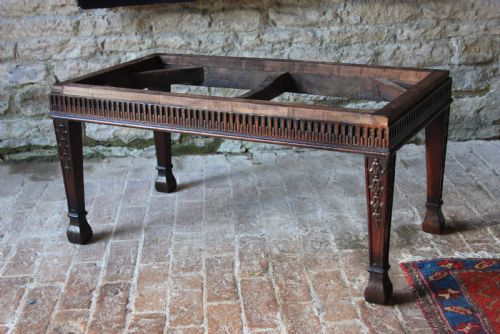
Mahogany Ottoman Footstool
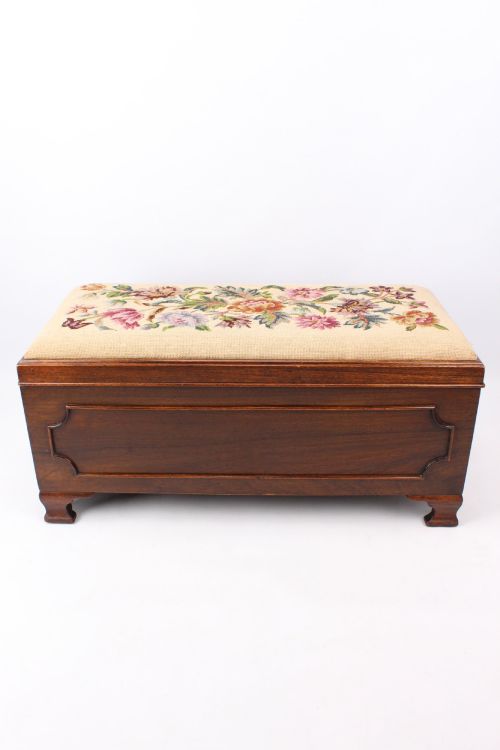
A mahogany ottoman footstool provides a solid timber frame beneath period textiles, offering both a seat and support for the feet.
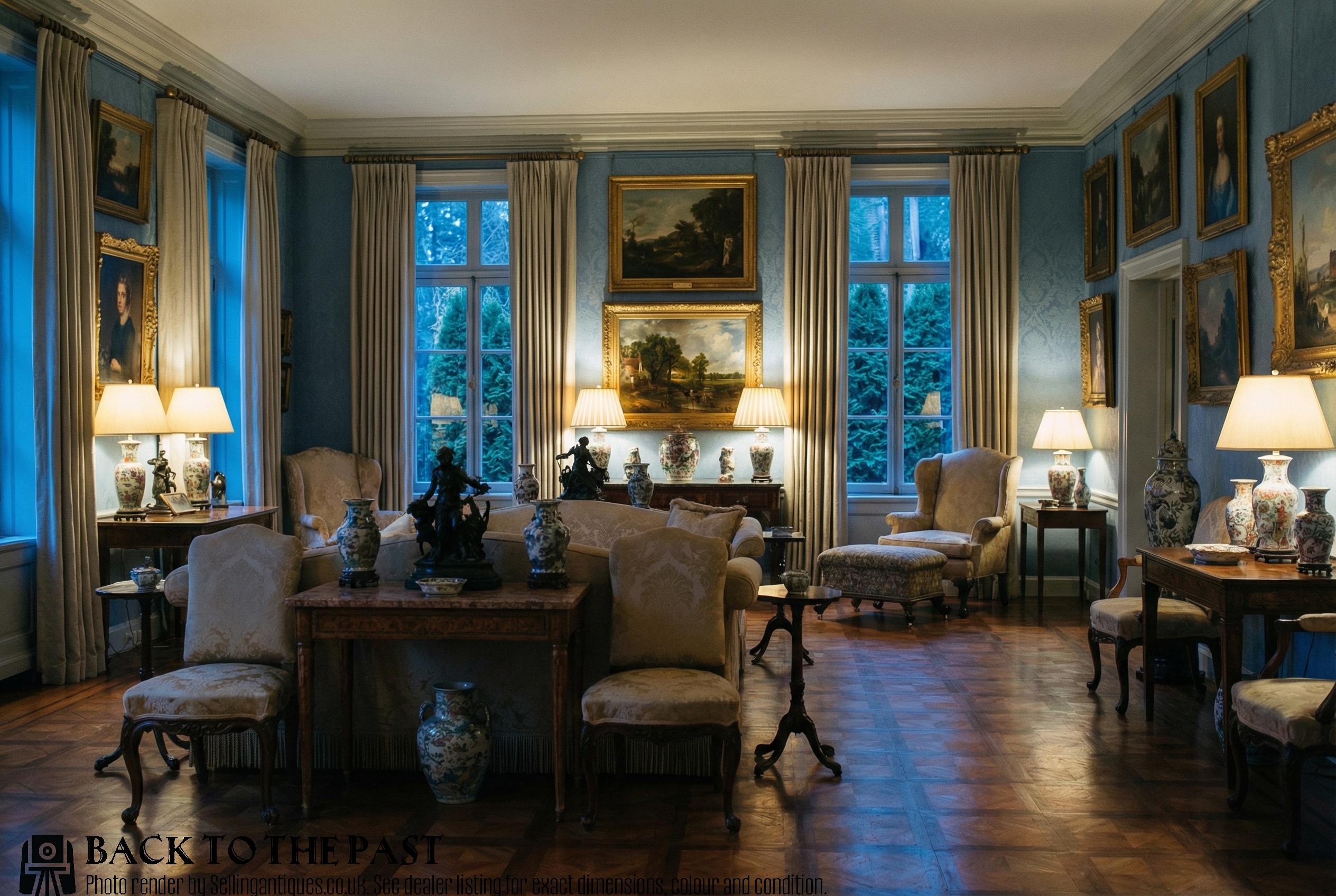
Mahogany Ottoman Footstool
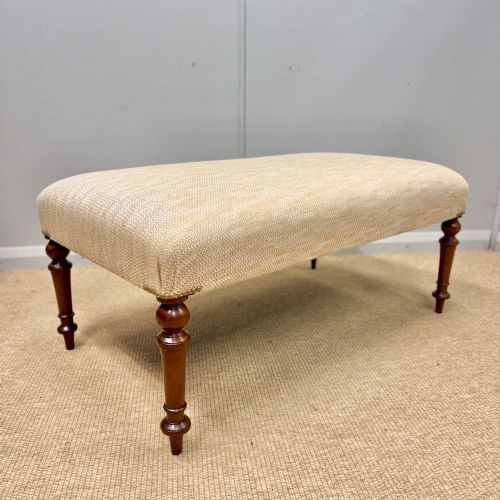
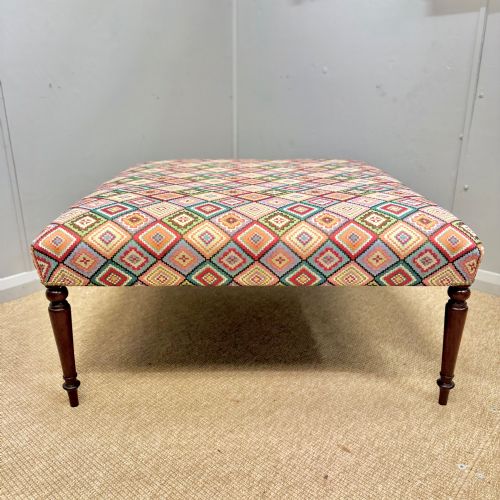
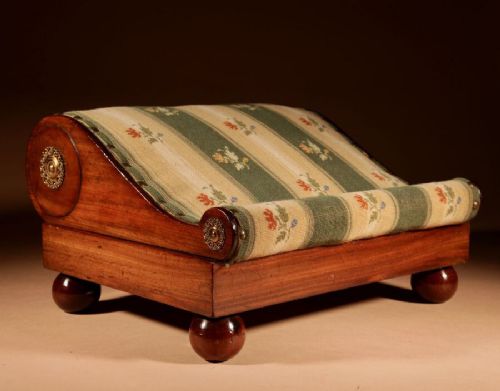
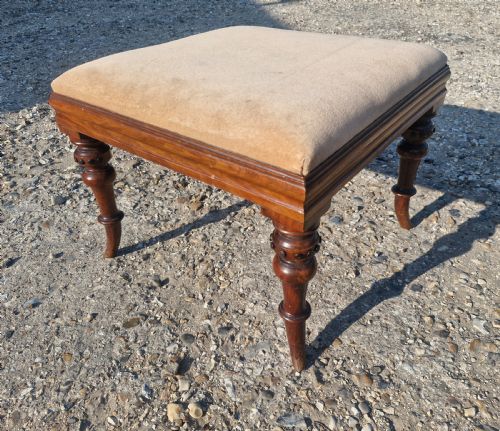
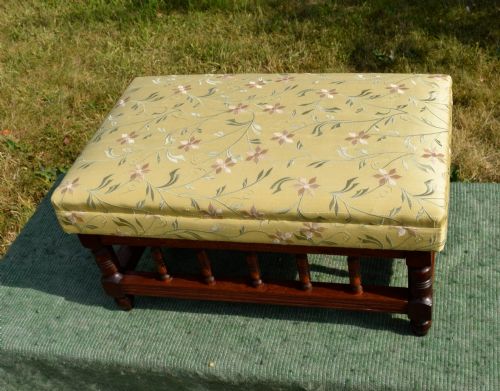
A mahogany ottoman footstool spans forms from simple upholstered blocks to storage ottomans and sewing box stools originating across the nineteenth century and revival periods. The majority of pieces on this page date to the Victorian era and the Regency period, constructed primarily as low stools or long benches.
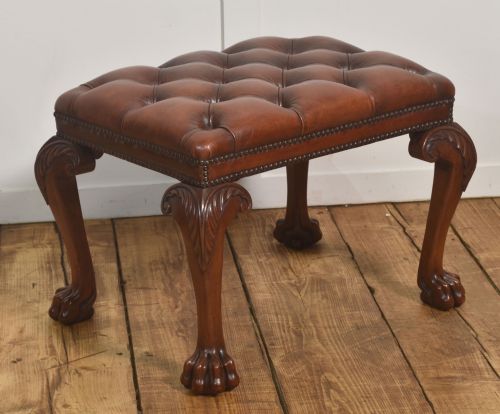
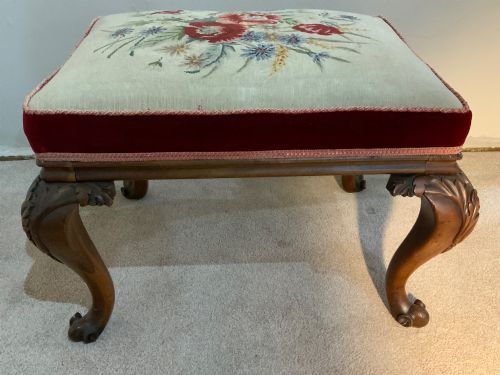
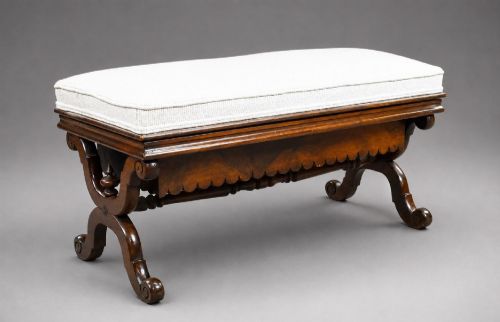
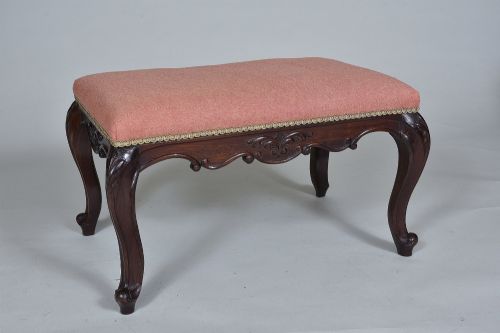
Makers shaped these frames in styles ranging from plain cabriole legs to Chippendale-style carving and Regency scroll ends. Buyers encounter square, oblong and circular formats designed to stand before armchairs or serve as centre pieces in a room.
How they were made
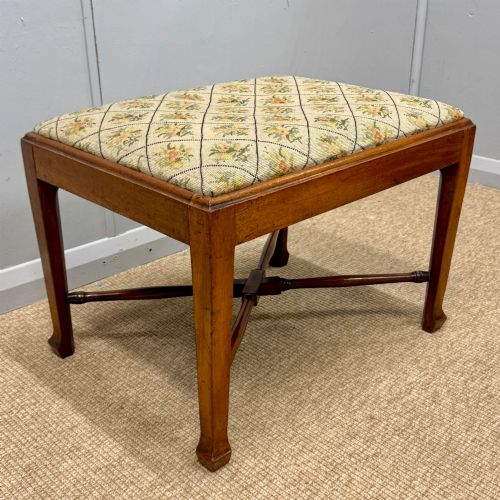
Carpenters built the foundational frames using dense mahogany, often shaping the timber into cabriole legs, x-frames, or cross stretchers with brass castors attached to the feet. Joinery relies on traditional methods to bear weight across low proportions.
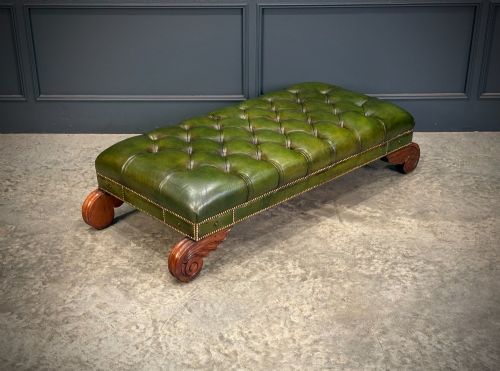
Upholstery completed the piece, incorporating leather, wool, velvet, tapestry, and needlework fixed with brass studs or buttoning. Some storage variants integrated hinged lids to conceal compartments within the wooden structure.
Metamorphic gout stools from the Edwardian era allowed sitters to adjust the angle of their resting foot with mechanical precision.
What varies in quality
The distinction between standard utility seating and finer examples rests on the crispness of the mahogany carving and the integration of the frame. Pieces showing defined scrollwork, substantial proportions, or documented maker attribution command greater attention.
The choice of covering material and the preservation of original textiles or hide dictate the visual weight of the item. Refined joinery in the legs and stretcher assembly distinguishes superior workshop output from simpler domestic joinery.
Howard & Sons·Hallett & Sons·Mathew Gregson
The Mahogany Ottoman Footstool Glossary
- Cabriole leg
- A furniture leg that curves outward at the knee and tapers inward to an ankle, found on many nineteenth-century stools.
- Cross stretcher
- Wooden rails connecting the legs near the base to provide structural stability and rigidity.
- Gout stool
- An adjustable footstool designed to elevate and support the foot at an angle for comfort.
- Hide
- Animal skin prepared for upholstery, frequently seen in buttoned red or burgundy leather on nineteenth-century examples.
- Needlework
- Hand-stitched textile designs applied to the seat tops of period footstools.
Mahogany Ottoman Footstool: Frequently Asked Questions
What is a mahogany ottoman footstool?
A mahogany ottoman footstool is a low seated item built with a hardwood timber frame and upholstered using fabrics, leather, or tapestry. These pieces often feature turned or carved legs and occasionally include internal storage compartments.
Such items served multiple domestic functions in period interiors, acting as foot rests, auxiliary seating, or low tables depending on their specific form and top construction.
How were these stools used historically?
These furnishings were placed beside armchairs and sofas to support the feet during periods of relaxation in period drawing rooms. Larger variants functioned as centre stools or long benches for multiple occupants.
Specialised forms like sewing box stools and storage ottomans combined seating with compartments for needlework or household items, reflecting nineteenth-century desires for multifunctional furniture.
How should I live with one of these footstools?
Living with a period footstool involves placing it as an accent piece in a living space where its timber frame and textile top can be appreciated. Regular dusting of the mahogany frame and gentle care for the leather or fabric maintain the surface.
Positioning the stool away from direct heat sources protects the timber from drying and preserves the integrity of nineteenth-century upholstery materials.