





Mahogany Musical Clock
When you search for a mahogany musical clock, you enter a world of sophisticated horology where rich timber meets complex chime and bell movements.
Mahogany Musical Clock
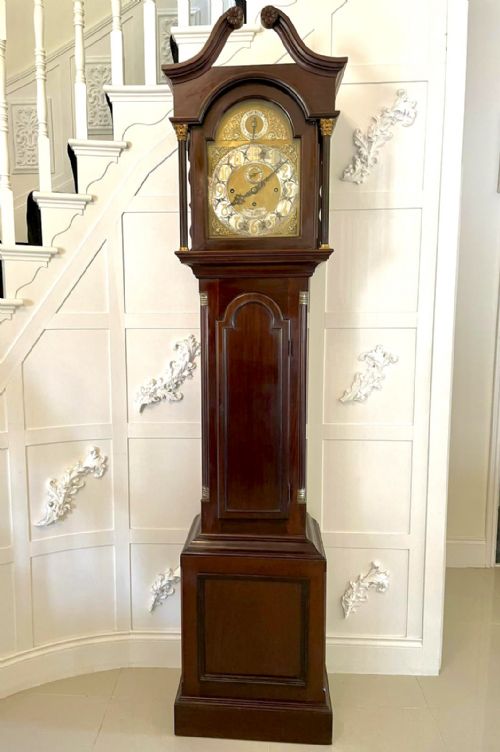
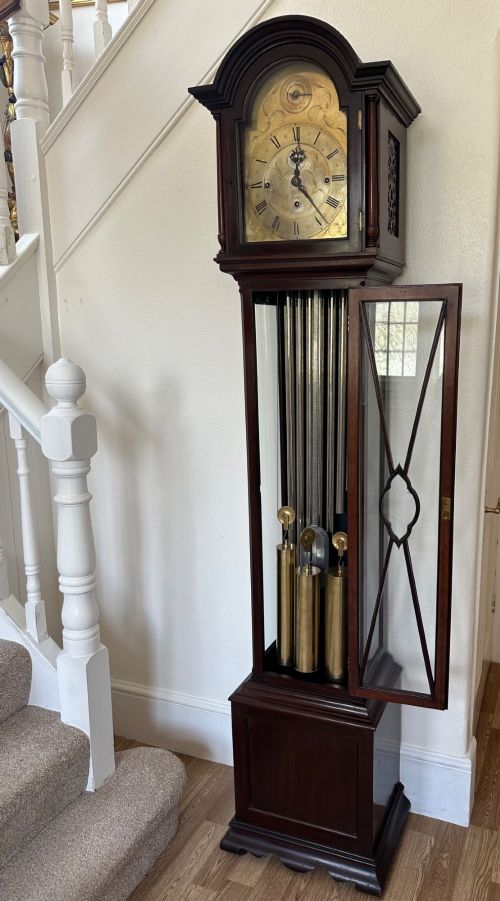
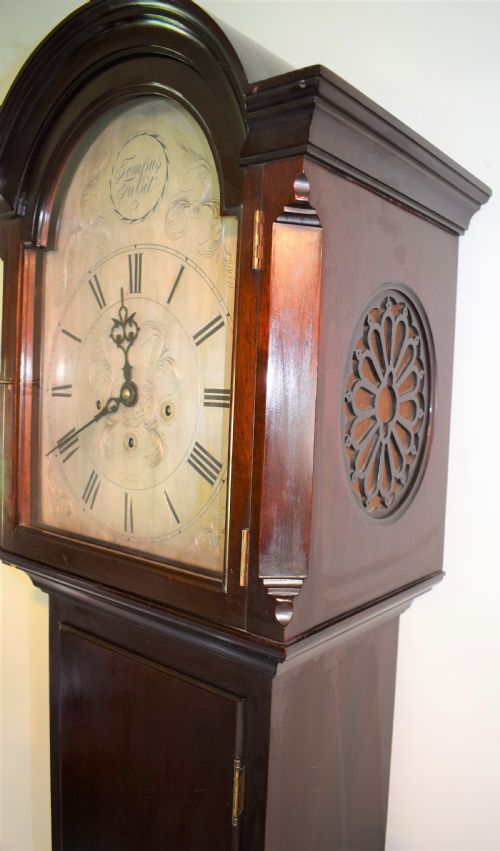
A mahogany musical clock combines a dense tropical hardwood housing with an intricate mechanical movement capable of playing tunes, chimes, or striking bells on the hour and quarter-hour. When you look at pieces matching this phrase, you primarily encounter tall floor-standing examples alongside smaller bracket clocks.
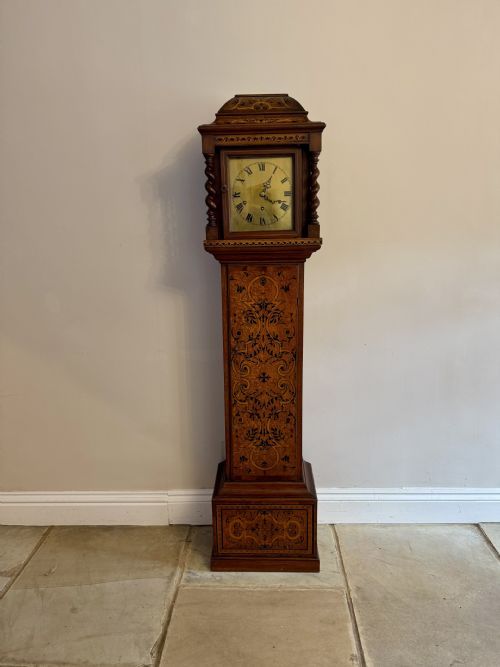
The floor-standing formats span grandfathers, grandmothers, and smaller variations, frequently produced during the Edwardian, Victorian, and Georgian eras. These tall cases often display glazed doors, brass dials, and inlaid marquetry details.
Bracket forms provide a more compact alternative designed for tables or wall brackets, originating from the eighteenth century onwards. Both formats deliver acoustic complexity through multiple trains and specialised chime barrels, tubes, or bells.
How they were made
Cabinetmakers constructed the housing using solid mahogany, frequently incorporating satinwood inlay, brass mounts, and glass panels to showcase the pendulum and dial. The timber was selected for stability and grain figure, then polished to a deep lustre.
Clockmakers fitted brass movements driven by weights or springs, utilising multiple trains to separate the timekeeping function from the chiming and musical mechanisms. Bells, tubular bells, and pinned cylinders were integrated into the upper trunk or hood to produce the acoustic output.
Mahogany Musical Clock Retail Price Guide 2026
Typical asking prices for mahogany musical clock among the pieces listed under this phrase on Sellingantiques today, from the lower quarter to the upper quarter. They describe what is for sale here now, not the wider market.
The listings show mahogany musical clocks spanning the eighteenth century through the Edwardian period, incorporating bracket and longcase forms.
What varies in quality
Movement complexity and tonal output dictate the standing of a piece within its type, separating standard time-and-strike configurations from sophisticated multi-tune, multi-train or tubular bell systems. The clarity of the acoustic chime and the precision of the dial engraving reflect the skill of the original maker.
Winsor Bishop Norwich·Francis Perigal London·Lister & Sons·Camerer Cuss & Co·Geo Tarratt of Leicester·J. N. Martyn Falmouth·Bravingtons·Gustav Becker·John Carter of London·Easterbrook Torquay Devon
The Mahogany Musical Clock Glossary
- Longcase clock
- A tall pendulum clock enclosed in a wooden case, commonly known as a grandfather clock. These standing timepieces generally measure six to eight feet in height.
- Bracket clock
- A portable spring-driven clock historically designed to sit upon a matching wall bracket. They frequently feature elaborate brass carrying handles and glazed side panels.
- Train
- An independent series of gears within a clock movement dedicated to a specific function such as timekeeping, striking, or playing music. Three-train movements manage time, hour striking, and musical chimes separately.
- Marquetry
- Decorative inlay work where pieces of various woods are fitted together to form pictorial patterns on the surface of the clock case. This technique adds ornamental contrast to plain mahogany panels.
- Silvered metal
- A brass or copper dial surface treated with a silver solution to provide a contrasting matte background for engraved numerals and inscriptions. It enhances legibility and reflects ambient light within the hood.
Mahogany Musical Clock: Frequently Asked Questions
How do I wind a musical clock?
Winding requires inserting the key into the specific winding holes on the dial face and turning it slowly until resistance is felt. Each train, whether for time, strike, or music, must be wound independently.
Care should be taken not to overwind the springs or pull the weight cords too quickly. Ensuring the pendulum is stationary before moving the case prevents damage to the suspension spring.
What is the difference between a grandfather and grandmother clock?
Grandfather clocks are the standard tall floor-standing timepieces, typically measuring over six feet in height. Grandmother clocks are slender, scaled-down versions produced predominantly in the twentieth century.
Despite their smaller stature, grandmother clocks often house sophisticated three-train musical movements. Both share similar mahogany case construction and dial layouts.
How many tunes can these clocks play?
Many standard musical clocks play a single recurring melody such as Westminster chimes on the quarter-hours. More complex multi-train examples feature pinned cylinders capable of switching between two or three distinct tunes.
Advanced tubular bell systems produce deep, resonant tones that mimic church bells. Selection levers on the dial allow the owner to change tunes or silence the mechanism entirely.
Where should I place a longcase clock?
Longcase clocks require a stable, dry interior location away from direct sunlight and sudden temperature fluctuations. Placing them against an interior load-bearing wall minimises vibrations from household traffic.
The case must be levelled carefully using adjustable feet or shims to ensure the pendulum swings evenly. Securing tall cases to the wall using discreet brackets prevents accidental tipping.