
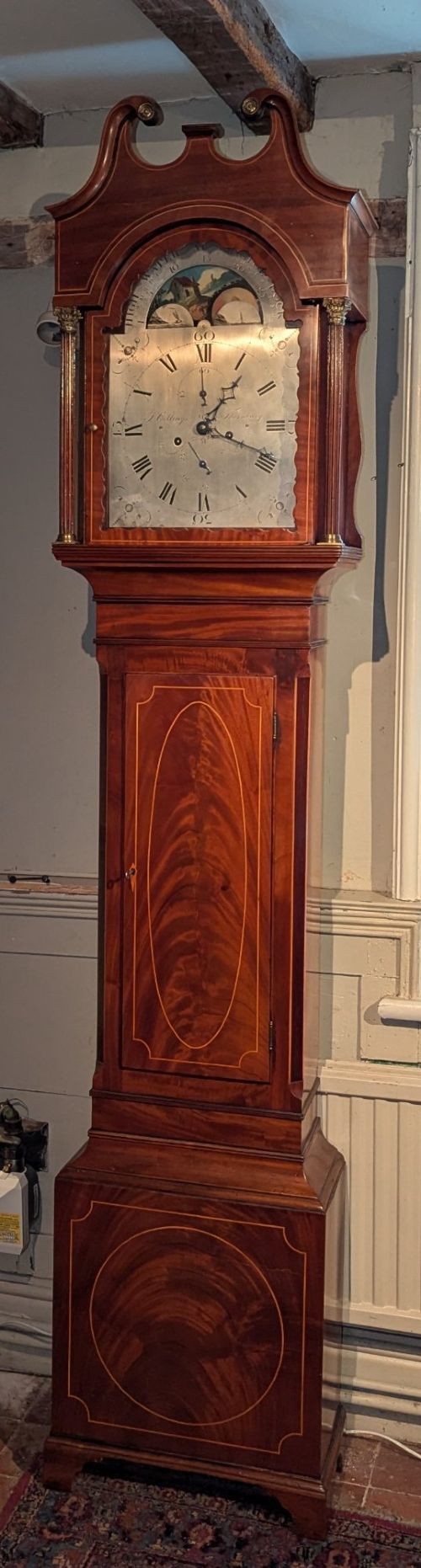
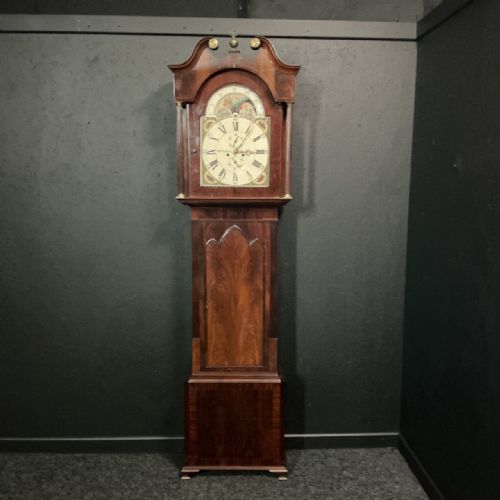
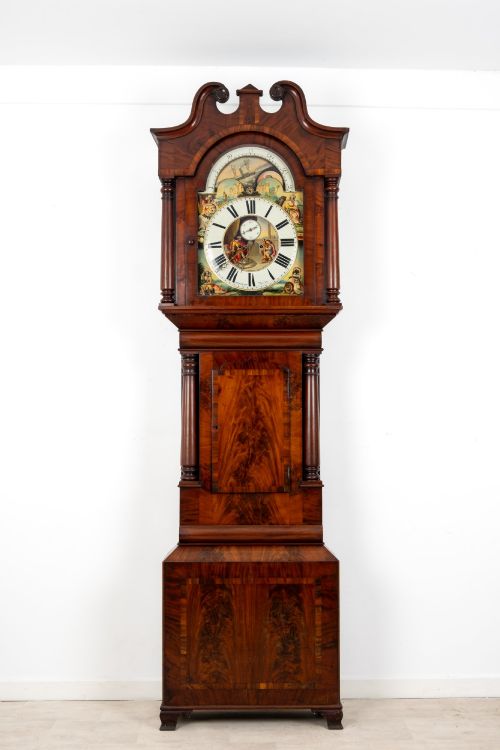




Mahogany Moon Dial Clock
A mahogany moon dial clock combines towering cabinet work with a painted mechanical display of the lunar cycle for domestic timekeeping.
Mahogany Moon Dial Clock
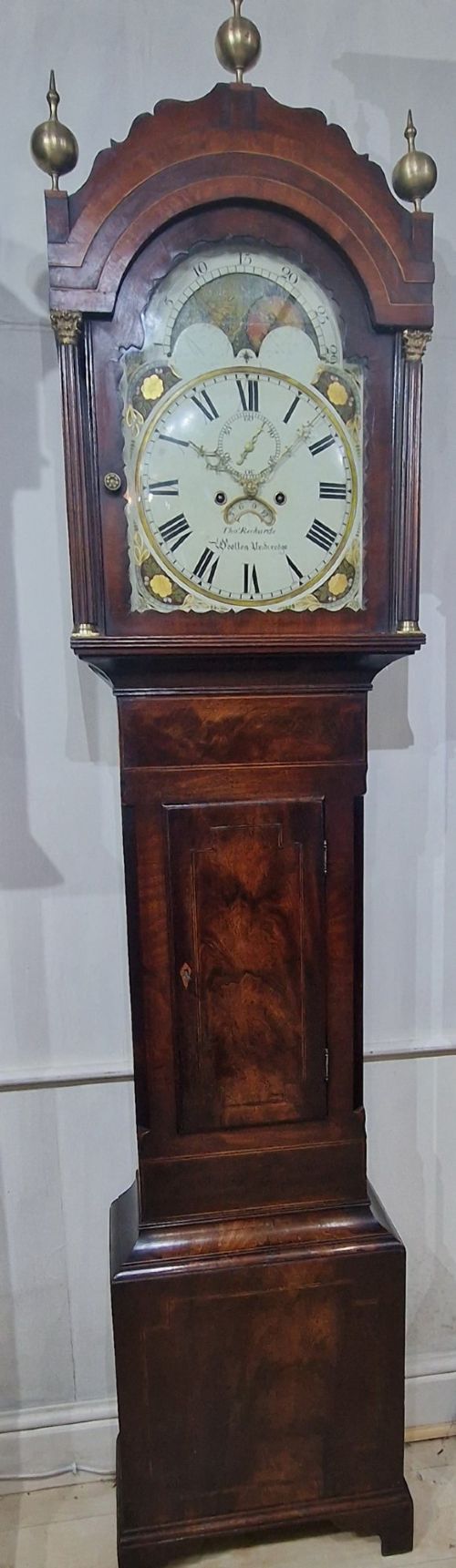
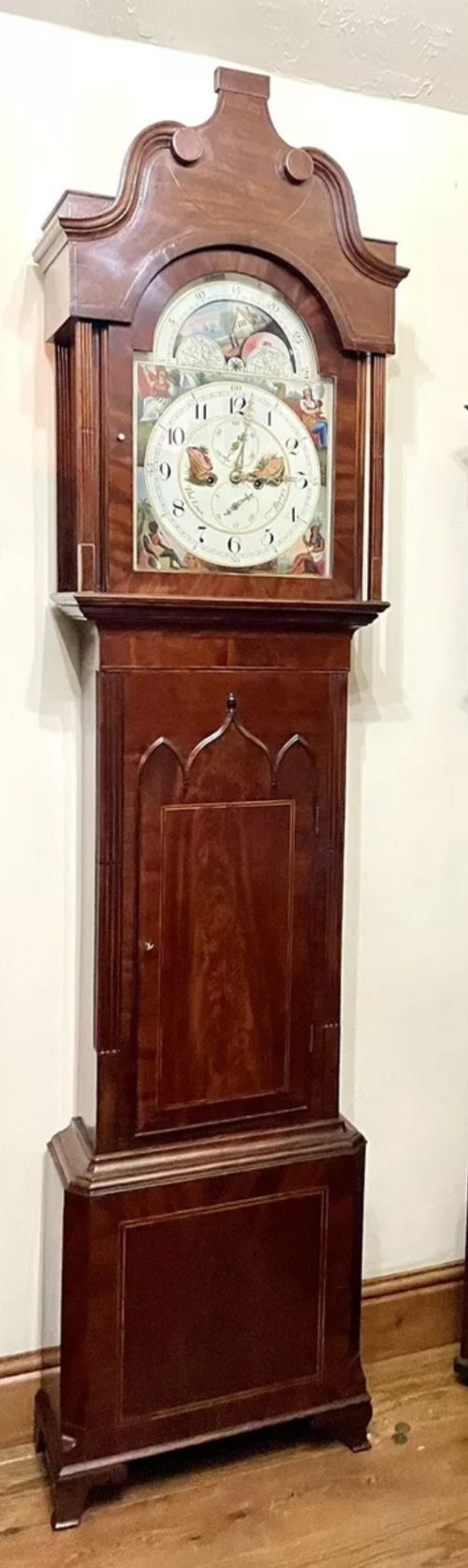
A mahogany moon dial clock is a tall floor standing timekeeper, frequently referred to as a grandfather clock, housed in a timber case. These pieces combine weight driven mechanisms with an arched dial displaying phases of the moon.
The versions most commonly met across these listings date from the Georgian period through to the nineteenth century. Makers from regional workshops across Britain built these tall cases to house intricate eight day movements alongside simpler thirty hour variations.
Cabinets constructed from mahogany often feature secondary woods such as oak, alongside inlaid decoration, glass inspection panels on the hood doors, and painted iron dials.
Materials and construction
Cabinet makers utilised solid mahogany and flame mahogany veneers over structural timbers like oak, building tall trunk doors and glazed hoods to protect the delicate brass gear trains within.
Dials were constructed from sheet iron, carefully painted with floral corners, chapter rings, and arched moon rollers that rotated behind shaped apertures to track the lunar month.
Movements relied upon steel pinions, brass wheels, lead or iron weights, and swinging pendulums, assembled by provincial clockmakers working across northern England, Wales, and Scotland.
Painted iron dials dominate the available inventory, displaying hand painted rolling moon mechanisms alongside regional signatures from northern England and Wales.
Factors of quality
The refinement of the cabinet work dictates much of the standing, separating standard production cases from examples featuring figured mahogany veneers, detailed marquetry inlay, and well proportioned architectural hoods.
The artistry on the painted iron dial influences desirability, with crisp hand painted moon rollers, subsidiary second hands, and four hand arrangements showing superior workshop output.
The reputation of the maker inscribed upon the dial surface adds distinction, particularly when associated with established regional centres of horology or notable provincial partnerships.
Parkinson Bros Batley·Edward Shepley·Edward White Birmingham·Will Lassell Toxteth Park·Thomas Lees Bury·John Banks Oldham·Thos Russell Lancaster·Furnival Oldham·Thomas Dean Leigh·Grocott Holywell·Stanyer Nantwich·Richardson Manchester·R Lawson Leigh·John Wood Grantham·Edward Glase Bridgnorth·James Rayner Hull·Henry Smith·William Mercer Liverpool·David Griffith Carnarvon·John Wyat Altringham·James Waring Stockport
The Mahogany Moon Dial Clock Glossary
- Moon roller
- A rotating disc painted with two moons that turns behind an arched dial to display the lunar phase over a twenty nine and a half day cycle. This mechanism tracks the tides as well as the night sky.
- Longcase clock
- A tall freestanding weight driven timekeeper housed in a protective wooden trunk, commonly known as a grandfather clock. These floor standing pieces require a level surface and adequate ceiling height.
- Chapter ring
- The circular metal ring on the clock face bearing numerals for tracking hours and minutes. These rings are typically silvered brass or painted iron.
- Hood
- The upper glazed section of the clock case that lifts or opens forward to provide access to the dial and movement. Glass panels allow the face to be viewed without opening the case.
- Eight day movement
- A mechanical gear train powered by suspended weights that requires winding once a week. This heavier movement typically utilises two separate weights hanging inside the trunk.
Mahogany Moon Dial Clock: Frequently Asked Questions
How do I wind an eight day clock?
Insert the winding key into the small holes on the painted iron dial and turn gently until the internal weights rise fully toward the top of the trunk.
Take care not to over wind the mechanism, supporting the weight slightly if needed to ease the tension on the brass gear train.
What is a penny moon dial?
A penny moon dial displays the lunar cycle using a small painted disc set directly within the chapter ring rather than within a larger arch at the top of the face.
This early layout appeared frequently on eighteenth century regional timepieces before the arched dial format became standard practice for provincial makers.
Why do some cases use oak and mahogany?
Makers frequently paired solid oak for structural frames, door backs, and internal framing while applying costly mahogany veneers to the visible exterior surfaces of the trunk and hood.
This traditional construction method provided structural stability against warping while offering a polished dark timber finish for the main display.
How do I set the moon phase correctly?
Consult a current lunar calendar to identify the exact phase of the moon on the day of setting before adjusting the mechanical roller behind the dial.
Many rolling moon mechanisms can be advanced forward by thumb pressure on the rear disc teeth or turned via an arbor behind the access door.
Where should I place a longcase clock?
Position the piece against a sturdy internal wall away from direct sunlight, heating vents, and damp floorboards to protect the timber case and iron dial.
Secure the trunk back to the wall using discreet brackets if necessary to prevent accidental tipping on uneven historic flooring.