




Antique Moon Dial Clock
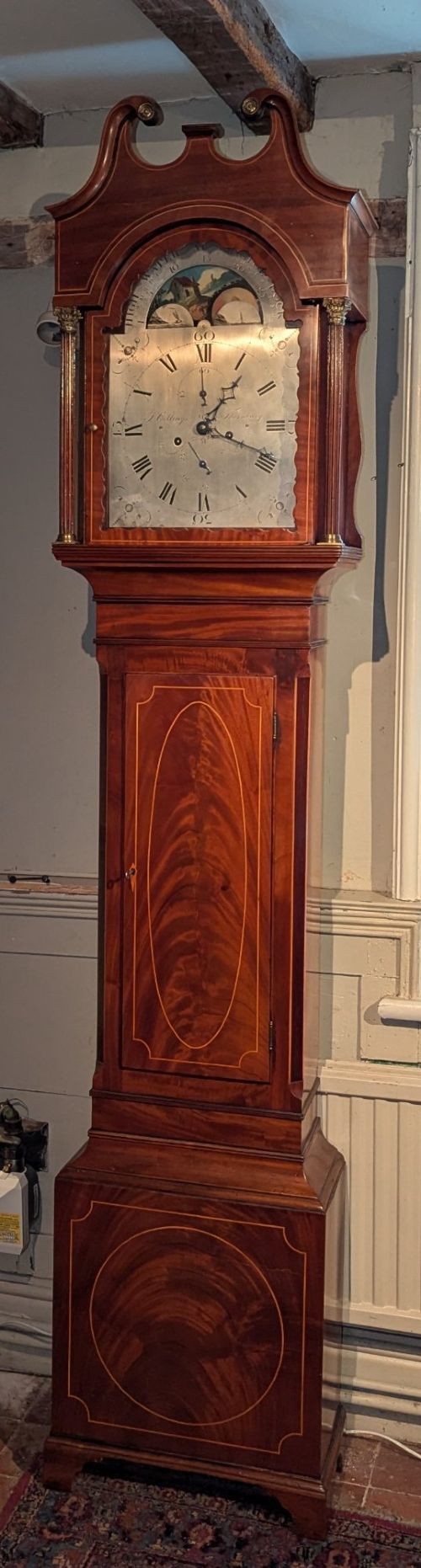
An antique moon dial clock brings mechanical timekeeping alive with a painted lunation roller tracking the lunar cycle from a grand case.
Antique Moon Dial Clock
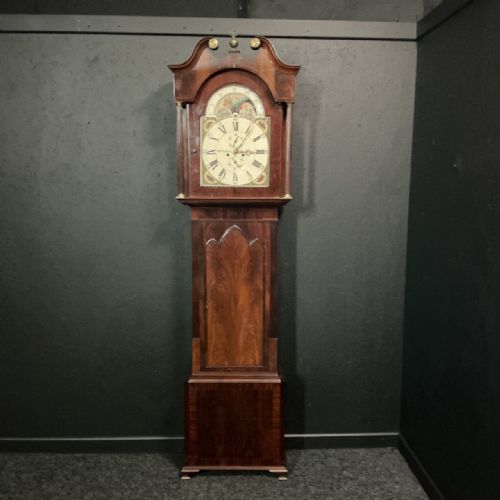
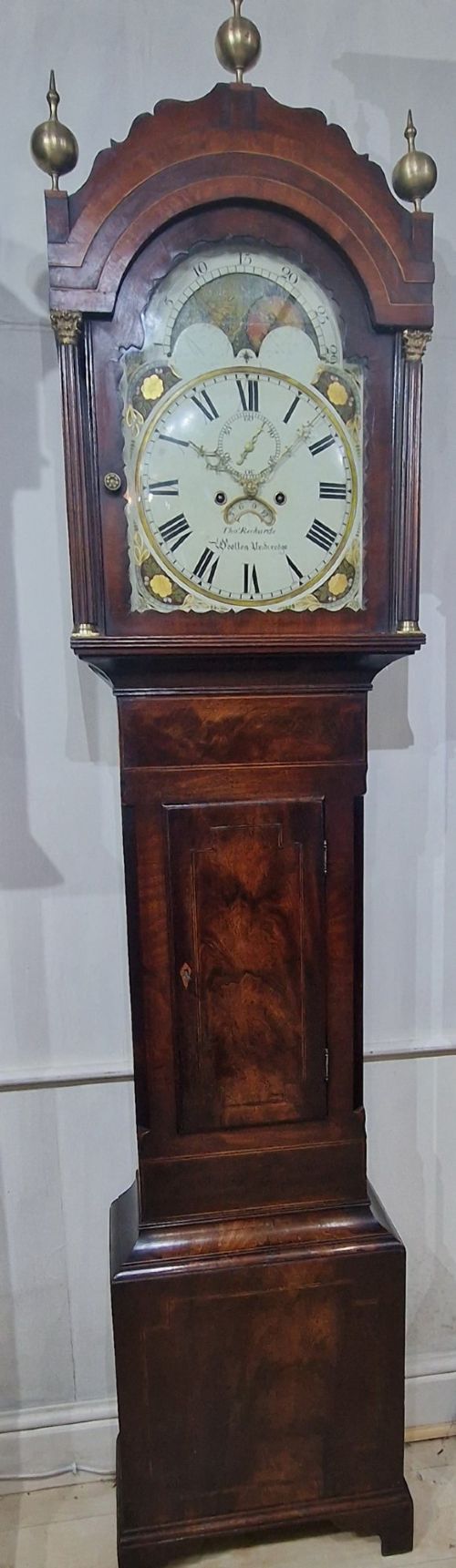
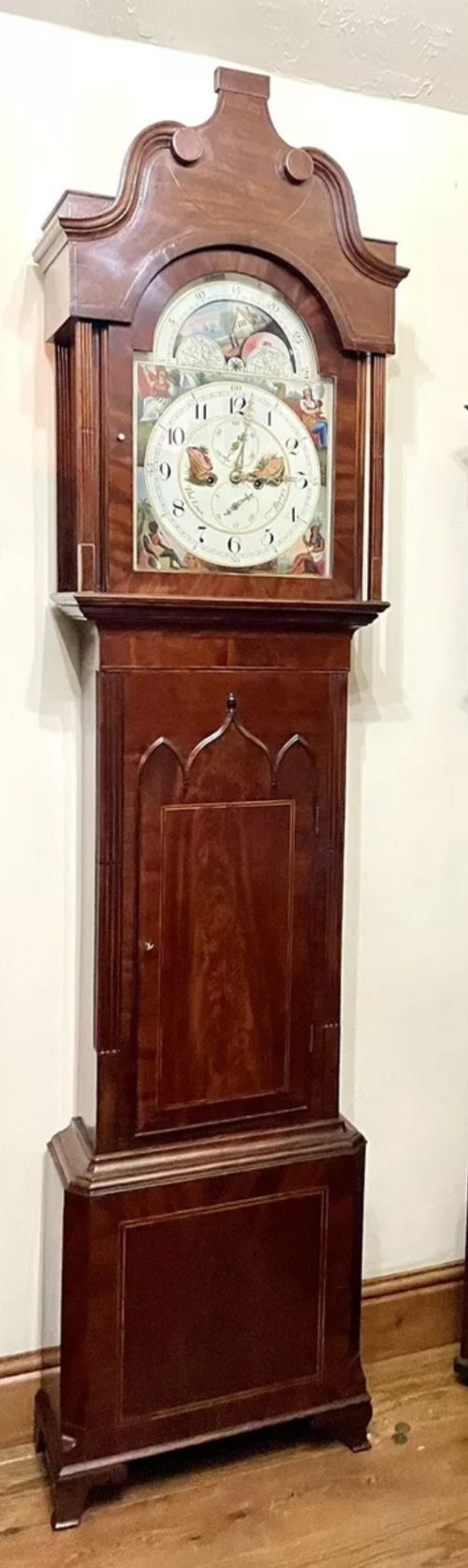
An antique moon dial clock is predominantly a longcase or grandfather clock housing a mechanical device within its arched dial to show the phases of the moon. These tall floor-standing timepieces date primarily from the Georgian, Victorian and eighteenth-century periods.
The core function combines standard timekeeping with a rotating disc or roller behind the dial face. This mechanism turns twice a lunar month to display the waxing and waning phases through an arched aperture.
How they were made
Cabinetmakers constructed the tall floor cases using mahogany and oak, frequently incorporating inlaid wood details and glass viewing doors. These timbers provided the structural integrity required to support weighty brass clockwork movements.
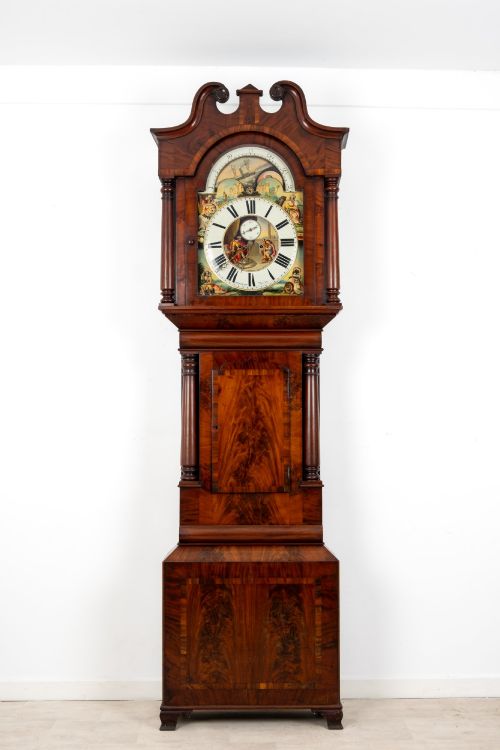
Dial faces combined painted iron or enamel with brass components to display hours, minutes and lunar tracking. Artists hand-painted the rolling moon discs with celestial imagery visible through the arched dial aperture.
Some provincial dials display grinning faces painted on the rolling moon.
What varies in quality
The quality of an antique moon dial clock rests in the artistic execution of the painted dial and the precision of the brass movement inside. Finer examples display intricate hand-painted lunar scenes and signature engraving from notable provincial clockmakers.
Cabinetry execution dictates overall merit, separating standard production cases from those featuring figured mahogany veneers, delicate marquetry inlay and well-proportioned architectural hoods.
Parkinson Bros Batley·Edward Shepley Manchester·Edward White Birmingham·Will Lassell Toxteth Park·Thomas Lees Bury·John Banks Oldham·Thos Russell Lancaster·Furnival Oldham·Thomas Dean Leigh·Grocott Holywell·Stanyer Nantwich·Richardson Manchester·R Lawson Leigh·John Wood Grantham·Edward Glase Bridgnorth·James Rayner Hull·Henry Smith·Robert Darling Melrose·William Mercer Liverpool·David Griffith Carnarvon·John Wyat Altrincham·Brocot
The Antique Moon Dial Clock Glossary
- Moon roller
- A rotating mechanism behind the dial that displays the lunar phases through an arched aperture. It turns continuously to mirror the cycle of the moon.
- Longcase clock
- A tall, weight-driven pendulum timekeeper housed in a protective wooden floor case. Also frequently referred to as a grandfather clock.
- Penny moon
- A simple lunar display showing a single moon phase painted on a rotating disc rather than the dual-moon rolling mechanism. This configuration often appears in eighteenth-century pieces.
- Arched dial
- A clock face featuring a curved upper section specifically designed to accommodate the moon phase mechanism. This shape became standard during the Georgian period.
- Movement
- The mechanical inner workings of the clock, typically driven by weights and controlled by a pendulum. Eight-day versions require winding weekly.
Antique Moon Dial Clock: Frequently Asked Questions
How does a moon dial work?
The mechanism connects to the clockwork via a gear train that rotates a double-moon disc once every fifty-nine days. This movement tracks the synodic lunar month behind an arched aperture on the dial face.
As the internal wheels turn, the painted moon phases slowly advance across the opening. This mechanical calculation allows the clock to display the exact appearance of the moon outside.
Where were these clocks made?
Provincial clockmakers across Britain constructed these timepieces in workshops spanning from Lancashire and Cheshire to Scotland and Wales. Local craftsmen built the movements while regional cabinetmakers fashioned the tall wooden cases.
Towns such as Liverpool, Manchester and Birmingham produced many notable examples signed on the dial face. This regional diversity means each clock carries distinct local stylistic traits.
How do I wind an eight day clock?
An eight-day movement requires winding once a week by inserting a key into the winding holes on the dial face. Turning the key slowly lifts the internal weights suspended inside the trunk of the case.
Care must be taken not to overwind the movement or let the weights drop too suddenly. Regular winding keeps the pendulum swinging and ensures the lunar mechanism stays synchronised.