


Mahogany Mirrored Credenza
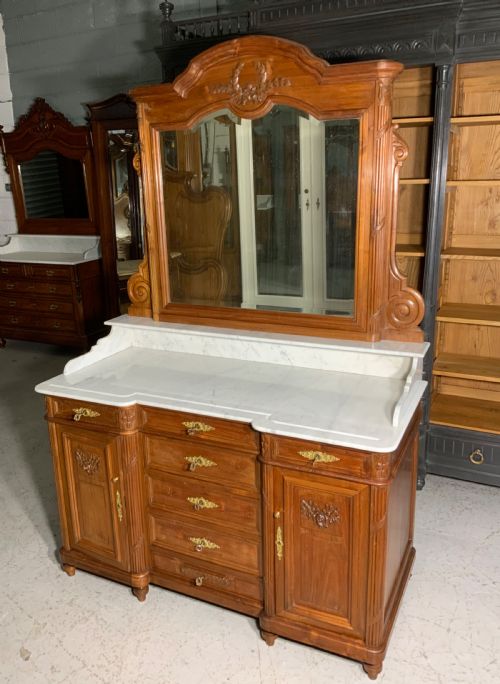
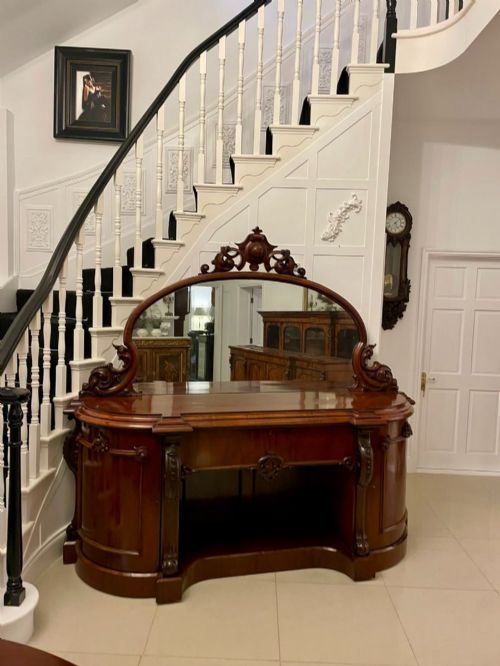
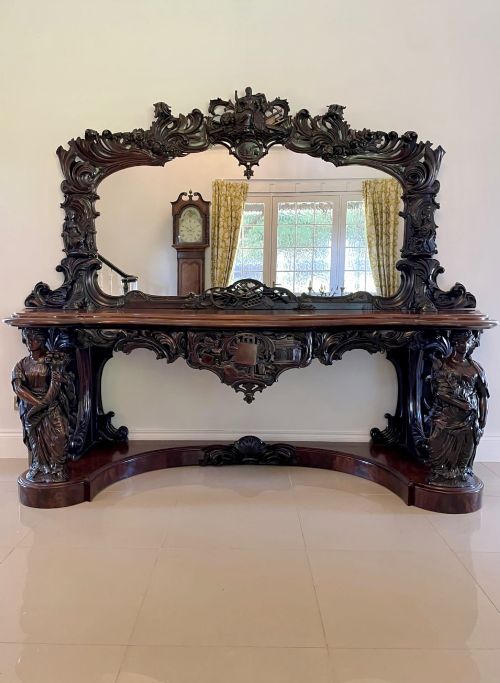
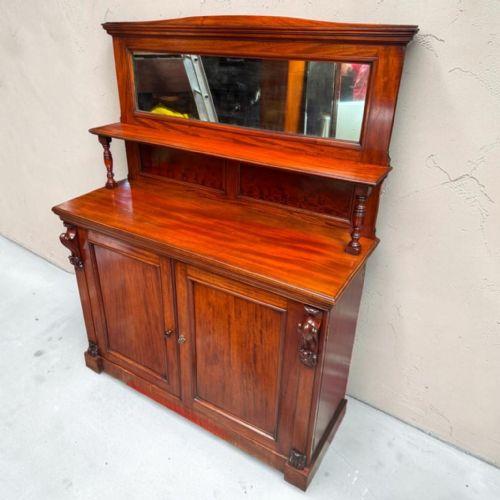
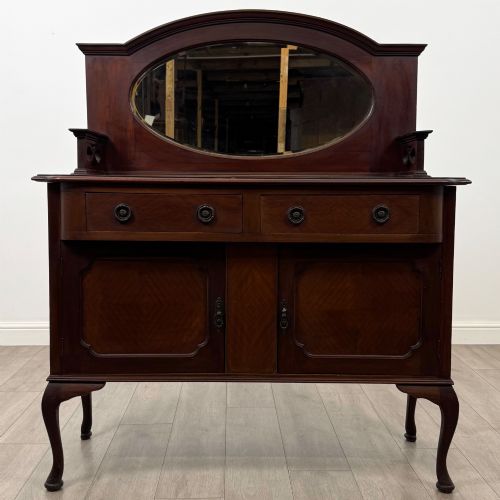
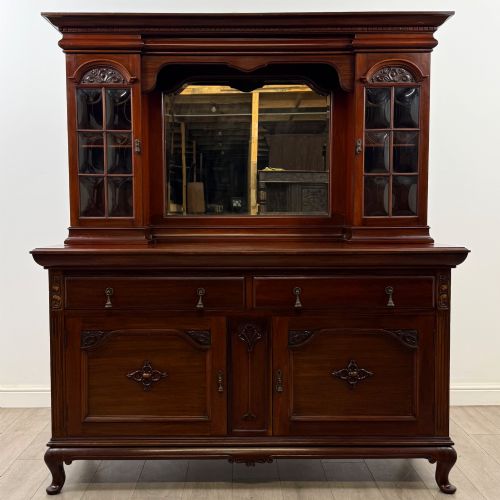
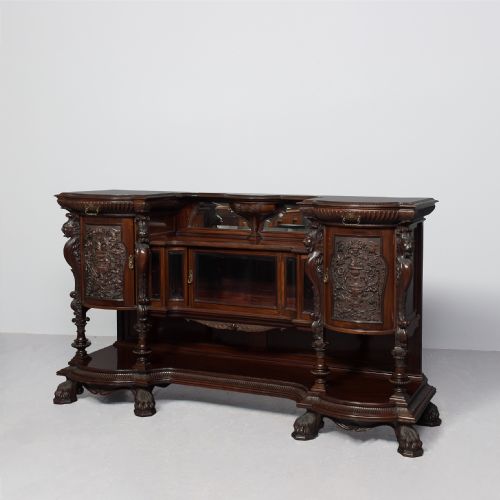
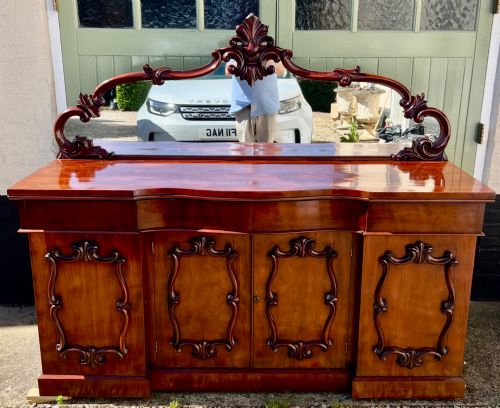
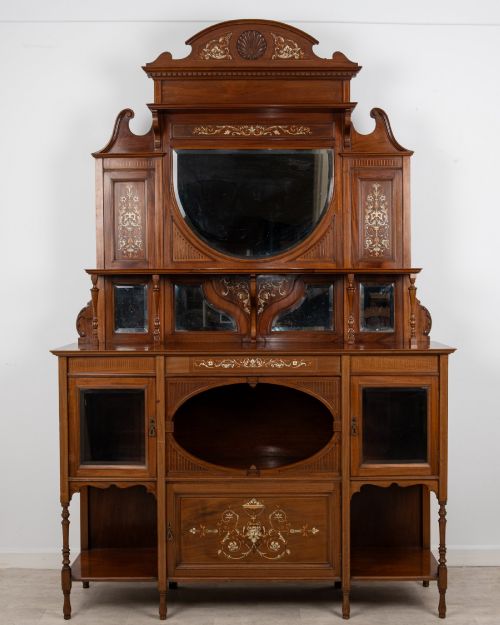
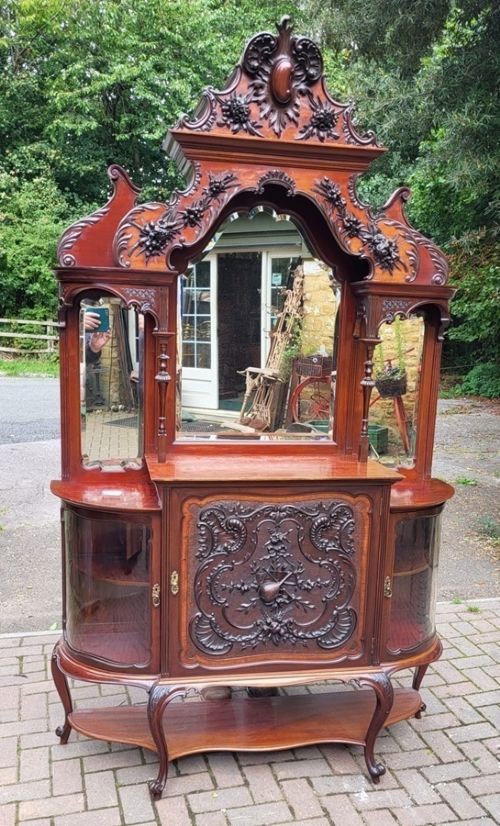
A mahogany mirrored credenza brings deep timber grain and reflected light into a room, serving as a substantial focal point for storage and display.
Mahogany Mirrored Credenza
A mahogany mirrored credenza unites the utility of a heavy timber sideboard with the decorative lift of an integrated mirror back. These pieces emerge predominantly from the Victorian and Edwardian eras, alongside select Regency examples, spanning sideboard, chiffonier, and cabinet forms.
The most frequent encounter on this page is the Victorian mirror back sideboard, often featuring carved details, enclosed cupboards, and an upright glass panel designed to brighten dark dining rooms. Variations stretch from monumental exhibition pieces to smaller side cabinets and display units.
Makers from provincial workshops to prominent firms like Gillows and Shapland & Petter applied their hands to these designs. Buyers find pieces ranging from utilitarian storage to elaborate breakfront forms with satinwood inlay.
Construction and Materials
Cabinet makers utilised solid mahogany and flame mahogany veneer over secondary woods, laying down dense grain patterns that respond well to traditional polishing. Flame veneer requires careful book-matching across large surfaces like cupboard doors and sideboard fronts.
Mirrors set into the upper wooden frames employ early silvering techniques behind bevelled glass, held securely by carved wooden crests and brackets. Brass hardware, handles, and hinges complete the structural assembly, often paired with subtle satinwood inlay to accent the borders.
Many a Victorian dinner guest used the mirrored credenza back to check their hair between courses without turning around.
Separating the Standard from the Superior
Quality rests in the selection of the timber and the crispness of the carving rather than the mere presence of decoration. Superior examples display deeply figured flame mahogany veneers that align seamlessly across drawers and doors, whereas lesser pieces rely on plain timber stock.
The integration of the mirror back distinguishes workshop execution. Finer cabinets feature heavy bevelling on the glass and robust internal framing that prevents warping, while standard iterations utilise flat mirror plates secured with simpler mouldings.
Gillows·Shapland & Petter
The Mahogany Mirrored Credenza Glossary
- Credenza
- A sideboard or cabinet designed for dining rooms or parlours, historically used for serving food or displaying silver. In later Victorian usage, the term overlaps closely with large sideboards and chiffoniers.
- Flame Mahogany
- A wood veneer cut from the branch junctions of the mahogany tree, producing a distinctive flickering flame pattern. Cabinet makers prize this grain for prominent surfaces on high-end Victorian furniture.
- Mirror Back
- An upright wooden superstructure holding a glass mirror, attached to the rear of a sideboard or credenza. This feature reflects interior lighting and porcelain displays.
- Chiffonier
- A low sideboard or cabinet, typically smaller than a full dining room sideboard, equipped with shelves or cupboards below. French and English versions appear frequently in nineteenth-century interiors.
- Satinwood Inlay
- Contrasting light-coloured wood inserted into recesses cut into the darker mahogany surface. This technique creates delicate geometric or floral borders.
Mahogany Mirrored Credenza: Frequently Asked Questions
Where should I place a mahogany mirrored credenza?
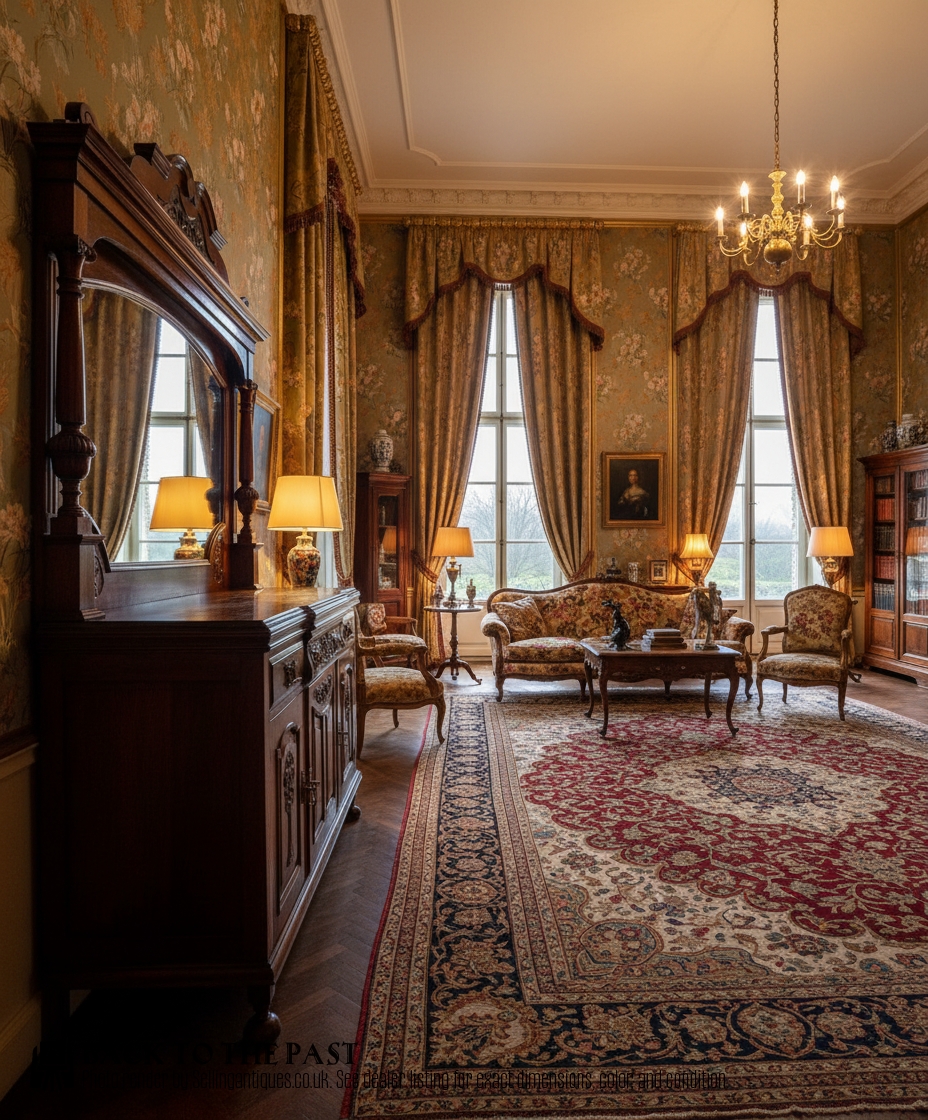
These pieces suit dining rooms, large hallways, or spacious living areas where their height and mirrored back can reflect natural light.
Ensure the wall space can support the visual weight of the timber and that floor levels are even to keep heavy cabinet doors aligned.
How do I care for antique mahogany wood?
Dust the timber regularly with a soft, dry cloth and avoid placing the cabinet near direct heat sources or strong sunlight.
Apply a quality beeswax polish periodically to nourish the grain and maintain the natural lustre of the finish without building up heavy residues.
How do I distinguish Victorian from Edwardian pieces?
Victorian examples generally show heavier carvings, darker finishes, and more ornate mirror frames with elaborate crests. Edwardian pieces tend to display lighter proportions, simpler lines, and restrained inlay work.
Examining the interior drawer construction and secondary woods often confirms the transition in manufacturing eras.
Can the mirror back be removed safely?
The mirror back is structurally integrated into the base cabinet on most designs and removing it alters the intended proportions and stability.
Disconnecting the superstructure requires detaching concealed screws and brackets from the rear, which is best left to professional restorers.