


Mahogany Metamorphic Table
A mahogany metamorphic table shifts between forms to serve dual purposes in dining rooms, libraries, and studies across the Georgian, Regency, and Victorian periods.
Mahogany Metamorphic Table
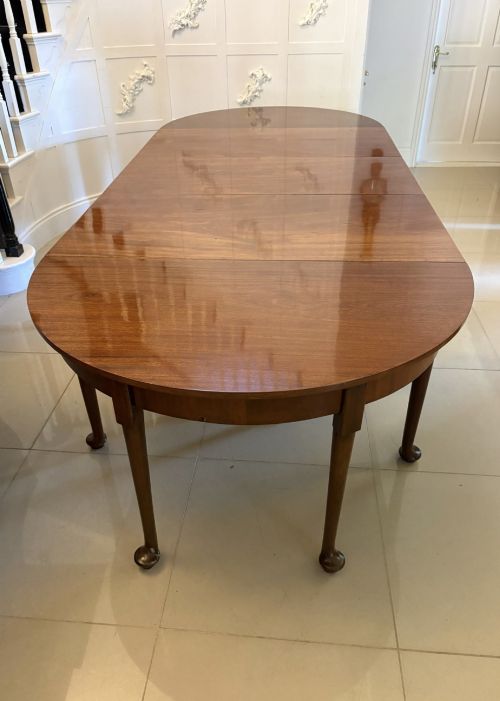
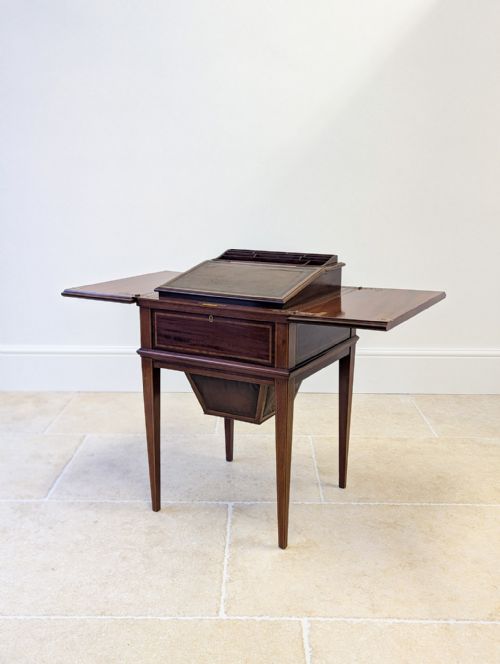
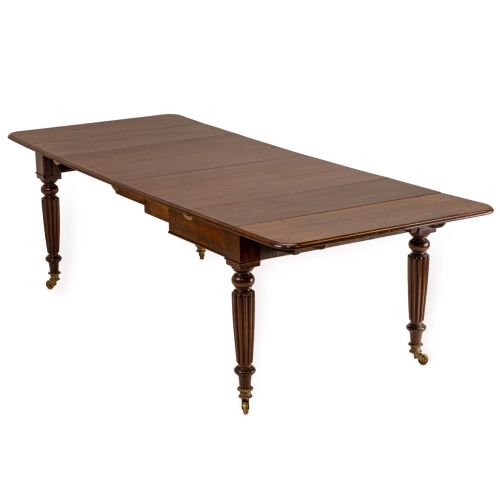
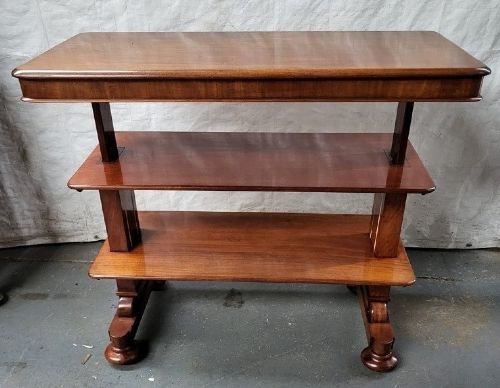
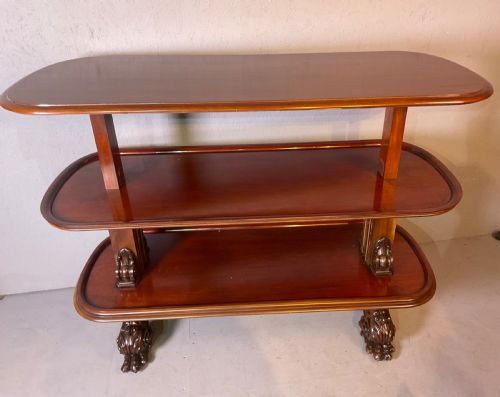
A mahogany metamorphic table transforms from a compact console, desk, or serving piece into a full dining table, reading stand, or multi-tier dumb waiter. These clever dual-purpose items provide space-saving utility without sacrificing the formal presence expected in period interiors.
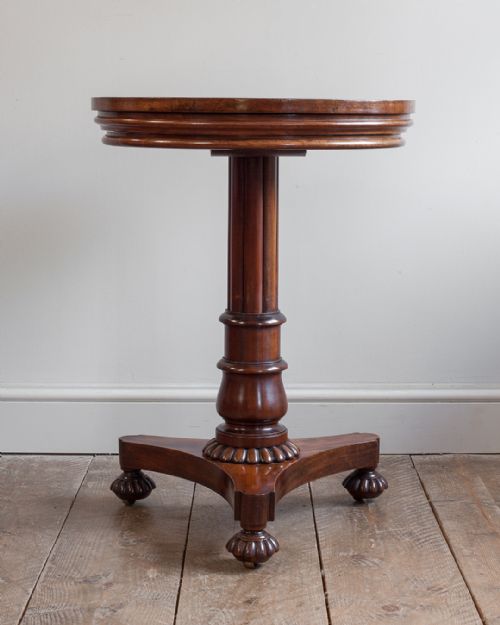
Examples on this page span the 18th, 19th, and early 20th centuries, covering George III, Regency, William IV, Victorian, and Edwardian eras. Buyers encounter everything from massive dining tables seating twelve to smaller occasional, writing, and sewing tables with hidden mechanisms.
Serving tables, buffets, and cellarettes also appear alongside library and architect riser desks that alter their height and configuration through clever hinges, pivots, and fold-over actions. The forms reflect the ingenuity of cabinet makers designing for changing social rituals and compact rooms.
How they were made
Cabinet makers relied primarily on solid mahogany and figured mahogany veneers, frequently pairing the dense timber with secondary woods such as mixed hardwood. Workshops utilised brass for hinges, castors, and mechanical action components, while decorative elements incorporated boxwood, satinwood, and ebony stringing or inlay.
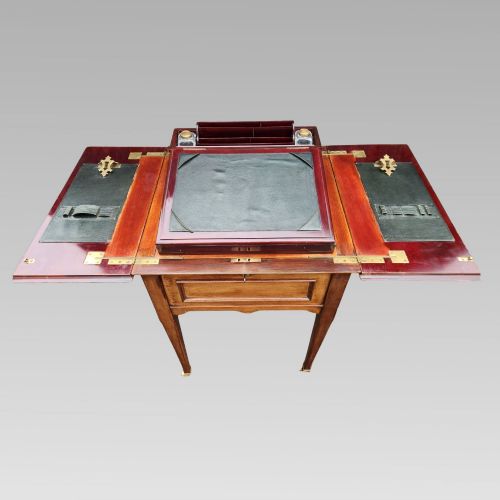
Writing and reading surfaces often integrated leather inserts and glass panels alongside drop-down flaps and rising pillars. Complex concealed tracks, ratchets, and counterweights enabled heavy dining leaves and console tops to shift smoothly between positions without binding.
Listings feature mahogany, satinwood, boxwood, ebony, brass, leather, and glass across Georgian, Regency, William IV, Victorian, and Edwardian dining and writing forms.
What varies in quality
Quality rests upon the precision of the mechanical conversion and the integrity of the timber selection. Superior examples demonstrate seamless motion where leaves, risers, and folding actions lock securely into place without excessive play in the joints.
Finer pieces display richly figured mahogany grain across primary surfaces, matched veneers, and meticulous internal joinery that remains concealed during normal use. Lesser execution shows friction in the moving parts, heavy-handed repairs to the tracks, or simpler secondary woods lacking the depth of period grain.
J.C Vickery of London
The Mahogany Metamorphic Table Glossary
- Metamorphic table
- A multifunctional piece of furniture engineered to change shape, height, or purpose through folding, sliding, or lifting mechanisms. These designs allowed single furnishings to serve as dining tables, desks, or serving consoles.
- Dumb waiter
- A tiered freestanding serving stand used to hold dishes or beverages without requiring immediate servant attendance. Victorian and Georgian versions sometimes incorporated folding or revolving tiers.
- Cellarette
- A lockable container or fitted table designed to hold wine bottles and decanters safely within the dining room. George III and Regency examples frequently integrated these into multi-purpose sideboards and serving tables.
- Figured mahogany
- Timber harvested with distinctive grain patterns such as flame, ripple, or fiddleback. Cabinet makers prized these cuts for the visual depth they brought to tabletops and principal facades.
Mahogany Metamorphic Table: Frequently Asked Questions
How do metamorphic mechanisms operate?
Hidden brass hinges, ratchets, pivots, and counterweighted pillars allow the framework to expand, lift, or fold. Internal tracks guide the movement so the piece transforms smoothly from a compact console or desk into an extended table.
Users simply release the catches or lift the primary surface to access the secondary configuration. The engineering conceals the transformation points entirely when closed.
Where were these tables used?
These adaptable items served primarily in dining rooms, libraries, drawing rooms, and studies. Compact townhouses and country estates alike utilised them to save floor space.
A single piece could function as a serving sideboard during dinner, a writing desk by day, or an occasional table for entertaining guests.
How do I care for mahogany surfaces?
Maintain the timber by keeping it away from direct heat sources and strong sunlight to prevent fading and veneer lifting. Regular dusting with a soft, dry cloth preserves the polished finish.
Apply mild beeswax sparingly when the wood appears dry, buffing gently to maintain the natural lustre of the period polish.
How do I identify the period?
Examine the secondary woods, edge profiles, and the style of the brass hardware. Georgian and Regency pieces typically show heavier figured mahogany and architectural proportions, while Edwardian examples often feature lighter inlay and satinwood banding.
The complexity of the mechanism and the joinery methods inside the frame also point toward specific manufacturing decades.