
Mahogany Low Cabinet
A mahogany low cabinet brings architectural proportion and deep timber warmth to a room while keeping surfaces clear.
Mahogany Low Cabinet
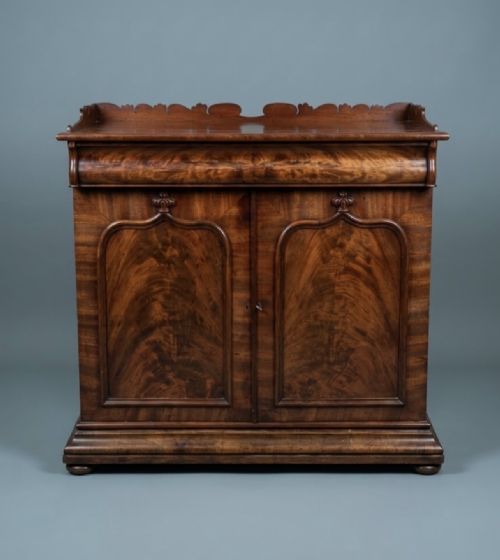
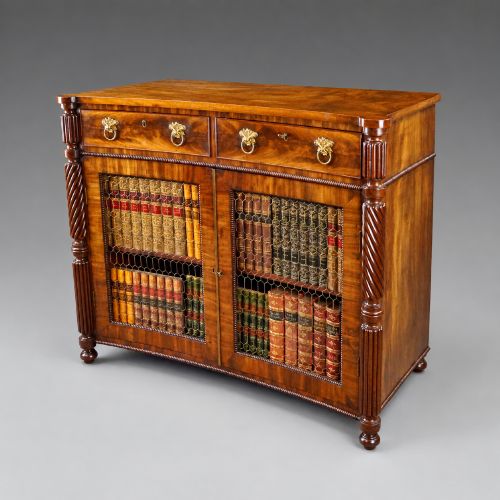
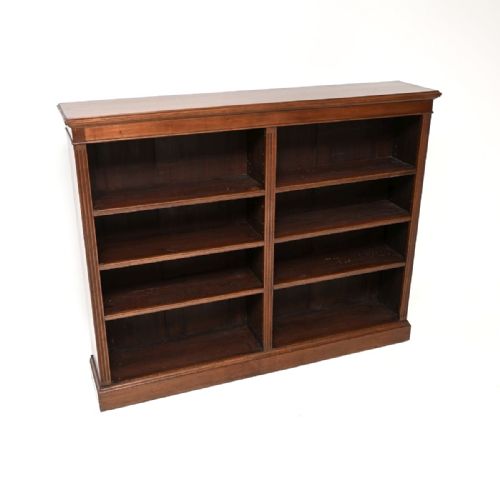
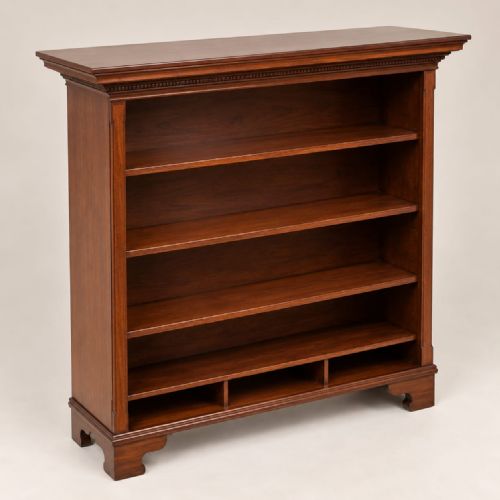
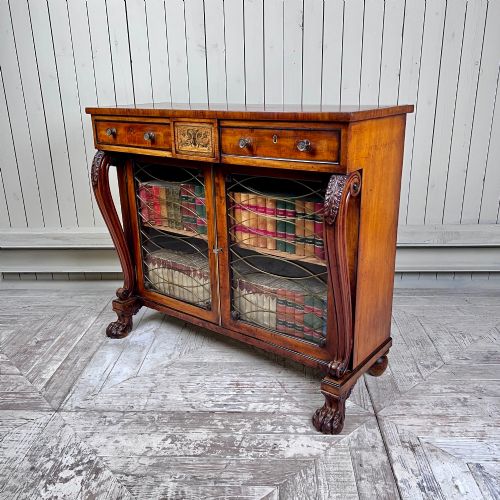
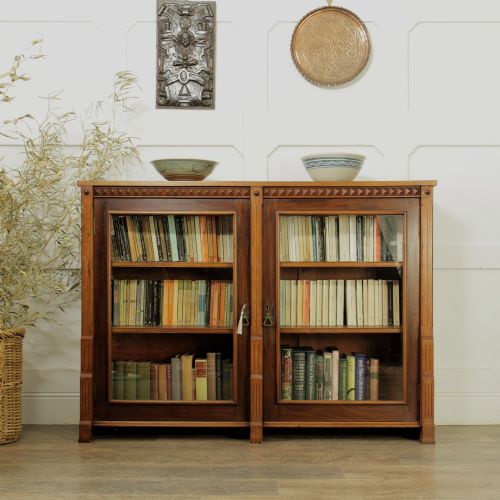
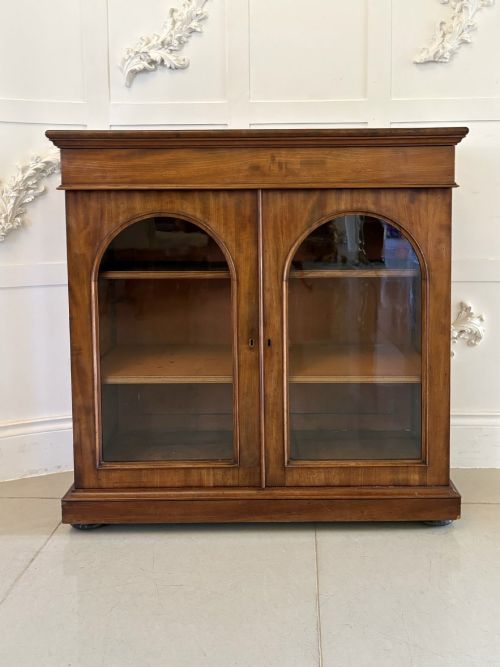
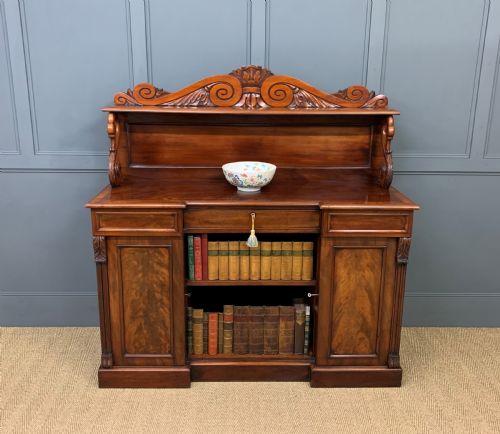
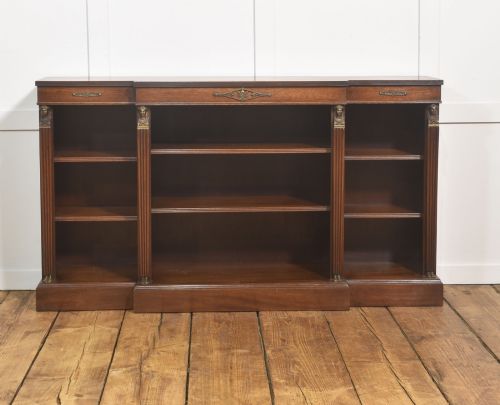
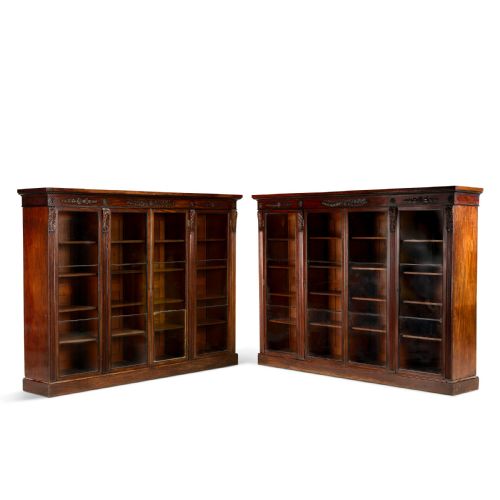
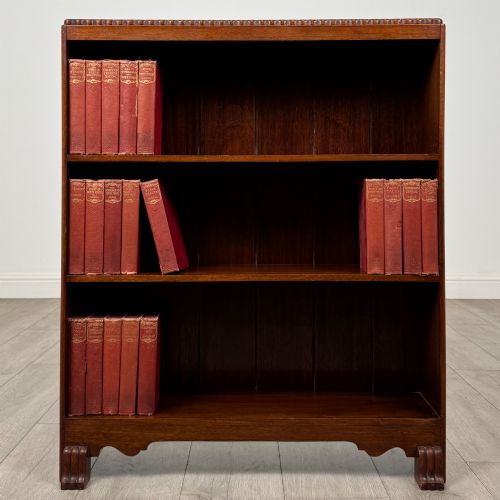
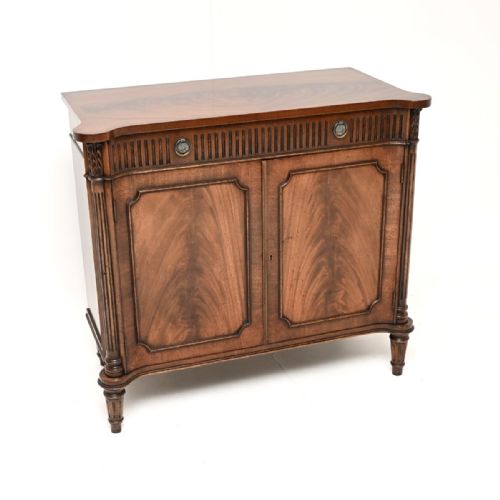
A mahogany low cabinet is a compact, grounding piece of furniture designed for storage or display at a reduced height, appearing frequently across Georgian, Regency, and Victorian periods. Buyers exploring this category encounter side cabinets, dwarf bookcases, chiffoniers, and low cupboards built from dense tropical hardwoods.
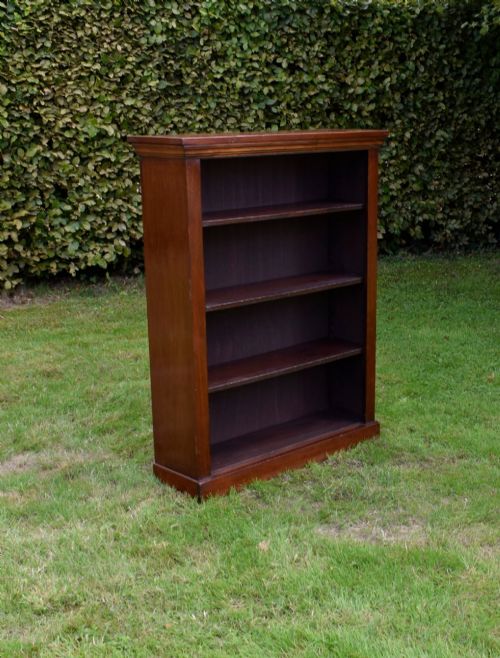
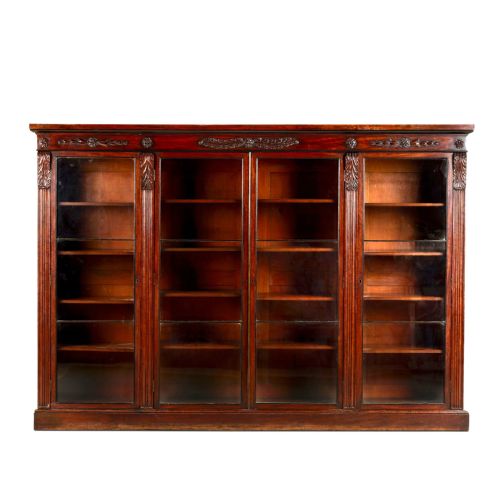
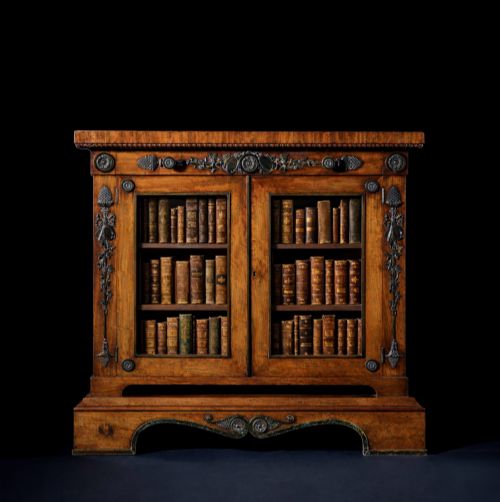
The selection ranges from early nineteenth-century Regency pieces featuring brass grilles and bronze mounts to Edwardian display cabinets and Victorian open bookcases. These forms reflect the changing domestic requirements for housing books, linens, and prized objects without dominating wall space.
How they were made
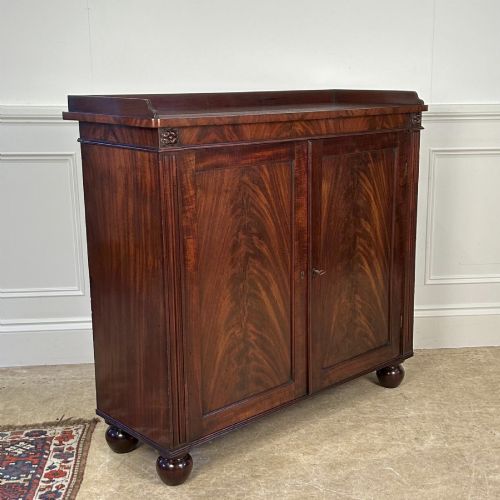
Cabinet makers utilised solid mahogany alongside flame mahogany veneer to create rich grain patterns across flat door panels and drawer fronts. Secondary timbers provided structural integrity within carcasses, while brass inlays, grilles, or ormolu mounts added refined contrast.
Surfaces were often finished with French polish to deepen the natural reddish-brown tones of the wood. Glazed doors utilised individual wooden glazing bars, and drawers featured traditional hand-cut dovetail joints.
Listings feature mahogany low cabinets spanning the Georgian, Regency, Victorian, and Edwardian periods, incorporating glass, brass, and marble elements.
What varies in quality
Quality rests upon the choice of timber and the precision of its application, particularly where figured veneers are matched symmetrically across cabinet doors. Superior examples display restrained, purposeful decorative elements such as fine brass stringing or well-cast mounts rather than excessive ornamentation.
Structural harmony also dictates value, seen in balanced proportions, tightly fitted joints, and original operational hardware such as working locks and brass castors. Lesser pieces often exhibit coarser secondary woods and mismatched grain selections.
Gillows·Waring and Gillow
The Mahogany Low Cabinet Glossary
- Flame mahogany
- A veneer cut from timber where the branch meets the trunk, producing a distinctive, fiery ripple pattern. This figure was highly prized for principal display surfaces on better cabinets.
- Chiffonier
- A low side cabinet equipped with drawers and doors, often surmounted by a small bookshelf. It evolved during the Regency period as a versatile dining room or parlour piece.
- Dwarf bookcase
- A low-stature open or glazed bookcase designed to sit beneath dado height. This form kept books within easy reach while preserving the sightlines of a room.
- Ormolu
- Gilded bronze applied as decorative mounts to furniture frames and feet. It was used sparingly on high-status Regency and nineteenth-century pieces to highlight architectural lines.
- Breakfront
- A cabinet facade where the central section projects forward from the flanking wings. This configuration added depth and rhythm to large bookcases and sideboards.
Mahogany Low Cabinet: Frequently Asked Questions
Where should I place a low cabinet?
A mahogany low cabinet sits comfortably beneath windows or against living room walls where standard bookcases might block light. The low height preserves sightlines across a room while offering a useful top surface for lamps and objects.
In dining rooms or hallways, these pieces function well for storing tableware or linens without crowding the floor plan. Their compact proportions make them adaptable to various interior layouts.
How do I clean mahogany wood?
Dust mahogany regularly with a soft, dry lint-free cloth to prevent particle buildup. Avoid silicone-based polishes, which leave a film and attract dust over time.
Feed the timber periodically with a traditional beeswax to maintain the lustre of the French polish. Keep the cabinet away from direct sunlight and heat sources to prevent the wood from drying out.
Are these cabinets sturdy enough for daily use?
Constructed from dense tropical hardwoods with traditional joinery, these cabinets were built to withstand generations of domestic service. The solid carcasses and dovetailed drawers handle everyday handling reliably.
Care should be taken not to overload shelves beyond their capacity, particularly in older glazed bookcases. Gentle handling of original hinges and locks ensures smooth mechanical operation.
How do I distinguish Regency from Victorian pieces?
Regency cabinets often display classical restraint, featuring architectural mouldings, brass grilles, and exotic wood inlays influenced by ancient styles. The proportions are typically crisp and geometric.
Victorian pieces tend to be heavier in build, sometimes incorporating richer carved details or Gothic influences. They frequently utilise deeper figured mahogany veneers and heavier plinth bases.