



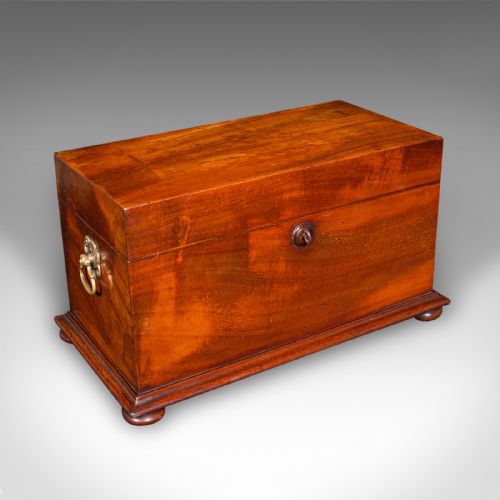

Mahogany Lockable Tea Box
A mahogany lockable tea box secures prized leaves behind timber and brass, offering tactile history for the modern interior.
Mahogany Lockable Tea Box
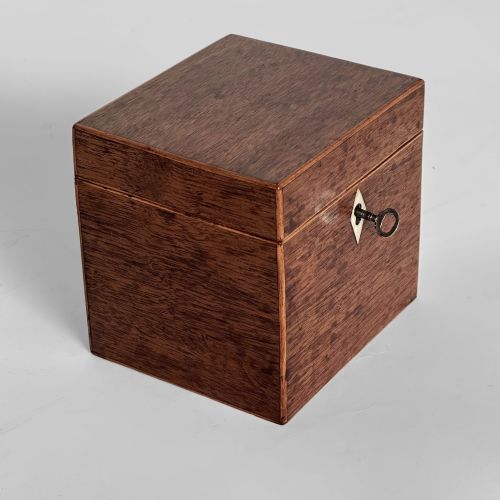
A mahogany lockable tea box represents a functional container from past centuries designed to keep expensive loose leaves safe from domestic pilfering. These pieces appear predominantly in Georgian, Regency, and Victorian styles, taking rectangular, octagonal, or sarcophagus forms.
Most examples found on this page date from the eighteenth and nineteenth centuries, utilising rich timbers with varying grain patterns. Buyers frequently encounter dual compartments or central mixing bowls within these sturdy wooden cases.
Originating in English parlours, a mahogany lockable tea box combines utilitarian storage with cabinet-maker artistry. The inclusion of working locks and original keys distinguishes this specific group from standard decorative boxes.
Markers of distinction
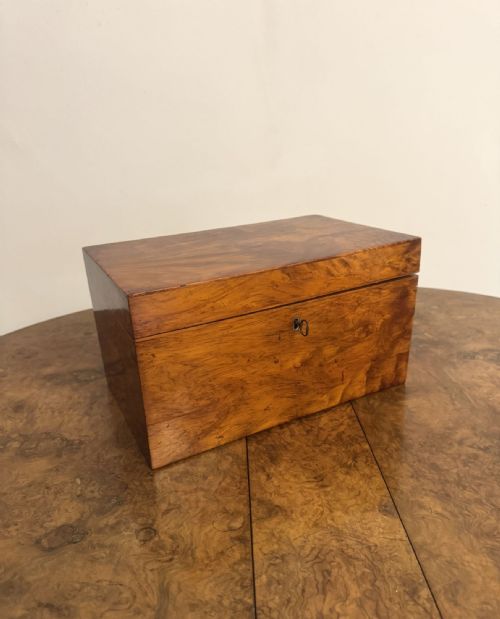
The sophistication of the timber grain and the precision of the inlay set superior pieces apart from simpler workshop output. Fine examples display deliberate pattern matching across the lid and sides, utilising burr veneers or star motifs.
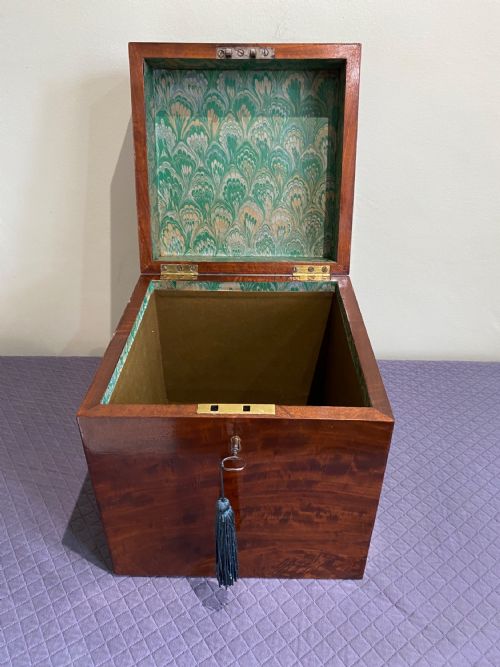
Internal complexity dictates the standing of a piece within the range, particularly the retention of original mixing glasses, internal canisters, and functioning brass locks. Finer boxes demonstrate superior joinery at the corners and heavier gauge brassware.
Current listings span the Georgian, Regency, and Victorian periods, utilising mahogany alongside boxwood, ebony, brass, and bone.
The Mahogany Lockable Tea Box Glossary
- Tea caddy
- A box or container designed for storing tea leaves. The term evolved from catty, the Chinese weight measurement for tea.
- Sarcophagus form
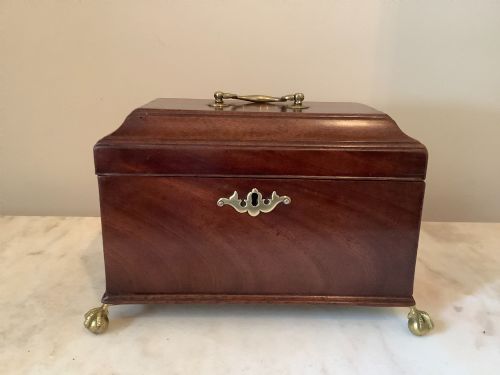
- A box shape featuring a domed or steep-sided profile resembling a classical stone coffin, popular during the Regency and Victorian periods.
- Escutcheon
- A flat plate of brass surrounding a keyhole that protects the surrounding wood from wear and tear.
- Stringing
- Thin lines of contrasting timber inlaid into the surface of a piece to create geometric borders and decorative panels.
- Mixing glass
- A glass bowl fitted inside the centre of a tea caddy used for blending different varieties of loose leaf tea.
Mahogany Lockable Tea Box: Frequently Asked Questions
How were these boxes used?
Households stored valuable loose leaf tea inside these locked containers to protect the precious commodity from servants or guests. The key remained with the master or mistress of the house.
Tea was an expensive import, making secure storage essential in the eighteenth and nineteenth centuries.
What fits inside a tea caddy?
Original interiors typically contained two lidded compartments for different black and green teas, alongside a central space for a glass bowl. The bowl served as a mixing vessel for combining leaves before brewing.
Some variants housed metal canisters or secret drawers concealed beneath the internal structure.
How do I date a mahogany tea box?
Stylistic clues such as bracket feet, stringing patterns, and hardware design help determine the age of the piece. Georgian and Chippendale examples often show simpler rectangular outlines with subtle inlay.
Later Regency and Victorian versions frequently adopt sarcophagus shapes, bolder brass paw feet, or elaborate burr maple and amboyna veneers.
Can I still use one for storage?
These timber boxes make excellent containers for modern jewellery, keepsakes, or modern tea bags. The sturdy construction protects delicate items while adding historic character to a room.
Care should be taken to protect the antique wood and interior linings from excessive moisture and direct sunlight.