

Mahogany Library Desk Chair
When you search for a mahogany library desk chair, you look for timber of deep reddish grain built to support hours of reading, writing and study.
Mahogany Library Desk Chair
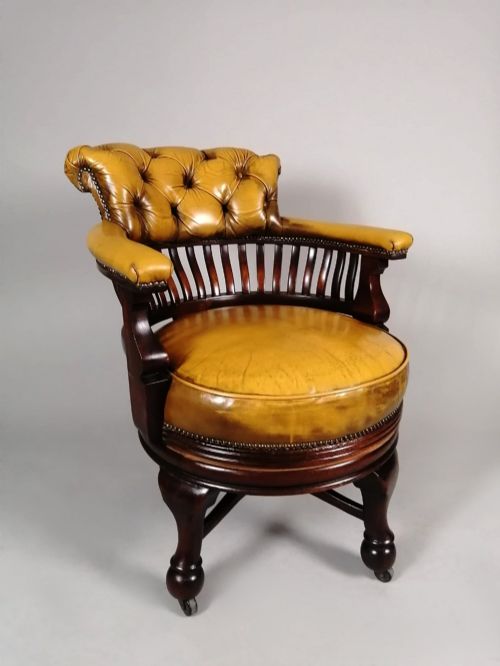
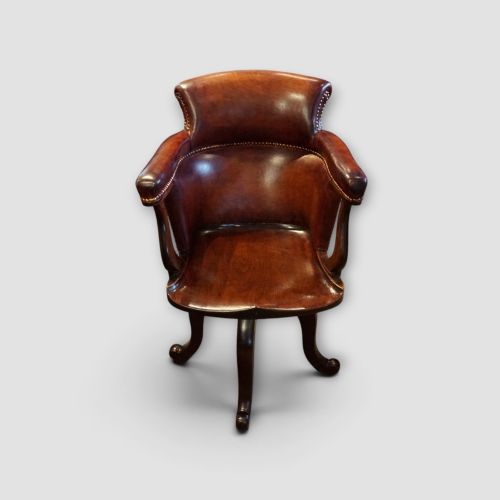
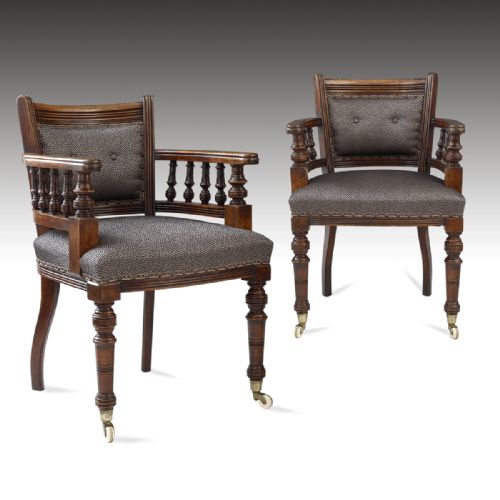
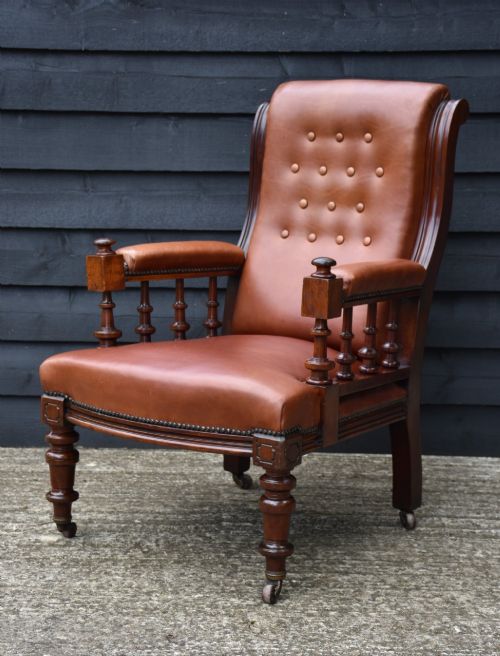
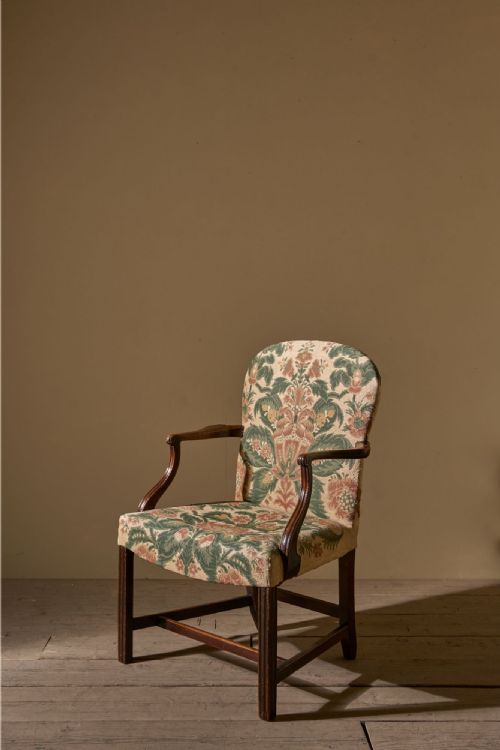
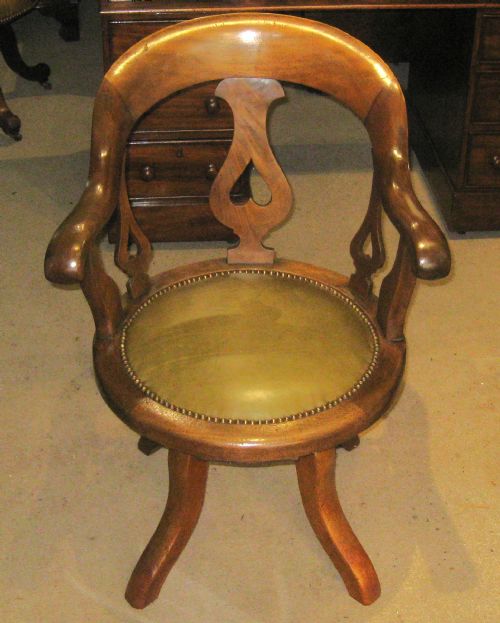
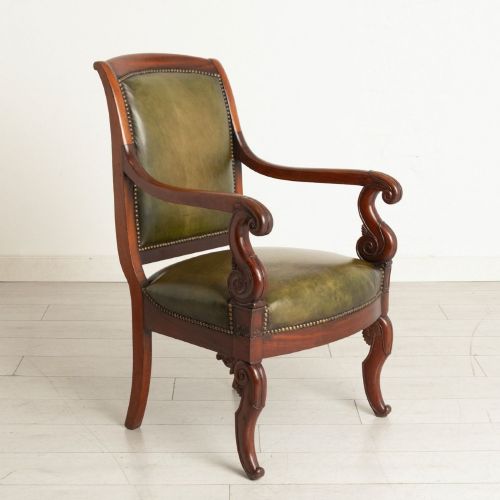
A mahogany library desk chair brings together domestic comfort and serious work, appearing in forms from deep Gainsborough armchairs upholstered in leather to revolving desk seats and tub-shaped library chairs. These pieces emerge across Georgian, Regency, William IV and Victorian periods, carrying the proportions needed for long hours at a partner desk or reading table.
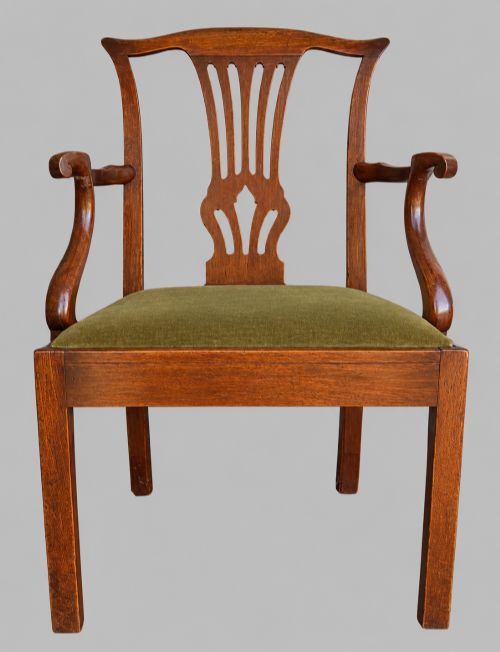
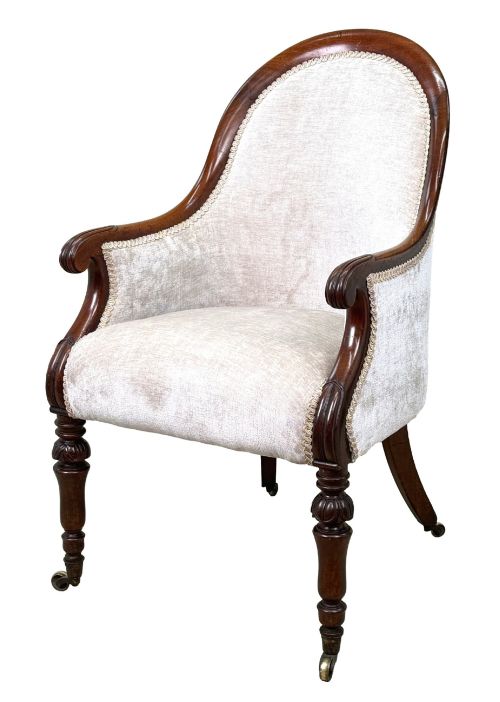
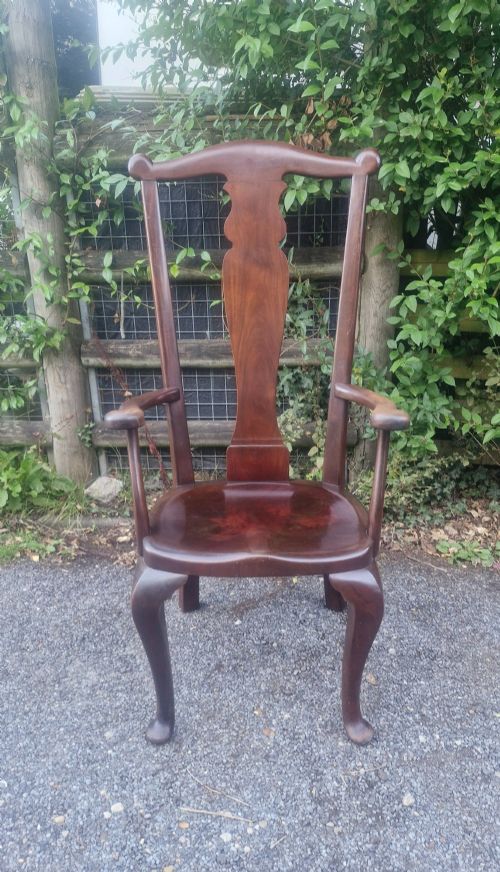
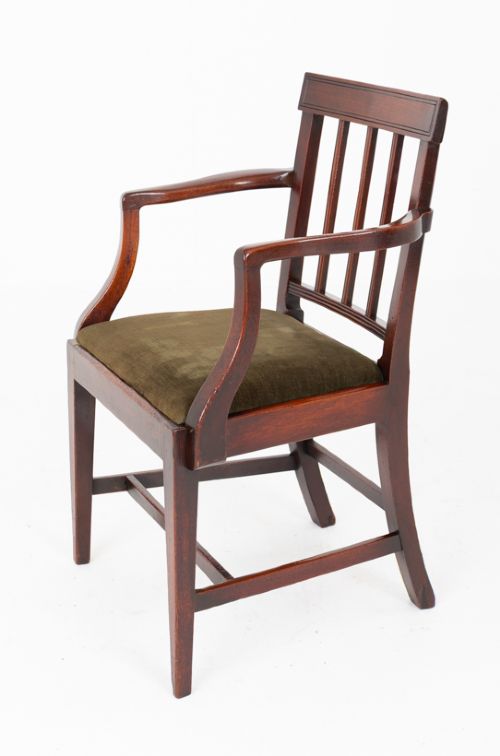
The versions most commonly met on this page span the nineteenth century, from elegant George III and Regency elbow chairs to sturdy Victorian office seats and Edwardian interpretations. Makers adapted the sturdy timber into open armchairs, caned bergères, and high-backed reading chairs fitted with brass casters and sloping arm supports.
Materials and Construction
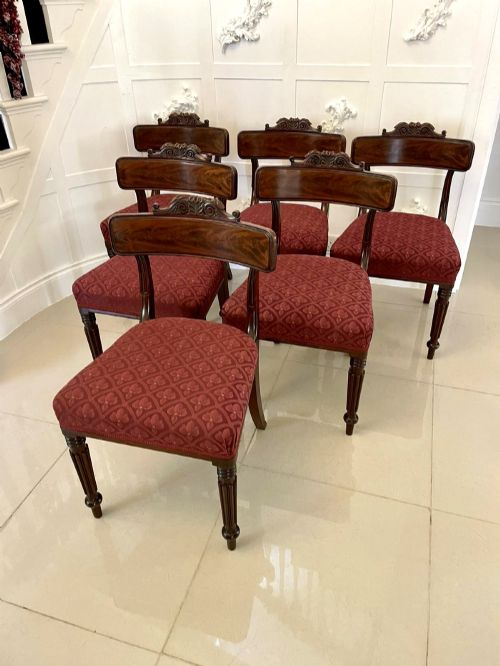
Craftsmen utilised dense, figured mahogany for frames, turning or carving the timber into reeded legs, bar backs, and sweeping elbow rests. Structural integrity relied on solid joinery, often reinforced with corner blocks to withstand the swivel action or weight of a working seat.
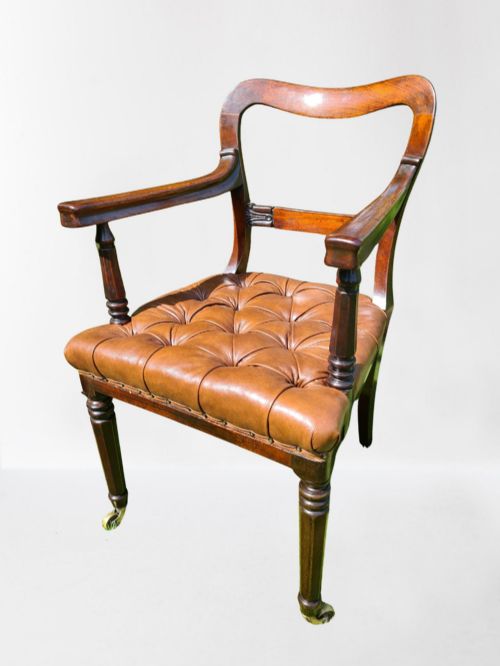
Surfaces were frequently paired with supple hand-dyed leather, velvet, or woven cane panels, secured with brass tacking along the seat rails. Brass casters allowed heavy library armchairs to move easily across carpets and parquet floors.
Listings feature mahogany library desk chairs spanning the eighteenth, nineteenth, and early twentieth centuries, including Georgian, Regency, and Victorian styles.
Evaluating the Build
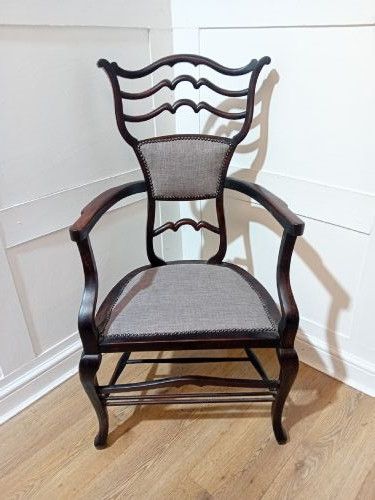
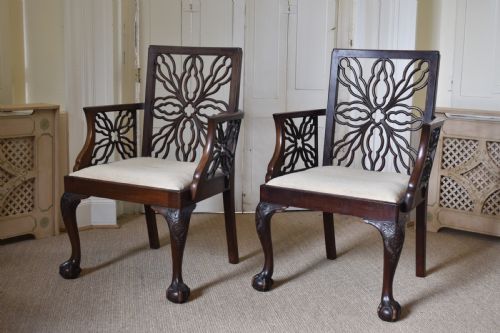
The distinction between ordinary utility seating and finer examples rests in the depth of carving and the selection of timber grain. Pieces showing crisp blind fretwork, well-proportioned curved backs, and secondary woods of equal substance reveal the hand of a more accomplished workshop.
Original upholstery methods and the survival of secondary elements, such as reading stands or integrated brass fittings, separate preserved examples from heavily altered pieces. The harmony of proportions between the seat height and the supportive arms dictates how successfully the chair fulfils its original purpose.
Gillows·Heal's Of London
The Mahogany Library Desk Chair Glossary
- Gainsborough chair
- A wide, low-seated armchair with padded upholstered arms and back, designed in the eighteenth century for reading or writing. These seats provide generous proportions and open sides.
- Bergère
- An enclosed armchair with stuffed or caned back and sides, where the wooden frame remains partially exposed. This French-inspired form offers lighter visual weight in a library setting.
- Bar back
- A chair featuring a horizontal carved splat resembling the top rail, offering robust lumbar support. This design appears frequently on nineteenth-century library and desk seating.
- Reeded
- A decorative moulding consisting of parallel convex strips resembling inverted fluting. Craftsmen carved these details onto the legs and arm supports of Regency and Victorian chairs.
- Caster
- A small wheel fitted to the base of chair legs to ease movement across flooring. Early versions are typically cast in brass and mounted on small ceramic or wooden collars.
Mahogany Library Desk Chair: Frequently Asked Questions
How do I spot a true desk chair?
True desk variants often feature lower arms to slide beneath writing surfaces, or revolving mechanisms built into the wooden underframe. Look for sturdy four-legged bases fitted with casters for mobility.
Many incorporate leather-lined seats designed to withstand daily study and administrative work over centuries.
Were these used in libraries or offices?
These seats served dual purposes in private homes, gentleman's clubs, and institutional reading rooms. They provided ergonomic support for scholars and professionals managing correspondence.
Their robust timber frames ensured longevity in heavily frequented spaces.
Can I use an antique desk chair daily?
Solid mahogany construction and traditional joinery make these pieces remarkably durable for everyday modern use. Regular conditioning of the leather and checking the frame joints will preserve the structure.
Ensure the seat height matches your contemporary desk before daily deployment.
How do I date a mahogany chair?
Dating relies on stylistic clues like reeded legs, cabriole curves, and the presence of blind fretwork or brass inlay. Georgian pieces show lighter, carved lines while Victorian examples favour heavier proportions.
Construction marks and the choice of secondary woods beneath the seat offer further chronological guidance.