


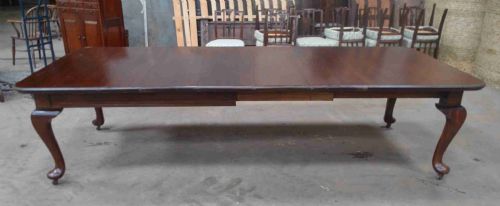
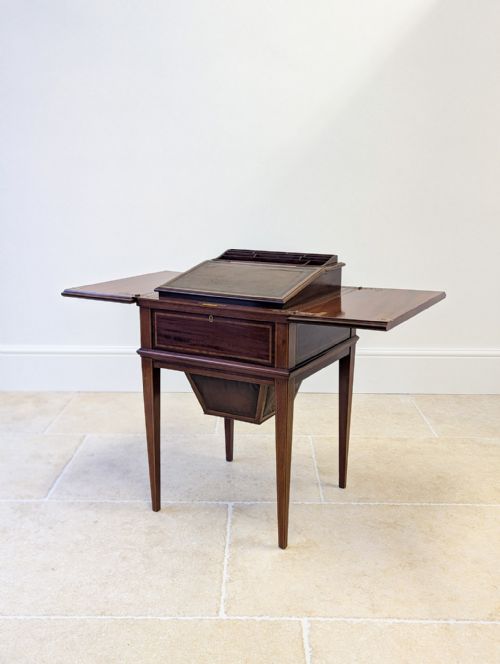
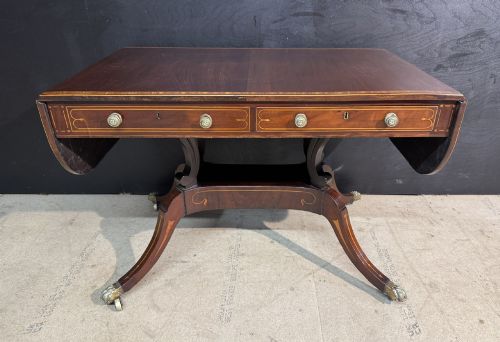
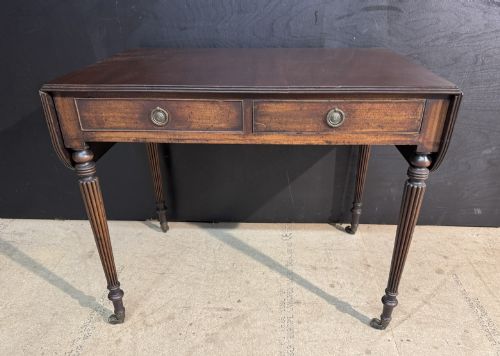
Mahogany Leaf Table
When you search for a mahogany leaf table, you enter a world of expanding dining surfaces and clever folding leaves shaped by centuries of British cabinet-making.
Mahogany Leaf Table
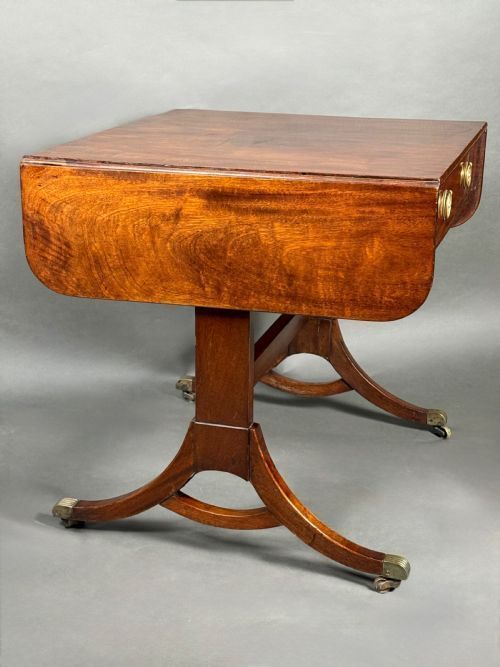
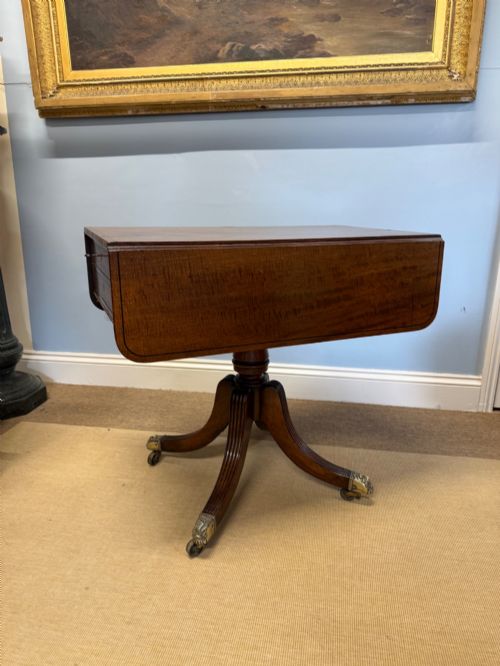
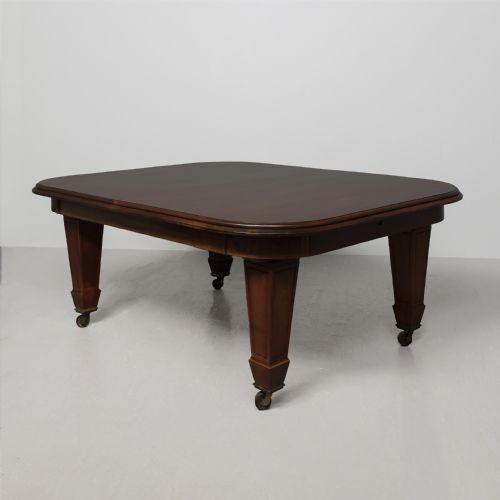
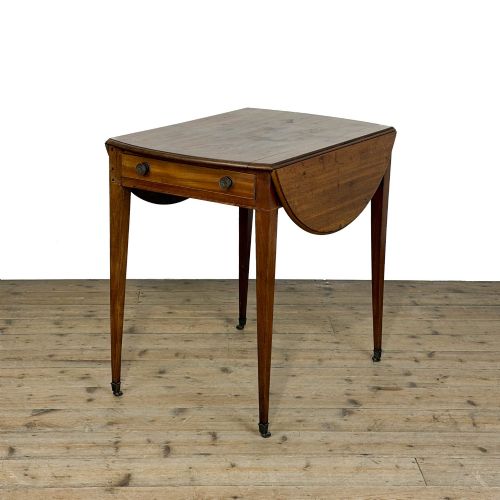
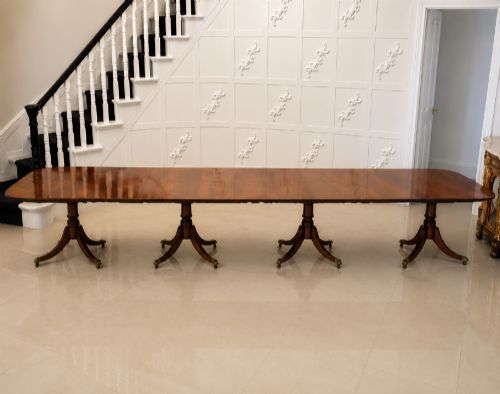
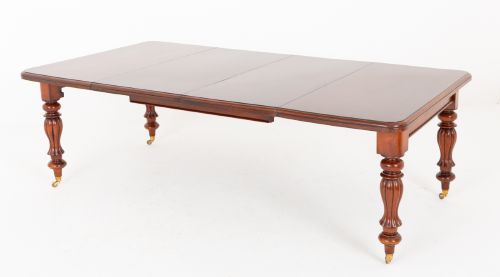
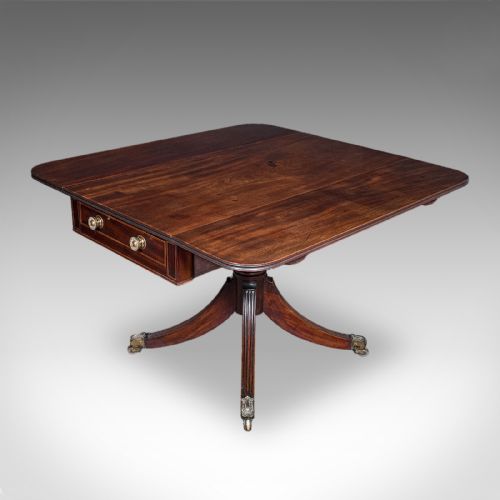
A mahogany leaf table encompasses various functional designs, from grand extending dining tables to compact Pembroke and drop-leaf tables intended for domestic use. The pieces found here span the Georgian, Regency, and Victorian periods, alongside Edwardian examples.
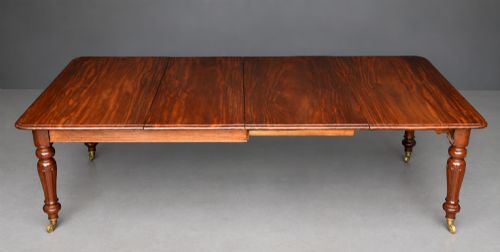
Dining tables frequently incorporate removable leaves to alter their length for gatherings, whilst smaller Pembroke and sofa tables utilise drop leaves supported by hinged brackets or rule joints. These items originate from workshops operating across the eighteenth, nineteenth, and early twentieth centuries.
Materials and Construction
Cabinet-makers relied heavily on solid mahogany and flame mahogany veneers, frequently enhanced with contrasting stringing in boxwood or satinwood. Structural elements often integrated brass castors, metal mechanisms for extending frames, and leather inserts on specialised writing surfaces.
Joinery techniques included rule joints on drop leaves and wind-out mechanisms on later extending dining tables to accommodate multiple extra leaves safely. Timber selection focused on figured grains that responded well to hand-finishing and polishing.
Listings span George II, Georgian, Regency, Victorian, and Edwardian periods, utilising mahogany, flame mahogany, brass, boxwood, and leather.
Assessing Excellence
Quality rests upon the selection of timber, particularly the depth of figure in flame mahogany and the precision of inlaid wood details. Superior items exhibit careful matching of grain across added leaves and drop flaps.
Construction integrity distinguishes finer examples, visible in robust pedestal mountings, smooth extending mechanisms, and original brass hardware. The refinement of turned legs and shaped aprons further separates standard workshop production from exceptional cabinet-making.
William and Gibton·Heal and Son·Gillows
The Mahogany Leaf Table Glossary
- Pembroke table
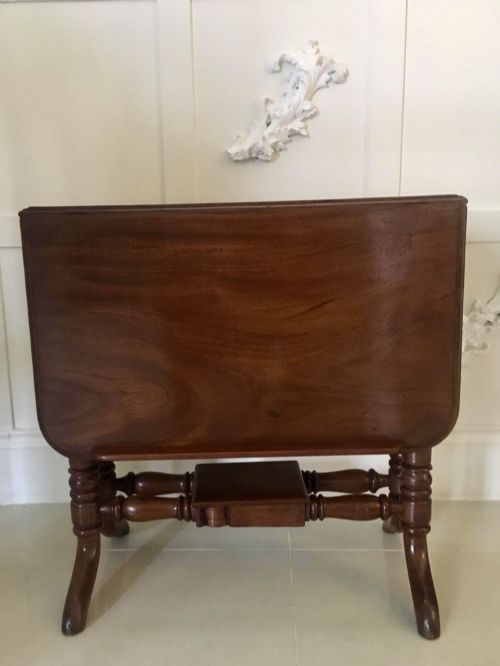
- A small occasional table featuring hinged drop leaves on two opposing sides, often equipped with a single drawer.
- Rule joint
- A moulded joint connecting a drop leaf to a table top, designed to conceal the gap and hinge mechanism when open.
- Gateleg table
- A table with hinged legs that swing out like gates to support drop leaves on either side.
- Sutherland table
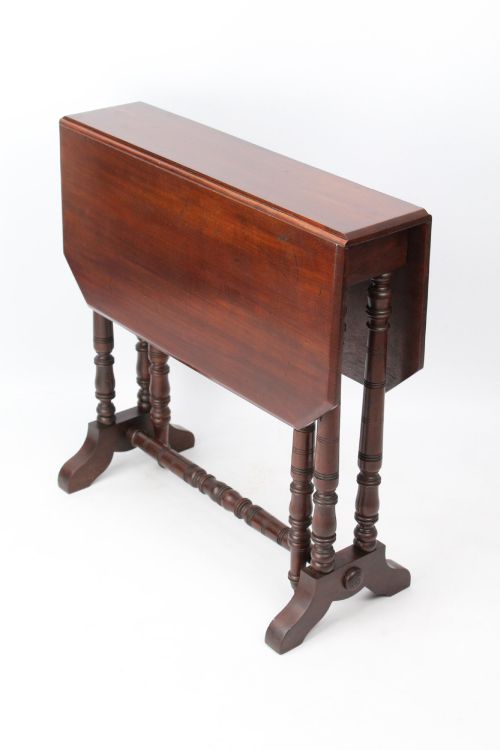
- A particularly narrow type of drop-leaf table where the leaves fold down almost vertically, saving space when not in use.
- Wind-out table
- An extending dining table operated by a detachable handle and internal screw mechanism to insert extra leaves.
Mahogany Leaf Table: Frequently Asked Questions
How do extending leaves work?
Extending tables usually separate at the centre via a winding mechanism operated by a crank handle, allowing individual leaves to drop into the gap.
Once positioned, the table winds back together to secure the extra sections firmly in place.
Where were Pembroke tables used?
Pembroke tables served versatile roles in Georgian and Regency drawing rooms as writing desks, breakfast tables, or sewing stations.
Their folding leaves allowed them to sit compactly against a wall until needed for an activity.
How do I identify a Georgian piece?
Georgian tables often display characteristic elements such as pad feet, Cuban mahogany timber, and restrained inlay work in boxwood.
Proportions remain classical, with attention paid to hand-cut joinery and solid timber construction before mass manufacturing took hold.