



Mahogany Lancet Arch Clock
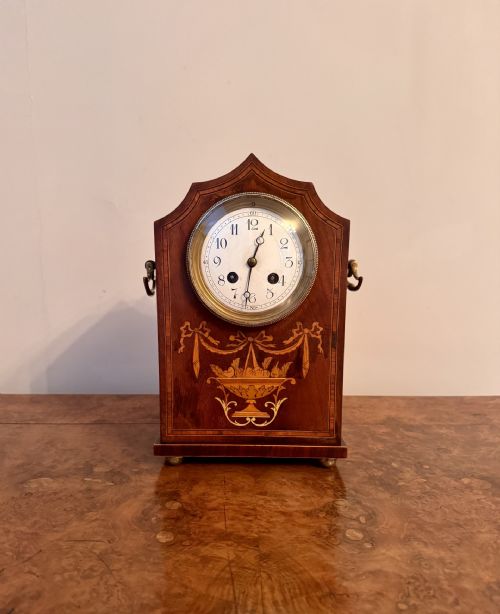
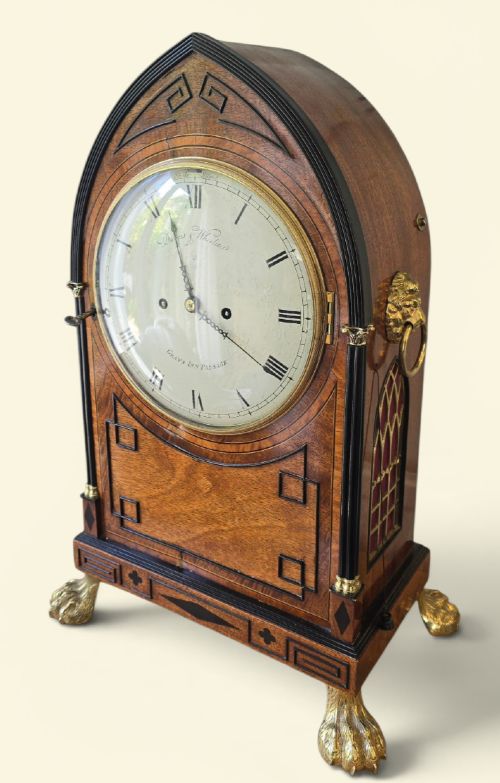
A mahogany lancet arch clock brings architectural elegance to any mantelpiece, combining rich timber grains with a distinctive pointed silhouette.
Mahogany Lancet Arch Clock
How they were made
Cabinetmakers constructed the architectural cases using solid mahogany and supportive secondary timbers, shaping the characteristic lancet top with precise joinery. Finer examples incorporate decorative stringing in boxwood and ebony, or intricate brass inlay set flush into the mahogany surface. Transparent glass doors protect the enamel or painted dials, which sit behind bezels cast in brass.
Clockmakers fitted mechanical movements driven by springs or weights, including single fusee systems that maintain even tension as the mainspring unwinds. Ticking and striking mechanisms utilise brass gears and plates, regulated by pendulums or balances depending on the bracket or mantel format.
Mahogany Lancet Arch Clock Retail Price Guide 2026
Typical asking prices for mahogany lancet arch clock among the pieces listed under this phrase on Sellingantiques today, from the lower quarter to the upper quarter. They describe what is for sale here now, not the wider market.
Listings span the Georgian, Regency, Victorian, Edwardian, and Belle Epoque periods, utilising mahogany, brass, glass, enamel, and burr mahogany.
What varies in quality
The sophistication of the cabinetwork separates standard production from superior pieces, particularly in the depth of the mahogany grain and the precision of inlaid stringing. Finely articulated brass mounts, well-proportioned architectural mouldings, and crisp dial lettering distinguish workshop output from simpler domestic versions.
Movement pedigree influences standing, with signed London makers such as Desbois and Wheeler commanding attention alongside robust provincial or continental mechanisms. The integration of complex striking trains or ting-tang configurations marks out more ambitious horological work.
Desbois and Wheeler·Cording of London·Wilkinson Leicester·Ganthony of London
The Mahogany Lancet Arch Clock Glossary
- Lancet top
- A pointed architectural arch shape resembling a lancet window, forming the distinctive silhouette of the clock case.
- Fusee
- A conical pulley used in mechanical clocks to equalise the torque of the mainspring as it runs down.
- Bracket clock
- A portable timekeeper originally designed to sit on a wall bracket or table surface.
- Stringing
- Thin inlaid lines of contrasting wood, such as boxwood or ebony, used to outline panels and architectural borders.
- Enamel dial
- A fused glass-on-metal face providing a smooth, durable background for painted numerals.
Mahogany Lancet Arch Clock: Frequently Asked Questions
What is a lancet arch clock?
A lancet arch clock is a timepiece housed in a wooden case featuring a pointed, Gothic-inspired arch at the top. This architectural form became particularly popular during the nineteenth century for mantel and bracket clocks.
Craftsmen utilised mahogany timber for the cases, frequently embellishing them with brass inlay, boxwood stringing, or contrasting veneers to highlight the clean lines of the arch.
Where should I place a bracket clock?
These clocks sit securely on level surfaces such as mantelpieces, sideboards, or dedicated wall brackets away from direct sunlight and damp conditions. Stability is essential for the pendulum or balance wheel to beat evenly.
Allowing adequate clearance around the wooden case protects the polished mahogany finish and any delicate brass mounts from accidental knocks.
How can I tell the period of a clock?
Dating relies on stylistic clues within the woodwork, dial construction, and movement signatures. Georgian and Regency examples often display restrained elegance with fine stringing or brass inlay, while Victorian and Edwardian pieces can be heavier in proportion.
Examining the backplate for maker signatures, such as those from London firms or continental workshops, provides further historical context.