



Gothic Lancet Mantel Clock
A gothic lancet mantel clock brings pointed architectural lines and rich dark woods straight from the period into your room.
Gothic Lancet Mantel Clock
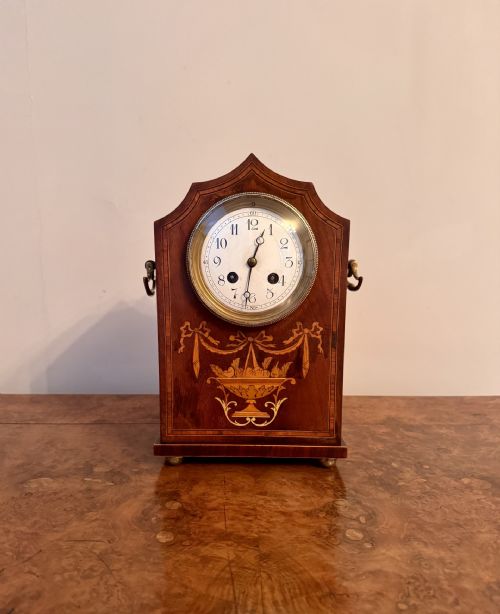
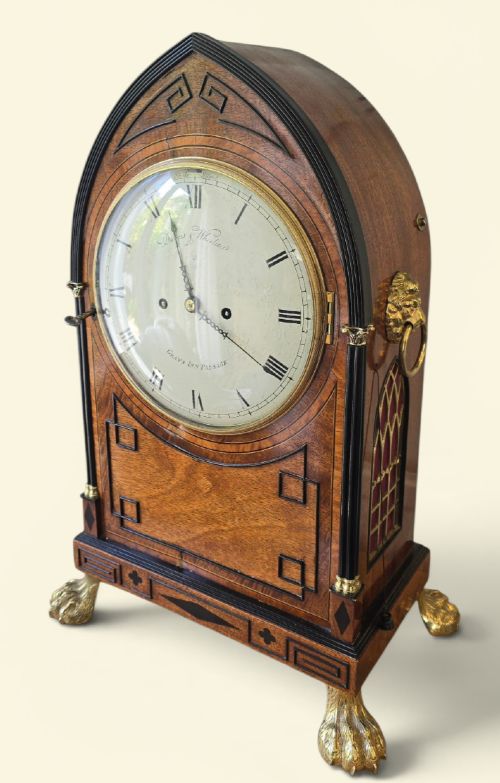
A gothic lancet mantel clock stands upright with a distinct pointed arch at the top, echoing the lancet windows of medieval architecture. When you search for this phrase, you find tall, slender wooden cases designed to sit neatly on a fireplace mantel or shelf. The versions you meet most often on this page date from the Georgian, Regency, and Victorian periods, often framed in rich timbers.
Makers from London and the provinces shaped these tall arched forms during the nineteenth century, sometimes employing the gothic taste alongside inlaid decoration. You will encounter bracket clocks and mantel clocks alike, housing white enamel dials behind protective glass doors. These timepieces served as functional household objects that doubled as striking decorative ornaments for the home.
How they were made
Cabinet makers built the tall arched cases using solid timbers like mahogany, oak, and ebony, frequently enriching the surfaces with delicate boxwood and brass inlay. The wood was selected for its grain and colour, then polished to a smooth finish that highlights the characteristic lancet silhouette. Glass panels protected the delicate enamel dials, while brass fittings added structural strength and decorative contrast.
The mechanical movements inside these cases were fitted with single fusee mechanisms designed to keep time reliably. Skilled clockmakers assembled the brass gears and escapements by hand, housing them securely within the wooden framework. Every piece relies on traditional joinery and metalworking techniques characteristic of English workshop production.
Gothic Lancet Mantel Clock Retail Price Guide 2026
Typical asking prices for gothic lancet mantel clock among the pieces listed under this phrase on Sellingantiques today, from the lower quarter to the upper quarter. They describe what is for sale here now, not the wider market.
Craftmen carved these pointed wooden arches so precisely that every clock appears ready to conduct service in a miniature cathedral.
What varies in quality
The refinement of the cabinet work and the precision of the brass inlay distinguish the finer examples from simpler workshop output. Better cases display harmonious proportions and careful selection of timber, whilst lesser pieces rely on plain surfaces with minimal detailing. The integration of the arched top with the rectangular base reveals the skill of the original maker.
The reputation of the maker inscribed on the dial or movement influences the standing of the clock within the range. Signed pieces from established London workshops carry a different level of craftsmanship compared to unsigned provincial items. The clarity of the enamel dial and the preservation of the original brass fittings further separate the standard examples from the top tier.
Desbois & Wheeler·Cording of London·Wilkinson Leicester·Ganthony of London
The Gothic Lancet Mantel Clock Glossary
- Lancet top
- An architectural arch shaped like a pointed medieval window, forming the signature silhouette of these clocks. This upward sweep defines the entire profile of the case.
- Fusee
- A conical pulley used in clock movements to maintain an even pull as the mainspring unwinds. This mechanism ensures consistent timekeeping.
- Bracket clock
- A portable timepiece originally designed to stand on a wall bracket or a table. Many examples in this style share the same form as mantel clocks.
- Enamel dial
- A metal face coated with fused glass powder to create a smooth, white background for the numerals. These dials provide clear legibility behind glass doors.
- Boxwood
- A dense, pale yellow wood frequently utilised for fine stringing and inlay work on dark mahogany cases. It offers sharp visual contrast against the primary timber.
Gothic Lancet Mantel Clock: Frequently Asked Questions
What is a lancet clock?
A lancet clock is a tall timepiece featuring an arched, pointed top that resembles medieval gothic architecture. These cases were designed primarily for placement on mantelpieces or tables.
Cabinet makers produced them in various timbers, most notably mahogany, often incorporating glass doors to protect the dial. They combine vertical emphasis with traditional clockmaking mechanics.
How do I wind the clock?
Winding requires a key matched to the specific square arbour on the enamel dial. You turn the key gently until you feel resistance from the mainspring.
Care must be taken not to overwind the movement, as this can damage the internal components. Regular, gentle winding keeps the mechanical gear train functioning properly.
Where should I place it?
These clocks belong on a stable, level surface away from direct sunlight, dampness, and heat sources. A mantelpiece or a sturdy sideboard provides an ideal setting.
A level position ensures that the pendulum or escapement beats evenly, allowing the movement to keep accurate time without stalling.
How do I identify the period?
You determine the period by examining the timber choices, dial construction, and overall decorative style of the case. Georgian and Regency pieces often feature precise brass inlay and refined proportions.
Victorian and Edwardian versions may display heavier proportions or alternative wood combinations. Signatures on the dial or movement provide direct clues to the date of origin.