



Mahogany Ladies Table
When choosing a mahogany ladies table, expect compact proportions designed for correspondence, dressing, and needlework across Georgian, Regency, and Edwardian periods.
Mahogany Ladies Table
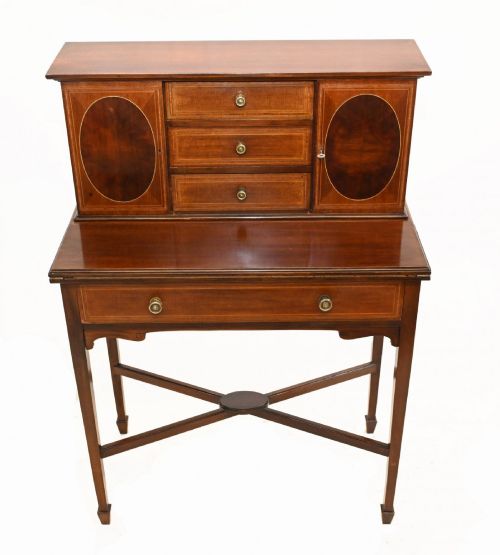
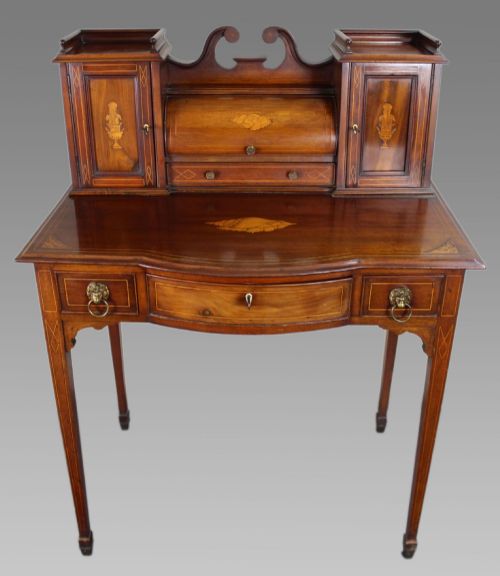
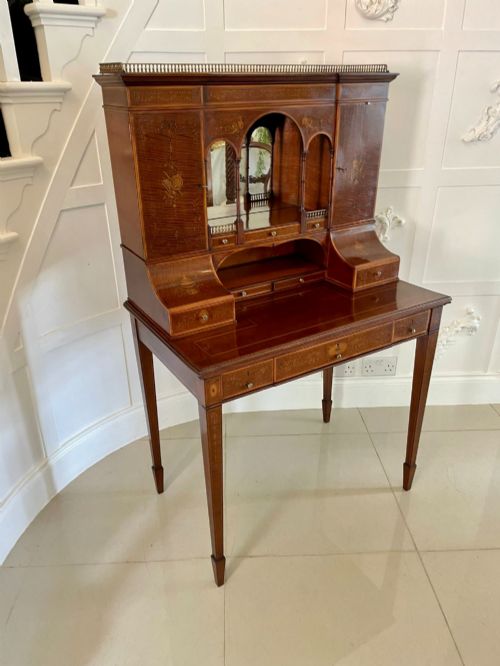
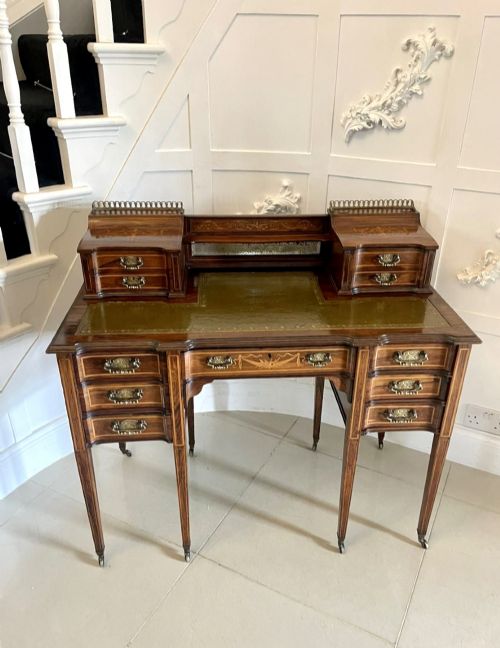
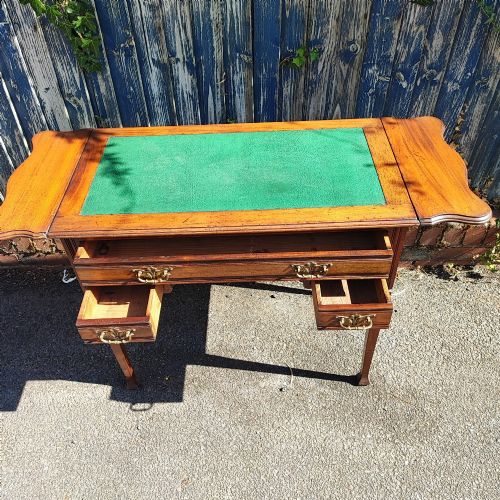
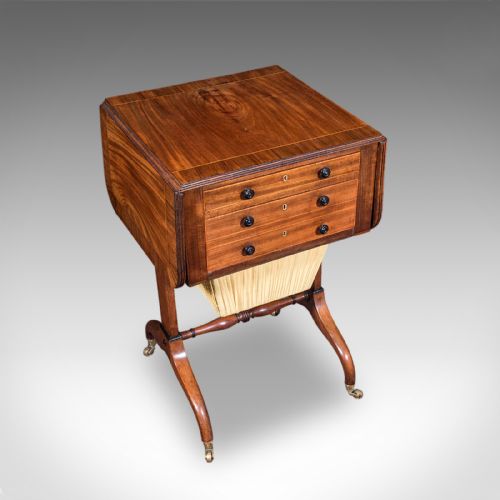
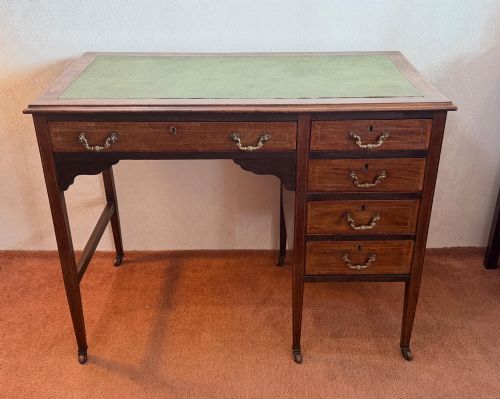
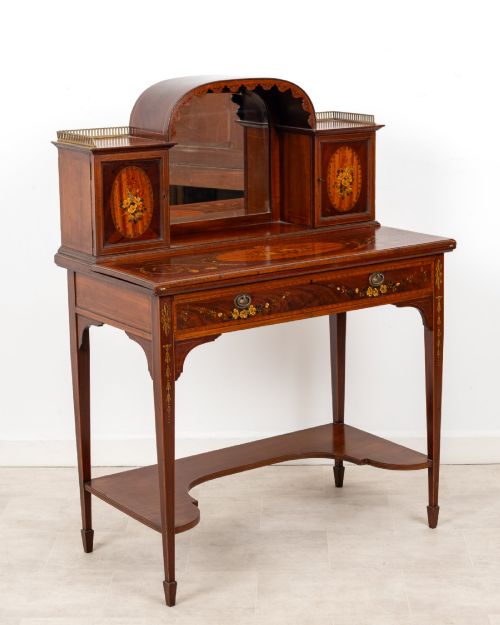
A mahogany ladies table encompasses small-scale writing desks, dressing tables, work tables for sewing, and occasional pieces intended for domestic use in withdrawing rooms and bedchambers. These items span periods from the eighteenth century through the Edwardian era, with significant representation from late Victorian and Edwardian workshops.
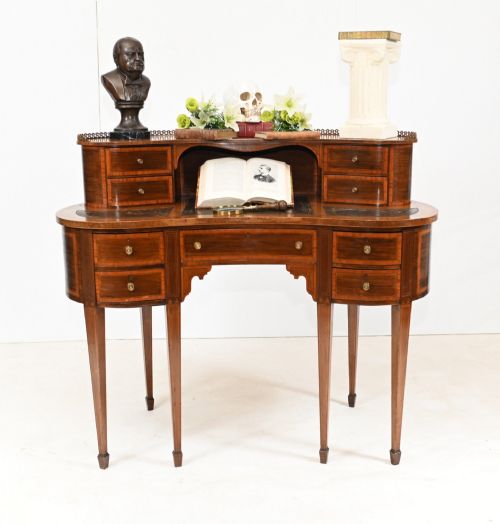
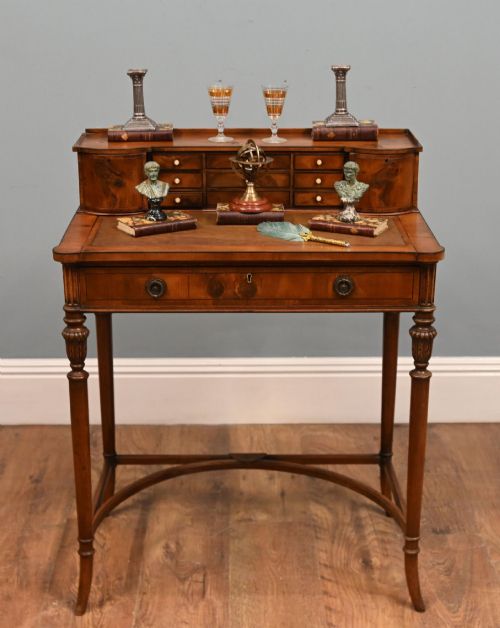
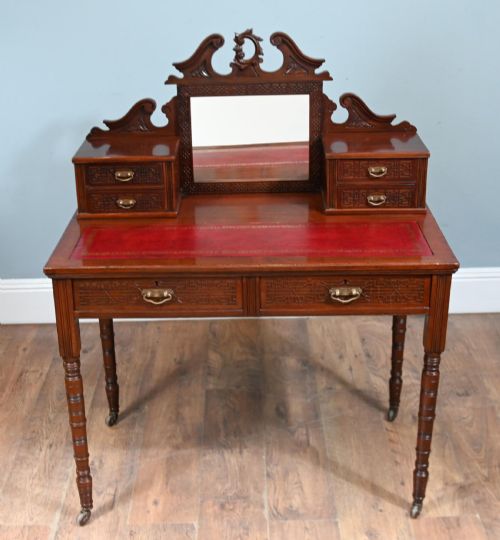
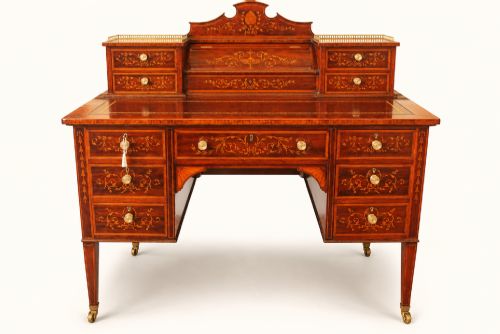
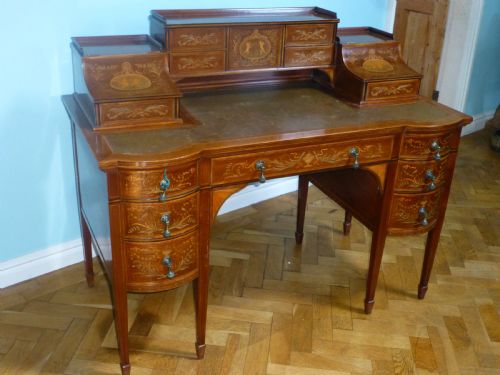
The forms vary widely depending on function, ranging from kidney-shaped writing desks and Carlton House desks to drop-leaf sewing tables, kneehole desks, and vanity dressing tables equipped with mirrors. Edwardian inlaid examples and Victorian interpretations of Sheraton and Regency styles dominate current selections.
Smaller variants often incorporate leather writing surfaces, fold-over tops, and compartmented drawers designed to hold stationery, cosmetics, or sewing implements. The fundamental characteristic uniting these objects is their refined scale, tailored for personal use rather than large-scale library or office administration.
How they were made
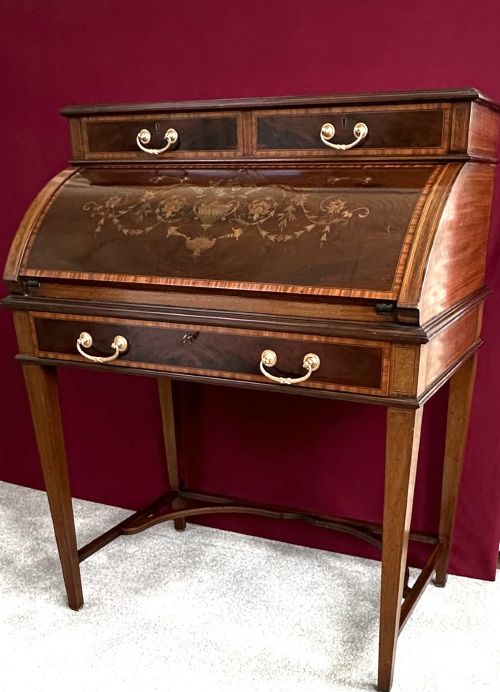
Cabinet makers utilised solid timber and veneers of flame mahogany, frequently accented with contrasting satinwood inlay, ebony stringing, or marquetry motifs in Sheraton and Regency styles. Secondary timbers provide structural stability within drawer linings and internal framing.
Desk surfaces frequently incorporate fitted leather writing inserts, sometimes tooled with gilt borders, alongside brass hardware, hinges, and occasional ormolu mounts. Dressing variants integrate mirror glass supported by adjustable frames or superstructure cabinets.
Construction techniques include dovetailed drawer construction, hand-carved supports such as lyre bases or tapering legs, and specialised mechanisms for fold-over tops, drop-side flaps, and lift-action compartments.
Mahogany Ladies Table Retail Price Guide 2026
Typical asking prices for mahogany ladies table among the pieces listed under this phrase on Sellingantiques today, from the lower quarter to the upper quarter. They describe what is for sale here now, not the wider market.
Secret compartments and hidden spring-loaded drawers occasionally turn up behind pigeonholes, ready to guard tiny letters and misplaced hairpins.
What varies in quality
Quality rests upon the selection and figure of the timber, where dense flame mahogany veneers and crisp, intricate satinwood inlay distinguish superior items from plain iterations. The precision of marquetry work and the subtlety of carved details further separate standard production from workshop masterpieces.
Internal construction standards reveal the level of craftsmanship, particularly in the neatness of dovetails, the choice of secondary woods, and the smooth operation of writing slides, tambour doors, and metamorphic folding mechanisms. Original brass handles and fitted interior compartments retain higher integrity than later replacements.
Attribution to documented makers or retailers adds distinction, reflecting superior standards of design execution and material selection within the workshop.
Maple and Co·Edwards and Roberts·Hobbs and Co·S and H Jewell·Gillows
The Mahogany Ladies Table Glossary
- Bonheur du jour
- A small, light ladies writing desk featuring a tiered superstructure with small drawers, pigeonholes, or a cabinet above the writing surface. This form gained popularity during the eighteenth century and saw revival in Edwardian workshops.
- Carlton House desk
- A horseshoe-shaped writing desk featuring a raised back fitted with numerous small drawers and compartments curving around the writer. The design originated in the late eighteenth century and reappeared in Victorian and Edwardian iterations.
- Kidney-shaped desk
- A freestanding writing table characterised by a curved, concave front that accommodates the user. These desks often feature leather-inset tops and finely finished backs for placement in the centre of a room.
- Drop-leaf table
- A table equipped with hinged flaps on one or both sides that fold down when not in use. These versatile surfaces allowed for flexible space utilisation in smaller domestic interiors.
- Marquetry
- The art of forming decorative patterns using fitted pieces of veneered wood of different colours and grains. This technique adorned the surfaces of many Edwardian and Sheraton revival pieces.
Mahogany Ladies Table: Frequently Asked Questions
What is a mahogany ladies table used for?
These tables served multiple domestic purposes, primarily functioning as compact desks for letter writing, personal correspondence, and managing household accounts. Many variants also incorporated compartments for sewing, needlework, or cosmetics.
Their reduced scale allowed them to be placed easily within private bedchambers, boudoirs, or drawing rooms rather than formal libraries.
How do I identify an Edwardian piece?
Edwardian examples, produced around 1900 to 1910, frequently exhibit Sheraton revival influences with light satinwood inlay, painted floral motifs, and mahogany veneers. They often utilise machine-sawn timber elements alongside traditional hand assembly.
Makers such as Maple and Co and Edwards and Roberts produced numerous variations during this period, sometimes stamping their drawers or incorporating paper trade labels.
What is the difference between a desk and a vanity?
Writing variants prioritize flat surfaces, often lined with leather, accompanied by stationery drawers and pigeonholes. Vanity and dressing table variants incorporate pivoting mirror glass, small trinket drawers, and compartments tailored for personal grooming.
Some metamorphic examples combine both functions through fold-over tops and lift-action mechanisms that conceal mirrors or writing surfaces.
Are these tables suitable for modern rooms?
Their compact proportions make them practical for contemporary domestic spaces requiring a small workspace or dressing surface. Freestanding versions with finished backs allow placement in the centre of a room rather than strictly against a wall.
Care should be taken to protect polished mahogany and leather surfaces from direct heat and moisture during daily use.