

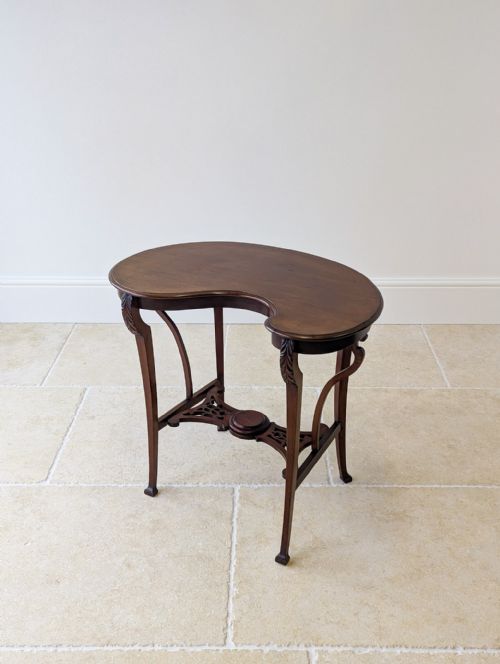


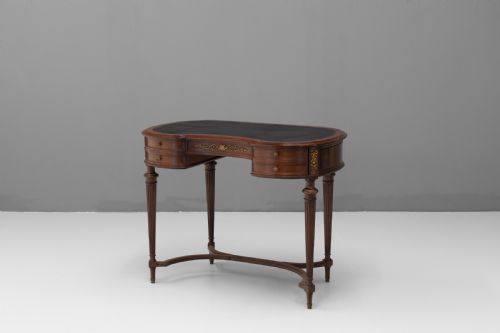


Mahogany Kidney Desk
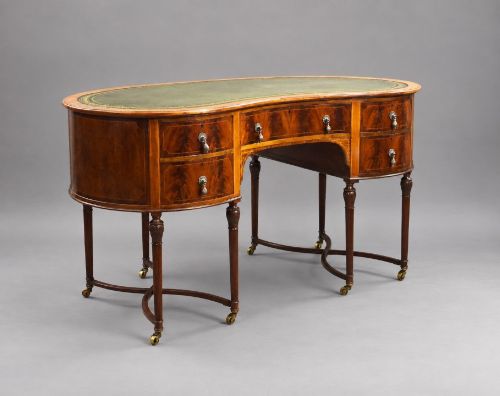
A mahogany kidney desk curves gracefully to fit the writer, offering a distinctive serpentine form built from rich timbers.
Mahogany Kidney Desks
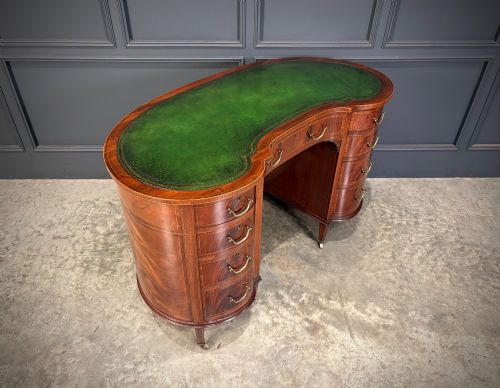
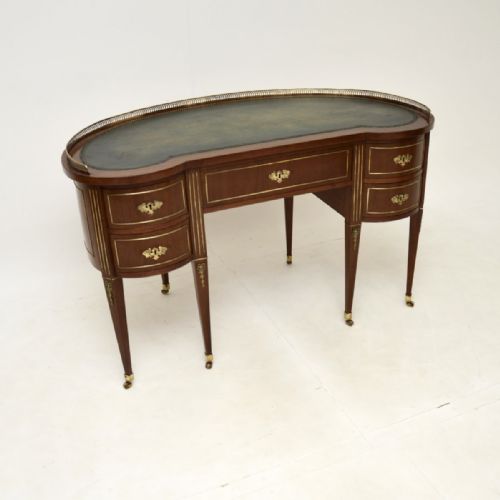
A mahogany kidney desk presents a curved, concave writing surface that wraps around the user, designed originally for efficient personal correspondence or dressing.
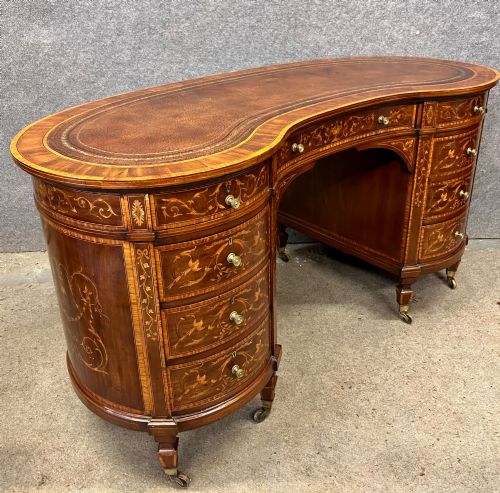
Most examples appearing in trade date from the Edwardian period or the late nineteenth century, frequently finished in the Sheraton Revival style with delicate stringing.
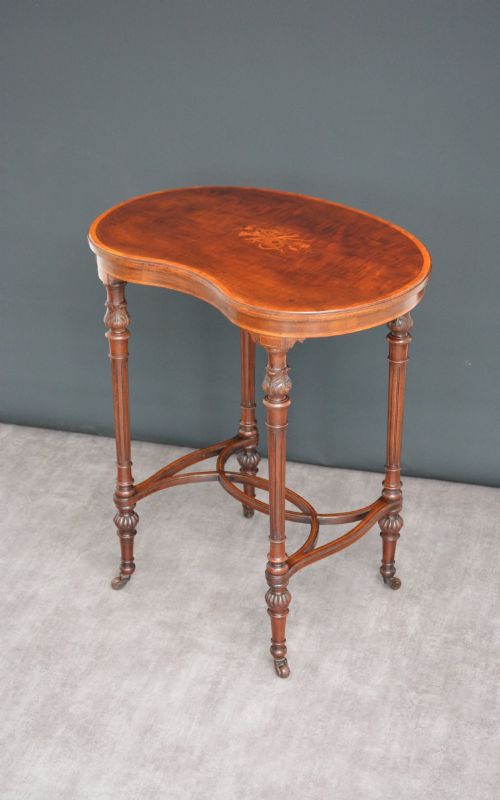
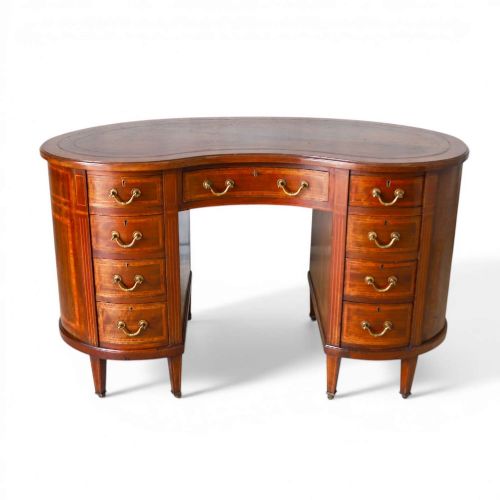
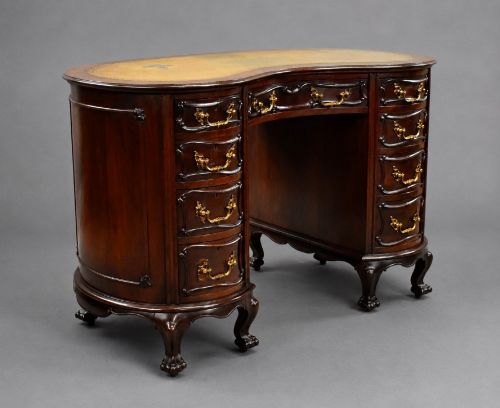
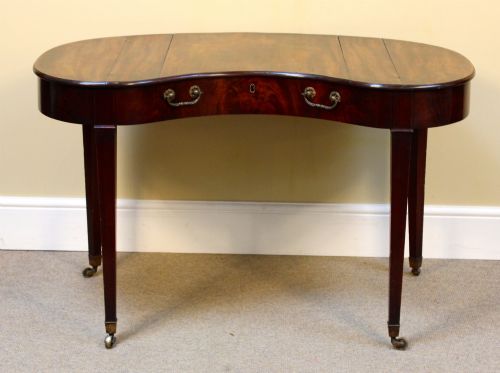
Makers produced these forms as both twin pedestal writing desks and freestanding tables, occasionally utilising the same shape for dressing tables with mirrors.
Construction and Materials
Cabinet makers constructed the curved carcase using solid mahogany and figured veneers, often incorporating boxwood and satinwood inlay along the drawer fronts and borders.
Writing surfaces typically feature inset panels of gilt-tooled leather, surrounded by polished mahogany thumb-moulded edges.
Hardware consists of cast brass handles and escutcheons, while supporting elements range from tapering spade feet to drawer-filled pedestals.
Retail Price Guide 2026
Typical UK retail prices for mahogany kidney desk, calculated from the Sellingantiques database of over a million retail prices indexed since 2003. This retail price guide relies exclusively on Sellingantiques data; no external sources or auction records are used, so the figures do not describe the wider market.
Makers utilised maple alongside mahogany for certain curved carcases, pairing the timber with brass hardware.
Distinctions in Quality
The standard of a mahogany kidney desk rests heavily on the crispness of its marquetry and the choice of timber figure, where well-matched flame mahogany distinguishes finer workshop output from plain stock.
Freestanding capability demands finished panelling to the reverse, allowing the piece to sit centrally in a room rather than against a wall.
Makers such as Maple and Co., JAS Shoolbred, and Wolfe and Hollander applied rigorous joinery standards, ensuring smooth drawer action along complex curved tracks.
Maple and Co·Jas Shoolbred·Wolfe and Hollander·Shapland and Petter
The Mahogany Kidney Desk Glossary
- Kidney desk
- A writing table shaped with a concave front and convex rear, resembling a bean or kidney. This ergonomic curve allowed the sitter closer access to drawers.
- Sheraton Revival
- A late nineteenth and early Edwardian design movement imitating the neoclassical furniture of Thomas Sheraton. It relies on satinwood inlay, light proportions, and tapered legs.
- Inlay
- A decorative technique where contrasting woods like boxwood or satinwood are fitted flush into recesses carved into the primary mahogany surface.
- Pedestal desk
- A form comprising two banks of drawers supporting a single desktop, creating a kneehole space in the centre.
- Leather top
- A writing surface inset into the timber top, traditionally bound in sheepskin and decorated with gold leaf tooling.
Frequently Asked Questions
What is a kidney desk?
A kidney desk is a compact writing table characterised by its curved, kidney-bean shape designed to wrap around the user.
Cabinet makers favoured this form during the nineteenth and early twentieth centuries for private studies and boudoirs.
Were these desks used for writing?
These pieces served primarily for personal correspondence, letter writing, and light administrative tasks rather than heavy business use.
The inset leather writing surface provided a smooth platform for quill or pen work.
How do I distinguish Edwardian pieces?
Edwardian examples often display light satinwood inlay, boxwood stringing, and Sheraton Revival influence, reflecting the taste of the nineteen hundreds.
Earlier nineteenth-century versions typically rely on heavier proportions and simpler mahogany carcases without elaborate marquetry.