
Mahogany Home Office Desk
A mahogany home office desk brings solid timber structure and period presence to a workspace, offering generous writing surfaces built to last.
Mahogany Home Office Desk
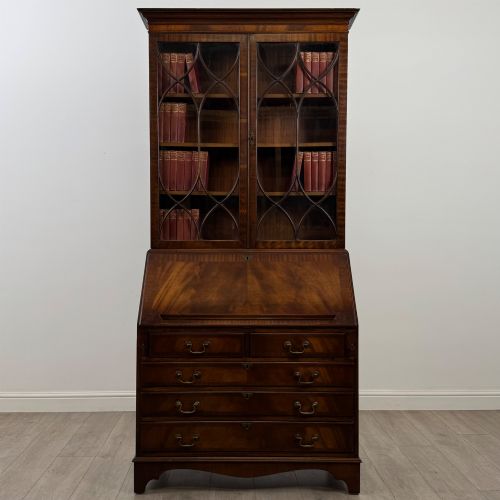
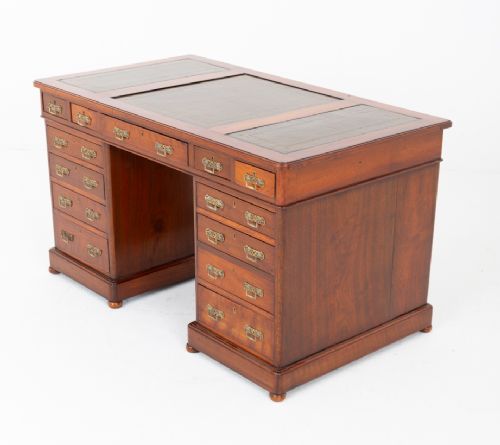
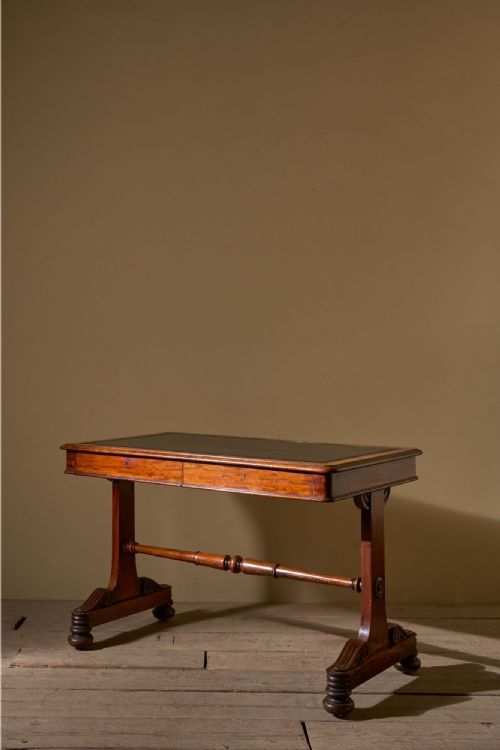
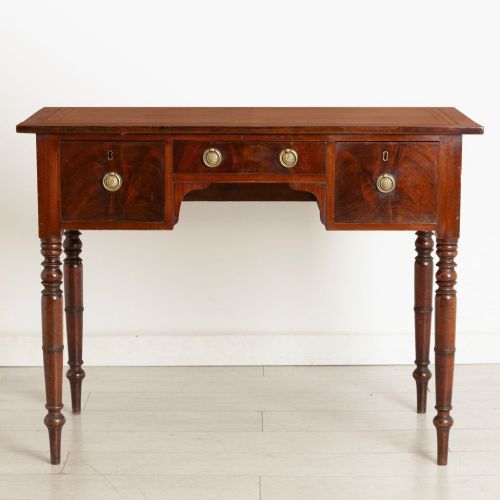
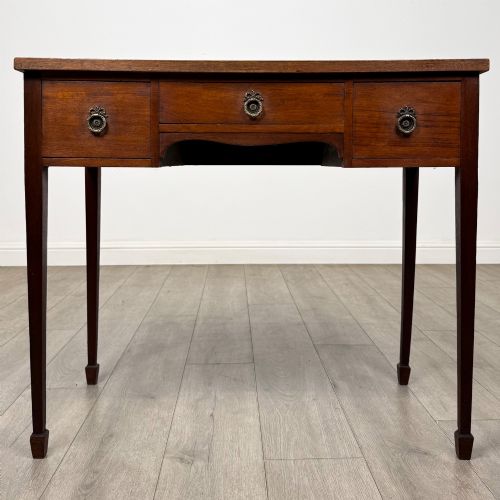
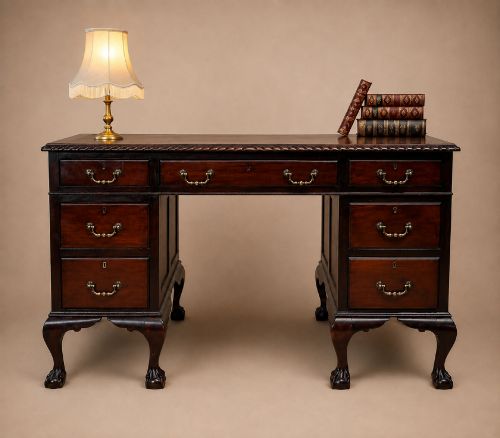
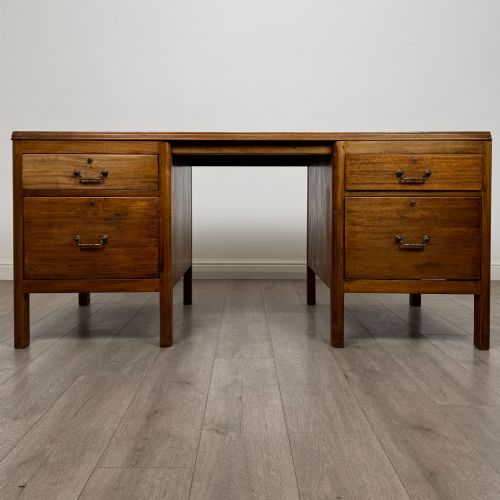
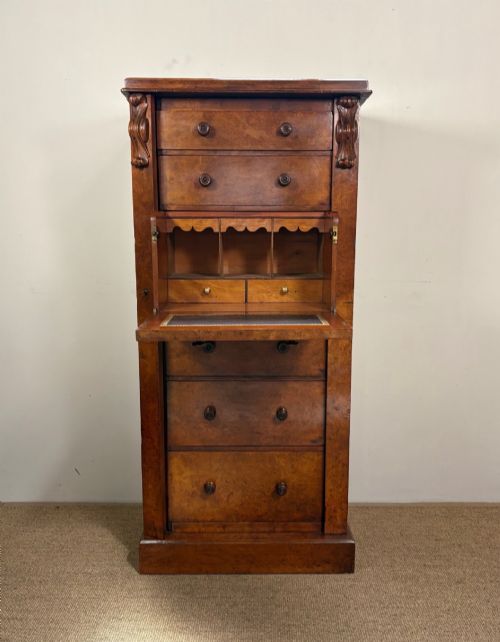
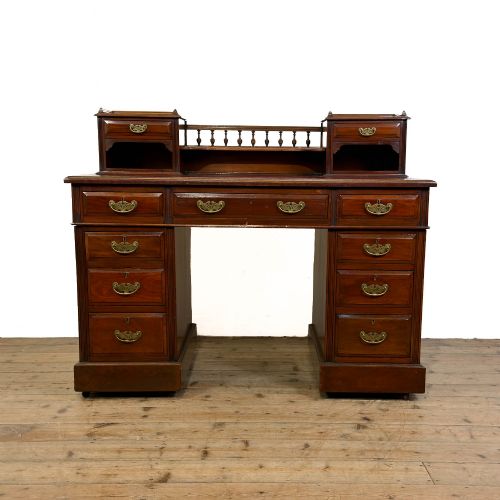
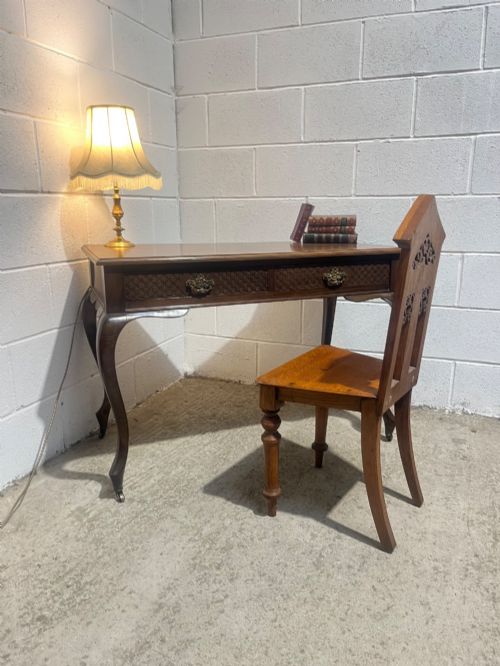
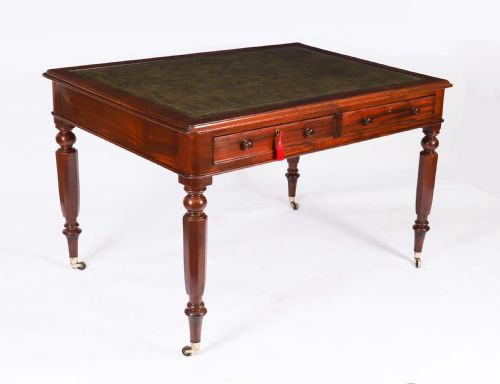
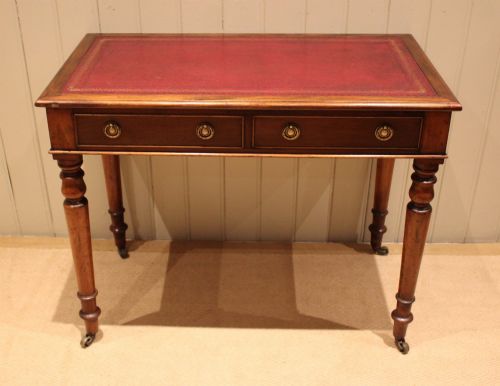
A mahogany home office desk comprises freestanding writing tables, pedestal desks, and bureau bookcases designed for daily workspace use. These pieces span the Georgian, Victorian, and Edwardian periods, bringing substantial timber presence into a modern room.
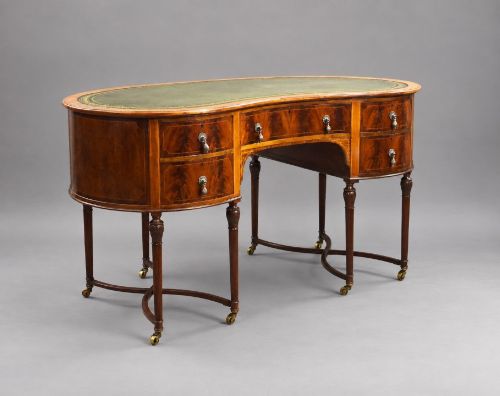
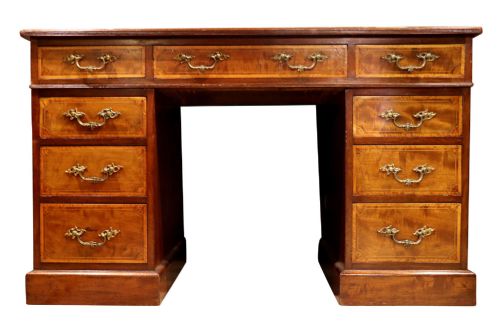
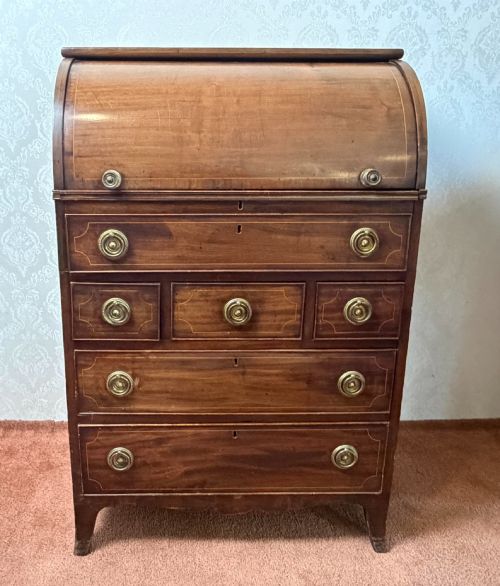
The most common formats met here are pedestal desks with banks of drawers and writing tables featuring turned or reeded legs. Makers also produced specialised forms such as Carlton house desks, kidney-shaped tables, and tambour writing desks.
Makers constructed these items from solid timber and veneers, frequently incorporating leather inserts on the writing surface. The forms reflect shifts in interior taste from formal Georgian proportions to robust Victorian engineering and lighter Edwardian styling.
Materials and construction methods
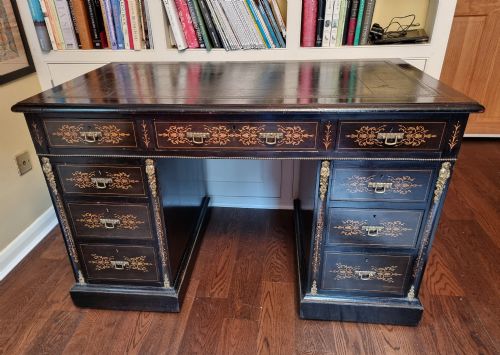
Workshops utilised solid mahogany and flame mahogany veneers over secondary timbers, often accenting surfaces with satinwood or marquetry inlay. Brass hardware, including original handles and locks, accompanies leather writing inserts framed by blind tooling.
Cabinetmakers joined drawer frames using traditional dovetail techniques and built structural carcases to support heavy daily use. Glass doors appear on bureau bookcases, while ebonised wood and maple provide contrasting details across specific pieces.
A tambour desk hides your morning paperwork behind a rolling wooden curtain that operates with satisfying mechanical precision.
Distinctions in craftsmanship
Quality rests on the depth of the timber figuring, particularly in flame mahogany veneers, and the crispness of inlaid satinwood or marquetry details. Superior examples exhibit intact original leather surfaces, matching brass hardware, and precise dovetail joinery within the drawer carcases.
Pieces bearing stamps or signatures from known makers demonstrate higher workshop standards in their internal construction and secondary wood selection. Lesser examples display plain timber surfaces with later replacement handles and re-glued joints.
Edwards and Roberts·Johnstone and Jeanes·Hobbs and Co·Maple and Co·Wolfe and Hollander
The Mahogany Home Office Desk Glossary
- Pedestal desk
- A form comprising two structural pedestals with banks of drawers supporting a central writing surface. This layout provides substantial storage beneath the top.
- Tambour
- A series of narrow wooden strips glued to a canvas backing, allowing a desktop cover to slide smoothly in a track. This mechanism conceals pigeonholes and small drawers.
- Partners desk
- A large double-sided writing table designed for two people to work opposite one another, featuring drawers on both faces. These pieces typically stand freestanding in the room.
- Carlton house desk
- A fitted writing desk featuring a stepped superstructure of small drawers and compartments curving around the back and sides of the writing surface. This refined shape emerged during the Sheraton period.
- Flame mahogany
- Timber cut from the fork of the mahogany tree to produce a distinctive flickering, flame-like grain pattern. Cabinetmakers reserved this veneer for primary display surfaces.
Mahogany Home Office Desk: Frequently Asked Questions
What is a partners desk?
A partners desk is a large double-sided writing table designed with drawers and cupboards on both faces. This configuration allowed two people to sit and work opposite each other.
Such pieces usually occupy a central position in a room rather than standing against a wall. They offer substantial workspace and storage capacity.
How do I identify an Edwardian desk?
Edwardian desks often display lighter proportions, Sheraton Revival influences, and satinwood inlay across the mahogany surfaces. Cabinetmakers during this period frequently produced writing tables and pedestal forms with refined legs.
These pieces contrast with heavier Victorian designs through their brighter timber tones and more delicate brass hardware.
What is flame mahogany?
Flame mahogany is a decorative veneer cut from where a branch joins the main tree trunk. This produces a dramatic, rippling pattern resembling flickering flames.
Craftsmen placed these veneers on drawer fronts and top surfaces to catch the light and create visual depth.
How were leather tops finished?
Writing surfaces were inset with panels of goatskin or calfskin, then finished with gold leaf tooling around the perimeter. This tooling added a decorative border to the workspace.
Many surviving pieces retain their original leather, while others feature later replacements applied during restoration.