


Mahogany Hearth Stand
These mahogany hearth stand pieces are functional fireside companions designed to hold plates, kettles or display screens near the grate.
Mahogany Hearth Stand
A mahogany hearth stand encompasses versatile fireside furnishings ranging from rotating fire cats and plate stands to adjustable pole screens and spill holders. These pieces originate predominantly from the Georgian, Regency and Victorian periods, reflecting practical domestic needs by the fireplace.
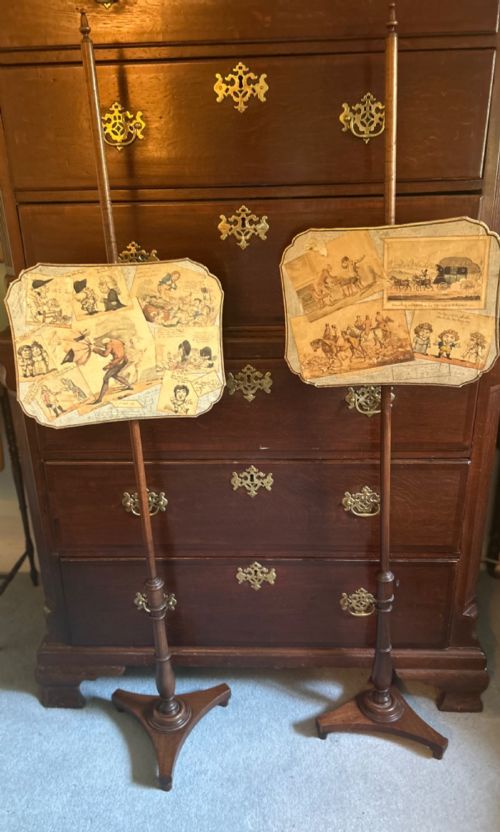
The most frequently encountered versions on this page include adjustable pole screens featuring embroidered needlepoint panels, along with traditional wooden cat stands designed to hold dishes or kettles warm near the hearth. The selection balances decorative needlework panels with utilitarian turned wood accessories.
Makers from the 18th and 19th centuries constructed these objects using robust timbers suited to daily fireside placement. The forms demonstrate how period households managed warmth, light and dining convenience within the principal living spaces.
Materials and Construction
Construction relies heavily on solid mahogany, frequently complemented by secondary woods like rosewood and structural details in brass. Workshops employed traditional turning, carving and joining techniques to create sturdy tripod bases and adjustable columns.
Surfaces often incorporate textile elements such as silk, needlepoint and embroidered panels, alongside glass reflectors and brass bindings. These mixed media pieces require both fine woodworking and textile arts to achieve their finished form.
Current listings demonstrate a strong representation of Georgian and Regency pole screens alongside Victorian cat stands and wooden spill holders.
Assessing Quality
Quality rests in the crispness of the turned woodwork and the proportional balance of the base, particularly on rotating stands and pole screens. Superior examples display refined carving on the legs and pillars rather than plain, utilitarian turning.
The integrity and execution of the needlepoint or embroidered panels distinguish finer items, alongside the originality of the brass fittings and adjustable mechanisms. Material choice, such as the depth of grain in the mahogany and the presence of rosewood accents, further separates standard pieces from the best work.
The Mahogany Hearth Stand Glossary
- Fire cat
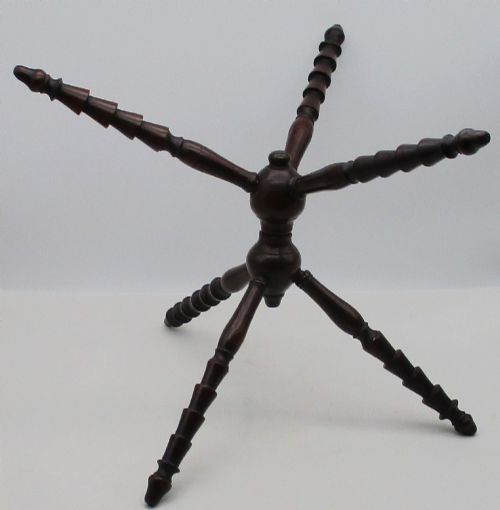
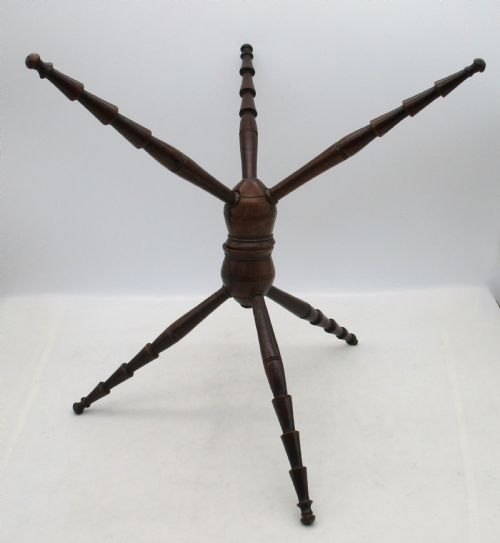
- A revolving wooden stand with multiple arms used near the hearth for holding plates or small kettles. These clever pieces allowed items to be rotated closer to or further from the heat.
- Pole screen
- An upright adjustable screen mounted on a slender pillar with a tripod base, designed to shield a person's face from the direct glare of an open fire. The panels often slide vertically to suit the user.
- Treen
- Small handmade wooden objects produced by turning on a lathe or carving by hand. Common items include spill holders and small stands.
- Needlepoint
- A type of canvas work embroidery used extensively on period fire screen panels. It provides both decorative colour and a barrier against radiant heat.
- Spill holder
- A small container designed to hold thin wooden spills used for transferring flames from the hearth to candles or pipes.
Mahogany Hearth Stand: Frequently Asked Questions
What is a fire cat stand?
A fire cat is a traditional revolving wooden stand equipped with arms designed to hold plates or keep dishes warm close to the hearth. The rotating mechanism allowed users to adjust the position of multiple items near the fire.
These pieces were essential items in period dining and sitting rooms before central heating and modern kitchen ranges altered how homes managed food preparation.
How do pole screens work?
Pole screens consist of a framed textile or wooden panel mounted on a tall vertical pole, supported by a heavy tripod base. The panel can be slid up and down to the desired height.
Originally placed between a seated person and the fireplace, the screen protected the face from the intense radiant heat of an open coal or wood fire.
What woods are used?
The primary timber found in these hearth pieces is mahogany, chosen for its rich grain, strength and resistance to warping near heat sources. Some examples incorporate rosewood for contrast.
Secondary woods and brass fittings provide structural support and functional movement, particularly in the adjustable mechanisms of pole screens.
How are periods identified?
Dating relies on the style of the turned woodwork, the form of the tripod base and the type of needlework employed. Georgian pieces often show simpler, robust turning, while Regency and Victorian examples feature more elaborate carving.
The evolution of hardware and assembly methods also helps narrow the manufacturing era from the late eighteenth century through the mid-nineteenth century.