
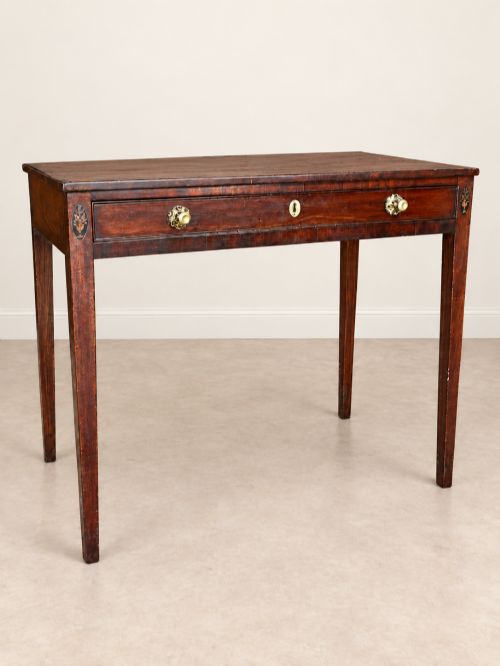
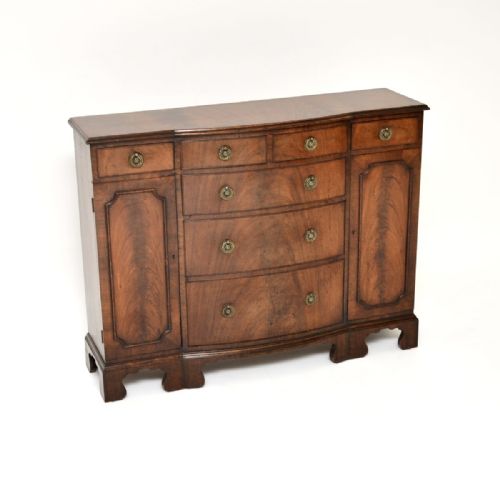
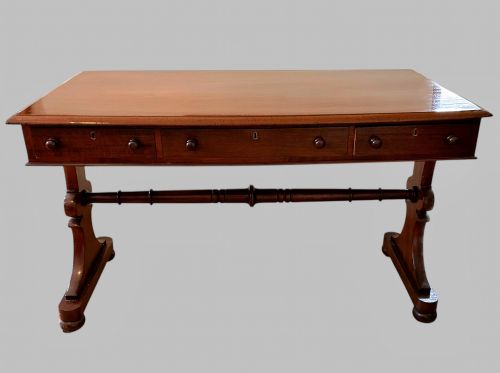
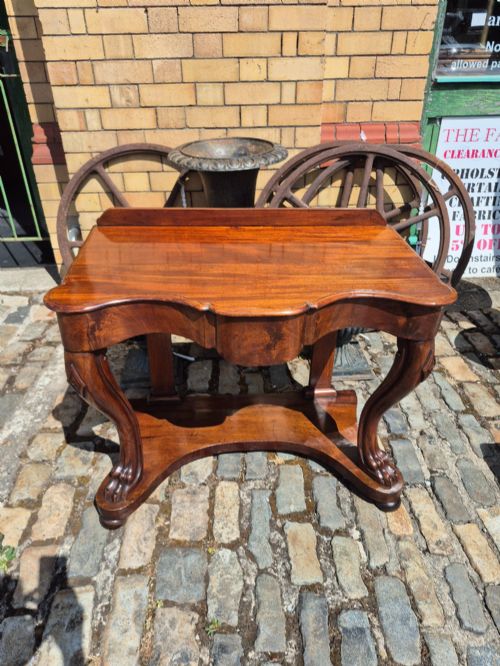
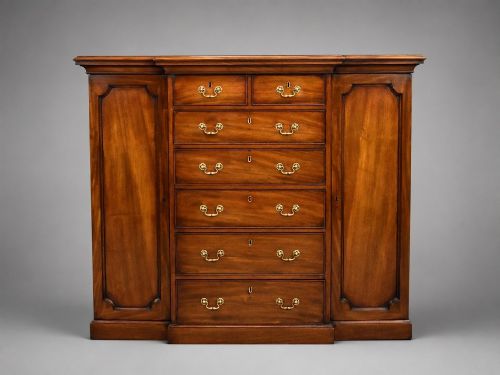
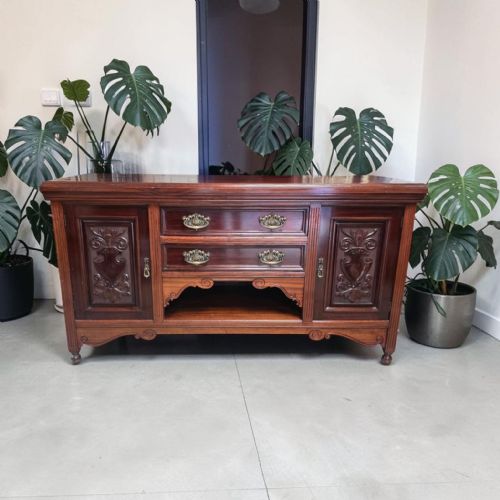
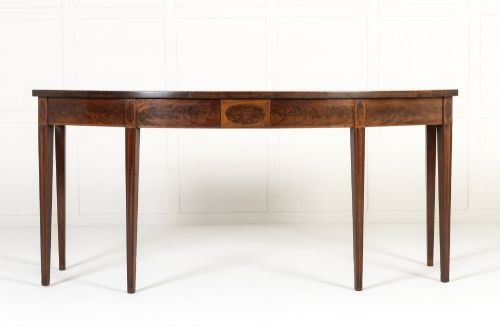
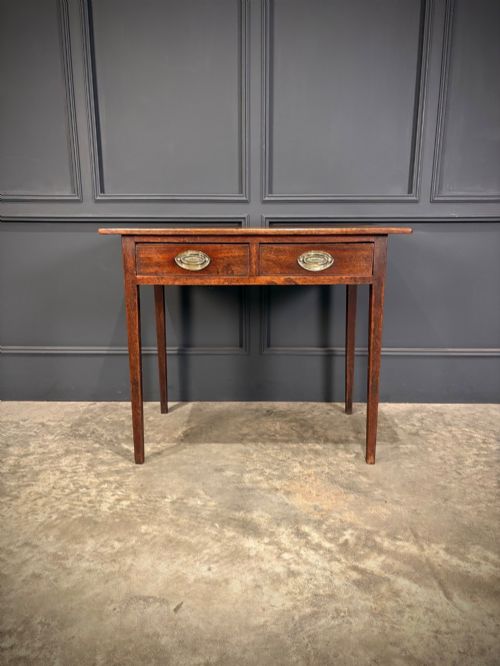

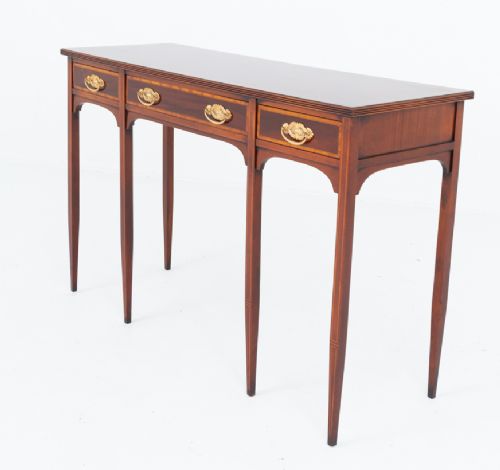
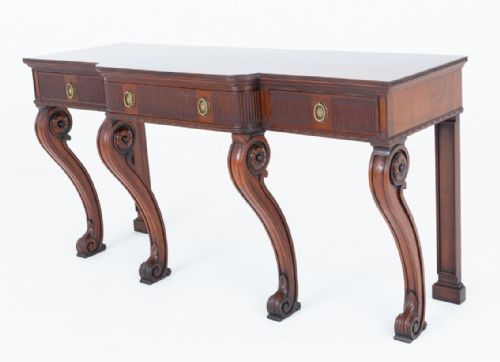
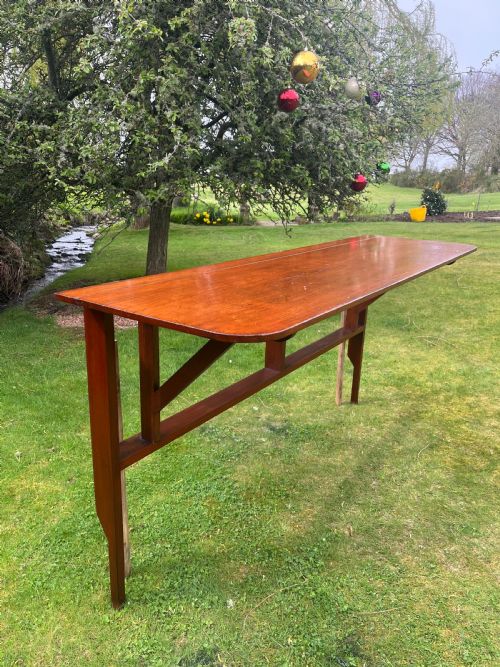
Mahogany Hallway Server Table
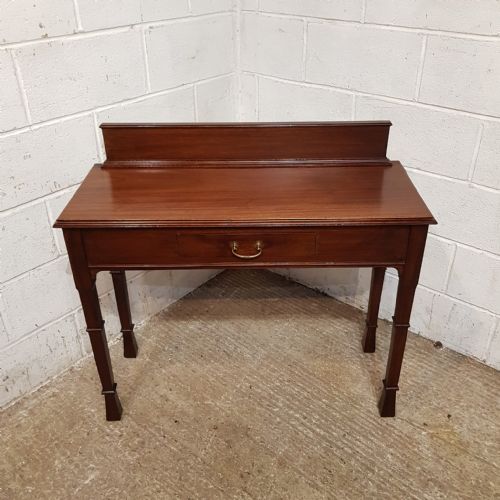
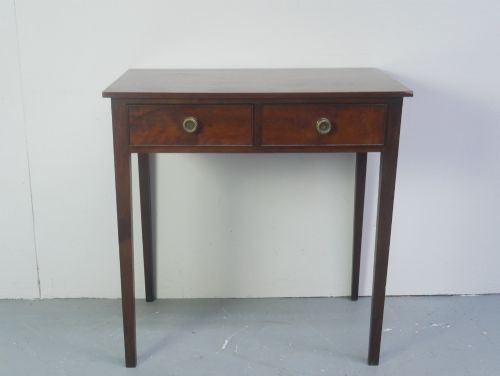
A mahogany hallway server table provides a commanding presence in an entrance, offering a surface for letters and lamps while concealing daily clutter in its drawers.
Mahogany Hallway Server Table
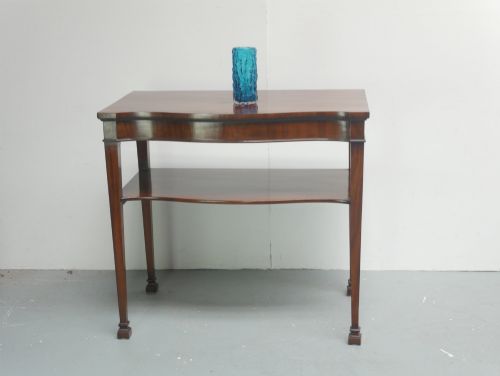
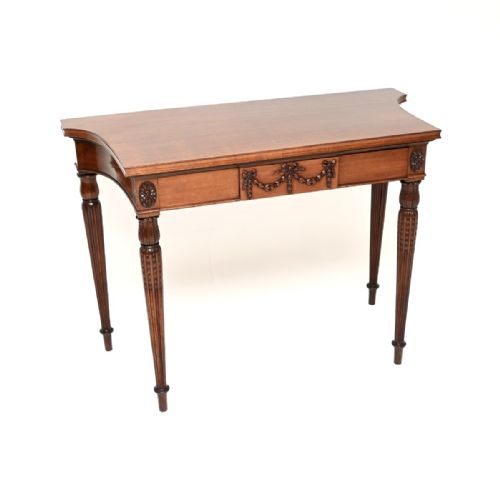
A mahogany hallway server table combines the utility of a sideboard with the slender proportions required for narrow spaces, drawing upon eighteenth-century dining forms adapted for domestic entries. These pieces span console tables, serving tables, and compact sideboards originating from the Georgian, Regency, and Victorian periods.
The most common versions encountered here date from the nineteenth century and the Edwardian era, often featuring bow fronts, rectangular tops, or breakfront configurations. Makers designed these furnishings to stand against entrance walls, employing deep timber tones to anchor the room.
Regional variations include Irish pieces with robust proportions and English examples displaying refined Sheraton or Chippendale influences. Buyers select them for their combination of surface utility and historical cabinet-making skill.
Construction and materials
Cabinet makers built these tables using solid mahogany alongside flame mahogany veneers applied to secondary timbers such as pine. They relied on traditional joinery techniques, incorporating hand-cut dovetails within the drawer construction to ensure lasting structural integrity.
Surface enrichment often involved contrasting stringing and banding in boxwood and satinwood, creating geometric borders along drawer fronts and table edges. Brass fittings, from drop handles to campaign corners, completed the hardware scheme.
The listings combine eighteenth-century Georgian designs with later Victorian and Edwardian interpretations in solid mahogany and veneer.
Markers of quality
Quality rests upon the selection of timber, where tightly figured flame mahogany or well-matched grain patterns distinguish superior pieces from plain stock. The crispness of carved details, such as gadroon edging or acanthus leaves, reveals the hand of a skilled artisan rather than routine workshop production.
Structural refinement shows in the thickness of the solid mahogany drawer linings and the precision of the dovetail joints. Superior examples maintain original brass hardware and retain a deep, warm patina developed through decades of polishing.
M. D. Miller & Sons, Nottingham
The Mahogany Hallway Server Table Glossary
- Bow front
- A convex curved cabinet front that swells outward in the centre, popular during the Georgian and Regency periods. This shape softens the profile of a room.
- Breakfront
- A piece of furniture whose central section projects forward from the flanking sections. It adds architectural depth and visual weight.
- Stringing
- Thin inlaid lines of contrasting wood, such as boxwood or satinwood, set flush into the mahogany surface. This technique outlines drawers and panels.
- Gallery
- A raised wooden or brass border running along the back and sides of a tabletop. It prevented items from sliding off the serving surface.
- Chippendale manner
- A design style inspired by the publications of Thomas Chippendale, featuring carved details and classical motifs. It flourished in the eighteenth century and saw revivals later.
Mahogany Hallway Server Table: Frequently Asked Questions
What is a mahogany hallway server table used for?
These tables serve as functional display and storage pieces in entrance halls and narrow passages. They provide a convenient surface for post and keys while offering drawer space for household items.
Historically, larger versions supported dining rooms, but compact iterations suit modern hallways perfectly. Their narrow depths allow placement in restricted spaces without obstructing foot traffic.
How do I identify a Georgian server table?
Georgian server tables typically display restrained classical proportions, hand-cut dovetails, and rich, dark mahogany surfaces. Look for architectural mouldings and honest timber construction rather than excessive ornamentation.
Many examples feature subtle crossbanding in satinwood or boxwood. The joinery inside the drawers should show irregular hand-cut pins rather than machine precision.
Can I use a server table in a small hallway?
Yes, many server tables are specifically chosen for hallways because their shallow depths fit narrow floor plans. Bow-front and console variants offer useful surface area without protruding too far into the walkway.
Selecting a piece with a three-quarter gallery also helps keep items secure on the top surface. Their slender legs maintain an open feel beneath the table.
What is the difference between a console and a server?
A console table traditionally requires wall attachment or rests on front legs with a flat rear, whereas a server is often freestanding and includes drawers. In practice, makers and dealers used these terms interchangeably over the centuries.
Both forms provide similar surface functions in a hallway setting. The presence of drawers usually points toward server or sideboard classifications.