
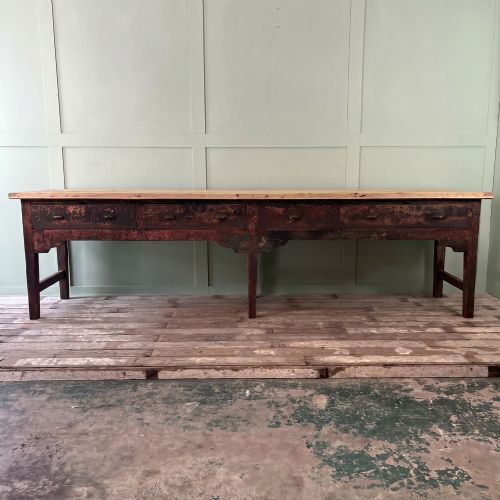
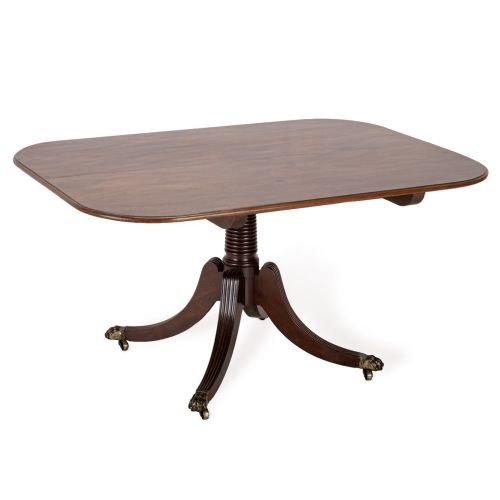


Georgian Six Leg Table
A georgian six leg table brings robust eighteenth and nineteenth century craftsmanship into domestic spaces, offering sturdy surfaces for dining, serving and display.
Georgian Six Leg Table
When searching for a georgian six leg table, buyers encounter a diverse selection of dining tables, serving tables, sideboards, console tables and library tables. These sturdy items span the eighteenth and nineteenth centuries, taking forms from tilt-top breakfast tables to drop-leaf gateleg designs and bowfront sideboards.
The pieces on this page mostly emerge from the Georgian and Regency periods, utilising rich timbers like mahogany alongside pine and oak. Such items served households for dining, food service and storage, functioning today as practical antique furniture with distinct period character.
How they were made
Cabinetmakers constructed these pieces primarily using solid mahogany, pine and oak, often enhancing surfaces with figured veneers, boxwood stringing and brass fittings. Structural stability relied on six-legged configurations, which supported wide drop-leaf mechanisms, heavy tilt-tops and long console structures.
Joinery methods involved traditional techniques suited to heavy daily use, incorporating turned legs and gateleg actions that allowed tables to expand for seating six people. Secondary timbers like pine and iron appeared in internal framing and structural hardware.
Lord Leverhulme once owned one of these serving tables, proving even industrial magnates needed somewhere to put the joint.
What varies in quality
The choice of primary timber creates a clear distinction across the range, with figured mahogany and satinwood veneers denoting finer production than plain pine or oak country pieces. Superior execution shows in the precision of turned legs, smooth drop-leaf or gateleg mechanisms and intact brass hardware.
Proportion and structural integrity define the higher tier of these tables and sideboards, where original surfaces and well-executed joinery remain undisturbed by heavy alterations. Lesser examples display simpler construction, utilitarian secondary woods and heavier wear to the structural frame.
The Georgian Six Leg Table Glossary
- Drop-leaf table
- A table with hinged flaps on either side that fold down when not in use. These mechanisms allowed furniture to save space in smaller rooms.
- Gateleg table
- A table featuring hinged legs that swing out to support drop leaves. This design provided extra stability for seating multiple people.
- Bowfront
- A convex, curved front on case furniture like sideboards and serving tables. This style became popular during the Georgian period.
- Tilt-top table
- A table with a top that pivots on a central pillar and tilts vertically for storage. Such pieces saved floor space when not serving meals.
- Stringing
- Thin inlay lines of contrasting wood used to decorate furniture surfaces. Cabinetmakers utilised boxwood and other light timbers against dark mahogany.
Georgian Six Leg Table: Frequently Asked Questions
How many people do these tables seat?
Many examples accommodate six individuals comfortably, utilising drop leaves, pull-out mechanisms or wide rectangular frames to provide adequate legroom and surface area.
Buyers often select these specific six-legged variants precisely because the extra supports maintain stability when the leaves are fully extended for dining.
Where should I place a serving table?
Serving tables and sideboards suit dining rooms and hallways, where their long proportions and drawers offer surface space for display and storage.
Their shallow depth compared to dining tables allows them to sit flush against walls without obstructing movement through the room.
How do I care for mahogany surfaces?
Regular dusting with a dry, soft cloth maintains the finish of eighteenth and nineteenth century timber without building up heavy wax layers.
Keep these tables away from direct heat sources and strong sunlight to prevent the timber from drying out or the polish from fading.
What is the difference between Georgian and Regency styles?
Georgian furniture typically emphasises robust proportions and traditional carved details, reflecting the aesthetics of the eighteenth century. Regency pieces, emerging later, often incorporate classical revival motifs and refined brass or mahogany contrasts.
Both periods utilise strong six-legged structural designs, though Regency items frequently display lighter decorative stringing and veneering.