
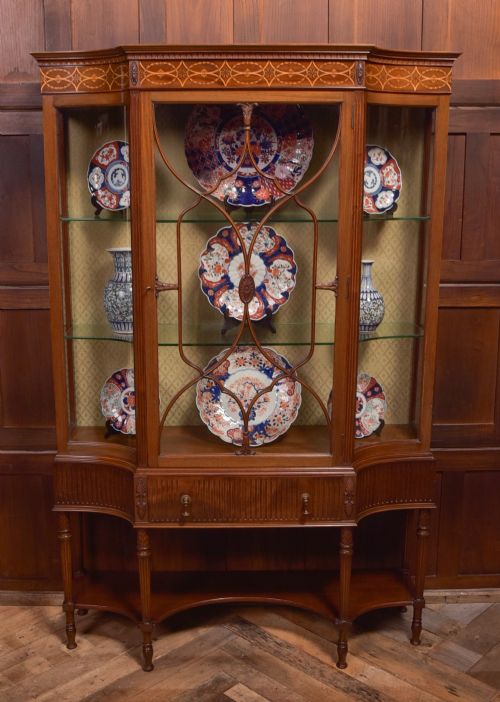

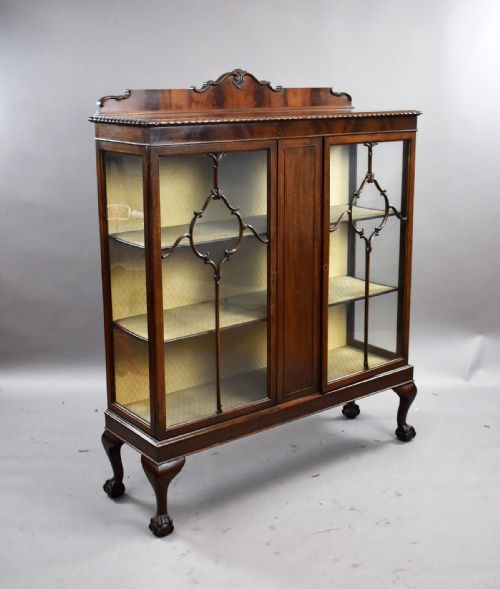
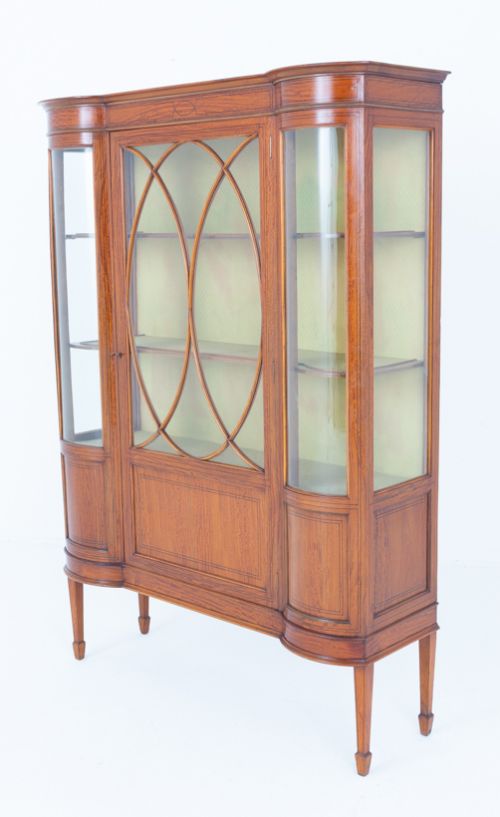
Mahogany Glass Front Cupboard
A mahogany glass front cupboard is a timber-framed display piece designed to exhibit books and china while keeping dust at bay.
Mahogany Glass Front Cupboard
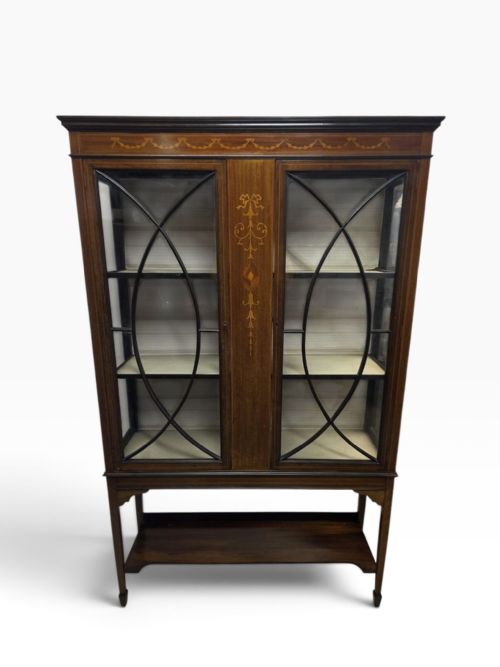
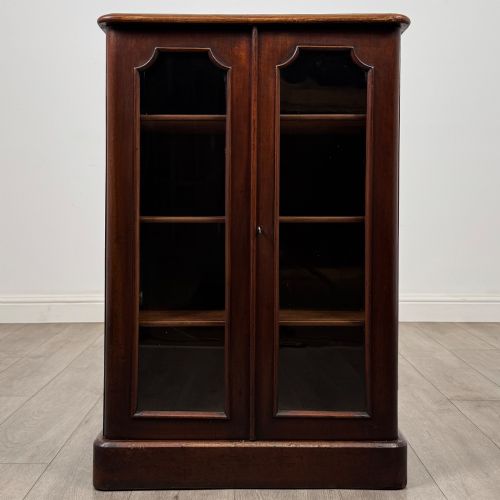
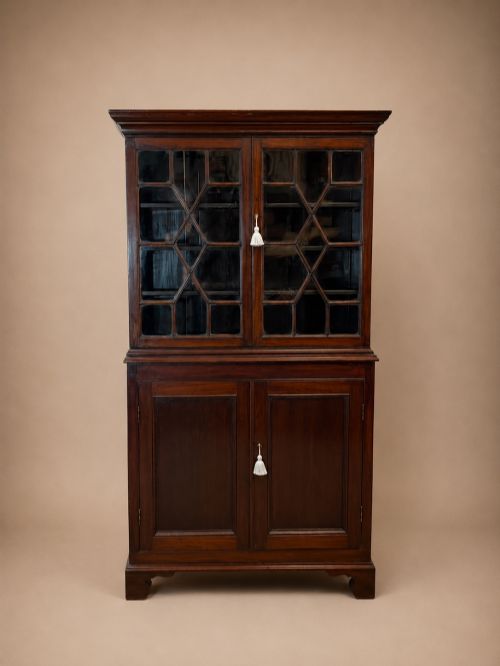
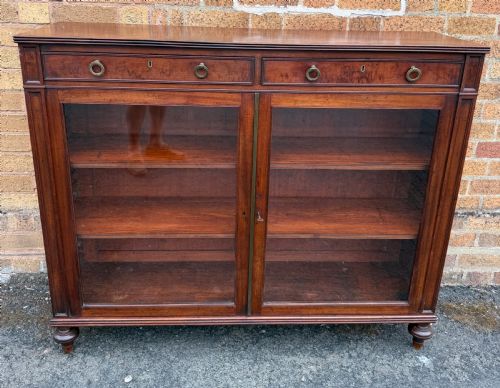
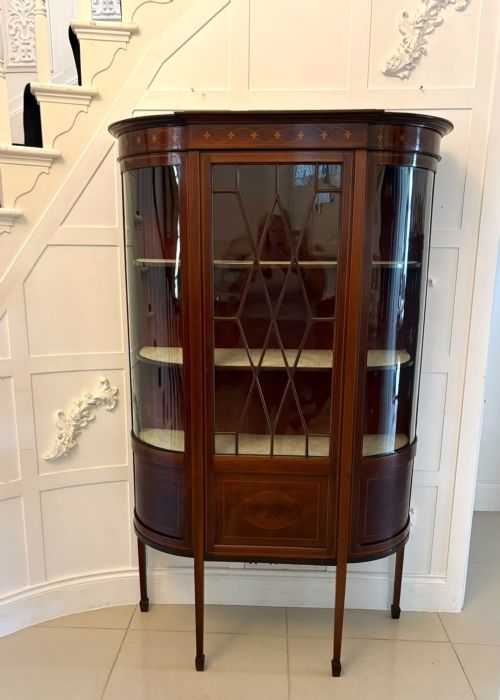
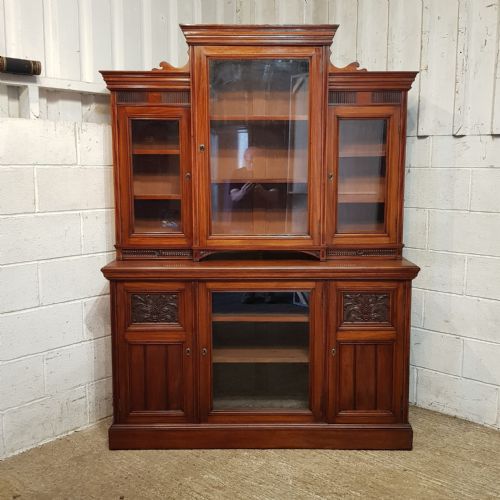
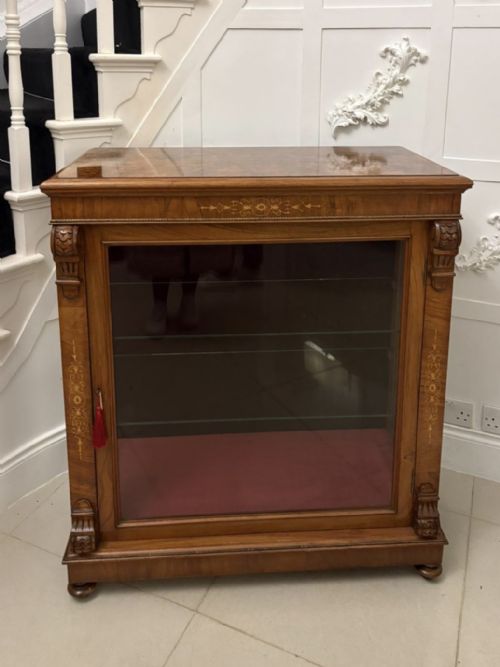
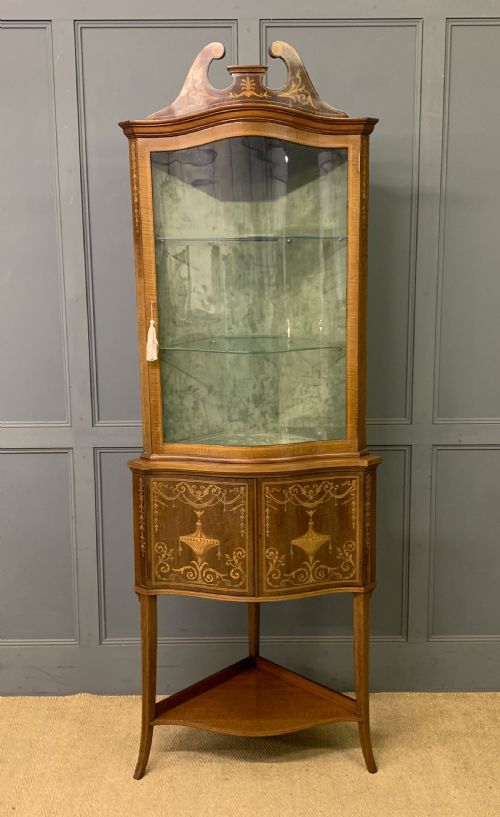
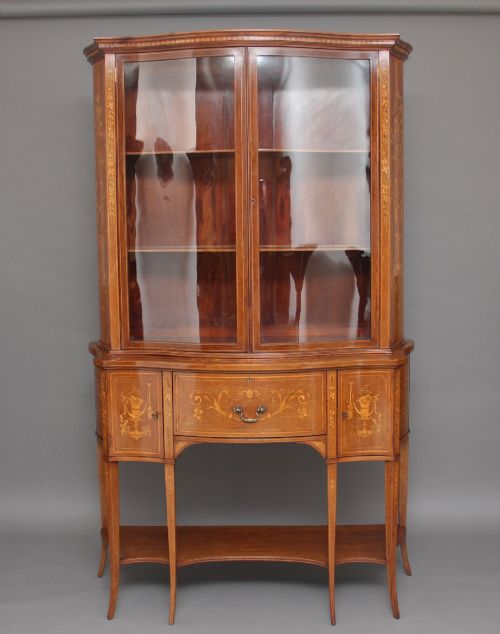
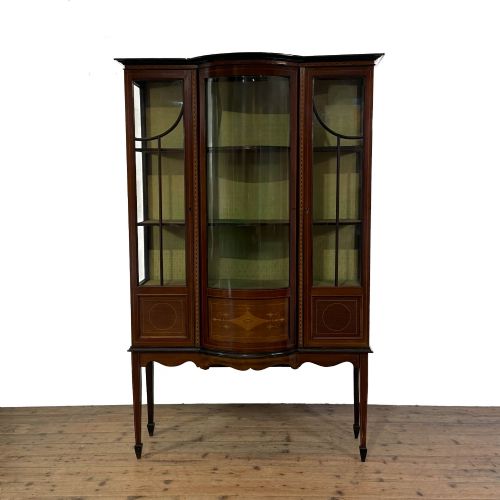
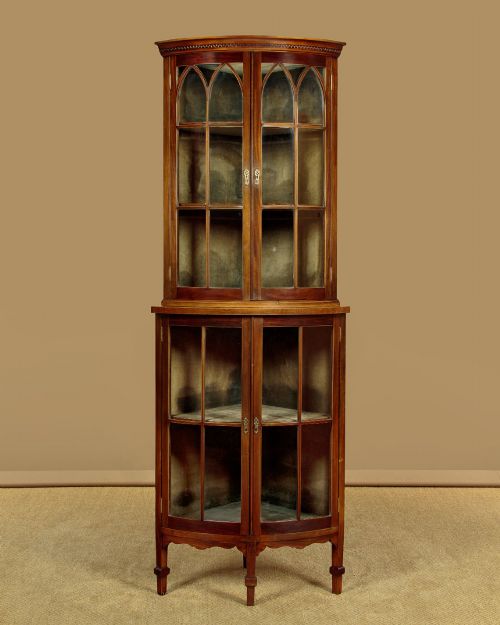
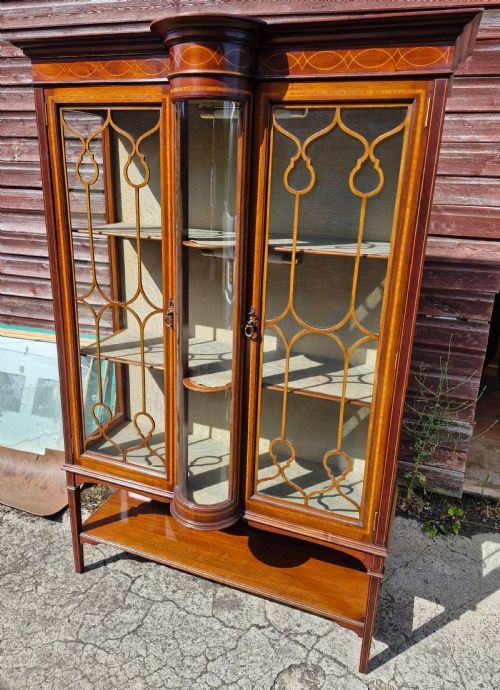
A mahogany glass front cupboard takes several distinct forms, appearing as tall library bookcases, corner cabinets, and freestanding display cabinets. Most examples encountered here belong to the Edwardian period and the nineteenth century, ranging from late Georgian origins up to the early twentieth century.
Makers constructed these pieces for domestic reception rooms, utilising glazed doors to show contents while protecting them. The inventory spans straightforward upright shelving units to bow-ended and serpentine forms designed for specific corners or wall spaces.
Materials and Construction
Carpenters built the primary carcase using solid mahogany and mahogany veneers, frequently incorporating glass panes within framed doors. Cabinet makers embellished the timber surfaces with contrasting boxwood and satinwood inlay, alongside marquetry detailing.
Hardware consists of brass fittings and handles, while internal shelves sometimes feature fabric or velvet linings. Structural variations include solid mahogany framing and specialised side cabinets incorporating satinwood or rosewood elements.
The inventory records pieces spanning the Georgian era through the Victorian period and into Edwardian Sheraton Revival designs.
Craftsmanship and Proportion
Quality depends on the precision of the timber selection and the crispness of any inlaid banding. Finer cabinets display balanced proportions, clean joinery, and well-fitted glazed doors that move smoothly within their frames.
Makers who supplied high-end establishments incorporated elaborate serpentine shaping and complex marquetry work. Simpler pieces rely on clean architectural lines rather than decorative stringing and intricate veneer patterns.
Edwards & Roberts·Maple & Co
The Mahogany Glass Front Cupboard Glossary
- Bow front
- A cabinet front that curves outward in a convex shape. This configuration requires curved glass panes in the doors.
- Marquetry
- Decorative patterns formed by fitted veneers of various woods. It appears frequently on cabinet friezes and doors.
- Serpentine
- A shaped front featuring a concave centre flanked by convex curves. This undulating profile demands advanced woodworking skill.
- Secretaire
- A desk fitted with a pull-down writing flap combined into a bookcase or cabinet. It conceals small internal drawers and pigeon holes.
- Inlay
- Contrasting timber inserted into a recess in the primary wood surface. Boxwood and satinwood provide pale contrast against dark mahogany.
Mahogany Glass Front Cupboard: Frequently Asked Questions
How do I date a mahogany glass front cupboard?
Examine the construction methods, timber choice, and decorative style visible on the cabinet. Edwardian pieces often display lighter satinwood inlay and Sheraton Revival influences, whereas Georgian and early nineteenth-century examples show heavier proportions and simpler architectural glazing bars.
Hardware and secondary timbers inside the drawers also help confirm the period. Later reproductions and revival pieces from the early twentieth century utilise machine-cut elements distinct from hand-finished older carcases.
Were these cupboards used for books or china?
These cabinets served multiple domestic purposes depending on their internal shelving and door configuration. Tall upright versions with adjustable timber shelves functioned as libraries for storing books.
Cabinets featuring glass panels on all sides and velvet-lined interiors were built specifically to display porcelain, glassware, and decorative objects. Corner units maximised space in smaller rooms for similar display functions.
How should I care for antique mahogany furniture?
Keep mahogany furniture away from direct heat sources and strong sunlight to prevent the timber and internal fabric linings from fading. Maintain a stable room temperature to protect the joints and veneer work from splitting.
Dust the glazed panels with a soft cloth and apply traditional beeswax sparingly to nourish the polished mahogany surface. Avoid silicone-based sprays that can sink into the grain and damage old finishes.