
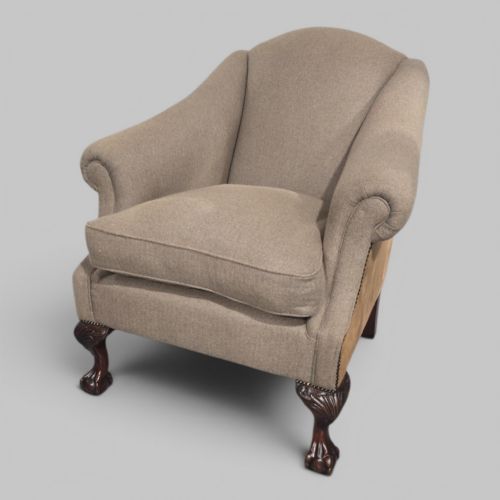
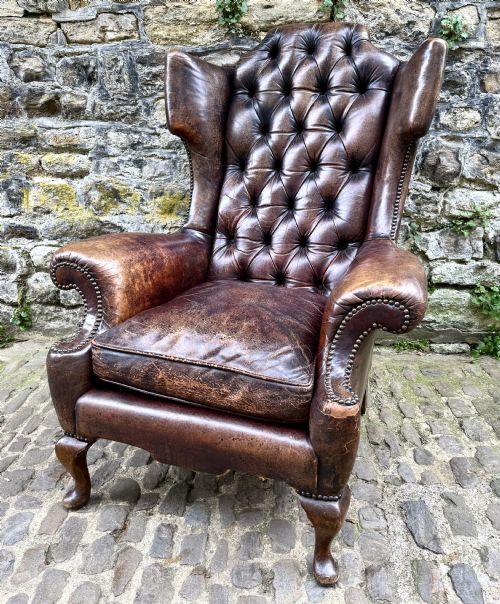
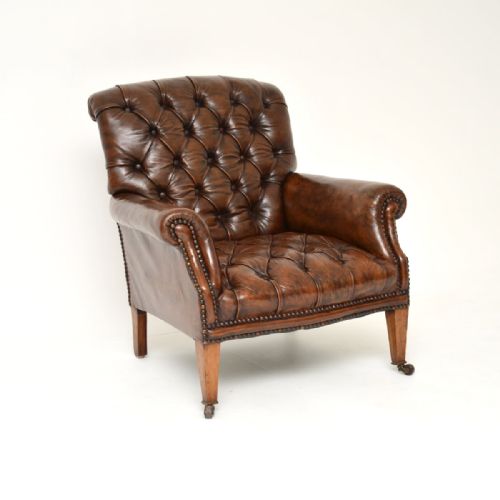


Mahogany Gentleman Chair
A mahogany gentleman chair offers robust timber framing and generous proportions, making it a comfortable fireside or library seat.
Mahogany Gentleman Chair
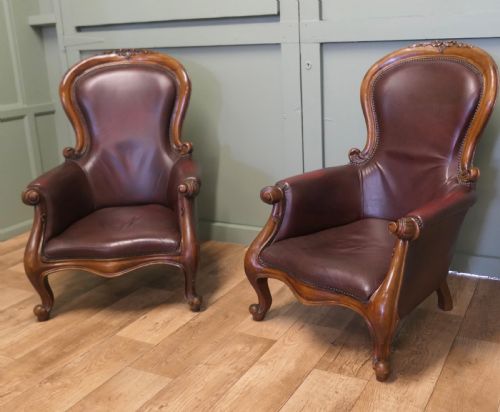
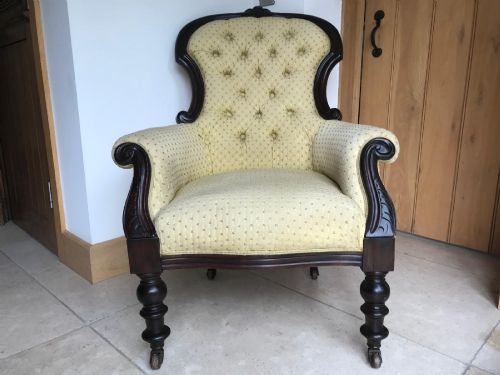
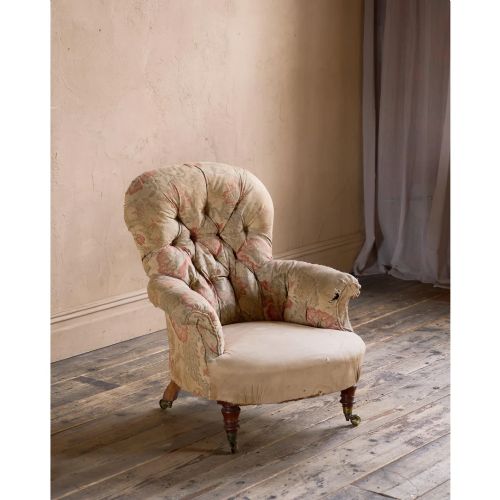
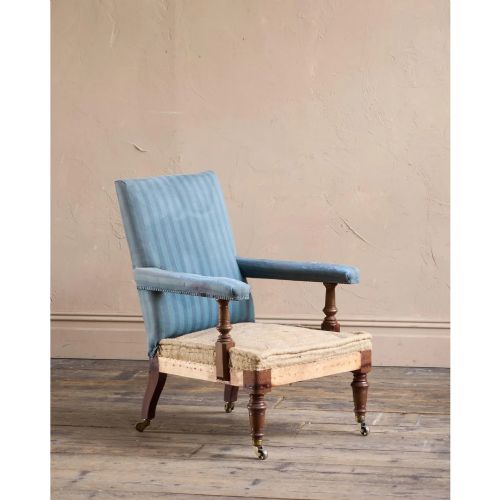
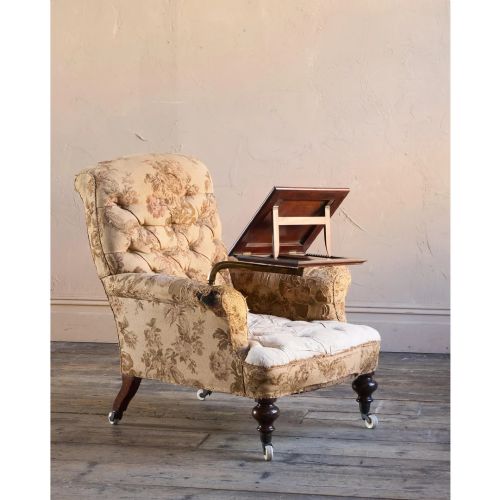
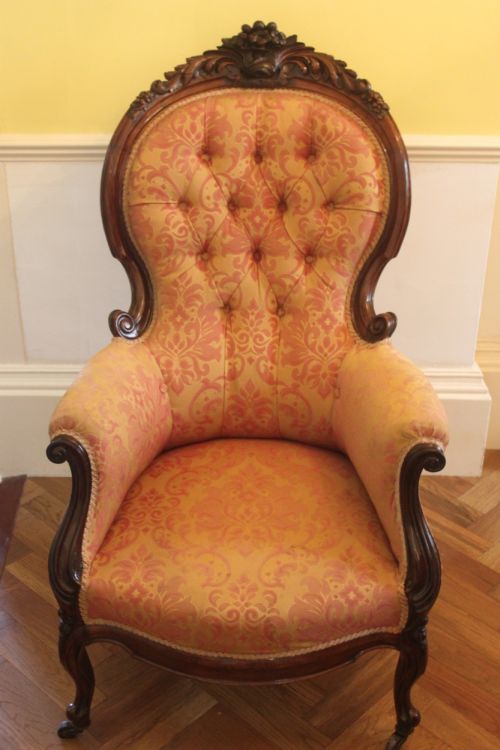
The most common examples on this page date from the nineteenth century, taking the form of library armchairs, fireside chairs, and spoon-back seats upholstered in leather or fabric. Many incorporate scroll arms, cabriole legs, or open armrests that reflect the prevailing taste of their respective decades.
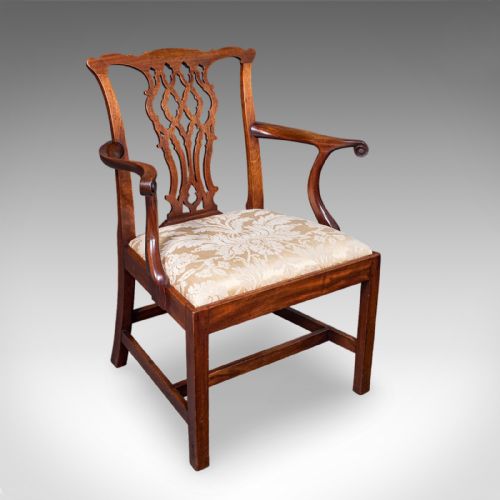
While the majority of pieces originate from English workshops, styles span from revival interpretations of Chippendale and Regency designs to ornate Victorian rococo forms. Buyers find everything from straightforward reading seats to expansive club chairs suited for traditional interiors.
How they were made
Cabinetmakers constructed the structural frames of these seats using solid mahogany, frequently augmented by secondary timbers for internal bracing and support. Joinery relied on traditional methods such as mortise and tenon joints to withstand heavy daily use.
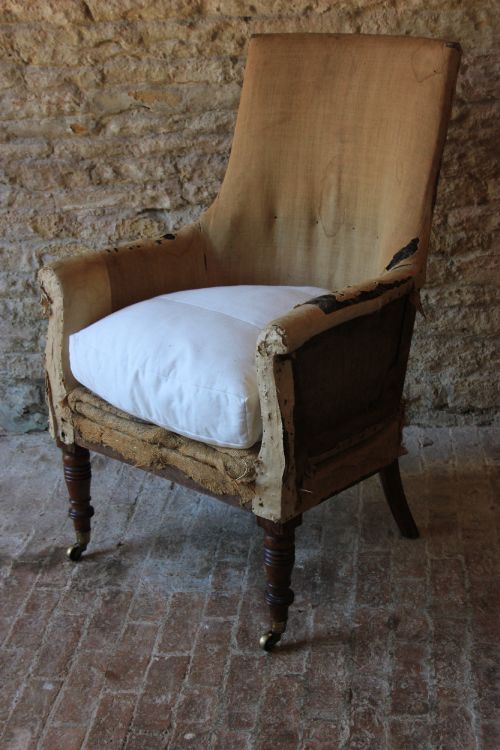
Upholstery layers involved materials like horsehair, hessian, and calico to build resilient padding beneath top coverings of leather, velvet, or fabric. Decorative touches included brass tacks, hand carving on wooden show frames, and turned supports such as barley twist legs.
Listings feature mahogany gentleman chairs spanning the Georgian, Regency, and Victorian eras alongside Edwardian interpretations.
What varies in quality
The degree of hand carving on the wooden frame often distinguishes standard production from finer workshop outputs. Crisp detailing in scrollwork and foliage indicates greater skill by the original cabinetmaker.
The selection of timber grain and the depth of the mahogany patination play significant roles in the visual impact of the chair. Heavier, more substantial framing generally points to sturdier construction and superior original materials.
Holland & Sons·Morison and Co·C. Hindley & Sons
The Mahogany Gentleman Chair Glossary
- Spoon back
- A padded chair back shaped in a concave oval resembling the bowl of a spoon. This contour provided ergonomic support for the spine.
- Library armchair
- A capacious seat designed for reading rooms, often built with wide armrests. Some examples include integrated reading stands or writing surfaces.
- Show frame
- An exposed wooden structure surrounding the upholstered portions of a chair. It displays the carved mahogany grain and joinery.
- Cabriole leg
- A furniture leg that curves outward in a convex arc and tapers inward below to a pad or scroll foot. It draws inspiration from animal limbs.
- Hessian
- A coarse woven fabric utilised beneath top upholstery to contain stuffing materials. It forms a durable foundation for horsehair padding.
Mahogany Gentleman Chair: Frequently Asked Questions
How do I identify a gentleman chair?
A gentleman chair typically presents a larger, heavier mahogany frame than standard parlor seating, often featuring deep buttoning, leather upholstery, or open arms.
These pieces were constructed to accommodate users comfortably for extended periods in studies and libraries.
Were these chairs used at desks?
Certain variations with open arms or swiveling mechanisms served as desk or library chairs for reading and writing.
Other versions functioned primarily as fireside or lounge seating in private chambers.
What is the difference between Victorian and Georgian examples?
Georgian iterations from the eighteenth and early nineteenth centuries tend to show restrained Chippendale or Regency lines with clean joinery.
Victorian pieces often introduce heavier carving, scroll arms, and elaborate show frames reflecting revival tastes.
How should I care for leather upholstery?
Leather surfaces benefit from gentle cleaning and occasional conditioning to maintain the suppleness of the hide.
Keeping the mahogany frame polished preserves the depth and sheen of the timber.