
Mahogany Furniture Chest
Mahogany furniture chest examples span Georgian, Regency, and Victorian periods, offering practical storage through time-tested craftsmanship.
Mahogany Furniture Chest
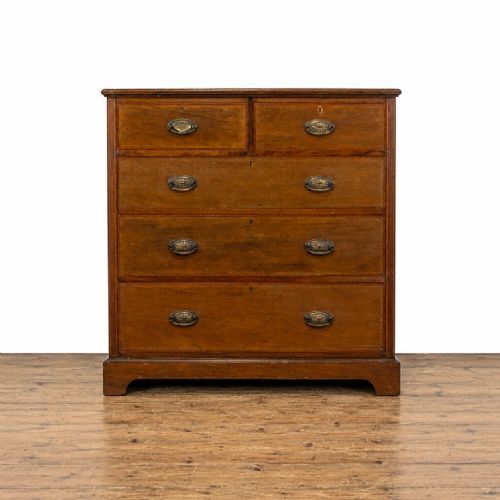
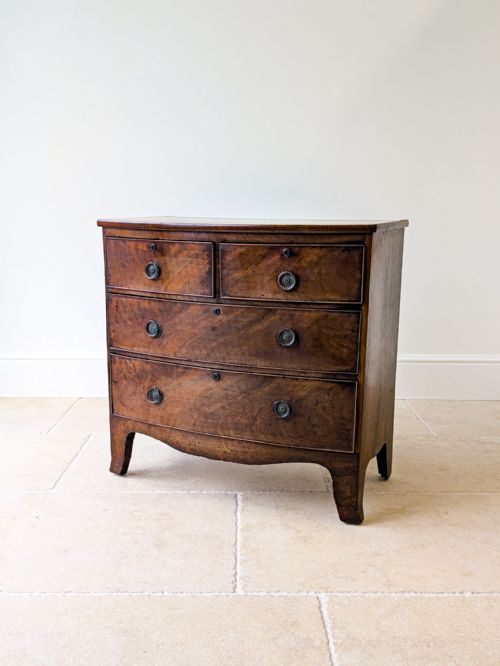
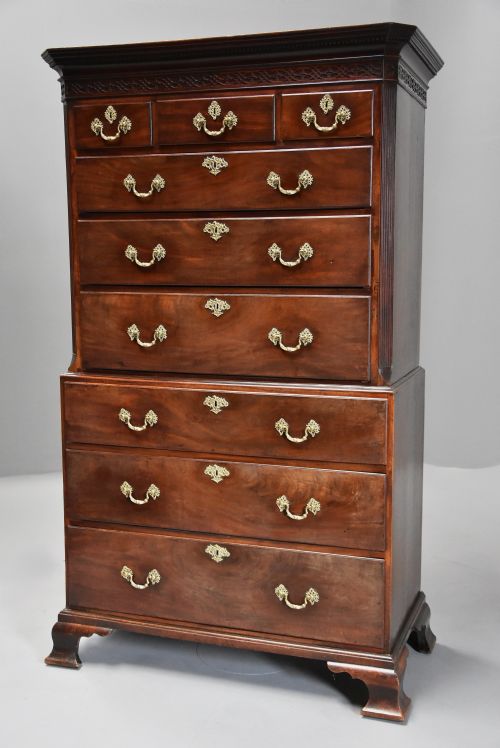
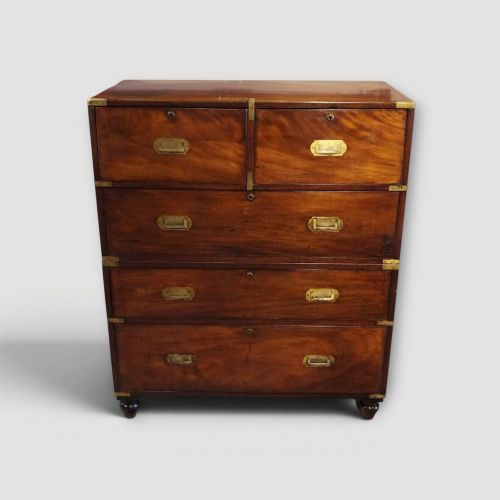
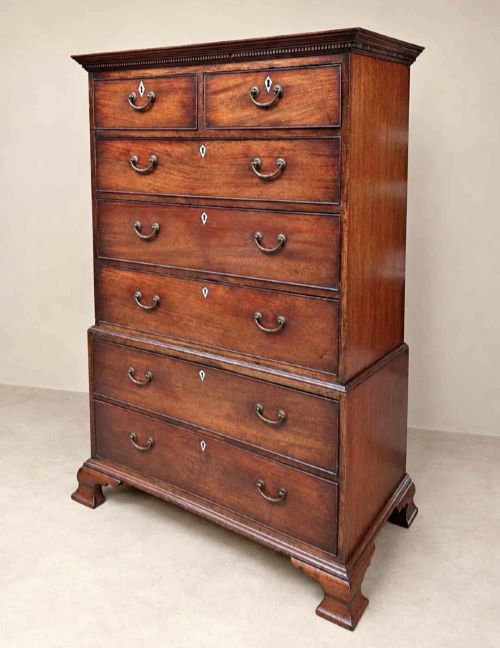
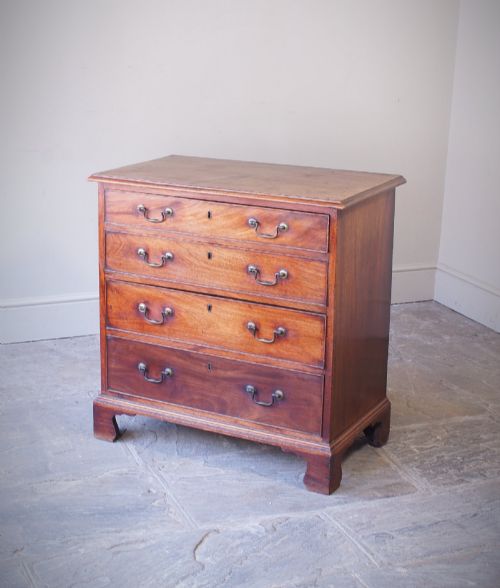
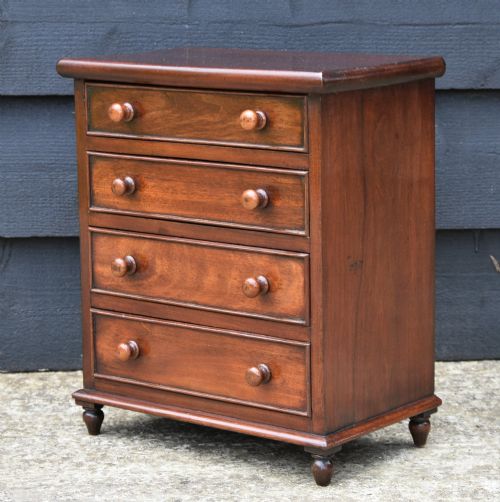
When you search for mahogany furniture chest, you encounter a diverse range of storage forms built primarily from the 18th century through to the Edwardian era. The selection centres heavily on chests of drawers, alongside taller variations like chest on chest tallboys and compact designs such as apprentice or miniature pieces.
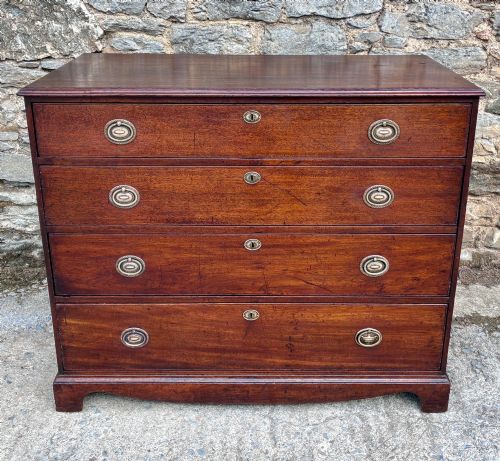
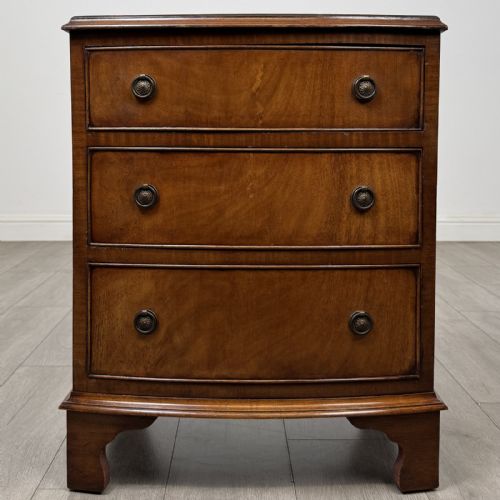
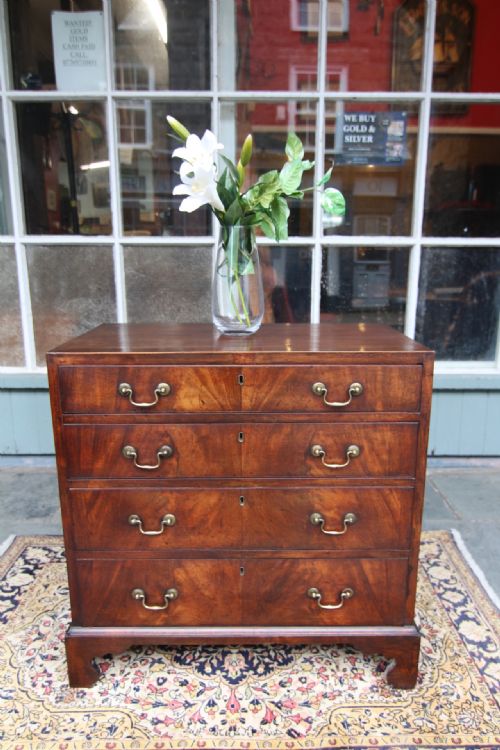
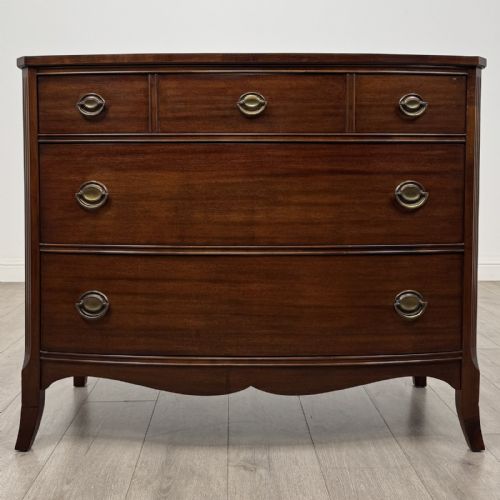
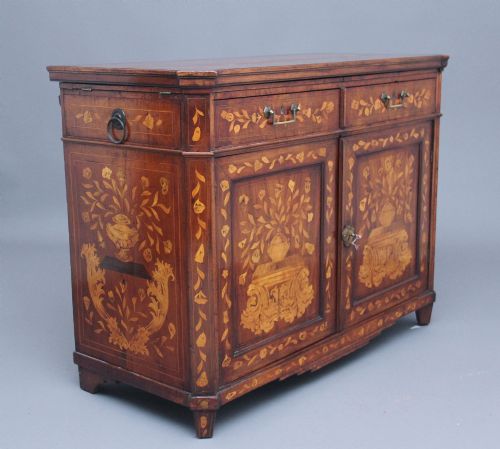
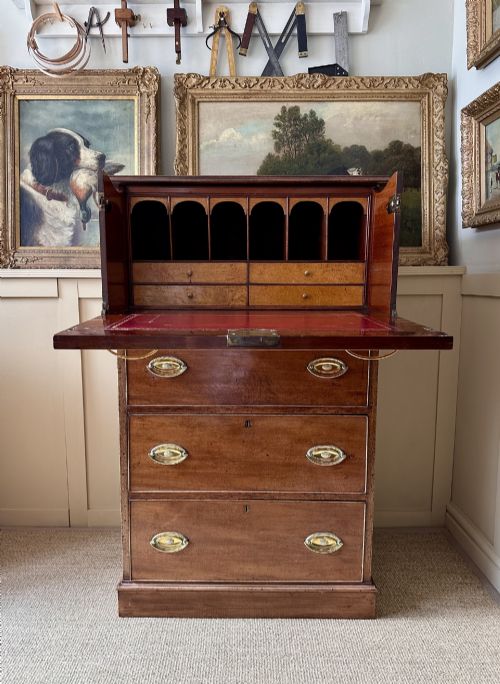
The prevalent forms include bow front chests from the Regency and Georgian periods, as well as Wellington chests and linen presses from Victorian workshops. Pieces range from straight-fronted four-drawer configurations to elaborate Dutch marquetry cabinets and secretaire bookcases.
Origins span English, Scottish, and continental European workshops, reflecting shifting stylistic preferences from Georgian proportions through to Edwardian interpretations and revival pieces.
How they were made
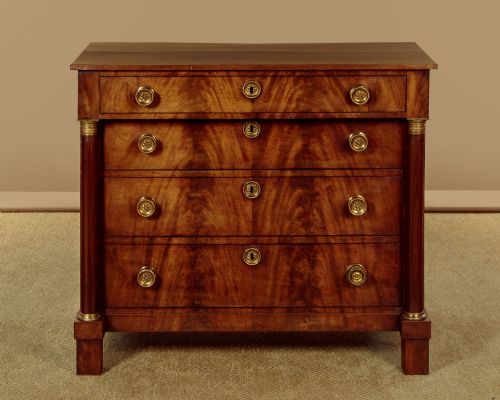
Construction relies heavily on solid timber and veneer applications, utilising flame mahogany veneer over secondary woods like oak to create rich visual depth on drawer fronts and surfaces. Brass hardware, including handles and escutcheons, provides functional and decorative accents across periods.
Cabinetmakers employed precision joinery methods, incorporating elements such as brushing slides, locking flaps, and candle sconce mounts into specialised forms like Wellington chests and dressing chests. Interior construction frequently utilises oak linings for drawers, ensuring structural longevity.
Materials recorded across current pieces include solid mahogany, flame mahogany veneer, oak, brass, glass, and marble.
What varies in quality
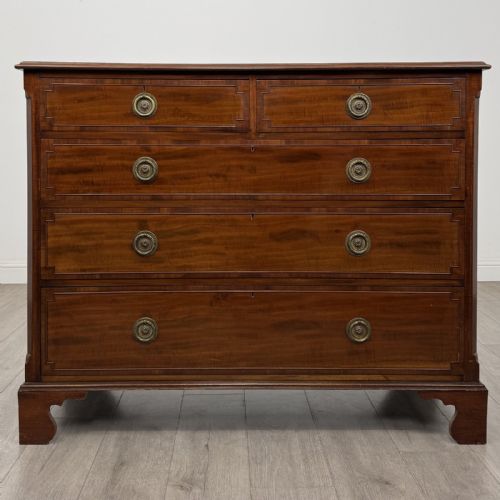
Quality in a mahogany furniture chest is dictated by the selection of timber grain, particularly the choice of figured or flame mahogany veneer matched symmetrically across drawer tiers. Superior examples display meticulous attention to carcass proportions, dovetail precision, and original brass fittings.
The integrity of secondary timbers, such as oak drawer linings, and the crispness of carved details or inlaid marquetry distinguish standard production pieces from master-built workshop outputs.
Whytock & Reid·T & G Seddon
The Mahogany Furniture Chest Glossary
- Brushing slide
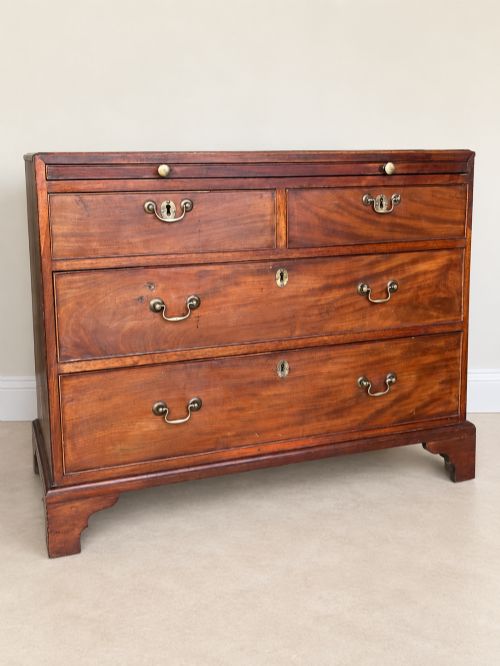
- A pull-out shelf integrated above the top drawers, traditionally used for folding clothes or writing.
- Wellington chest
- A tall, narrow chest of drawers secured by a hinged locking side flap that bars the drawer fronts.
- Chest on chest
- A tall storage unit comprising an upper chest section stacked upon a deeper lower base, often termed a tallboy.
- Flame mahogany veneer
- Thin slices of timber cut from wood where branches meet the trunk, yielding a distinctive swirling, flame-like grain pattern.
- Bow front
- A convex curved front profile popular on chests dating from the Regency and Georgian periods.
Mahogany Furniture Chest: Frequently Asked Questions
How do I date a mahogany chest?
Dating relies on examining construction techniques, drawer dovetailing, and stylistic cues such as bracket feet or turned legs. Georgian pieces often show hand-cut dovetails and oak linings, whereas later Victorian examples utilise machine-sawn elements.
Secondary woods and hardware styles also shift across periods, helping to differentiate an 18th-century piece from an Edwardian revival or George IV production.
What is a brushing slide used for?
A brushing slide is a pull-out wooden board integrated just beneath the top surface or upper drawer of a chest. Historically, gentlemen utilised this ledge to brush garments or fold linen before drawers were opened fully.
In living spaces today, the slide serves as a convenient temporary shelf for resting small items or keys.
Where should I place a tallboy?
A tallboy or chest on chest provides substantial vertical storage with a relatively small floor footprint, making it ideal for bedrooms or dressing areas. Ensure the piece is positioned away from direct heat sources to prevent the mahogany veneer from drying out.
Securing taller chests to a wall using appropriate brackets is recommended for safety, particularly in rooms with heavy foot traffic.
What distinguishes a Wellington chest?
A Wellington chest is characterised by its tall, narrow proportions and a distinctive locking side flap that fastens over the drawer edges. This hinged stile is typically secured with a key, locking all drawers simultaneously.
Originally designed for secure storage of papers or valuables, these pieces are frequently fitted with slender drawers and subtle mounts.