

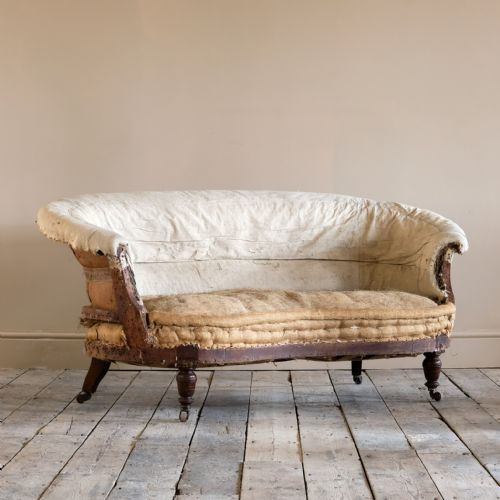


Mahogany Framed Settee
A mahogany framed settee brings solid timber and traditional upholstery together, offering seating with a distinct historical presence.
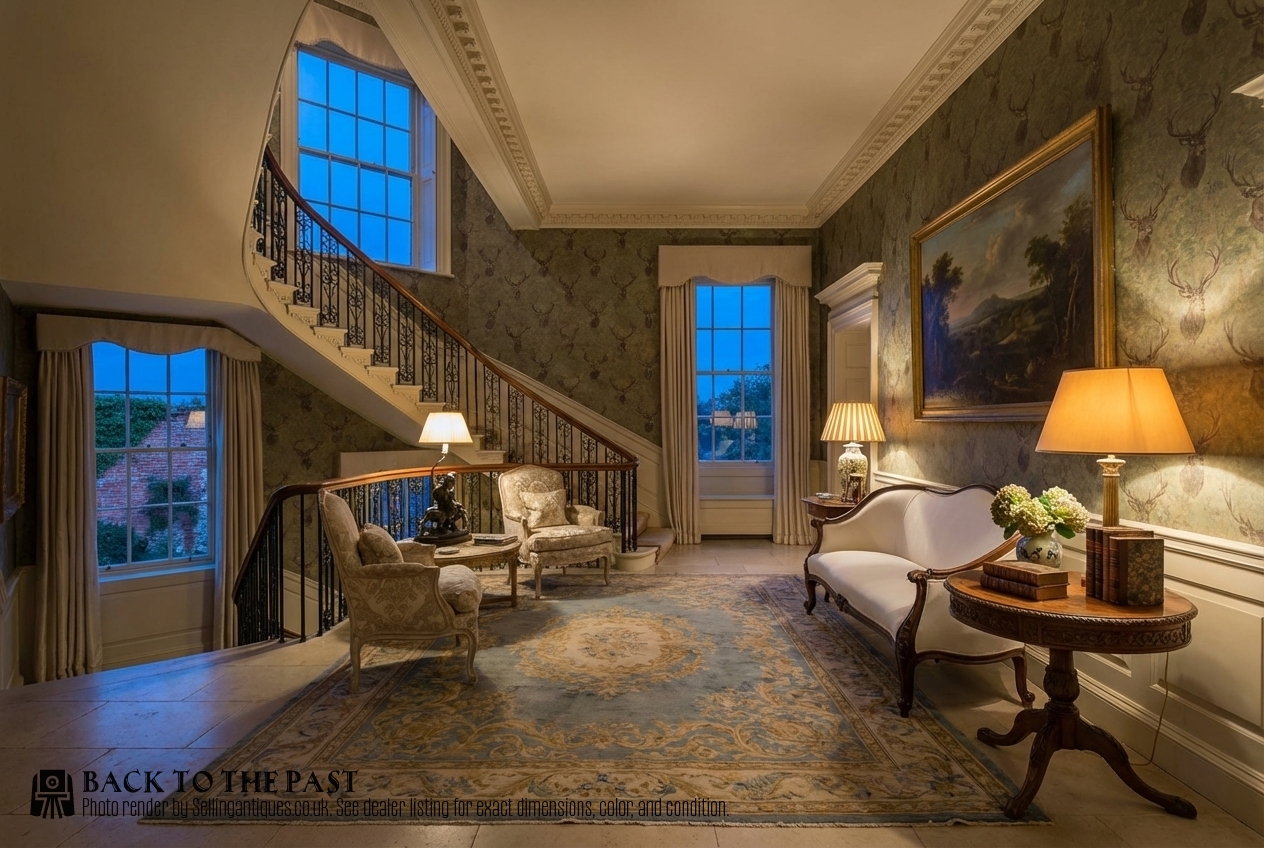
Mahogany Framed Settee
A mahogany framed settee is a substantial timber-structured seat designed for formal reception rooms, drawing rooms and country house interiors. The selection spans periods from the eighteenth century through to the Edwardian era, encompassing Georgian proportions and later revival styles.
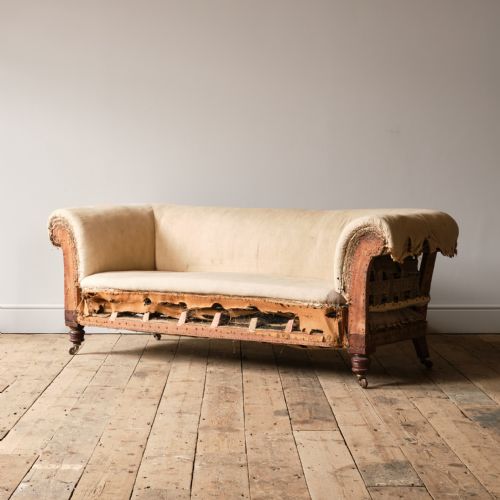
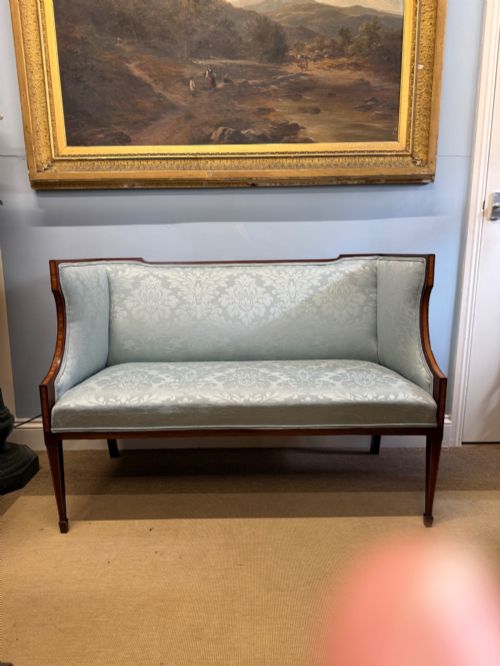
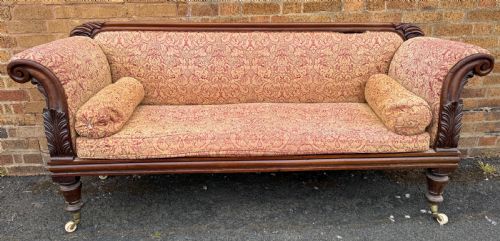
Most examples found here combine exposed mahogany show frames with upholstered seats, backs and scroll arms. Pieces appear in various forms, including double-ended sofas, camelbacks, scroll-end settees and salon seating.
Materials and construction
Makers utilised solid mahogany for the structural frames, often selecting timbers with rich grain patterns or incorporating satinwood inlay and brass details. Frames receive hand-carved ornamentation along the crest rails, arms and cabriole or turned legs.
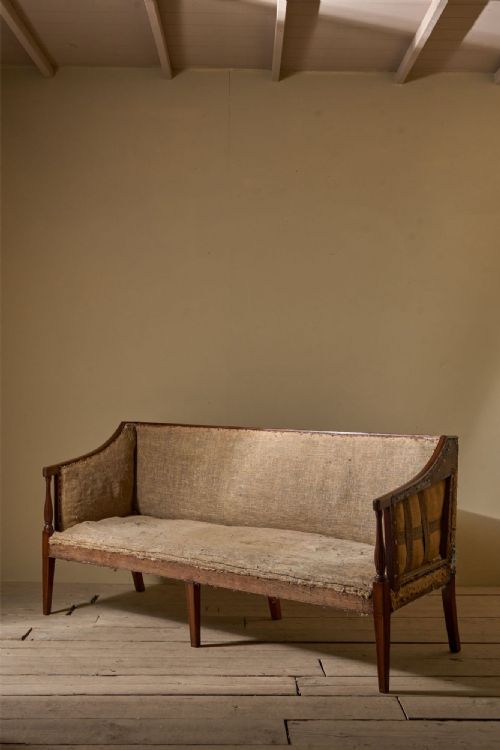
Traditional upholstery techniques layer hessian, calico, hair and stuffing over webbed bases, finished with top covers in leather, velvet, damask or plain fabric.
Some nineteenth-century settees spent generations in draughty country house halls, quietly absorbing decades of damp air and hunting stories.
Distinctions in quality
Quality rests in the crispness of the timber carving and the architectural balance of the frame proportions. Superior pieces display thoughtful joinery and select mahogany cuts that show deep grain movement.
The integrity of the underlying show frame and the retention of original timber surfaces distinguish finer examples from standard production.
Hampton and Sons·Howard and Sons·Lamb of Manchester
The Mahogany Framed Settee Glossary
- Show frame
- The exposed wooden structure of a settee that remains visible around the upholstered sections. It highlights the quality of the timber and any carved detailing.
- Scroll end
- A sweeping, curved arm or end termination common on Regency and William IV settees. This design follows classical scroll motifs.
- Camelback
- An upholstered sofa back featuring a graceful, undulating convex curve resembling a camel's hump. This profile emerged during the eighteenth century.
- Bergere
- An enclosed armchair or settee style featuring cane panels set into the wooden frame. It often includes loose upholstered seat cushions.
Mahogany Framed Settee: Frequently Asked Questions
How do I date a mahogany framed settee?
Dating relies on observing the silhouette, carved ornamentation and timber characteristics visible in the frame. Georgian pieces show restraint and classical proportions, while Victorian and Edwardian examples often feature heavier carving or revival influences.
Examining the construction methods and joinery beneath the upholstery or along the underside provides further clues to the period of manufacture.
What rooms suit a country house settee?
These large settees suit spacious living rooms, entrance halls or drawing rooms where their substantial timber frames can anchor the layout. Their traditional silhouettes work well alongside period architecture and mixed antique furniture.
Placing them away from direct heat sources helps protect the mahogany timber and traditional upholstery materials from drying out.
Are these settees comfortable for daily use?
Comfort depends on the internal upholstery padding and the depth of the seat frame. Many period pieces feature firm, traditional stuffing that offers upright support rather than deep lounging.
Buyers planning regular use often assess whether the internal webbing and springs provide the desired level of give.
Can I reupholster an antique settee?
Reupholstery is a common practice for antique seating, particularly when listings note that a piece is offered for re-upholstery. This allows new fabric choices while preserving the historic mahogany frame.
Working with traditional upholstery materials ensures the finished piece retains its correct profile and sits properly within the show frame.