


Carved Mahogany Salon Sofa
A carved mahogany salon sofa brings nineteenth-century drawing-room elegance into a modern room with its rich timber frame and plush upholstery.
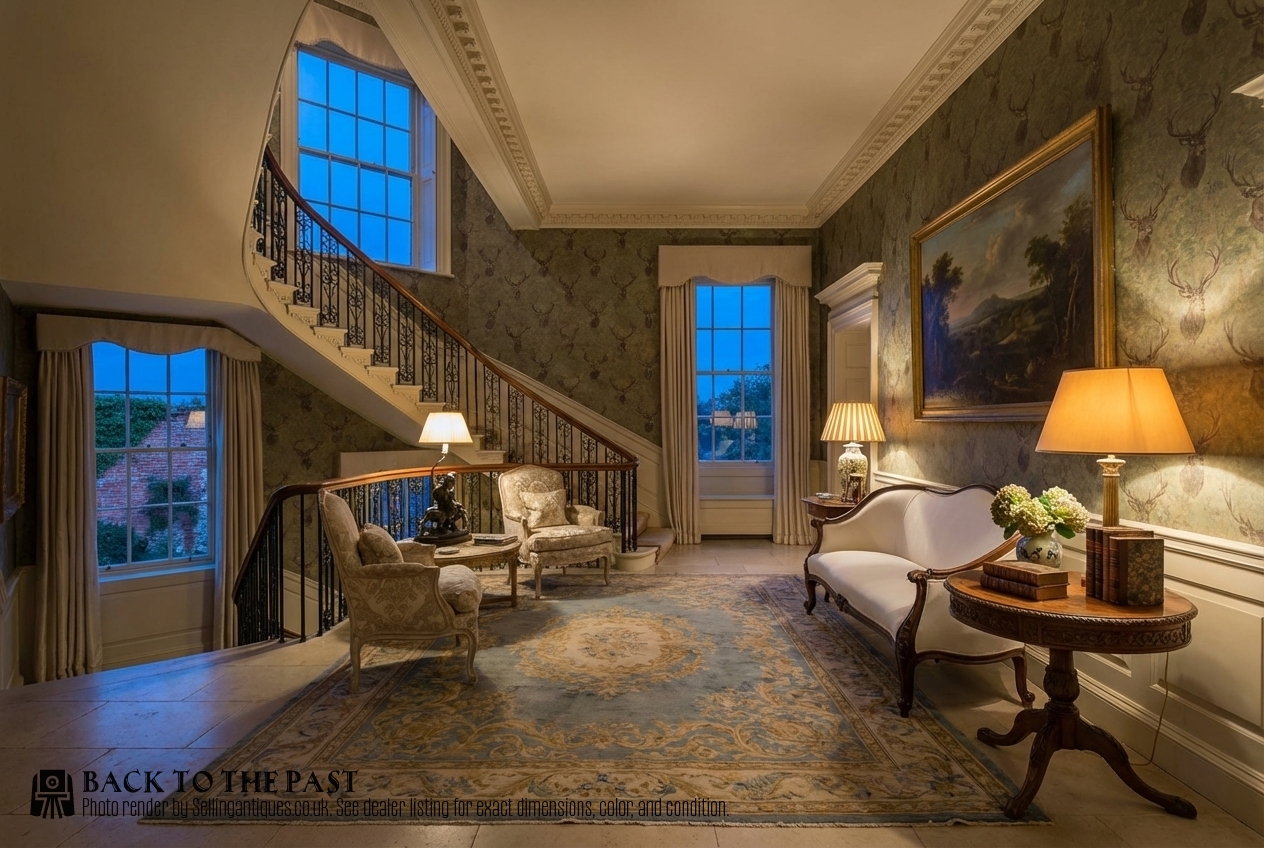
Carved Mahogany Salon Sofa
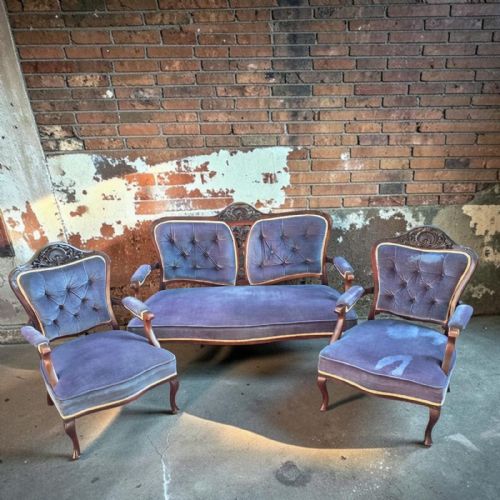
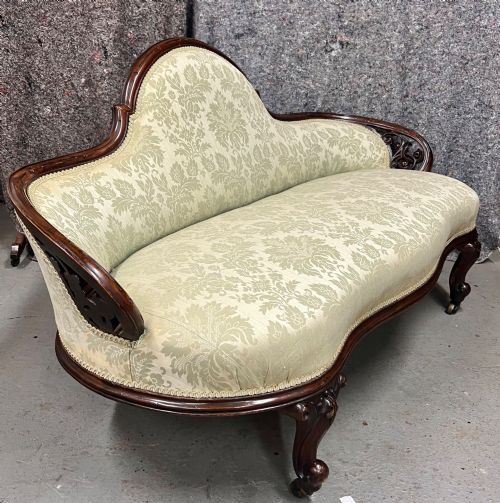
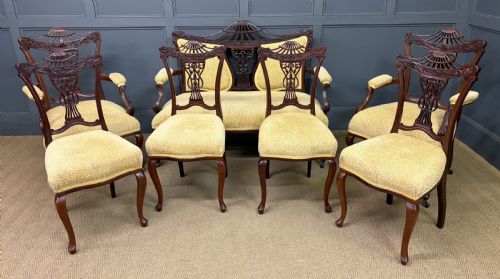
A carved mahogany salon sofa is a formal nineteenth- or early twentieth-century seating piece designed for entertaining guests in a parlour or reception room. These items appear across Victorian, Edwardian, and Late Victorian periods, frequently accompanied by matching armchairs or forming part of larger salon suites.
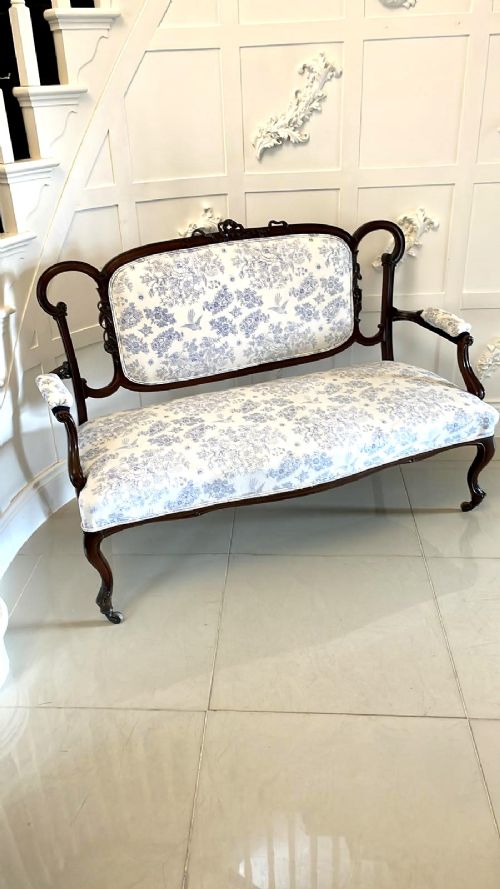
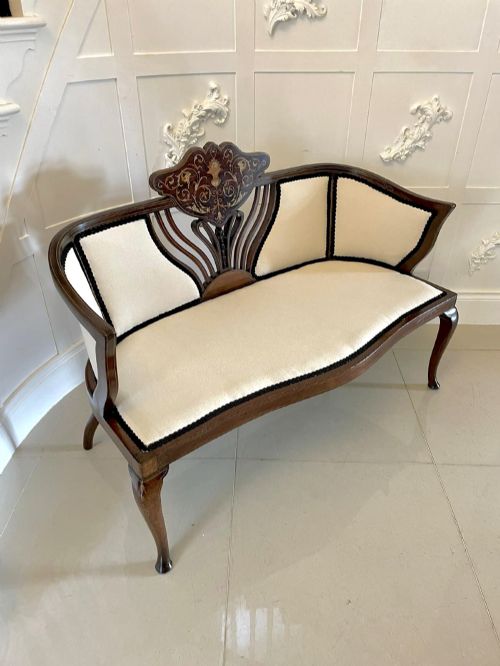
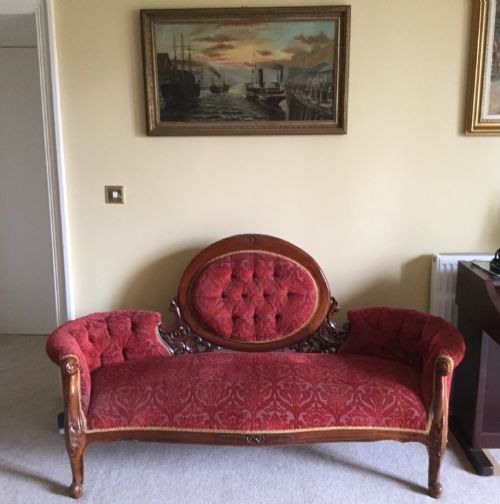
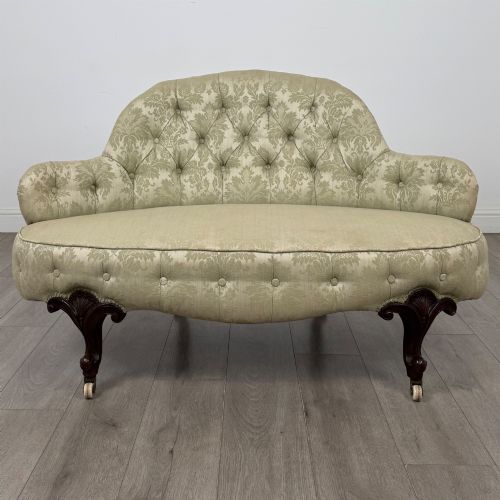
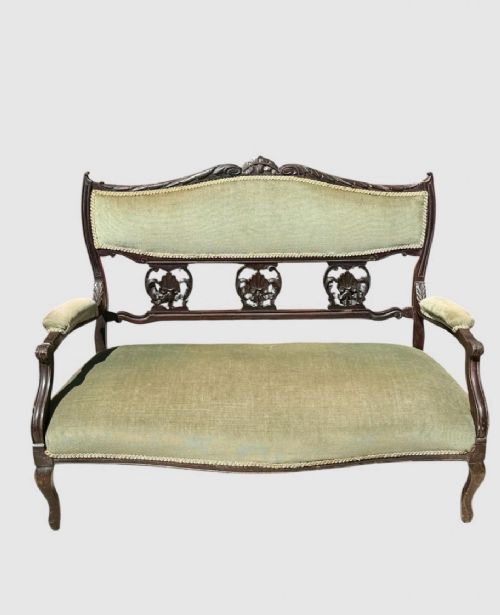
Buyers encounter various formats including double-ended settees, smaller two-seater sofas, and larger reception pieces with elaborate frames. Many examples display detailed woodwork, ranging from Victorian Rococo Revival curves to Chippendale style influences and subtle boxwood inlay.
The timber framework relies on solid mahogany, often polished to a warm tone that highlights the natural grain. These pieces serve as both functional seating and decorative centrepieces, reflecting the interior tastes of the 1850s through to the 1910s.
Materials and construction methods
Makers constructed the primary structural frames using dense mahogany, selected for its strength and ability to hold intricate hand-carved details along the crest rails and cabriole legs. Boxwood inlay appears on specific Edwardian examples, adding contrasting geometric or linear decoration to the wooden surfaces.
Upholstery techniques evolved across the periods, incorporating traditional sprung bases and deep buttoning to provide firm support. Finishers upholstered these frames in textiles such as velvet, damask, brocade, and patterned fabric, secured with brass tacks or decorative gimp.
His and her Edwardian sofa chairs ensure nobody ever has to argue over the most comfortable corner of the parlour again.
Assessing quality in salon seating
Quality rests significantly on the crispness and depth of the timber carving, where hand-tooled execution distinguishes superior frames from simpler production pieces. The structural integrity of the mahogany chassis and the proportion of the overall silhouette also determine the standing of an individual settee.
Originality of the woodwork and the retention of period-appropriate upholstery methods influence the character of each piece. Finer examples exhibit precise joinery, balanced proportions, and careful integration of decorative elements like inlaid boxwood or elaborate scrollwork.
Morison & Co - Edinburgh
The Carved Mahogany Salon Sofa Glossary
- Mahogany
- A durable tropical hardwood known for its deep reddish-brown colour and fine grain. Cabinetmakers favoured it for formal furniture throughout the nineteenth century.
- Brocade
- A rich, heavy woven fabric featuring raised decorative patterns. It often appears on Victorian and Edwardian salon seating.
- Salon suite
- A coordinated set of parlour seating comprising a sofa alongside matching armchairs or smaller chairs. These groupings furnished formal nineteenth-century reception rooms.
- Double-ended sofa
- A settee design featuring symmetrically scrolled or raised ends rather than a conventional single back and one arm. This layout allowed users to recline facing either direction.
- Boxwood inlay
- Contrasting pale wood inserted into recesses carved into the mahogany surface. Edwardian makers utilised this technique for delicate linear ornamentation.
Carved Mahogany Salon Sofa: Frequently Asked Questions
How do I date a salon sofa?
Dating relies on stylistic clues, combining the silhouette of the mahogany frame with the specific carved details and upholstery methods. Victorian pieces often display heavier proportions and curved Rococo Revival motifs, whereas Edwardian examples favour lighter inlaid woodwork.
Examining secondary timbers and construction techniques inside the frame provides further chronological context. Comparing the piece against documented examples from the mid-nineteenth to early twentieth century helps narrow the decade of manufacture.
Were these sofas used daily?
These pieces served primarily for formal entertaining in drawing rooms and reception spaces rather than casual lounging. Households reserved them for receiving visitors, afternoon tea, and musical evenings.
Because of this specific social function, many surviving examples retain delicate frames and decorative upholstery that reflect light domestic wear compared to everyday library seating.
Can I reupholster an antique settee?
Reupholstering is common and often necessary to restore structural support and refresh worn textiles. Many pieces come to market ready for new fabric or retaining later heritage upholstery.
Maintaining traditional sprung bases and professional padding techniques ensures the piece retains its original seating profile and aesthetic balance.
What is a salon suite?
A salon suite is a matching set of reception furniture, typically including a sofa paired with several armchairs or parlour chairs. Makers designed these groupings to create a unified decorative scheme in formal nineteenth-century rooms.
Finding a complete suite together is uncommon, as sets frequently became separated over generations of use and inheritance.