
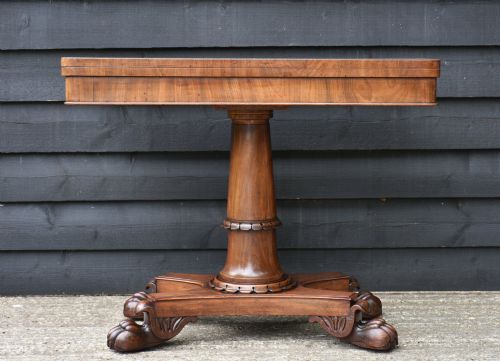
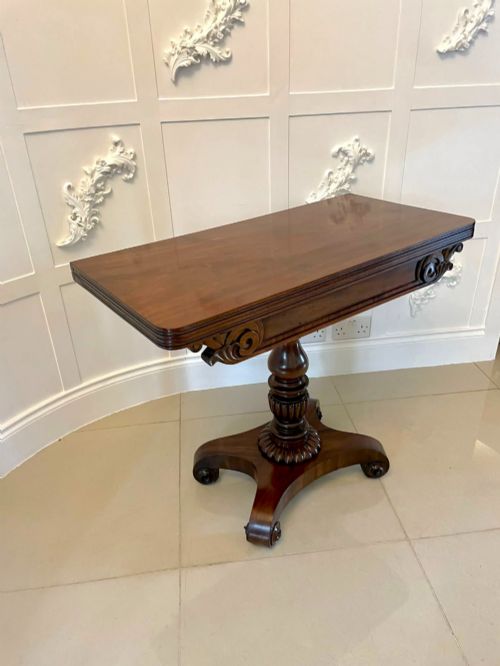
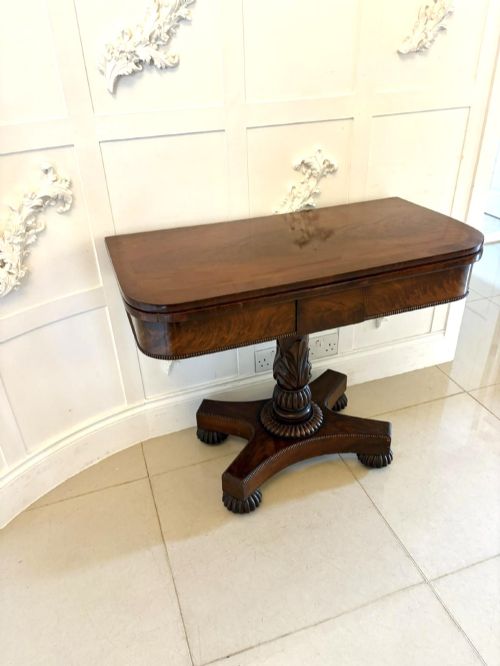
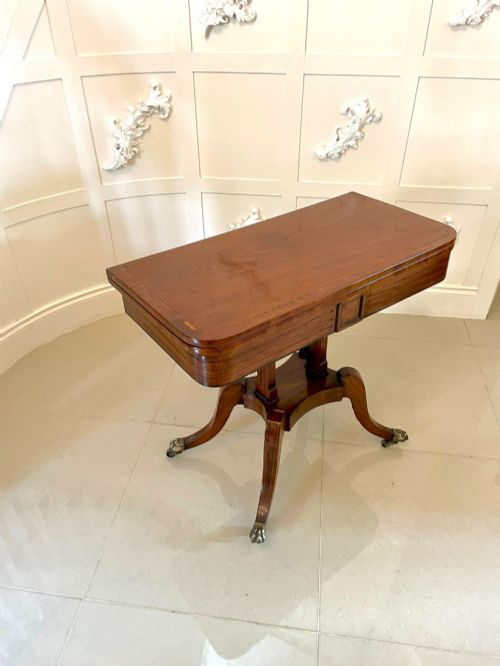

Mahogany Folding Games Table
A mahogany folding games table transforms from a compact side piece into a surface for cards, chess or tea.

Mahogany Folding Games Table
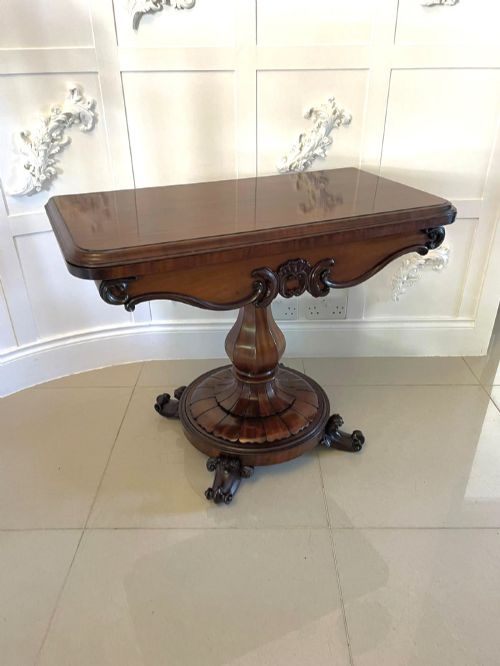
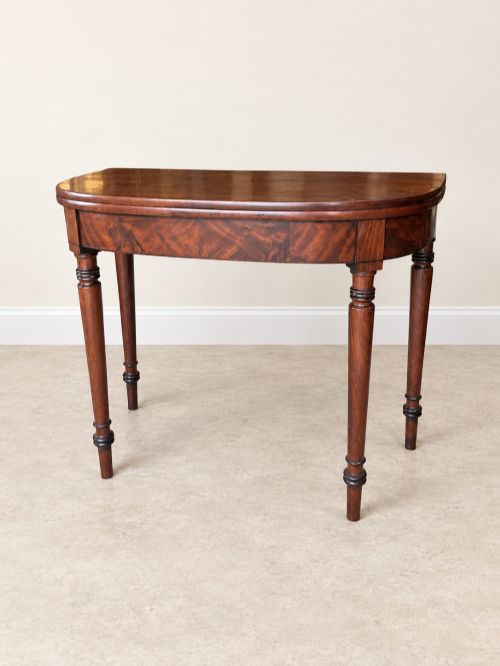
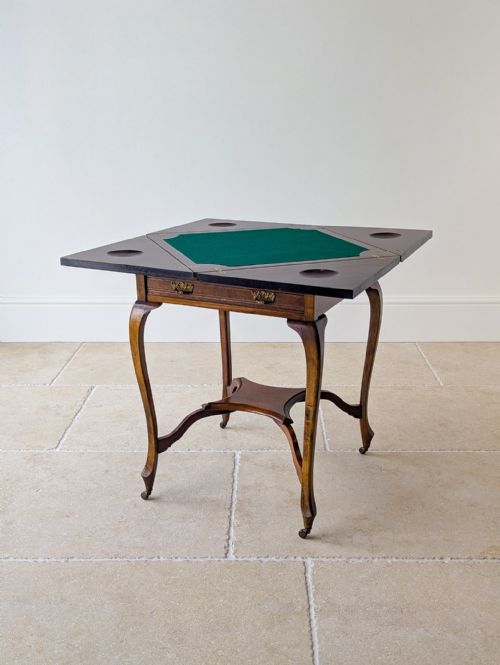
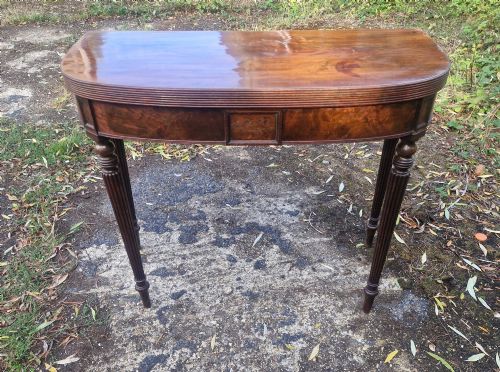
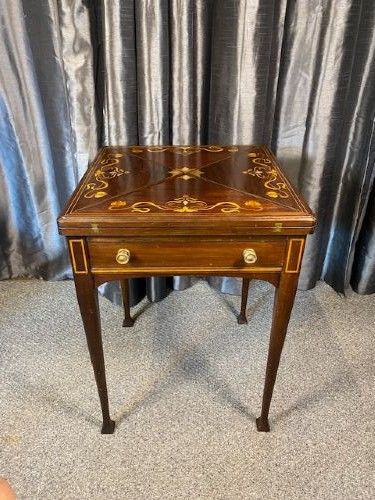
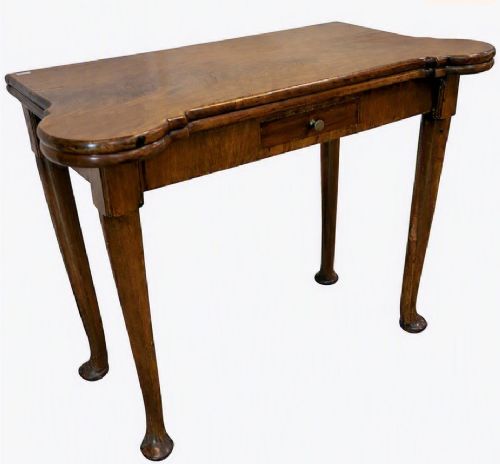
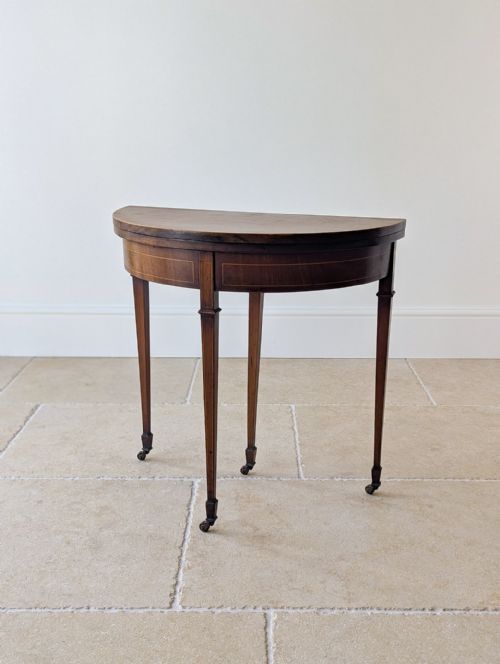
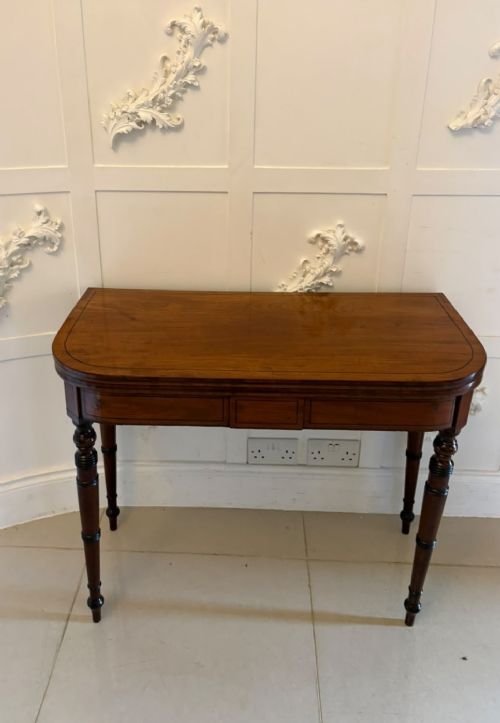
A mahogany folding games table meets you across multiple periods, most frequently appearing in Georgian, Regency, Victorian and Edwardian forms. These dual-purpose surfaces pivot, fold or swivel to reveal baize-lined play areas or concealed storage spaces beneath the top. You will encounter straightforward rectangular shapes alongside demi-lune, serpentine and envelope designs.
The objects served polite domestic recreation, functioning as card tables, tea tables or console tables during daily domestic life. Many examples span the eighteenth and nineteenth centuries, showing cabinetmaking shifts from George II and George III proportions through to later Victorian and Edwardian manufacturing. The scale remains domestic, intended to stand against a parlour wall until needed for an evening of cards.
Materials and construction
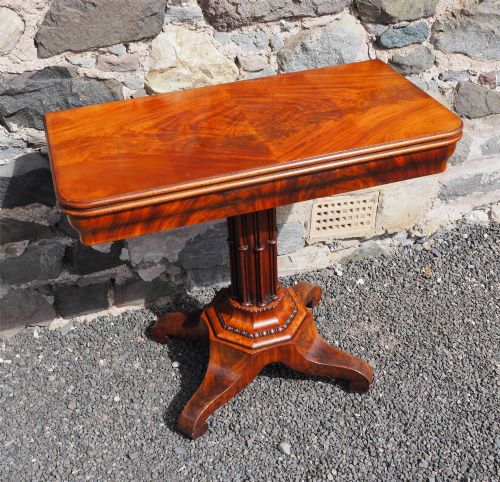
Solid mahogany and flame mahogany veneer provide the primary visual character, supported occasionally by secondary timbers like walnut, satinwood and boxwood for contrasting stringing. Cabinetmakers selected figured grain for the folding top surfaces to create visual impact when opened out.
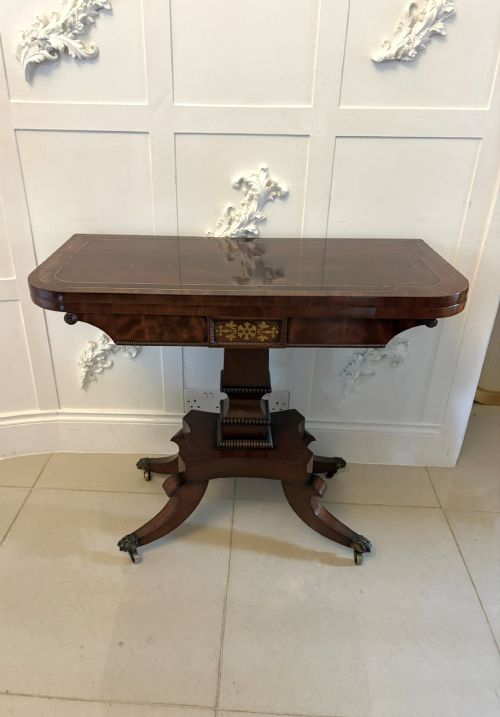
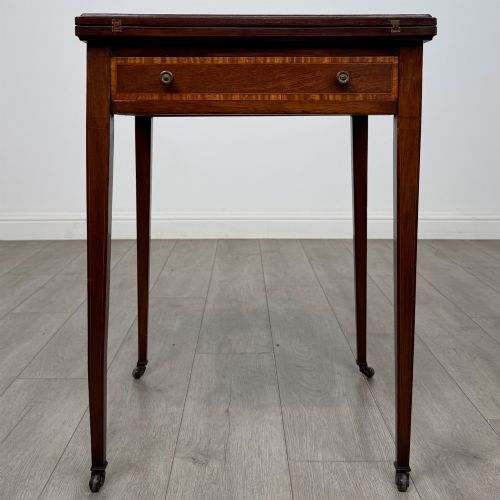
Construction methods include concertina actions that expand the framework to support the opened leaf evenly, alongside swivel and pivot mechanisms. Inlays of satinwood and brass lines decorate the borders of Regency and Edwardian editions, while baize lines the interior playing surfaces.
Form variations include card tables, tea tables, console tables, side tables and envelope tables.
Factors of quality
The choice of timber grain on the fold-over top dictates visual success, particularly where flame mahogany veneer matches across the fold line. Superior examples demonstrate precise cabinetmaking in the concertina or pivoting hinge mechanisms, ensuring the top sits level and stable in both configurations.
Proportion and leg carving separate standard workshop production from finer pieces, such as those with detailed brass inlay or shaped serpentine edges. The integrity of the original baize lining and the crispness of any satinwood or boxwood inlay further distinguish the better items.
James Shoolbred And Co·Antoine Lampre·W Thornhill
The Mahogany Folding Games Table Glossary
- Concertina action
- A table frame that expands on hinged rails like a bellows to support all four corners when the top unfolds. This mechanism allows the weight to rest evenly across the base.
- Baize
- A coarse woollen felt material used to line the interior playing surface of card tables. It provides a soft, tactile mat for dealing cards.
- Demilune
- A half-moon shape used for table tops and frames that stand flat against a wall. When unfolded, the top typically reveals a full circle or square playing area.
- Envelope card table
- A square top design featuring four triangular flaps that fold inward toward the centre like an envelope. Opening one flap causes the others to rise simultaneously via an internal wooden mechanism.
Mahogany Folding Games Table: Frequently Asked Questions
How do I operate the folding top?
Most tables utilise either a pivot mechanism where the top rotates ninety degrees before folding flat, or a concertina action where the frame pulls outward.
Lifting the upper leaf requires checking the hinge alignment carefully to prevent strain on the timber joints.
Were these tables only used for cards?
Many models served multiple functions, doubling as tea tables or console tables during daytime hours.
The baize lining remained hidden until the top leaf opened for evening entertainment.
How do I identify a Georgian piece?
Georgian examples typically exhibit solid mahogany construction, restrained proportions and straight or cabriole legs without heavy factory embellishment.
Look for hand-cut dovetails and timber patination consistent with eighteenth-century workshop practices.
Where should I place a folding table at home?
These tables sit comfortably against a hallway or drawing room wall in their closed, folded position.
Ensure the surrounding floor space allows adequate clearance if you intend to open the leaves for display.