
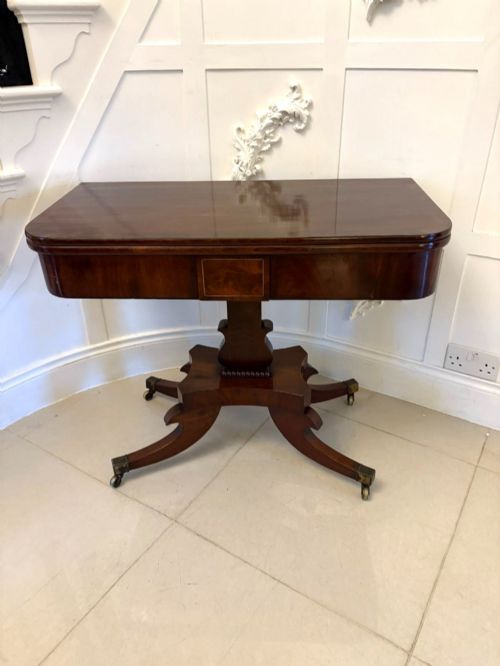
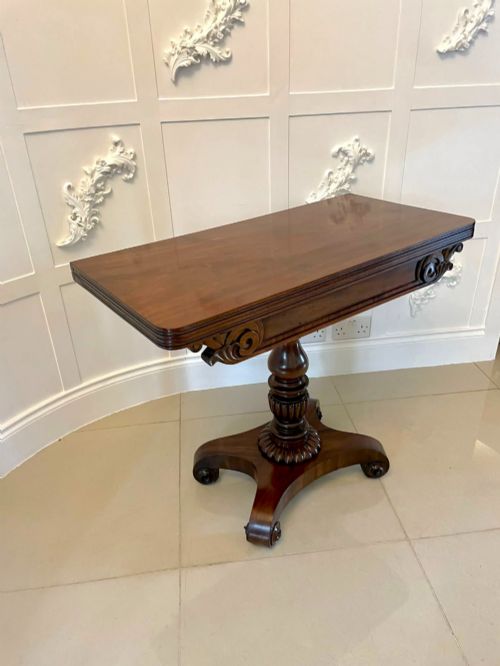
Antique Folding Console
An antique folding console adapts from a slim wall table into a card, tea or games surface through a clever hinged top.

Antique Folding Console
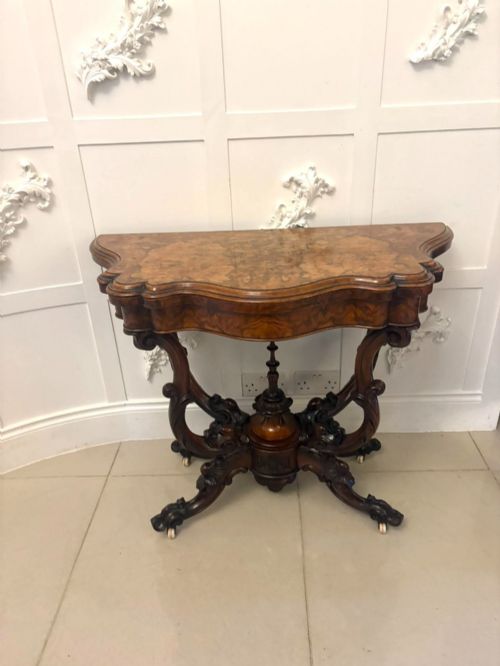
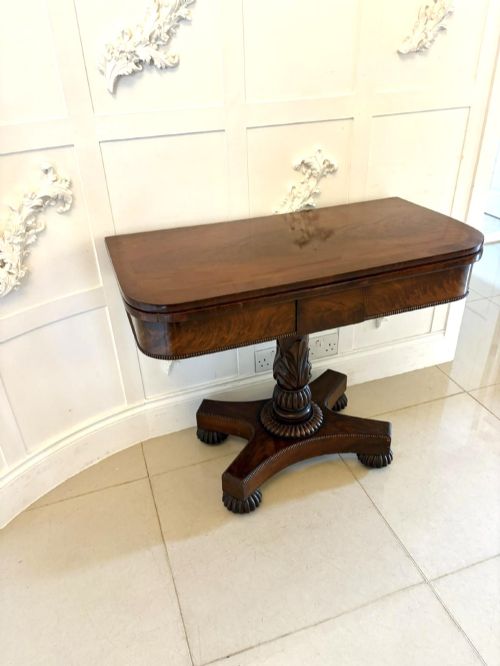
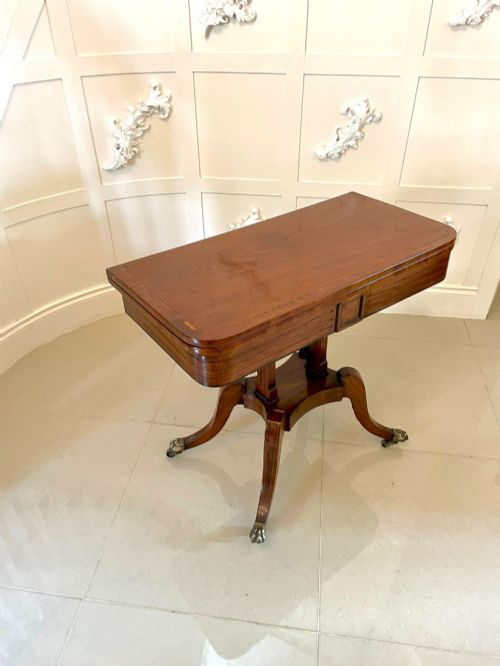
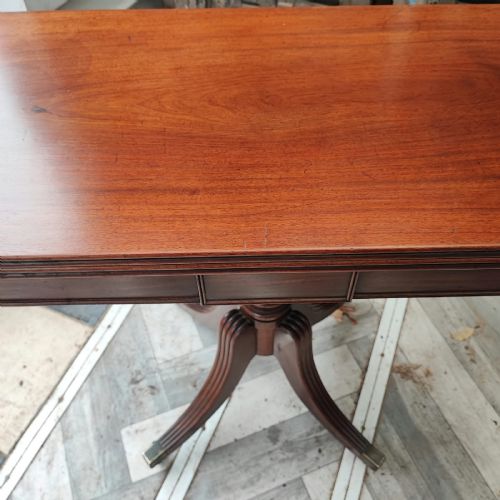
When you search for an antique folding console, you look at versatile timber tables designed to stand against a wall until opened for dining, card games or tea. The pieces listed here span the eighteenth and nineteenth centuries, taking forms such as card tables, tea tables and games tables from the Georgian, Regency and Victorian eras.
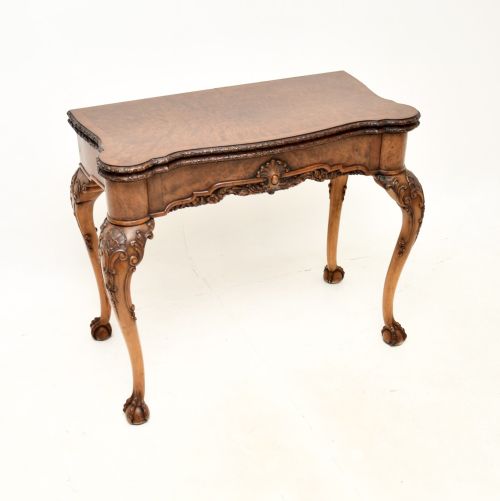
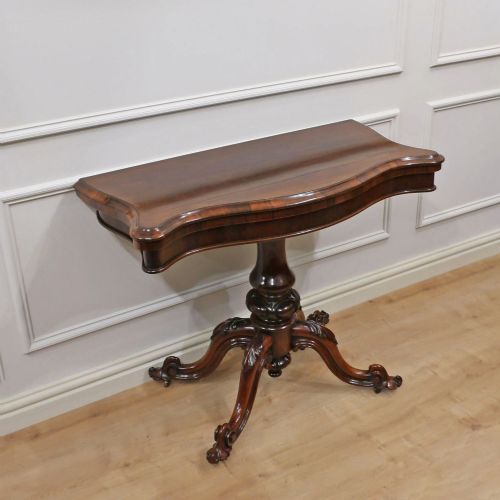
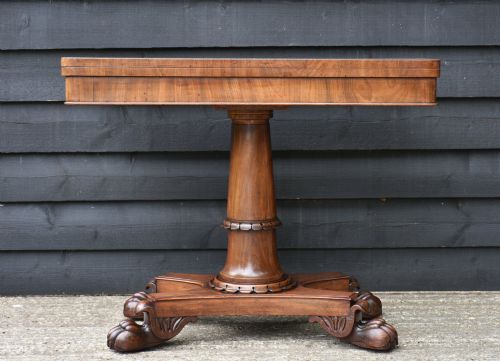
You are most likely to meet mahogany and rosewood examples from the Regency and Victorian periods, often featuring a fold-over top supported by concertina actions or swing legs. These dual-purpose items served historic drawing rooms where floor space demanded adaptable furniture.
Many items combine functions in their titles, appearing as card and console tables or tea and side tables. They bridge the gap between ornamental wall furniture and practical hospitality surfaces.
How they were made
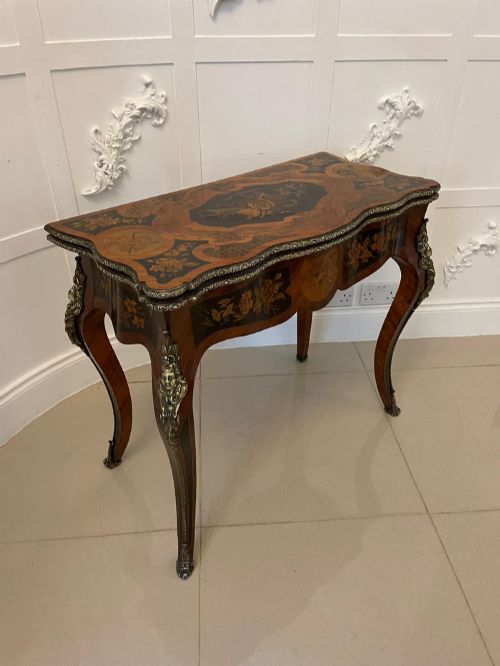
Cabinetmakers built these tables using dense hardwoods like mahogany, rosewood and walnut, frequently applying fine veneers such as burr walnut, satinwood and flame mahogany over secondary timbers. Crossbanding and stringing in lighter woods added geometric contrast to the primary surfaces.
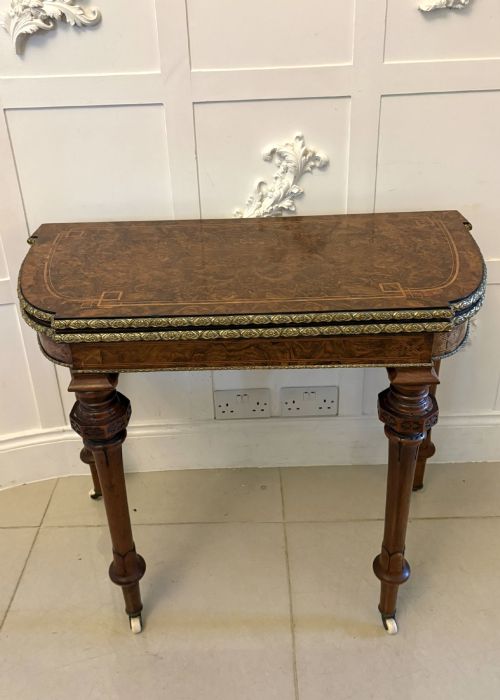
Metal mounts in ormolu and brass inlay feature prominently in Regency and Victorian workshops, dressing the friezes and legs. Brass was also utilised for intricate boulle work or simple stringing lines embedded directly into the timber top.
The folding mechanisms rely on sturdy hinge construction, swing legs or concertina frames that distribute weight evenly when the top leaf opens out.
Materials documented across the inventory include ormolu, boxwood, satinwood, burr walnut and brass inlay.
What varies in quality
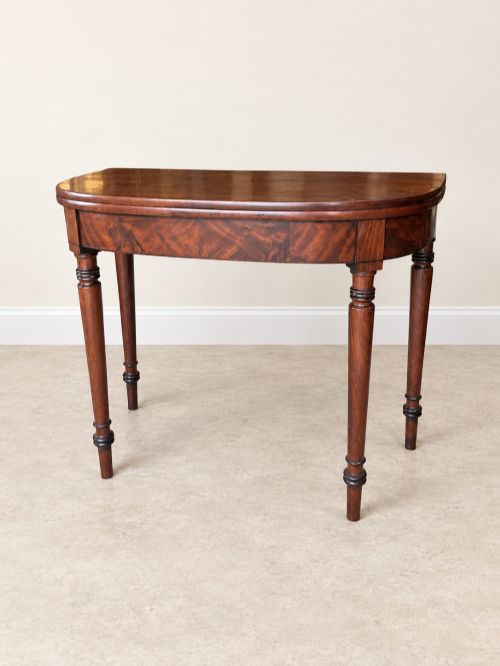
The standard of a folding console rests upon the choice of timber and the precision of its veneers. Figures like flame mahogany, burr walnut and figured rosewood distinguish superior examples from plain stock, particularly when grain patterns match symmetrically across the folding leaves.
Constructional refinement separates workshop tiers. A concertina action that extends the frame to support all four corners evenly demands greater joinery skill than a simple swing leg.
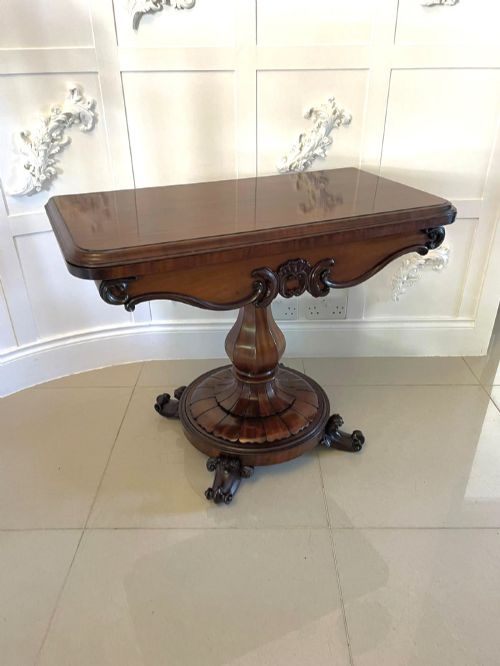
Carved details, such as basket bases, sabre legs or delicate marquetry inlay in satinwood and kingwood, mark the output of higher-grade makers.
George Bullock·Giles Grendey·Gillows
The Antique Folding Console Glossary
- Concertina action
- An expanding frame mechanism that pulls outward when the table top opens, allowing the rear legs to move to the centre for balanced support. This construction method is associated with higher-grade eighteenth and nineteenth-century card tables.
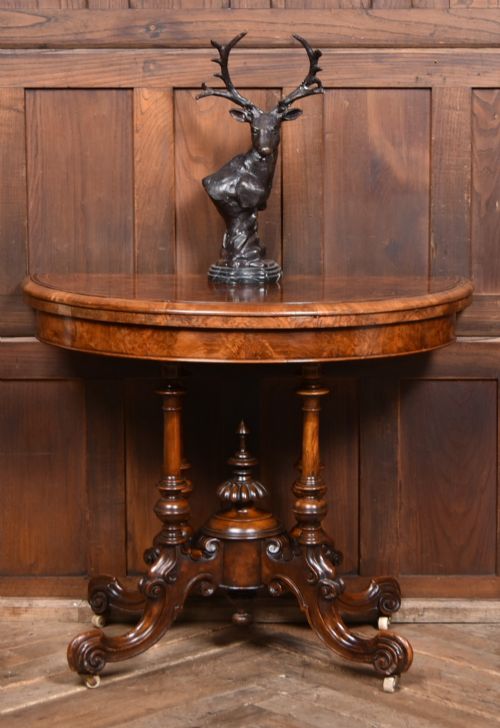
- Demi-lune
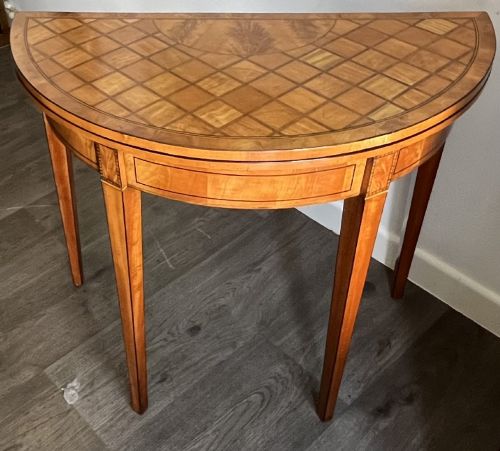
- A half-moon shape with a curved front and flat back designed to sit flush against a wall. These tables often house folding leaves that reveal circular surfaces when opened.
- Crossbanding
- A strip of veneer laid around the border of a table top with the grain running perpendicular to the central panel. It frames the primary wood figure.
- Marquetry
- Decorative patterns formed by fitting pieces of various coloured veneers into a prepared wood base. French and late Victorian pieces frequently employ this technique.
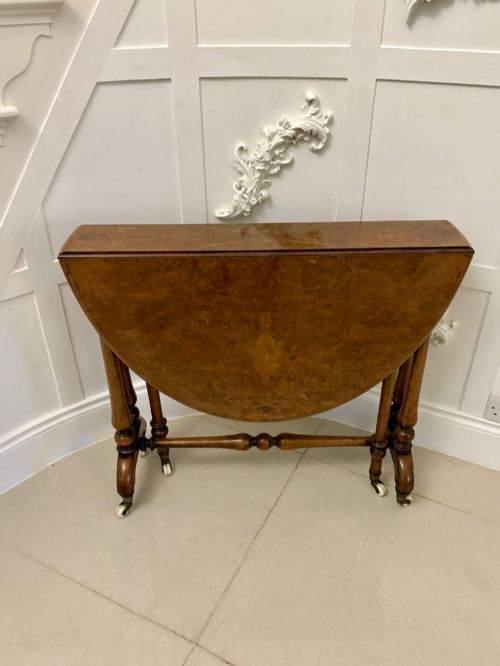
- Sutherland table
- A narrow drop-leaf table with hinged flaps supported by swinging gate legs. Several examples appear among the Victorian walnut and mahogany listings.
Antique Folding Console: Frequently Asked Questions
How do you open a folding console?
Most pieces operate by lifting the hinged top leaf and rotating or pulling the rear frame outward. Swing legs pivot from the apron, while concertina frames expand symmetrically to bear the weight of the doubled surface.
Care must be taken to support the hinge line during movement to protect the timber joints and internal pivot mechanisms.
What were these tables used for?
These pieces functioned primarily as pier tables or sideboards against a drawing room wall when closed. Opening the top transformed them into card tables for whist, tea tables for social hosting, or general gaming surfaces.
Their dual nature provided practical utility without permanently sacrificing domestic floor space in period homes.
How do I date a mahogany console?
Dating relies on architectural styles, timber selection and leg profiles. Georgian examples often feature straight or cabriole legs with plain mahogany, while Regency pieces introduce brass inlay and sabre legs.
Victorian items frequently utilise burr walnut and heavier carved bases, reflecting evolving nineteenth-century aesthetic preferences.
Where should I place one at home?
An antique folding console sits naturally in a hallway, drawing room or dining area against a flat wall. Keeping the top closed displays the wood grain and decorative crossbanding as a slim side table.
Positioning the piece away from direct heat sources protects the fragile veneers and historical finishes from drying out.