





Early Georgian Games Table
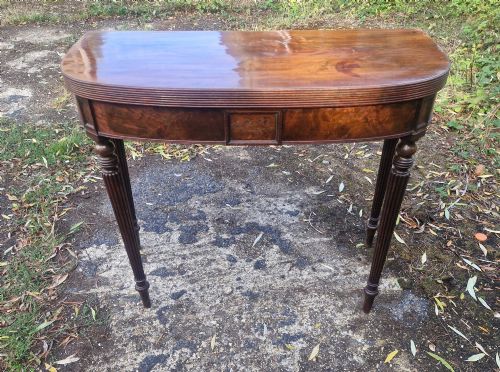
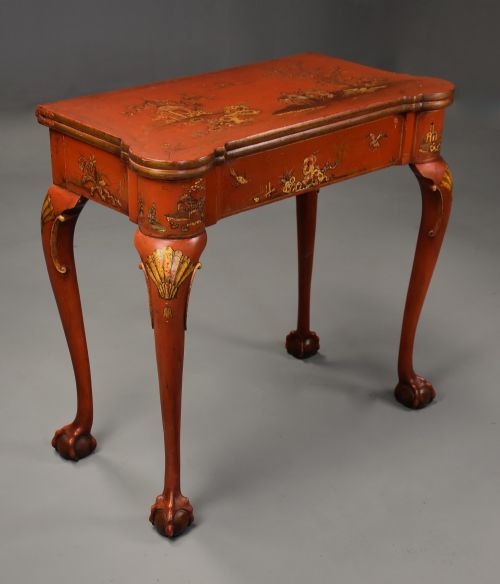
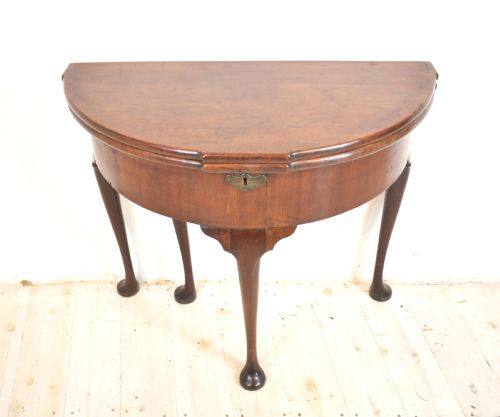
An early georgian games table brings ingenious folding tops and rich mahogany timber together for centuries of card play and elegant entertaining.
What varies in quality
The distinction between ordinary and exceptional examples lies in the selection of timber figures and the crispness of carved details. High-grade pieces display carefully matched veneers and seamless folding leaves that lie perfectly flat when open.
Proportion and structural balance dictate the success of the design, ensuring the table remains stable on its legs when extended. Finer craftsmanship is visible in the smooth operation of the turnover mechanism and the discreet integration of corner wells.
Gillows
The Early Georgian Games Table Glossary
- Crossbanding
- A border of veneer laid with the grain running perpendicular to the surrounding wood, framing the primary panel. This technique adds visual depth to the top surface.
- Turn over leaf
- A hinged section of the tabletop that folds out to double the surface area for gaming or dining. It requires precise alignment with the fixed base.
- Chinoiserie
- European decorative style imitating Chinese artistic traditions, often featuring painted lacquer and gilt motifs. It appears on select eighteenth-century forms.
- Triple top
- A multi-layered table design that conceals specialised compartments or alternative playing surfaces beneath successive folding leaves. This configuration maximises utility within a single piece.
Early Georgian Games Table Retail Price Guide 2026
Typical asking prices for early georgian games table among the pieces listed under this phrase on Sellingantiques today, from the lower quarter to the upper quarter. They describe what is for sale here now, not the wider market.
Hidden candle wells ensure that late-night card games survived the fading evening light without scorching the baize.
Early Georgian Games Table: Frequently Asked Questions
How do you open an early georgian games table?
The top leaf pivots on wooden or brass hinges, swinging upwards and outwards to rest upon a swing leg or a concertina frame.
Once extended, the surface reveals a baize or leather playing area, sometimes accompanied by circular indents for holding drinking glasses or gaming counters.
Were these tables only used for playing cards?
While specifically engineered for card games like whist and ombre, the tables served multiple functions in a domestic interior.
When closed, the folded top functioned as a standard side table or console against the wall, accommodating decorative objects or tea canisters.
How do I distinguish an eighteenth-century table from a later copy?
Examination of the timber shrinkage, hand-cut joinery, and the wear patterns on the internal pivot mechanisms provides clear clues to age.
Later nineteenth and twentieth-century interpretations often display machine-tooled elements and different secondary woods beneath the main surfaces.
Where should I place a fold-over games table at home?
These pieces sit comfortably against a hallway or drawing-room wall in their closed position, maintaining a slim profile.
Opening the table requires sufficient clearance around the perimeter to allow guests to circulate freely and access the extended playing surface.